- Company Articles
- Products and Technology
- Product knowledge
- 4040F EU Standard Aluminum Profile: Compatibility with Lean Pipe Accessories

4040F EU Standard Aluminum Profile: Compatibility with Lean Pipe Accessories
Related Product
4040F EU Standard Aluminum Profile
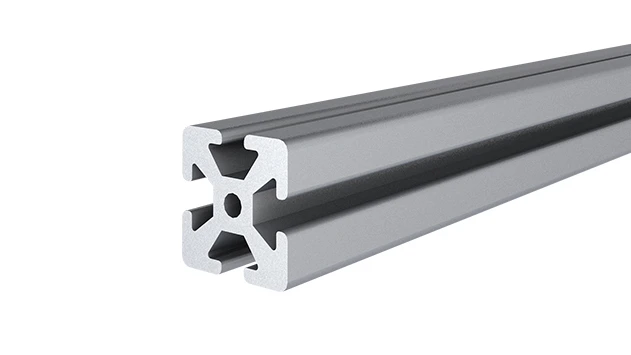
4040F is a 4.00x4.00 CM fractional 40 series square extrusion T-slot profile with four side open T-slots, each side with 4.00cm face. The profile has align-a-grooves to assist in aligning connecting profiles.
The Backbone of Modern Lean Manufacturing
Walk into any efficient manufacturing facility today, and you'll likely spot a common thread: structures that adapt as quickly as production needs change. From workbenches that reconfigure in hours to material racks that expand with inventory, the magic often lies in one unassuming component—the aluminum profile. Among these, the 4040F EU Standard Aluminum Profile has emerged as a quiet hero, bridging the gap between rigid machinery and the dynamic demands of lean systems. But what makes it so indispensable? The answer lies in its remarkable compatibility with lean pipe accessories —the small, versatile parts that turn static frames into living, breathing production tools.
Lean manufacturing isn't just about cutting costs; it's about empowering teams to work smarter. Every second spent adjusting a workbench, every awkward reach for materials, or every delay in reconfiguring a production line chips away at efficiency. The 4040F profile, with its EU-standardized design, was built to eliminate these frictions. Its 40x40mm cross-section, precision-engineered T-slots, and lightweight yet durable aluminum alloy (typically 6063-T5) create a foundation where accessories snap into place, adapt, and evolve—no welding, no custom fabrication, just pure, uncomplicated flexibility.
Understanding the 4040F: More Than Just a Metal Bar
At first glance, the 4040F might look like any other aluminum extrusion. But EU standards ensure consistency—meaning a 4040F profile from one lean system supplier will fit seamlessly with accessories from another. This uniformity is a game-changer for manufacturers who can't afford downtime or mismatched parts. Let's break down its key features:
1. T-Slot Design: The profile's length is lined with T-shaped grooves (typically 8mm or 10mm wide) that act as universal sockets. Accessories like brackets, connectors, and even circuit boards slide into these slots and lock in place with bolts or spring nuts. It's like building with a grown-up version of Lego—intuitive, secure, and infinitely reconfigurable.
2. Material Strength: Aluminum 6063-T5 strikes the perfect balance: it's lightweight enough for manual adjustments (a 1-meter length weighs just 1.2kg) but strong enough to support heavy loads (up to 200kg per linear meter when properly braced). This makes it ideal for everything from lightweight workbenches to robust material racks.
3. Corrosion Resistance: Anodized or powder-coated finishes protect the 4040F from oils, coolants, and humidity—critical in factory environments where rust or degradation could compromise structural integrity.
But the real genius? How these features translate into compatibility with the aluminum profile accessories that bring lean systems to life.

A Match Made in Lean Heaven: 4040F and Its Accessory Ecosystem
Imagine designing a production line where you can swap out a roller track for a conveyor, add a shelf to a workbench, or reposition a caster—all in under an hour. That's the reality when you pair 4040F profiles with the right accessories. Let's explore the most essential ones and how they work together:
| Accessory Category | Key Examples | How It Attaches to 4040F | Real-World Impact |
|---|---|---|---|
| Connectors & Joints | 90° aluminum profile connector, 45° aluminum profile connector, three-way aluminum profile connector | Slides into T-slots; secured with hex bolts or cam locks. Some feature built-in gaskets for vibration resistance. | Turns straight profiles into L-shapes, T-junctions, or even complex 3D structures (e.g., the frame of a workbench with overhead shelving). |
| Roller Track Components | Plastic roller track guide rail (yellow/grey), aluminum guide rail A, roller track placon mount for aluminum profile flat | Mounting brackets slide into T-slots; rail connectors lock sections together. Wheels are pre-assembled for quick installation. | Creates gravity-fed material flow (e.g., a roller track that moves components from storage to assembly stations, reducing manual lifting). |
| Casters & Feet | Flat adjustable swivel castor wheel, anti-slip adjustable leveling feet, heavy-duty split foot seat | Caster plates bolt into T-slots; leveling feet thread into threaded inserts pre-installed in the profile's end caps. | Transforms static racks into mobile trolleys or stabilizes workbenches on uneven factory floors. |
| Panels & Covers | Aluminum honeycomb panel, T-slot rubber seal cover, 4040 aluminum profile end cap | Panels attach via bracket clips in T-slots; end caps snap onto profile ends to prevent dust buildup. | Turns open frames into enclosed work surfaces (e.g., a workbench top) or protects T-slots from debris in messy environments. |
| Specialized Hardware | Swivel roller balls (1 inch), suction cup anti-slip foot adjuster, aluminum profile rubber strip | Roller balls mount via plate brackets; suction cups thread into T-slot nuts for temporary, damage-free stability. | Adds functionality like easy sliding of heavy boxes (roller balls) or secure positioning on smooth floors (suction cups). |
What's striking about this ecosystem is its modularity. A single 4040F profile can start as part of a simple material rack, then be disassembled and repurposed into a mobile workbench or a conveyor support frame—all by swapping accessories. For example, a manufacturer producing small electronics might use 4040F with roller track and casters to build a "pick-and-place" trolley that follows assembly line workers. When production shifts to larger components, they can remove the roller track, add leveling feet, and top it with a honeycomb panel to create a sturdy assembly table. No new profiles needed—just a few hours and a wrench.
Why Lean System Suppliers Swear by 4040F Compatibility
For a lean system supplier , compatibility isn't just a selling point—it's a promise of reliability. When a customer orders a custom solution, they need to trust that the components will work together today and tomorrow. The 4040F's EU standardization eliminates the guesswork. Suppliers can source accessories from multiple vendors (e.g., roller tracks from one, connectors from another) and guarantee a perfect fit, reducing lead times and lowering costs.
Consider a scenario where a supplier is tasked with building a lean workcell for a automotive parts manufacturer. The customer needs a workbench with integrated tool storage, a roller track for incoming parts, and a mobile cart for finished goods. Using 4040F profiles, the supplier can:
1. Build the workbench frame with 90° connectors and a honeycomb panel top.
2. Attach a plastic roller track guide rail (grey) to the side for parts flow.
3. Add casters to a separate 4040F frame to create the mobile cart.
If the customer later wants to add a shelf, the supplier simply sends a few three-way connectors and extra profiles—no redesign required. This agility turns one-time buyers into long-term partners.
Suppliers also appreciate the 4040F's durability. Unlike cheaper steel profiles, aluminum resists corrosion, so accessories like roller tracks or casters maintain smooth operation even in humid or oily environments. This reduces warranty claims and keeps customers' production lines running longer.
Beyond the Factory: 4040F's Hidden Roles in Lean Systems
While 4040F is a staple in manufacturing, its compatibility with lean pipe accessories makes it surprisingly versatile outside the factory floor. For example:
-
Warehousing:
Paired with swivel roller balls and aluminum guide rails, 4040F profiles create gravity-fed picking racks that speed up order fulfillment.
-
Retail:
Custom display shelves built with 4040F and adjustable brackets can be reconfigured overnight for seasonal promotions.
-
Lab Environments:
ESD-safe workbenches (using ESD workstation accessories) with 4040F frames ensure sensitive electronics are protected during testing.
-
Education:
Technical schools use 4040F and accessories to teach students about lean principles—letting them design, build, and rebuild mock production lines in class.
In each case, the magic is the same: 4040F provides the structure, and the accessories provide the function. It's a partnership that turns "what if" into "why not."
Choosing the Right Accessories: Tips for Maximum Compatibility
Not all accessories are created equal, and even with 4040F's standardized design, a few missteps can lead to frustration. Here's how to ensure a perfect fit:
1. Stick to EU-Standard Accessories:
Look for accessories labeled "EU standard" or "compatible with 4040F profiles." Avoid generic "universal" parts—they may fit loosely or require modification.
2. Check Load Ratings:
A caster rated for 50kg won't support a 200kg workbench. Always match accessories to the profile's load capacity (4040F typically handles 150-200kg per linear meter when properly braced).
3. Think About Environment:
In wet or corrosive settings, opt for stainless steel or nickel-plated accessories (e.g., stainless steel swivel roller balls). For cleanrooms, choose plastic or anodized aluminum to avoid particle shedding.
4. Test Before Scaling:
If you're designing a custom setup, buy a small set of profiles and accessories first. Assemble a prototype to check for wobble, smooth movement (for roller tracks), and ease of adjustment.
The Future of Lean: 4040F as a Foundation for Innovation
As manufacturing evolves—with trends like small-batch production, customization, and human-robot collaboration—the need for flexible infrastructure will only grow. The 4040F EU Standard Aluminum Profile, with its unmatched compatibility with lean pipe accessories, is poised to be at the center of this evolution. Imagine a smart factory where 4040F frames support IoT sensors (attached via T-slot brackets) that monitor production flow, or where collaborative robots (cobots) work alongside humans at 4040F workbenches that adjust height automatically via motorized casters.
But even as technology advances, the core value of 4040F remains unchanged: it puts control back in the hands of the people on the factory floor. A line worker shouldn't need an engineering degree to reposition a shelf or add a roller track. With 4040F and the right accessories, they can make those changes themselves—turning frustration into empowerment, and inefficiency into opportunity.
Final Thoughts: More Than Parts, a Partnership
The 4040F EU Standard Aluminum Profile isn't just a component; it's a testament to the power of compatibility. When profiles and accessories work in harmony, they don't just build structures—they build systems that adapt, grow, and inspire. For lean system suppliers, it's a tool to deliver value. For manufacturers, it's a way to stay competitive in a fast-changing world. And for the workers on the ground? It's the difference between dreading change and embracing it.
So the next time you walk through a factory and see a workbench that looks like it was built yesterday (even though it's been there for years), or a roller track that bends and flows with the production line, take a closer look. Chances are, you're looking at 4040F profiles and the lean pipe accessories that make lean manufacturing not just a philosophy, but a daily reality.