- Company Articles
- Products and Technology
- Application Cases
- 4040F EU Standard Aluminum Profile for Computer Peripherals Assembly: Case Studies

4040F EU Standard Aluminum Profile for Computer Peripherals Assembly: Case Studies
Related Product
4040F EU Standard Aluminum Profile
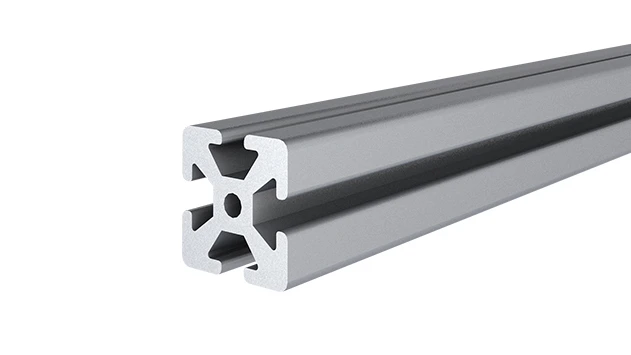
4040F is a 4.00x4.00 CM fractional 40 series square extrusion T-slot profile with four side open T-slots, each side with 4.00cm face. The profile has align-a-grooves to assist in aligning connecting profiles.
In the fast-paced world of computer peripherals manufacturing, every second counts. From keyboards and mice to printers and monitors, the assembly line demands precision, flexibility, and efficiency. Yet, many teams still grapple with rigid workstations, clunky material flow, and systems that resist quick adjustments. What if there was a solution that didn't just fix these pain points but grew with your business? Enter the 4040F EU Standard Aluminum Profile—a quiet hero in the form of extruded aluminum that's transforming how teams build, adapt, and thrive. Let's dive into real stories of manufacturers who turned chaos into clarity with this unassuming yet powerful tool.
Understanding the 4040F EU Standard Aluminum Profile
At first glance, the 4040F might look like just another piece of metal. But scratch the surface, and you'll find a masterpiece of engineering. As an aluminum extrusion profile , it's crafted by forcing heated aluminum through a die, creating a consistent, lightweight structure with built-in T-slots. These slots aren't just for show—they're the secret to its adaptability, letting you attach aluminum profile accessories like joints, brackets, and panels without drilling or welding. Think of it as a grown-up version of building blocks, but for serious manufacturing.
What sets the 4040F apart? Its 40x40mm cross-section strikes the perfect balance between strength and versatility. It's sturdy enough to support heavy workbenches yet light enough to reconfigure without calling in the muscle. And because it's EU-standard, you're not stuck with proprietary parts—most aluminum profile accessories from reputable suppliers will fit, giving you the freedom to mix, match, and innovate.
But why aluminum? Unlike steel, it won't rust or weigh down your assembly line. Unlike plastic, it won't warp under heat or heavy use. For computer peripherals, where precision is non-negotiable, the 4040F's stability ensures parts align correctly, reducing errors and rework. It's not just a material—it's a foundation for leaner, happier, and more productive teams.
Case Study 1: Streamlining Workstations at TechFlow Peripherals
The Challenge: Rigid Workbenches Stifling Growth
TechFlow Peripherals, a mid-sized manufacturer in Poland, had a problem: their keyboard assembly line was bursting at the seams. They'd grown from 50 to 200 employees in three years, but their workstations hadn't kept up. The old wooden benches were fixed-height, wobbly, and impossible to adjust for ergonomics. Workers strained to reach tools, and swapping out components for new keyboard models meant days of disassembly and reconstruction. "We were losing 2-3 hours per changeover," says Maria, their production manager. "And with 15 new models launching that year, we knew we couldn't keep up."
The Solution: 4040F Workbenches with Adjustable Heights
Maria's team turned to a local lean system supplier specializing in aluminum profiles. Together, they designed custom workstations using the 4040F profile as the frame. The key? Internal rotatary aluminum joints that let workers adjust the bench height with a simple twist, no tools required. They added pegboards for tools, LED light strips for better visibility, and even small shelves for parts bins—all attached via T-slot accessories. "The first time we built a prototype, the team couldn't stop touching it," Maria laughs. "One worker said, 'It feels like it was made for my hands.'"
The Results: Happier Teams, Faster Changeovers
Within two weeks of rolling out the new workstations, the changes were undeniable. Changeover time dropped from 3 hours to 45 minutes. Ergonomic adjustments reduced worker fatigue—reports of wrist pain fell by 60%. And because the 4040F frames were so sturdy, the team could add anti-static mats (critical for electronics) without worrying about sagging. "We didn't just build workbenches," Maria says. "We built a system that respects our team's time and bodies. That's priceless."

Case Study 2: Material Flow Makeover at QuickPrint Monitors
The Challenge: Bottlenecks in Monitor Assembly
QuickPrint Monitors in Germany prides itself on fast delivery, but their material flow was a bottleneck waiting to happen. Monitors move through multiple stages—screen mounting, circuit board installation, testing, and packaging. Their old system relied on static shelves and manual cart transport, leading to parts piling up, missed deadlines, and frustrated workers. "We'd have pallets of screens sitting in the hallway because there was no room on the line," explains Thomas, their logistics coordinator. "Then, when a station ran out of parts, someone had to run to the warehouse—wasting 10-15 minutes per trip."
The Solution: 4040F Roller Tracks and Material Racks
Thomas partnered with a roller track supplier to redesign their flow using 4040F profiles and roller track placon mounts . They built gravity-fed roller tracks that carried screens and components directly to each workstation, using the 4040F as the track frame. For heavier parts like metal monitor stands, they added material rack B (3 row and 3 floor) units, also built with 4040F, to keep inventory organized and at arm's reach. The racks were even mobile, thanks to lockable casters attached via caster accessories , so they could shift with production needs.
The Results: From Chaos to Clockwork
Three months in, the transformation was stark. Parts now glide to stations instead of being carried, cutting transport time by 75%. The warehouse team reduced "urgent runs" from 12 per day to 2. Best of all, the roller tracks and racks adapted when QuickPrint launched a new 32-inch monitor line—they simply added extra track sections and adjusted the rack heights using aluminum profile accessories . "I used to dread production meetings because all we talked about was delays," Thomas says. "Now? We're talking about how to keep up with demand. That's a good problem to have."
Case Study 3: Scaling Lean Systems at GlobalKeyboards Inc.
The Challenge: A System That Couldn't Keep Up with Demand
GlobalKeyboards, a multinational with factories in Spain and Hungary, was on a roll—their mechanical keyboards were flying off shelves. But their lean system was cracking under pressure. Their Hungarian plant used steel frames for everything, which were heavy and expensive to modify. Their Spanish plant used plastic, which warped in the summer heat. "We needed a unified system that worked across both sites," says Carlos, their global operations director. "Something that was lean, durable, and didn't require two different sets of tools or suppliers."
The Solution: Standardizing on 4040F Across Borders
Carlos's team chose the 4040F EU Standard Aluminum Profile as their common denominator. They worked with a lean system supplier that could ship to both countries, ensuring parts were interchangeable. In Hungary, they replaced steel workbenches with 4040F frames, cutting assembly line weight by 40% and making reconfigurations a one-person job. In Spain, they swapped plastic racks for 4040F-based systems that withstood summer temperatures without warping. They even standardized on swivel roller balls 1 inch for part transfer tables, so workers in both plants used the same motion to slide components.
The Results: A Unified, Scalable System
Within a year, the benefits multiplied. Training new employees became easier—skills learned in Spain translated directly to Hungary. Maintenance costs dropped by 30% because aluminum doesn't rust and T-slot accessories are easy to replace. And when GlobalKeyboards acquired a third factory in Portugal, they replicated the system in weeks, not months. "The 4040F didn't just solve our immediate problems," Carlos says. "It gave us a playbook for growth. We're not just building keyboards—we're building a company that can adapt to anything."
Why 4040F Works for Computer Peripherals: Key Benefits
It's clear the 4040F isn't a one-trick pony. Here's why it's become a go-to for computer peripherals manufacturers:
- Precision for Sensitive Electronics : Computer parts like circuit boards and screens demand stable work surfaces. The 4040F's rigid structure minimizes vibration, reducing the risk of micro-cracks or misalignments.
- ESD Compatibility : Many suppliers offer ESD-safe accessories (like black ESD wheels for roller tracks), critical for preventing static damage to components.
- Speed to Market : With quick-connect aluminum profile accessories , you can prototype new assembly lines in days, not weeks. That means faster launches for new products.
- Sustainability : Aluminum is 100% recyclable, and the 4040F's durability means less waste over time. Many teams report lower carbon footprints from reduced shipping weight (thanks to aluminum's lightness).
- Cost-Effective in the Long Run : While upfront costs might be higher than plastic, the 4040F's lifespan (often 10+ years) and reusability make it cheaper over time. One manufacturer calculated a 2.5-year ROI from reduced rework and faster changeovers.
Finding Your 4040F Partner: What to Look for in a Supplier
Ready to explore the 4040F for your own line? Choosing the right lean system supplier makes all the difference. Here's what to prioritize:
- Range of Accessories : Look for suppliers that stock everything from internal rotatary aluminum joints to roller track placon mounts . The more options, the more creative you can get.
- Customization Support : A good supplier won't just sell you parts—they'll help design solutions. Ask if they offer CAD design services or on-site consultations.
- EU Standard Compliance : Ensure their 4040F profiles meet EU standards for quality and safety, especially if you export products.
- Lead Times : In manufacturing, delays cost money. Look for suppliers with local warehouses to keep lead times under two weeks.
- Customer Service : You'll have questions (like "Can this joint support a 50kg load?"). Choose a supplier with responsive support—preferably one that assigns a dedicated account manager.
Many manufacturers start with a small order—a single workbench or roller track—to test the waters. As Maria from TechFlow puts it: "We thought we were just buying aluminum. Turns out, we were buying peace of mind."
Real Results: By the Numbers
Don't just take our word for it. Here's how the 4040F impacted the case study companies:
| Company | Key Improvement | Quantifiable Result |
|---|---|---|
| TechFlow Peripherals | Changeover Time | Reduced from 3 hours to 45 minutes (-75%) |
| QuickPrint Monitors | Material Transport Time | Cut by 75% (10-15 minute runs → 2-3 minutes) |
| GlobalKeyboards Inc. | Maintenance Costs | 30% reduction across three factories |
| TechFlow Peripherals | Worker Fatigue Reports | 60% drop in wrist pain complaints |
Beyond the Assembly Line: The Human Impact
Numbers tell part of the story, but the real magic is in the human moments. At QuickPrint, Thomas recalls a line worker approaching him after the roller tracks were installed. "He said, 'I used to hate coming to work because I was always rushing to fix mistakes or fetch parts,'" Thomas says. "'Now, I can focus on building a good monitor. I feel proud of what I do again.'"
At GlobalKeyboards, Carlos noticed something similar: "Our turnover rate dropped. People weren't leaving because the work felt manageable, even during busy seasons. When your tools work with you, not against you, it changes how you feel about your job."
The 4040F isn't just about aluminum and T-slots. It's about respecting the people behind the products. It's about giving teams the tools to do their best work without fighting the system. In a world where manufacturing can feel cold and impersonal, that's a revolution.
So, what does the 4040F EU Standard Aluminum Profile mean for you? It's not just a material upgrade—it's a mindset shift. It's choosing flexibility over rigidity, adaptability over stagnation, and people over processes. Whether you're a small workshop or a global enterprise, the 4040F invites you to build not just products, but systems that grow, learn, and thrive.
As Maria from TechFlow puts it: "We didn't just buy a profile. We bought a future where we're ready for whatever comes next." And in manufacturing, that's the most valuable tool of all.