- Company Articles
- Products and Technology
- Product knowledge
- 4040F EU Standard Aluminum Profile for Laboratory Equipment Frames: Corrosion Resistance & Sterility

4040F EU Standard Aluminum Profile for Laboratory Equipment Frames: Corrosion Resistance & Sterility
Related Product
4040F EU Standard Aluminum Profile
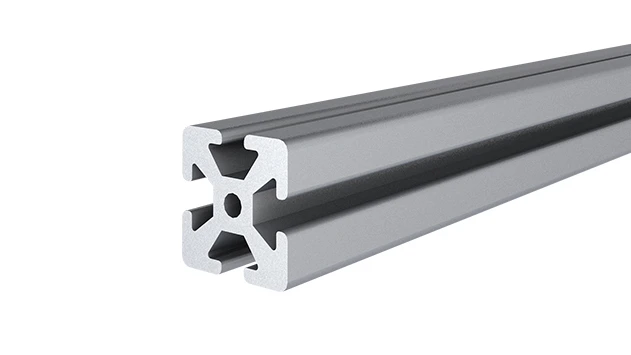
4040F is a 4.00x4.00 CM fractional 40 series square extrusion T-slot profile with four side open T-slots, each side with 4.00cm face. The profile has align-a-grooves to assist in aligning connecting profiles.
Walk into any modern laboratory—whether it's a bustling chemical research facility, a sterile medical diagnostics lab, or a high-tech pharmaceutical development space—and you'll notice something critical: the equipment, workbenches, and shelving that form the backbone of daily operations. These aren't just pieces of furniture; they're the silent workhorses that must withstand harsh chemicals, frequent cleaning, and the relentless demand for precision. In environments where a single spill or contamination risk can compromise experiments or patient safety, the materials used to build these structures matter more than you might think. That's where the 4040F EU Standard Aluminum Profile comes in—a-sounding component that's quietly revolutionizing how labs design durable, sterile, and adaptable equipment frames.
The Lab Environment: A Battlefield for Equipment
Let's start by painting a picture of what lab equipment endures. Chemical labs regularly handle acids, solvents, and corrosive reagents that can eat through metal or degrade plastic over time. Medical labs use strong disinfectants like bleach or alcohol to wipe down surfaces multiple times a day to prevent cross-contamination. Even in biological labs, humidity and temperature fluctuations can take a toll on materials. Add to that the need for frequent reconfiguration—labs often rearrange workspaces to accommodate new equipment or research projects—and you've got a perfect storm of challenges for traditional building materials.
For years, labs relied on stainless steel or heavy-duty plastic for frames and workbenches. Stainless steel is tough, sure, but it's heavy, expensive, and hard to modify once installed. Plastic, while lightweight, can warp under heat, scratch easily (creating tiny crevices where bacteria hide), and lacks the structural strength needed for heavy equipment. So, what if there was a material that could balance corrosion resistance, sterility, strength, and flexibility? Enter the 4040F aluminum extrusion profile.
What Makes 4040F Aluminum Extrusion Profile Stand Out?
At its core, the 4040F is an aluminum extrusion profile—meaning it's formed by pushing heated aluminum through a die to create a specific cross-sectional shape. The "4040" refers to its dimensions (40mm x 40mm), a popular size for frames and supports, while "EU Standard" ensures it meets strict European quality and safety regulations. But the real genius is in how this simple shape addresses the unique needs of lab environments.
Corrosion Resistance: More Than Just a Coating
Aluminum naturally forms a thin oxide layer when exposed to air, which acts as a built-in barrier against corrosion. But the 4040F takes this a step further. Most EU standard aluminum profiles undergo anodization—a process that thickens this oxide layer, making it even more resistant to chemicals, moisture, and abrasion. Unlike painted or plated metals, this anodized layer won't chip or peel over time, even with repeated scrubbing. In tests, 4040F profiles have withstood prolonged exposure to common lab chemicals like sulfuric acid (dilute), ethanol, and hydrogen peroxide without showing signs of pitting or discoloration—something stainless steel can struggle with, especially if its protective chromium layer is scratched.
Sterility: Smooth, Seamless, and Easy to Clean
Sterility in labs isn't just about killing germs—it's about preventing them from taking hold in the first place. The 4040F's extrusion process creates a smooth, seamless surface with no welds, joints, or rough edges where bacteria, dust, or chemical residues can hide. Compare that to welded steel frames, where tiny gaps between welds are magnets for contamination. Even better, aluminum's non-porous surface means that when you wipe it down with disinfectant, there's nowhere for pathogens to linger. Lab managers often report spending less time on deep cleaning since switching to aluminum profile-based frames—time that can be redirected to actual research.
Strength Without the Weight
Labs need frames that can support heavy equipment—think centrifuges, spectrometers, or large glassware. The 4040F, made from high-grade 6063 aluminum alloy (a blend of aluminum, magnesium, and silicon), offers an impressive strength-to-weight ratio. It's lightweight enough to be easily reconfigured (no need for heavy machinery to move a workbench) but strong enough to support loads up to 500kg per linear meter when properly braced. This balance is a game-changer for labs that need both stability and flexibility.

Aluminum Profile Accessories: The Unsung Heroes of Lab Design
A profile is only as good as the accessories that bring it to life. The 4040F isn't used in isolation—it's paired with a range of aluminum profile accessories that make customization a breeze. Think T-slot nuts, brackets, hinges, and end caps—small components that turn a simple aluminum bar into a fully functional lab workbench, shelving unit, or equipment rack.
Take T-slot connectors, for example. The 4040F's extrusion includes built-in slots along its length, allowing accessories to be attached anywhere along the profile without drilling or welding. Need to add a shelf to a workbench? Slide a bracket into the slot, tighten a nut, and you're done. Want to mount a monitor arm above your workspace? Use a hinge accessory to adjust the angle. This modularity means labs can adapt their setups in minutes, not days—critical when a new grant arrives or a project scope changes.
End caps are another small but vital accessory. They seal the ends of the aluminum profile, preventing dust, liquids, or insects from getting inside the hollow core. In sterile labs, this isn't just about cleanliness; it's about maintaining a controlled environment where even the smallest contaminants are kept at bay.
Workbenches: The Heart of the Lab, Reinvented
Let's zoom in on one of the most common uses of 4040F profiles: workbenches. A lab workbench isn't just a table—it's where experiments are prepared, samples are analyzed, and delicate instruments are placed. Using 4040F for the frame transforms this essential piece of furniture in three key ways:
- Customizable Height and Layout: With aluminum profile accessories like adjustable feet and telescoping brackets, workbenches can be tailored to fit researchers of different heights or specialized tasks. No more one-size-fits-all discomfort.
- Integrated Utility Racks: The T-slot design lets labs add overhead racks for hanging tools, power strips, or task lights—keeping the work surface clutter-free and reducing tripping hazards from loose cords.
- Easy Surface Swaps: Top surfaces (like chemical-resistant phenolic resin or stainless steel) can be quickly removed and replaced if they get damaged, without replacing the entire frame. This extends the bench's lifespan and cuts down on replacement costs.
In a recent survey of lab managers who switched to 4040F-based workbenches, 85% reported fewer maintenance issues, and 78% noted that reconfiguring workspaces took less than half the time it did with their old steel or wooden frames. One manager at a pharmaceutical lab put it this way: "We used to dread rearranging the lab—now we can do it over a weekend, and the benches look as good as new even after a year of daily chemical spills."
How Does It Compare to Other Materials? Let's Break It Down
To truly understand the value of 4040F, let's stack it up against traditional lab materials in the areas that matter most:
| Feature | 4040F Aluminum Extrusion Profile | Stainless Steel | Heavy-Duty Plastic |
|---|---|---|---|
| Corrosion Resistance | High (anodized layer resists chemicals, no chipping) | High (but scratches can expose underlying metal) | Medium (prone to chemical degradation over time) |
| Sterility | Excellent (smooth, non-porous surface; easy to disinfect) | Good (but welds/crevices trap bacteria) | Poor (scratches create hiding spots for germs) |
| Weight | Light (easy to reconfigure) | Heavy (difficult to move; requires permanent installation) | Light (but less stable for heavy loads) |
| Customization | High (modular aluminum profile accessories; no welding/drilling) | Low (requires cutting/welding; hard to modify) | Medium (limited by mold designs; not easily adjustable) |
| Cost (Long-Term) | Moderate (higher upfront, but low maintenance/replacement costs) | High (expensive to buy and install; costly to repair) | Low (cheap upfront, but needs frequent replacement) |
The table tells a clear story: 4040F aluminum extrusion profile hits the sweet spot between durability, functionality, and cost. It's not the cheapest option upfront, but its longevity and adaptability make it a smarter investment for labs planning for the long haul.
Real-World Impact: Labs That Swear By 4040F
Let's look at a few examples of how 4040F is making a difference in real labs:
Case 1: A University Chemistry Lab
A large public university was struggling with rusted steel workbenches in its organic chemistry labs. Spills of acetic acid and dichloromethane were eating through the metal, creating safety hazards and requiring costly replacements every 2–3 years. After switching to 4040F aluminum profile frames with phenolic resin tops, they've now gone 5 years without a single frame replacement. "The anodized aluminum looks brand new, even with students spilling solvents weekly," says the lab coordinator. "And when we added new fume hoods last year, we reconfigured the workbenches in a day—something that would've taken a week with the old steel frames."
Case 2: A Medical Diagnostics Lab
In a busy hospital lab, sterility is non-negotiable. The lab was using plastic shelving for sample storage, but scratches from daily use were becoming breeding grounds for bacteria, leading to failed sterility tests. They replaced the shelving with 4040F aluminum profile frames and smooth aluminum shelves. "We wipe them down with bleach twice a day, and the surface still shines," notes the lab manager. "No more scratches, no more failed tests—and the shelves are strong enough to hold our heavy centrifuges without bending."
Why It Matters: More Than Just "Another Material"
At the end of the day, the 4040F EU Standard Aluminum Profile is more than just a building material—it's a tool that empowers labs to focus on what they do best: research, discovery, and saving lives. By reducing maintenance headaches, simplifying reconfiguration, and ensuring safety through corrosion resistance and sterility, it frees up time, money, and mental energy that can be redirected to groundbreaking work.
For lab managers, it's a way to future-proof their spaces. For researchers, it's a reliable workspace they can trust. And for patients and the public, it's one more layer of assurance that the labs developing life-saving treatments or testing critical samples are built on a foundation of quality.
So, the next time you walk into a lab, take a closer look at those unassuming frames and workbenches. Chances are, they're made of 4040F aluminum extrusion profile—quietly doing its job, so the real stars of the lab can do theirs.