- Company Articles
- Products and Technology
- Product knowledge
- 4040F EU Standard Aluminum Profile Groove Design: Enhancing Component Compatibility

4040F EU Standard Aluminum Profile Groove Design: Enhancing Component Compatibility
Related Product
4040F EU Standard Aluminum Profile
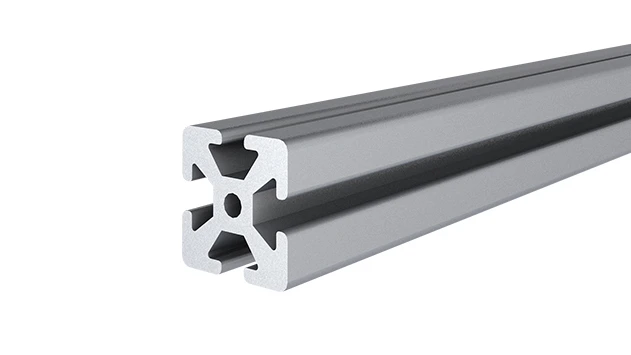
4040F is a 4.00x4.00 CM fractional 40 series square extrusion T-slot profile with four side open T-slots, each side with 4.00cm face. The profile has align-a-grooves to assist in aligning connecting profiles.
In the fast-paced world of manufacturing, where every second counts and efficiency is the backbone of success, the tools and materials that form the production line are more than just parts—they're the silent partners in productivity. Among these, aluminum profiles have emerged as unsung heroes, providing the flexibility, durability, and adaptability that modern factories demand. But not all profiles are created equal. For production managers, engineers, and frontline workers alike, the difference between a smooth, seamless workflow and a frustrating, stop-and-start day often comes down to one critical factor: component compatibility. This is where the 4040F EU Standard Aluminum Profile shines, particularly through its innovative groove design that acts as a universal language for accessories, connectors, and fixtures. Let's dive into how this design transforms compatibility from a headache into a competitive advantage.
What Is the 4040F EU Standard Aluminum Profile?
Before we explore the groove design, let's ground ourselves in what the 4040F EU Standard Aluminum Profile actually is. Part of the broader family of "lean system" components that drive efficient manufacturing, the 4040F is a specific type of aluminum extrusion profile—meaning it's formed by pushing heated aluminum through a die to create a consistent, precise shape. The "4040" in its name refers to its cross-sectional dimensions: 40mm by 40mm, making it a versatile middleweight option suitable for everything from workbenches and material racks to machine guards and conveyor frames. The "F" denotes a specific flange design within the EU standard, ensuring uniformity across manufacturers who adhere to European guidelines. This standardization is key—it means that whether you source your profiles from Germany, Italy, or a trusted local aluminum profile supplier, the dimensions, tolerances, and most importantly, the groove design, will match.
But why aluminum? Unlike steel, aluminum offers a winning combination of strength, lightness, and corrosion resistance, making it ideal for both indoor and controlled outdoor environments. It's also inherently recyclable, aligning with the sustainability goals of modern businesses. For lean manufacturing systems, which prioritize minimizing waste and maximizing flexibility, aluminum profiles like the 4040F are indispensable. They allow teams to build, modify, and repurpose structures—think workbenches, turnover trolleys, or flow racks—without the need for welding, cutting, or custom fabrication. And at the heart of this versatility lies the profile's groove, or "T-slot," which is less a feature and more a gateway to endless possibilities.
The Groove Design: Anatomy of a Compatibility Powerhouse
At first glance, the groove in the 4040F profile might seem like a simple indentation, but its design is the result of decades of engineering refinement. Let's break it down. The groove follows a T-shaped cross-section, with a narrow opening at the profile's surface leading to a wider channel beneath. In the 4040F standard, this groove typically measures around 8mm in width at the opening and 10mm in width at the base, with a depth of approximately 12mm (exact dimensions can vary slightly by manufacturer but remain within EU standard tolerances). This T-shape is intentional: the narrow opening keeps accessories secure once installed, while the wider base provides space for nuts, bolts, and connector heads to slide into place and lock firmly.
But the magic isn't just in the shape—it's in the precision. EU standards dictate tight tolerances for the groove's dimensions, ensuring that even minor variations between profiles and accessories don't lead to misalignment. For example, the groove's edges are deburred and smoothed during manufacturing, preventing snags or damage to accessories during installation. The internal corners of the T-slot are rounded, reducing stress points and making it easier to insert and adjust components like sliding nuts or bracket mounts. These small details add up to a groove that doesn't just "fit" accessories—it welcomes them, turning assembly from a struggle into a straightforward, almost intuitive process.
To put this in context, consider the alternative: non-standard profiles with proprietary groove designs. In the past, manufacturers might opt for custom extrusions to save costs or meet unique needs, only to find themselves locked into a single supplier for accessories. A bracket that works with Brand X's "special" groove won't fit Brand Y's slightly different shape, leading to inventory bloat (stocking multiple versions of the same part) or costly delays when a supplier is out of stock. The 4040F's standardized groove eliminates this problem by speaking a common language. Whether you're using a 90° aluminum profile connector from one supplier and an aluminum profile end cap from another, the groove ensures they'll work together seamlessly.

Enhancing Component Compatibility: How the Groove Makes a Difference
Compatibility isn't just about "fitting"—it's about reliability, efficiency, and adaptability. The 4040F's groove design enhances compatibility in three key ways: by simplifying assembly, expanding accessory options, and future-proofing systems.
1. Simplifying Assembly: From Guesswork to Snap-and-Go
Anyone who's ever tried to assemble furniture with mismatched screws knows the frustration of parts that "almost" fit. In manufacturing, that frustration multiplies—wasted time, stripped threads, and unstable structures can lead to production delays or even safety risks. The 4040F's groove design eliminates this guesswork. Take, for example, the 90° aluminum profile connector, a staple in building frames for workbenches or racks. These connectors feature prongs that slide into the T-slot, and once positioned, a bolt is tightened to expand a wedge or clamp, locking the connector firmly in place. Because the groove's dimensions are standardized, the connector's prongs and clamping mechanism are engineered to fit perfectly, requiring no adjustments or modifications. A worker can secure a connector in seconds, not minutes, allowing them to focus on building the structure rather than troubleshooting fit issues.
The same logic applies to accessories like aluminum profile rubber strips, which line the groove to reduce noise, protect cables, or provide a non-slip surface. Thanks to the groove's consistent width and depth, these strips slide in easily and stay put, without bunching, slipping, or leaving gaps. Even more complex components, like roller track placon mounts (used to attach roller tracks to profiles for conveyor systems), benefit from the groove's precision. These mounts often have T-shaped bases that slot directly into the groove, aligning perfectly with the profile's edges to ensure the roller track sits level and secure—critical for maintaining smooth material flow in a production line.
2. Expanding Accessory Options: A Universe of Compatibility
One of the biggest advantages of the 4040F's standardized groove is the sheer range of aluminum profile accessories available. Because the EU standard is widely adopted, manufacturers around the world produce compatible components, from the everyday to the specialized. Need a caster wheel for a mobile workbench? There's a caster bracket designed to bolt into the T-slot. Building a material rack and need shelf supports? T-slot-compatible brackets come in every angle and load capacity. Even niche items, like swivel roller balls (used for easy sliding of materials) or plastic roller track guide rails (for guiding products along a conveyor), are engineered to interface with the 4040F's groove.
This breadth of options empowers teams to solve unique problems without reinventing the wheel. For instance, a electronics manufacturer might need an ESD workstation (electrostatic discharge-safe workbench) to protect sensitive components. Using 4040F profiles, they can combine ESD-safe aluminum honeycomb panels (mounted via T-slot brackets), grounding clips (attached through the groove), and anti-slip adjustable leveling feet (screwed into the profile's base groove) to create a custom solution—all using off-the-shelf accessories. Without the standardized groove, this would require custom brackets, welding, or risky improvisation, driving up costs and lead times.
3. Future-Proofing Systems: Adaptability for Tomorrow's Needs
In manufacturing, change is constant. A product line might need to be reconfigured for a new model, a workbench might need to be extended to accommodate more workers, or a material rack might need to be repurposed for a different part. The 4040F's groove design makes these changes not just possible but painless. Because components are secured via the T-slot rather than welded or glued, they can be loosened, adjusted, or removed entirely without damaging the profile. This means a workbench built today can become a turnover trolley tomorrow by swapping out legs for casters, or a single-level material rack can be expanded to three levels by adding more shelf brackets—all using the same base profiles.
This adaptability is a cornerstone of lean manufacturing, where "muda" (waste) is the enemy. By allowing structures to evolve with changing needs, the 4040F reduces the need to purchase new equipment, minimizing waste and maximizing return on investment. It also supports continuous improvement: if a team identifies a better way to arrange a production cell, they can experiment with different configurations using existing profiles and accessories, testing and refining without delay. In short, the groove design turns static structures into dynamic tools that grow with your business.
Key Accessories Compatible with 4040F Grooves: A Closer Look
To truly appreciate the groove design's impact, let's put names to the accessories that make it sing. Below is a table highlighting common aluminum profile accessories and how they leverage the 4040F's groove to enhance compatibility and functionality:
| Accessory Type | Example Product | Function | How the Groove Enables Compatibility |
|---|---|---|---|
| Connectors | 90° Aluminum Profile Connector | Joins two 4040F profiles at a right angle (e.g., workbench legs to frames). | T-shaped prongs on the connector slide into the groove; a bolt tightens to clamp the connector securely, no welding needed. |
| End Caps | 4040 Aluminum Profile End Cap | Covers the exposed end of a profile to prevent injury, dust buildup, or cable snags. | Snaps or screws into the groove's opening, with tabs that fit the groove's width for a snug, rattle-free fit. |
| Sealing & Protection | Aluminum Profile Rubber Strip | Lines the groove to dampen noise, protect cables, or provide a non-slip surface for materials. | Designed to match the groove's depth and width, sliding in easily and staying in place without adhesive. |
| Mounting Brackets | Roller Track Placon Mount for Aluminum Profile | Attaches roller tracks (used in conveyors) to 4040F profiles, ensuring alignment and stability. | T-shaped base slides into the groove; bolts secure the mount, allowing height/angle adjustments before final tightening. |
| Leveling & Mobility | Anti-Slip Adjustable Leveling Feet | Stabilizes workbenches or racks on uneven floors; adjustable height prevents wobbling. | Threaded stem screws into a T-nut within the groove, allowing height adjustment without removing the foot. |
Real-World Impact: How Compatibility Drives Efficiency
Let's bring this to life with a scenario that's all too familiar in manufacturing: a small electronics plant needs to expand its assembly line to meet a surge in demand for a new smartphone model. The team has a tight deadline—just two weeks to build three new workbenches, two material racks, and a short conveyor system to move parts between stations. Without the 4040F's groove design, this project could easily spiral into chaos: ordering custom brackets that don't fit, waiting for welding services, or cobbling together unstable structures with mismatched parts. But with 4040F profiles and compatible accessories, here's how it actually plays out:
Day 1: The team orders 4040F profiles, 90° aluminum profile connectors, 4040 aluminum profile end caps, anti-slip adjustable leveling feet, and aluminum honeycomb panels (for workbench surfaces) from their local aluminum profile supplier. Because all components are EU-standard, they know everything will fit.
Day 3: Parts arrive. Two workers start assembling the workbenches: cutting profiles to length (using a simple miter saw), sliding 90° connectors into the grooves at each corner, tightening bolts to lock them, and attaching leveling feet to the base profiles. The honeycomb panels are mounted using T-slot brackets that bolt directly into the groove, and end caps are snapped on to smooth edges—all in under 4 hours per workbench.
Day 5: The material racks go up. Using the same 4040F profiles, the team adds shelf brackets (compatible with the groove) and plastic roller track guide rails (grey, to match the factory's color scheme) to the shelves, allowing boxes of components to slide easily. No drilling or measuring—just sliding brackets into place and tightening.
Day 7: The conveyor system is assembled. Roller tracks are attached to 4040F support frames using roller track placon mounts, which slot into the groove and align perfectly. Swivel roller balls (1 inch) are added at transfer points to ensure smooth transitions between tracks. By the end of the day, the entire system is up and running—on time, under budget, and ready to handle the new production volume.
This isn't just a hypothetical—it's the reality for countless factories that leverage standardized aluminum profiles. The groove design turns what could be a stressful, resource-intensive project into a streamlined, empowering experience for the team.
Why Compatibility Matters More Than You Think
At this point, you might be thinking, "Compatibility sounds great, but isn't it just a 'nice-to-have'?" The truth is, it's a "must-have"—and its impact ripples through every level of a business. For production managers, it reduces lead times and inventory costs (no need to stock 10 types of brackets when one works). For engineers, it sparks innovation (if components fit, you can prototype new structures faster). For workers, it reduces frustration and increases confidence (knowing parts will fit means less time troubleshooting, more time building). And for the bottom line, it translates to higher productivity, lower waste, and a more agile response to market changes.
Consider the alternative: a factory using non-standard profiles with proprietary grooves. When a critical accessory breaks—a caster wheel on a trolley, for example—the team might have to wait weeks for a replacement from the original manufacturer. In the meantime, the trolley is out of commission, slowing down material transport. With the 4040F, they can walk into any aluminum profile supplier and pick up a compatible caster bracket and wheel, getting the trolley back in service the same day. That's the difference between a minor hiccup and a major disruption.
Conclusion: The Groove as a Catalyst for Success
The 4040F EU Standard Aluminum Profile's groove design is more than a feature—it's a testament to the power of standardization and thoughtful engineering. By creating a universal interface for aluminum profile accessories, from 90° connectors to end caps and rubber strips, it transforms compatibility from a barrier into a bridge, connecting ideas to action, parts to purpose, and workers to efficiency. In a world where manufacturing excellence is defined by how quickly you can adapt, innovate, and produce, the 4040F doesn't just keep up—it leads the way.
So, the next time you walk through a factory, take a closer look at the workbenches, racks, and conveyors. Chances are, many of them are built with aluminum profiles. And if they're built with the 4040F EU Standard, know that beneath the surface, in the precision of its groove, lies a story of compatibility—one that's quietly driving productivity, reducing waste, and empowering teams to do more with less. That's the magic of good design: it doesn't shout. It works, seamlessly, so you can too.