- Company Articles
- Products and Technology
- Solution
- 4040F EU Standard Aluminum Profile in 3C Assembly Lines: Structural Solutions & Benefits

4040F EU Standard Aluminum Profile in 3C Assembly Lines: Structural Solutions & Benefits
Related Product
4040F EU Standard Aluminum Profile
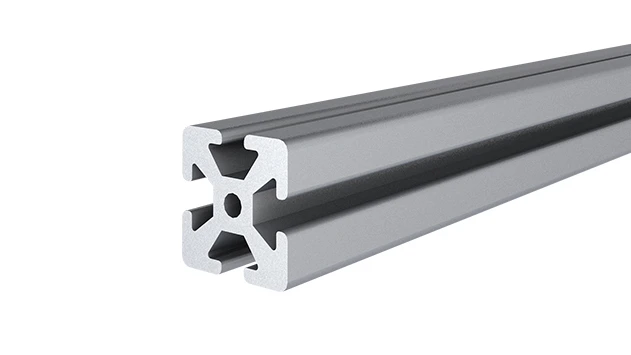
4040F is a 4.00x4.00 CM fractional 40 series square extrusion T-slot profile with four side open T-slots, each side with 4.00cm face. The profile has align-a-grooves to assist in aligning connecting profiles.
Walk into any 3C (Consumer Electronics) assembly plant today, and you'll likely be struck by two things: the relentless pace of production and the intricate dance of components moving from station to station. From smartphones to laptops, smartwatches to tablets, the 3C industry thrives on speed, precision, and adaptability. But behind this seamless operation lies a critical, often overlooked backbone: the physical structure that organizes workspaces, streamlines material flow, and keeps everything—quite literally—together. In recent years, one material has emerged as a game-changer in this space: the 4040F EU Standard Aluminum Profile. More than just a metal frame, it's a versatile building block that's redefining how 3C assembly lines are designed, built, and reimagined. Let's dive into why this aluminum extrusion profile has become the unsung hero of modern electronics manufacturing.
The 3C Assembly Line Challenge: Why "One-Size-Fits-All" No Longer Works
To understand the value of the 4040F profile, we first need to grasp the unique hurdles 3C manufacturers face. Unlike industries with long product lifecycles—think automotive or heavy machinery—3C products evolve at breakneck speed. A smartphone model might be updated every 6–12 months, and each new iteration can bring changes in component sizes, assembly steps, or even production volumes. This constant flux demands assembly lines that aren't just strong or durable, but adaptable .
Traditional assembly setups, often built with welded steel or fixed wooden structures, fall short here. Welding limits reconfiguration—changing a workbench height or adding a new material rack would require cutting, rewelding, and repainting, costing time and money. Wooden structures, while cheap, lack the load-bearing capacity needed for heavy tools or stacks of components. And both options are notoriously heavy, making it nearly impossible to rearrange layouts without forklifts or extensive labor.
Then there's the issue of space. 3C plants are often squeezed for square footage, especially in high-cost manufacturing hubs like Shenzhen or Shanghai. Every inch counts, so structures need to be compact yet (multifunctional). A workbench shouldn't just hold a assembly station; it should integrate tool storage, component bins, and even ESD (Electrostatic Discharge) protection to safeguard sensitive electronics. Material racks need to maximize vertical space while keeping parts easily accessible. And with workers standing for hours, ergonomics—adjustable heights, comfortable reach zones—isn't a luxury; it's a necessity to prevent fatigue and errors.
Enter the 4040F EU Standard Aluminum Profile. Designed with these challenges in mind, it's a modular solution that checks all the boxes: strength, flexibility, lightweight, and compatibility with a vast ecosystem of aluminum profile accessories. Let's break down what makes it so special.
Meet the 4040F: What Makes This Aluminum Extrusion Profile Stand Out?
At first glance, the 4040F might look like any other metal bar—but that's where appearances deceive. Let's start with the basics: "4040" refers to its cross-sectional dimensions (40mm x 40mm), while "F" denotes its specific groove design, a EU standard that ensures compatibility with a wide range of connectors and accessories. Made from high-grade aluminum alloy (typically 6063-T5, known for its excellent strength-to-weight ratio), it's produced via extrusion—a process where molten aluminum is forced through a die to create consistent, precise shapes. This manufacturing method not only ensures uniformity across batches but also allows for the signature "T-slot" design that's key to its versatility.
The T-Slot Advantage: A Blank Canvas for Customization
If the 4040F had a superpower, it would be its T-slots—longitudinal grooves running along its length that act as built-in connection points. Unlike traditional steel frames, which require drilling holes or welding to attach components, the T-slots let you slide in bolts, nuts, or specialized aluminum profile accessories (like brackets, hinges, or clamps) and tighten them in place. This means no pre-drilling, no welding, and no permanent modifications. Need to add a shelf to a workbench? Slide in a bracket, tighten the bolt, and you're done. Want to reposition a tool holder? Loosen the nut, slide it to the new spot, and retighten. It's like building with industrial-grade Lego bricks—only stronger and more durable.
Specs That Matter: Strength, Weight, and Durability
For 3C assembly lines, where even small inefficiencies add up, the 4040F's physical properties are a game-changer. Let's put numbers to it:
| Property | 4040F EU Standard Aluminum Profile | Traditional Welded Steel (Comparable Size) |
|---|---|---|
| Weight (per meter) | ~1.8–2.2 kg | ~8–10 kg |
| Yield Strength | ≥160 MPa | ≥250 MPa (but heavier, so lower strength-to-weight ratio) |
| Corrosion Resistance | High (natural oxide layer; optional anodization for extra protection) | Low (requires painting/coating; prone to rust if damaged) |
| Max Load Capacity (Horizontal Beam, 1m Span) | ~200–300 kg (depending on wall thickness) | ~400–500 kg (but significantly heavier) |
| Reconfigurability | High (no welding; tools-free adjustments with accessories) | Low (requires cutting/welding for modifications) |
The first thing that jumps out? Weight. At just 2 kg per meter, the 4040F is roughly 75% lighter than steel. This doesn't just make installation easier (two workers can carry a 3-meter length without strain); it also means structures built with 4040F are movable. Add a set of caster wheels (another aluminum profile accessory), and a heavy workbench can be rolled across the factory floor to a new location in minutes—no forklift needed. For 3C plants that frequently rearrange lines for new product launches, this mobility is invaluable.
Strength-wise, while steel technically has a higher yield strength, the 4040F's strength-to-weight ratio is superior. A 4040F frame can easily support the weight of a typical 3C assembly station: think a 50 kg workbench top, plus tools (screwdrivers, soldering irons), component bins (10–15 kg each), and even a small monitor for assembly instructions. And because aluminum naturally forms a protective oxide layer, it resists corrosion from spills (common in electronics manufacturing, where cleaning solvents or coolants might drip) or humidity—no need for regular repainting like steel.

Structural Solutions: How 4040F Transforms 3C Assembly Lines
Now that we understand the "why" behind the 4040F, let's explore the "how." From workstations to material racks, this aluminum extrusion profile isn't just a replacement for old structures—it's a platform for innovative, tailored solutions that address specific 3C assembly pain points. Let's walk through three key applications.
1. Workbenches: Ergonomic, Customizable, and Ready for Change
The workbench is the heart of any assembly line—a place where operators spend 8+ hours a day, performing repetitive tasks with microscopic precision. A poorly designed workbench leads to fatigue, errors, and even injuries. The 4040F changes that by letting manufacturers build workbenches that adapt to people , not the other way around.
Take, for example, a smartphone assembly workstation. An operator assembling circuit boards needs a flat, stable surface at elbow height (typically 750–800mm) to avoid hunching. A colleague installing screens, meanwhile, might need a slightly lower surface (700mm) to angle the device comfortably. With 4040F, you can build adjustable-height workbenches: the legs are made of 4040F profiles with multiple T-slot positions, so you can raise or lower the top by simply loosening the bolts, sliding the legs to the desired height, and retightening. No cutting, no welding—just a few minutes of adjustment.
But it's not just height. 4040F workbenches can be customized with add-ons that streamline workflows. Need to keep tools within arm's reach? Attach a vertical 4040F frame to the back of the bench and add tool hooks or holders via T-slots. Want to reduce clutter? Install under-shelf bins for component storage, using brackets that slide into the T-slots of the bench's lower frame. Even ESD protection—critical for handling sensitive electronics—can be integrated: add an ESD mat to the bench top, and ground it using a conductive bracket clipped into the T-slot. And if the next product requires a wider bench? Simply add another 4040F crossbeam and extend the top—no need to buy a whole new bench.
2. Material Racks: From Chaos to Controlled Flow
In 3C assembly, "time is money" isn't just a saying—it's a measurable metric. When an operator has to walk 10 meters to fetch a component, or rummage through a disorganized bin to find the right part, production slows down. Material racks built with 4040F profiles solve this by organizing components in a way that's visible, accessible, and aligned with the assembly sequence. One popular design is the "Material Rack B (3 row and 3 floor)" configuration—a multi-tiered rack that uses 4040F uprights and crossbeams to create three rows of shelves, each with three levels. But what makes it effective isn't just the structure; it's how it integrates with other tools, like roller track systems.
Imagine a line assembling smartwatch screens. The components—display panels, adhesive strips, protective films—need to flow to the assembly station in the order they're used. A Material Rack B built with 4040F can be fitted with roller track (another key accessory in the aluminum profile ecosystem) on each shelf. Roller track uses small, free-spinning wheels that let bins or trays glide forward with minimal effort, following the "First In, First Out" (FIFO) principle. When the front bin is empty, the next one slides forward—no lifting, no reaching, no wasted time. And because the 4040F's T-slots are compatible with roller track brackets, you can adjust the angle of the shelves (slightly tilted forward) to ensure smooth gliding, or even add dividers to separate different component types.
The beauty of this setup is its scalability. If production ramps up and you need more storage, add another 4040F upright and crossbeam to extend the rack. If a new component is larger than the existing bins, adjust the shelf height by moving the brackets up or down the T-slots. It's a system that grows with your needs, not against them.
3. Modular Conveyor Systems: Flexibility in Motion
In larger 3C plants, components and semi-assembled products often need to move between stations—from PCB (Printed Circuit Board) assembly to display mounting, or from testing to packaging. Traditional conveyor belts are fixed, expensive, and hard to reconfigure. But 4040F profiles, combined with roller track and aluminum profile accessories, let you build modular conveyor systems that adapt to changing layouts.
Here's how it works: Use 4040F profiles as the conveyor frame, mounting roller track along the top. The roller track—typically made of aluminum or steel with plastic or metal wheels—lets products slide or roll from one station to the next. Unlike fixed conveyors, which require permanent installation (and often electrical wiring for motors), these modular systems can be built as gravity-fed lines (sloped slightly downward) for short distances, or motorized for longer runs. And because the 4040F frame is lightweight, you can add casters (via T-slot brackets) to make the entire conveyor mobile. Need to reroute the line for a new product? Unlock the casters, wheel the conveyor to the new location, and lock it in place. It's that simple.
For example, a laptop assembly plant might use a 4040F-based roller conveyor to move partially assembled units from the motherboard installation station to the keyboard mounting station—about 5 meters away. If the next laptop model requires an extra step (say, adding a touchpad before the keyboard), the plant can extend the conveyor by adding another section of 4040F frame and roller track, or even split the line into two with a T-junction (using 4040F corner brackets). No need to hire contractors or shut down production for days—just a few hours of reconfiguration.
The Bottom-Line Benefits: Why 4040F Delivers ROI Beyond the Initial Cost
At this point, you might be thinking, "This all sounds great, but isn't aluminum more expensive than steel or wood?" It's true: the upfront cost of 4040F profiles and aluminum profile accessories is higher than, say, wooden planks or basic steel bars. But in the 3C industry, where change is constant, the long-term return on investment (ROI) more than makes up for it. Let's break down the key benefits that translate to real savings.
1. Reduced Downtime During Reconfiguration
In 3C manufacturing, downtime is the enemy. Every minute a line is idle costs money—in lost production, missed deadlines, and overtime pay to catch up. Traditional steel structures require cutting, welding, and repainting to reconfigure, which can take days. With 4040F, reconfiguration is measured in hours, not days. For example, changing the layout of a workbench area might take two workers 2–3 hours (loosening bolts, moving frames, reattaching accessories) instead of 2–3 days with steel. Multiply that by the number of product launches or line changes in a year, and the savings add up fast.
2. Longer Lifespan, Lower Maintenance
Aluminum doesn't rust, warp, or rot—unlike steel (which rusts without paint) or wood (which warps in humidity). A 4040F structure can last 10+ years with minimal maintenance: just occasional cleaning to remove dust or debris from T-slots. Compare that to steel, which might need repainting every 2–3 years, or wood, which might need replacing after 3–5 years due to wear and tear. Over a decade, the lower maintenance and replacement costs make 4040F the more economical choice.
3. Improved Worker Productivity and Morale
Happy, comfortable workers are productive workers. Ergonomic workbenches (adjustable heights, tool placement within arm's reach) reduce fatigue and repetitive strain injuries, leading to fewer sick days and higher focus. Organized material racks with roller track mean less time searching for components and more time assembling products. And because 4040F structures are clean, modern, and customizable, they create a workspace that feels intentional—not thrown together. This might seem intangible, but studies show that well-designed workspaces can boost productivity by 10–15%—a significant number in high-volume 3C manufacturing.
4. Future-Proofing for New Technologies
The 3C industry is constantly adopting new technologies: collaborative robots (cobots), automated guided vehicles (AGVs), or AI-powered quality control systems. These tools often require changes to the physical layout—adding space for a cobot, or rerouting lines to accommodate AGVs. 4040F's flexibility makes it easy to integrate these technologies. Need to mount a cobot arm above a workbench? Use 4040F uprights and brackets to create a sturdy frame. Want to add a sensor for quality control? Slide a mounting bracket into the T-slot and position it exactly where needed. With 4040F, you're not just building for today's needs—you're building for tomorrow's innovations.
Real-World Impact: A Case Study in Adaptability
To put this in perspective, let's look at a hypothetical (but realistic) example. A mid-sized 3C manufacturer in Guangdong, China, produces smart home devices—think smart speakers and security cameras. A few years ago, their assembly line relied on welded steel workbenches and wooden material racks. When they launched a new smart speaker model with a smaller footprint, they faced a problem: the existing workbenches were too wide, wasting space, and the wooden racks couldn't support the heavier tooling needed for the new product's circuit boards.
The solution? They replaced their steel workbenches with 4040F-based workstations, customized to the new product's dimensions (narrower, with adjustable heights). They also installed Material Rack B (3 row and 3 floor) units with roller track, to organize the smaller components. The result? Assembly time per unit dropped by 12% (thanks to better tool placement and easier component access), and reconfiguration for the next product launch took just 8 hours (down from 3 days with steel). Within a year, the ROI on the 4040F investment was complete—and they've since expanded the system to three more lines.
Conclusion: The 4040F—More Than a Profile, a Production Partner
In the fast-paced world of 3C manufacturing, where adaptability is as critical as precision, the 4040F EU Standard Aluminum Profile stands out as more than just a building material. It's a strategic asset that empowers manufacturers to build assembly lines that grow, change, and evolve with their products. From customizable workbenches that reduce worker fatigue to modular material racks that streamline component flow, from roller track conveyors that adapt to new layouts to a design philosophy that prioritizes flexibility over rigidity—this aluminum extrusion profile is redefining what's possible in electronics production.
So, the next time you pick up a smartphone or power on a laptop, take a moment to appreciate the unseen structure that helped build it. Chances are, it's built on 4040F profiles—quietly, efficiently, and ready for whatever the next innovation brings. For 3C manufacturers looking to stay ahead in a competitive market, the message is clear: the future of assembly lines isn't fixed. It's flexible. It's modular. And it's made of aluminum.