- Company Articles
- Products and Technology
- Application Cases
- 4040F EU Standard Aluminum Profile in Aerospace Component Manufacturing: Lightweight Solutions

4040F EU Standard Aluminum Profile in Aerospace Component Manufacturing: Lightweight Solutions
Related Product
4040F EU Standard Aluminum Profile
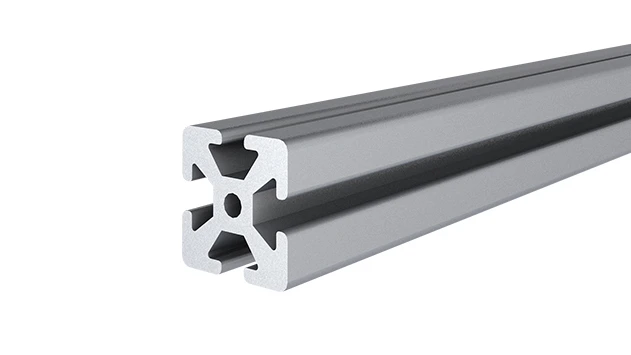
4040F is a 4.00x4.00 CM fractional 40 series square extrusion T-slot profile with four side open T-slots, each side with 4.00cm face. The profile has align-a-grooves to assist in aligning connecting profiles.
Aerospace manufacturing is a world where precision isn't just a goal—it's a necessity. Every component, from a tiny bracket to a large structural frame, must balance strength, durability, and weight. Why weight? Because in aviation, every gram saved translates to lower fuel consumption, extended range, and reduced operational costs. Over an aircraft's lifetime, those grams add up to millions of dollars in savings. This relentless pursuit of efficiency has led manufacturers to rethink traditional materials and embrace innovative solutions. Enter the 4040F EU Standard Aluminum Profile—a humble-sounding component that's quietly revolutionizing how aerospace parts are designed, built, and assembled.
But what makes this aluminum profile stand out in a industry filled with high-tech materials? It's not just about being "lightweight." It's about being smartly lightweight—strong enough to handle the rigors of aerospace manufacturing, flexible enough to adapt to evolving production needs, and efficient enough to streamline workflows. In this article, we'll dive into how the 4040F profile is becoming a cornerstone of modern aerospace component manufacturing, exploring its properties, applications, and the tangible benefits it brings to the factory floor.
What Is the 4040F EU Standard Aluminum Profile?
First, let's demystify the name. The "4040F" refers to a specific type of aluminum extrusion defined by EU standards. The numbers "4040" indicate its cross-sectional dimensions: 40mm by 40mm, a common size for structural framing. The "F" typically denotes a specific groove design or flange configuration, optimized for compatibility with a wide range of aluminum profile accessories—think brackets, connectors, and panels. Unlike generic aluminum bars, this profile is engineered with precision T-slots running along its length, allowing for easy attachment of components without welding or drilling. It's a modular building block, designed to be part of a system rather than a standalone piece.
But the 4040F isn't just about convenience. It's crafted from high-grade aluminum alloys, often 6063 or 6061, known for their excellent strength-to-weight ratio and corrosion resistance. These alloys undergo a controlled extrusion process, where heated aluminum is pushed through a die to form the precise 40x40mm shape with T-slots. The result? A profile that's not only lightweight but also remarkably rigid, capable of supporting heavy loads while maintaining dimensional stability—critical for aerospace applications where component alignment is non-negotiable.
Why Aerospace Manufacturing Needs Lightweight, Modular Solutions
Aerospace component manufacturing is a complex dance of conflicting demands. On one hand, parts must be strong enough to withstand extreme forces during flight—turbulence, pressure changes, and structural stress. On the other hand, they must be as light as possible to improve fuel efficiency. This balance is even more critical for electric or hybrid aircraft, where battery weight is already a limiting factor.
Traditional manufacturing setups often relied on steel structures: heavy workbenches bolted to the floor, fixed material racks, and rigid assembly lines. While steel is strong, its weight makes it cumbersome. Moving a steel workbench to reconfigure a production line requires heavy machinery and downtime. Steel also corrodes over time, demanding regular maintenance in humid or industrial environments. For aerospace manufacturers, where production lines frequently shift to accommodate new aircraft models or component designs, this rigidity is a liability.
Here's where the 4040F profile shines. Its aluminum construction cuts weight by roughly 60% compared to steel (aluminum has a density of ~2.7 g/cm³ vs. steel's ~7.8 g/cm³), making it easy to handle and reposition. Its modular design, paired with aluminum profile accessories like joints, casters, and brackets, allows for quick assembly and disassembly. Need to adjust a workbench height? Swap out a few brackets. Want to add a new shelf to a material rack? Slide in a new profile section and secure it with T-slot nuts. This flexibility reduces downtime, speeds up reconfiguration, and lets manufacturers adapt to new projects without overhauls.

Key Applications in Aerospace Component Manufacturing
The 4040F profile isn't a one-trick pony. Its versatility has made it a staple in several critical areas of aerospace manufacturing. Let's explore some of its most impactful applications:
1. Assembly Workbenches
Aerospace assembly requires workbenches that are stable, ergonomic, and adaptable. 4040F profiles form the backbone of these workstations, often paired with aluminum honeycomb panels or anti-static surfaces (essential for handling sensitive electronics). What makes them special? Adjustability. Using aluminum profile accessories like height-adjustable legs or tilting brackets, workers can customize the bench to their height, reducing fatigue during long shifts. Casters (another accessory) can be added to make benches mobile, allowing teams to move workstations closer to large components like wing sections or engine parts, eliminating unnecessary walking and saving time.
Take, for example, the assembly of avionics components—small, delicate parts that require precision handling. A 4040F workbench can be fitted with tool holders, LED task lighting, and ESD (electrostatic discharge) mats, all secured via T-slots. If the production line switches to a new avionics model with different tooling needs, the bench can be reconfigured in hours, not days. This adaptability is a game-changer for manufacturers juggling multiple projects.
2. Material Racks and Storage Systems
Aerospace parts come in all shapes and sizes—from tiny fasteners to large composite panels. Storing these efficiently is key to maintaining a lean workflow. 4040F profiles are used to build modular material racks that can be tailored to specific part dimensions. Unlike fixed steel racks, these systems can grow or shrink as inventory needs change. Need to add a shelf for longer bolts? Simply cut a 4040F section to length, attach it with corner brackets, and secure it to the rack frame. The T-slots also allow for adding dividers, label holders, or even roller tracks (more on that next) to slide heavy parts in and out with minimal effort.
One aerospace supplier in Germany, for instance, replaced its steel storage racks with 4040F-based systems and reported a 30% increase in storage density. By customizing shelf heights to fit specific components—rather than using generic steel shelving—they could store more parts in the same floor space, freeing up room for additional production lines.
3. Roller Track Conveyors
Moving components between workstations is a critical part of aerospace manufacturing. Dropping or damaging a part during transport can lead to costly delays or safety risks. Roller track systems, often built with 4040F profiles and aluminum guide rails, provide a smooth, controlled way to move parts. The 4040F frame supports the roller track, while T-slots allow for easy mounting of guide rails to keep parts aligned. Whether it's a lightweight circuit board or a heavier engine component, these conveyors reduce manual lifting, lowering injury risks and speeding up material flow.
In one case, a manufacturer of landing gear components switched from manual cart transport to a 4040F-based roller track system. The result? A 25% reduction in time spent moving parts between machining and assembly stations, and a 50% drop in reported strains among workers. The system's modularity also meant they could add curves or branches to the track as production expanded, without rebuilding from scratch.
How 4040F Stacks Up: A Comparison with Traditional Materials
To truly appreciate the 4040F's value, let's compare it to two common alternatives in manufacturing: mild steel and generic aluminum profiles. The table below highlights key factors like weight, strength, and adaptability—critical for aerospace applications.
| Feature | 4040F EU Standard Aluminum Profile | Mild Steel (1.5mm thickness) | Generic 40x40mm Aluminum Profile (Non-EU Standard) |
|---|---|---|---|
| Density (g/cm³) | 2.7 | 7.8 | 2.7 |
| Weight (per meter, kg) | ~1.2 | ~3.5 | ~1.1 |
| Tensile Strength (MPa) | 200-250 (alloy-dependent) | 370-460 | 150-180 (lower-grade alloy) |
| Corrosion Resistance | High (natural oxide layer) | Low (requires painting/coating) | Medium (inconsistent finishing) |
| Modularity (with accessories) | High (T-slots, EU-standard accessories) | Low (requires welding/drilling) | Medium (limited accessory compatibility) |
| Cost (per meter, approximate) | $15-20 | $8-12 | $10-14 |
| Lead Time for Customization | 1-2 days (with standard accessories) | 1-2 weeks (welding, painting) | 3-5 days (limited accessory options) |
The data tells a clear story: While mild steel is stronger, its weight and lack of adaptability make it impractical for dynamic aerospace production lines. Generic aluminum profiles are lighter but often use lower-grade alloys, sacrificing strength, and their non-standard design limits accessory compatibility. The 4040F, meanwhile, strikes a balance—lightweight, strong enough for most manufacturing loads, and fully compatible with a wide range of aluminum profile accessories. Its higher upfront cost is offset by lower installation time, reduced maintenance, and long-term flexibility.
The Role of Aluminum Profile Accessories: Turning Frames into Systems
The 4040F profile is only as good as the accessories that complement it. These small, often overlooked components—joints, brackets, casters, and guide rails—transform a simple aluminum extrusion into a fully functional system. For aerospace manufacturers, this ecosystem of parts is what makes the 4040F truly indispensable.
Take joints, for example. Internal rotary aluminum joints allow 4040F sections to pivot, creating foldable workbenches or adjustable material racks. Parallel fixation joints secure two profiles side-by-side, doubling load capacity for heavier components. Even something as simple as a T-slot nut and bolt becomes critical: these small fasteners slide into the profile's T-slots, letting workers attach accessories without drilling holes, preserving the profile's integrity.
Casters are another unsung hero. Heavy-duty swivel casters with brakes turn static workbenches into mobile workstations, ideal for chasing large components like fuselage sections. For cleanrooms or sensitive assembly areas, non-marking caster wheels prevent floor scratches, maintaining a sterile environment. And when precision is needed, leveling feet (adjustable via T-slots) ensure workbenches stay stable, even on uneven factory floors.
Perhaps most importantly, these accessories are standardized. EU standards ensure that a bracket from one supplier fits a 4040F profile from another, giving manufacturers the freedom to mix and match parts. This interoperability reduces supply chain risks and makes it easy to source replacements or upgrades.
Lean Manufacturing: Aligning with Aerospace's Efficiency Goals
Aerospace manufacturing thrives on lean principles—eliminating waste, optimizing workflows, and continuous improvement. The 4040F profile aligns perfectly with this mindset, supporting lean initiatives in tangible ways.
Consider waste reduction. Traditional steel setups often require overbuilding: a workbench might be designed to support 500kg, even if it only needs to hold 200kg, because modifying it later is too hard. With 4040F, manufacturers can build to exact specifications, using aluminum profile accessories to reinforce only where needed. This "right-sizing" cuts material waste and reduces costs.
Space optimization is another area. Modular 4040F systems take up less floor space than bulky steel racks, freeing up room for additional production lines or inventory. In one facility, a switch to 4040F material racks reduced storage footprint by 30%, allowing the company to add a new assembly cell without expanding the building.
Perhaps most impactful is the support for "just-in-time" production. Aerospace manufacturers often produce components in small batches, requiring frequent line reconfigurations. The 4040F's quick assembly/disassembly lets teams retool in hours, not days, ensuring production keeps pace with demand. This agility is critical in an industry where delays can cost millions.
Looking Ahead: The Future of 4040F in Aerospace
As aerospace manufacturing evolves—with trends like electric aviation, additive manufacturing, and smart factories—the 4040F profile is poised to play an even bigger role. Here's what to watch for:
Advanced Alloys: Suppliers are developing new aluminum alloys for 4040F profiles that offer higher strength-to-weight ratios, making them suitable for even heavier aerospace components. These alloys could open doors to using 4040F in structural testing rigs or temporary assembly jigs for airframe parts.
Integration with Smart Tech: T-slots aren't just for mechanical accessories. They're increasingly used to mount sensors, cameras, or IoT devices. Imagine a 4040F workbench with built-in sensors that track tool usage or monitor vibration during assembly—data that can be used to optimize workflows or predict maintenance needs.
Sustainability: Aluminum is 100% recyclable, and the 4040F's modular design means components can be disassembled and reused at the end of their lifecycle. As aerospace companies push for net-zero goals, this recyclability will become a key selling point.
Conclusion: More Than a Profile—A Catalyst for Innovation
The 4040F EU Standard Aluminum Profile may not grab headlines like carbon fiber composites or 3D-printed engines, but its impact on aerospace manufacturing is undeniable. It's a testament to the power of "small" innovations—materials and designs that solve everyday challenges in big ways. By combining lightweight strength, modularity, and adaptability, it's helping manufacturers build better components, faster, with fewer resources.
For aerospace, where the margin for error is zero and the drive for efficiency is endless, the 4040F profile isn't just a tool. It's a partner in progress. As aircraft become lighter, more efficient, and more advanced, the humble aluminum extrusion will be right there, supporting the next generation of aerospace innovation—one T-slot at a time.