- Company Articles
- Products and Technology
- Solution
- 4040F EU Standard Aluminum Profile in Automotive Parts Production: Lightweight Solutions

4040F EU Standard Aluminum Profile in Automotive Parts Production: Lightweight Solutions
Related Product
4040F EU Standard Aluminum Profile
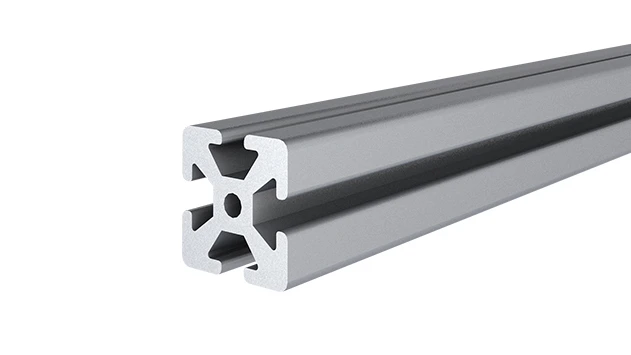
4040F is a 4.00x4.00 CM fractional 40 series square extrusion T-slot profile with four side open T-slots, each side with 4.00cm face. The profile has align-a-grooves to assist in aligning connecting profiles.
Walk into any modern automotive production facility, and you'll be met with a symphony of precision: robots welding frames, workers assembling intricate components, and conveyor belts gliding parts from station to station. But behind this seamless operation lies a hidden challenge: balancing speed, durability, and weight—three factors that can make or break a manufacturer's bottom line. As the industry shifts toward electric vehicles (EVs) and stricter emissions regulations, the pressure to cut weight without sacrificing strength has never been greater. Enter the 4040F EU Standard Aluminum Profile: a unassuming yet transformative solution that's quietly revolutionizing how automotive parts are made, stored, and moved.
In this article, we'll explore why this specific aluminum extrusion profile has become a cornerstone of lean manufacturing in automotive plants worldwide. From its role in lightweighting workbenches to its integration with roller track systems, we'll break down how the 4040F profile—and its accompanying aluminum profile accessories—are solving real-world problems for manufacturers. Whether you're a production manager looking to optimize your assembly line or a supplier seeking durable, adaptable tools, this deep dive will show you why the 4040F is more than just a piece of metal—it's a catalyst for efficiency.
The Automotive Industry's Weight Dilemma: Why Every Gram Counts
To understand the 4040F's impact, let's start with the elephant in the factory: weight. For decades, automotive manufacturers relied on steel for its strength, but in an era of EVs and fuel efficiency mandates, steel's heft has become a liability. Consider this: a 10% reduction in vehicle weight can improve fuel efficiency by 6-8% for internal combustion engines, and for EVs, it translates to 5-10% more range— a critical selling point for consumers wary of charging.
But the weight problem isn't limited to the vehicles themselves. Production equipment—workbenches, material racks, conveyor frames—also adds up. A single steel workbench can weigh 200+ kg, making it hard to reposition for line reconfigurations. Heavy racks require reinforced flooring, and clunky conveyor systems guzzle energy. For manufacturers operating on tight margins, these inefficiencies aren't just inconvenient—they're costly.
Enter aluminum extrusion profiles. Lightweight yet strong, aluminum offers a 30-40% weight reduction compared to steel while maintaining comparable tensile strength. And among aluminum profiles, the 4040F EU Standard stands out as a versatile workhorse, designed to tackle the unique demands of automotive production.
What Is 4040F EU Standard Aluminum Profile? A Closer Look
At first glance, the 4040F might seem like just another metal bar—but its design is a masterclass in engineering. Let's break down its key features:
Dimensions and Compliance
The "4040" in its name refers to its cross-section: 40mm by 40mm, a size that strikes a perfect balance between load capacity and maneuverability. The "F" denotes its adherence to EU standards, meaning it meets strict criteria for dimensional accuracy, material quality, and safety—critical for manufacturers operating across Europe or exporting to EU markets.
Material: 6063-T5 Aluminum Alloy
The 4040F is crafted from 6063-T5 aluminum alloy, a material chosen for its exceptional properties: high strength (tensile strength of 180 MPa), excellent corrosion resistance, and ease of machining. Unlike steel, it won't rust, even in factories where oils, coolants, and humidity are constant. And because it's anodized—treated with an electrolytic process to create a protective oxide layer—it stands up to scratches and wear, ensuring a long service life.
T-Slot Design: The Secret to Versatility
Perhaps the 4040F's most defining feature is its T-slot design—longitudinal grooves running the length of the profile. These slots allow for quick, tool-free attachment of accessories: brackets, shelves, casters, and more. No drilling, welding, or heavy machinery required—just slide a T-slot nut into the groove, tighten a bolt, and you're ready to go. This modularity is a game-changer for lean manufacturing, where adaptability is key.
| Feature | Benefit for Automotive Production |
|---|---|
| 40x40mm Cross-Section | Supports medium loads (up to 500kg per linear meter) without bending, ideal for workbenches and racks. |
| T-Slot Grooves | Enables quick reconfiguration of tools and accessories, reducing downtime during line changes. |
| 6063-T5 Aluminum Alloy | 30-40% lighter than steel, with corrosion resistance for long-term use in factory environments. |
| EU Standard Compliance | Ensures compatibility with EU-certified accessories and meets safety regulations for global operations. |

Applications in Automotive Production: Where 4040F Shines
The 4040F isn't a one-trick pony. Its versatility makes it indispensable across multiple stages of automotive parts production. Let's explore three key applications:
1. Workbenches: The Heart of Assembly Stations
Ask any automotive assembly worker, and they'll tell you: a good workbench can make the difference between a productive shift and a frustrating one. Traditional steel workbenches are sturdy but immovable; wooden ones warp under heavy tools. The 4040F changes the game with lightweight, customizable workstations.
Take, for example, a workstation assembling dashboard components. Using 4040F profiles as the frame, manufacturers can add:
-
Adjustable shelves
(via T-slot brackets) to store screws, clips, and small parts at arm's reach.
-
Tool holders
for power drills and screwdrivers, keeping tools organized and reducing time spent searching.
-
Caster wheels
(a key aluminum profile accessory) to make the bench mobile, so workers can reposition it for team-based assembly or line reconfigurations.
-
ESD mats
(for electronics assembly) to prevent static damage to sensitive components like infotainment systems.
The result? A workstation that weighs 60-70% less than steel equivalents, cuts setup time by 50%, and adapts to new tasks in minutes—no welding or heavy lifting required.
2. Material Racks and Storage: Organizing for Lean Efficiency
In automotive production, disorganized storage is a silent productivity killer. Parts get lost, workers waste time searching for inventory, and overstocked racks take up valuable floor space. The 4040F profile solves this with modular material racks that align with lean principles like "just-in-time" inventory.
Consider a "material rack b (3 row and 3 floor)" design—common in automotive plants for storing plastic trim pieces or small metal brackets. Built with 4040F uprights and crossbars, this rack can be customized with:
-
Dividers
to separate different part numbers, preventing mix-ups.
-
Label holders
(slotted into T-slots) for clear inventory tracking.
-
Roller tracks
(another key accessory) to let bins glide forward as parts are used, ensuring first-in, first-out (FIFO) rotation and reducing waste.
Because the 4040F is lightweight, these racks can be installed without reinforced flooring, and their modular design means adding or removing shelves is as simple as loosening a few bolts—perfect for scaling up or down with production demands.
3. Conveyor and Roller Track Systems: Moving Parts with Less Energy
Conveyor systems are the arteries of automotive plants, moving parts from stamping to painting to assembly. But traditional steel conveyors are energy hogs, thanks to their weight. The 4040F profile lightens the load—literally—by serving as the frame for roller track systems.
Roller tracks built with 4040F profiles and aluminum guide rails (like "aluminum guide rail a" or "plastic roller track guide rail yellow") glide parts with minimal friction. The lightweight frame reduces strain on motors, cutting energy use by 15-20%. And because the T-slot design allows easy adjustment of roller spacing, manufacturers can adapt the track to different part sizes—from small fasteners to larger door panels.
One automotive supplier in Germany reported saving €12,000 annually on energy costs after replacing steel roller track frames with 4040F aluminum—proof that lightweighting equipment pays off.
Aluminum Profile Accessories: The Glue That Holds It All Together
A profile is only as good as its accessories, and the 4040F's ecosystem of aluminum profile accessories is what truly unlocks its potential. These small but mighty components turn basic profiles into fully functional systems:
- 90° Aluminum Profile Connectors: These L-shaped brackets join two 4040F profiles at right angles, forming the corners of workbenches or racks. No drilling—just slide them into the T-slot and tighten.
- End Caps: Plastic or aluminum caps that snap onto profile ends, preventing dust buildup and protecting workers from sharp edges.
- Roller Track Placon Mounts: These brackets attach roller tracks to 4040F profiles, ensuring smooth part flow in conveyor systems. Options like "roller track placon mount for aluminum profile flat" or "center support bracket" add stability for heavy loads.
- Caster Accessories: From swivel wheels to brake mechanisms, these let you turn static workbenches into mobile carts—ideal for kitting parts or moving tools between stations.
- T-Slot Nuts and Bolts: The unsung heroes of the system, these fasteners secure accessories to the profile without damaging the aluminum.
The best part? All these accessories are standardized, meaning you can mix and match components from different suppliers (as long as they meet EU standards) to create custom solutions. This flexibility is a boon for manufacturers with unique workflows or legacy equipment that needs upgrading.
Sustainability: Aluminum's Green Edge in a Carbon-Conscious Industry
Today's automotive manufacturers aren't just focused on efficiency—they're under pressure to reduce their carbon footprint. Governments worldwide are tightening emissions regulations, and consumers are increasingly choosing brands with strong sustainability credentials. Here, the 4040F profile delivers another win: aluminum is 100% recyclable, with no loss in quality.
When a 4040F workbench or rack reaches the end of its life, it can be melted down and reused to make new profiles—using just 5% of the energy required to produce primary aluminum. This closed-loop cycle aligns with automotive giants' goals to achieve carbon neutrality by 2030-2050.
Additionally, the 4040F's lightweight design reduces transportation emissions. A truckload of aluminum profiles carries 3-4 times more units than steel, cutting fuel use and carbon output during delivery. For global suppliers shipping to plants across continents, this adds up to significant environmental savings.
Choosing the Right Supplier: What to Look For
Not all 4040F profiles are created equal. To maximize the benefits, partner with a supplier who understands automotive production's unique demands. Here's what to prioritize:
1. Quality Certifications
Look for suppliers with ISO 9001 certification (quality management) and compliance with EU standards (EN 755 for aluminum extrusions). This ensures consistent dimensional accuracy and material strength—critical for safety and performance.
2. Accessory Availability
A reliable supplier should stock a full range of aluminum profile accessories—from connectors to casters—to avoid delays in setup. Bonus points if they offer custom machining for unique parts, like specialized brackets for odd-shaped components.
3. Technical Support
Even the most modular system can benefit from expert guidance. Choose a supplier with engineers who can help design workbenches, racks, or conveyor systems tailored to your production line. Look for case studies or testimonials from other automotive clients to gauge their expertise.
The Bottom Line: 4040F Profile as a Catalyst for Automotive Innovation
In the fast-paced world of automotive production, every tool, every process, and every material choice matters. The 4040F EU Standard Aluminum Profile isn't just another component—it's a strategic investment in efficiency, flexibility, and sustainability. By combining lightweight strength, modular design, and a robust ecosystem of accessories, it helps manufacturers tackle the industry's biggest challenges: reducing weight, cutting costs, and adapting to change.
Whether you're building workbenches for EV battery assembly, organizing parts for just-in-time delivery, or upgrading conveyor systems to save energy, the 4040F profile delivers results. It's a testament to how smart engineering—paired with the right accessories—can transform a factory floor from a place of chaos to a hub of precision and productivity.
So, the next time you walk through an automotive plant, take a closer look at the racks, workbenches, and conveyors. Chances are, you'll spot the 4040F profile hard at work—quietly powering the future of manufacturing, one lightweight, adaptable component at a time.