- Company Articles
- Products and Technology
- Product knowledge
- 4040F EU Standard Aluminum Profile in Home Appliance Manufacturing: Assembly Jigs & Fixtures

4040F EU Standard Aluminum Profile in Home Appliance Manufacturing: Assembly Jigs & Fixtures
Related Product
4040F EU Standard Aluminum Profile
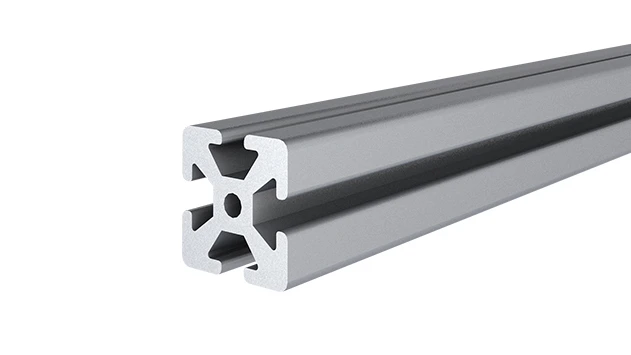
4040F is a 4.00x4.00 CM fractional 40 series square extrusion T-slot profile with four side open T-slots, each side with 4.00cm face. The profile has align-a-grooves to assist in aligning connecting profiles.
Walk into any modern home appliance factory, and you'll witness a carefully choreographed dance of precision. Robotic arms glide smoothly, workers assemble components with focused attention, and conveyor belts carry parts from station to station—all working toward a common goal: building reliable, high-quality appliances like refrigerators, washing machines, and ovens. But behind this seamless operation lies an unsung hero: the assembly jigs and fixtures that hold, align, and secure parts at every step. These tools are the backbone of manufacturing, ensuring consistency, reducing errors, and keeping production lines moving. Yet, as appliance designs evolve faster than ever—with new features, sleeker aesthetics, and smarter technology—manufacturers need jigs and fixtures that can keep up. That's where the 4040F EU Standard Aluminum Profile shines. More than just a material, it's a versatile solution that's redefining how factories design, build, and adapt their production tools.
What is the 4040F EU Standard Aluminum Profile?
At first glance, the 4040F might seem like just another piece of metal, but its design and specifications make it a standout in industrial applications. Let's break it down: the "4040" refers to its cross-section—40mm in width and 40mm in height—creating a square profile that balances strength and versatility. The "F" denotes a specific EU standard design, often indicating a flanged or grooved structure that's optimized for compatibility with accessories. Made from high-grade aluminum alloy (typically 6063 T5, a common choice for extrusions), it's lightweight yet surprisingly strong, resistant to corrosion, and easy to work with.
EU standards are key here. Compliance ensures consistent quality, dimensional accuracy, and safety across manufacturers. For home appliance factories, this means they can source 4040F profiles from different suppliers and still expect the same fit and performance—critical for maintaining production consistency. The extrusion process, where aluminum is pushed through a die to create the profile's shape, results in a smooth, uniform surface with integrated T-slots. These slots are game-changers: they allow accessories like nuts, bolts, brackets, and connectors to slide into place, enabling quick assembly and modification without welding or drilling.
Why 4040F is a Game-Changer for Home Appliance Manufacturing
Home appliance manufacturing is a high-stakes industry. Factories produce thousands of units daily, and even small errors in part alignment can lead to defective products, costly recalls, or frustrated customers. Traditional materials for jigs and fixtures—like steel or wood—often fall short. Steel is strong but heavy, making jigs difficult to move or reconfigure. Wood warps over time, compromising precision. Plastic lacks the strength for heavy-duty use. The 4040F aluminum profile addresses these pain points head-on, offering a unique blend of benefits:
Lightweight yet Durable: Aluminum is about one-third the weight of steel, so jigs and fixtures built with 4040F are easier to handle. A worker can reposition a 4040F-based jig without heavy machinery, reducing strain and downtime. Yet, it's strong enough to support the weight of appliance parts—think refrigerator doors, washing machine drums, or oven panels—without bending or warping.
Corrosion Resistance: Factories aren't always clean environments. Grease, coolant, and moisture can take a toll on metal tools. Aluminum's natural resistance to corrosion means 4040F profiles last longer, even in harsh conditions, reducing replacement costs.
Modularity: The T-slots in 4040F profiles are like built-in highways for accessories. Need to adjust a jig to fit a new oven model? Slide a bracket into the T-slot, tighten a nut, and you're done. No need to cut new metal or weld parts—changes take minutes, not days. This modularity is a lifesaver in an industry where product lines evolve rapidly.
Sustainability: Aluminum is 100% recyclable, aligning with the growing focus on eco-friendly manufacturing. When a jig reaches the end of its life, the 4040F profile can be melted down and repurposed, reducing waste.

4040F in Action: Assembly Jigs for Precision
Assembly jigs are the unsung heroes of part alignment. They hold components in place during welding, fastening, or bonding, ensuring every part fits exactly where it should. For home appliances, which rely on tight tolerances (think: a refrigerator door that seals perfectly to keep food cold), jigs are non-negotiable. 4040F profiles excel here, offering the precision and flexibility needed to build jigs for even the most complex parts.
Take, for example, a jig used to assemble washing machine drum brackets. The drum spins at high speeds, so its brackets must be aligned within 0.5mm to prevent vibration and noise. A 4040F-based jig can be designed with adjustable stops and clamps, all secured via T-slots. When the drum design updates—say, to a larger capacity—the jig's brackets can be repositioned using aluminum profile accessories like sliding nuts and knobs. No need to build a new jig from scratch; the 4040F frame stays, and only the accessories change. This adaptability cuts lead times for new product launches, a critical advantage in a market where consumers crave the latest features.
Another example: oven door hinges. These small but vital parts must align perfectly to ensure the door opens and closes smoothly and seals heat inside. A 4040F jig can hold the hinge plates at the exact angle needed for welding, with interchangeable pins to accommodate different hinge sizes. After welding, the jig can be quickly reconfigured for the next batch of hinges—no downtime, no wasted materials.
Fixtures Built with 4040F: From Testing to Production
Fixtures go beyond assembly—they're used for testing, inspection, and production line support. In home appliance factories, fixtures might hold a control panel while sensors check for electrical connections, or guide a part along a conveyor belt. 4040F's modularity makes it ideal for these applications, as fixtures often need to adapt to different product models.
Consider a testing fixture for refrigerator temperature sensors. The fixture must hold the sensor in place while a machine simulates different temperatures, ensuring it reads accurately. With 4040F, engineers can design a fixture with adjustable arms that clamp the sensor, and T-slot accessories that mount the testing equipment. When a new sensor model is introduced—smaller, with different wiring—the arms and equipment can be repositioned in minutes. Compare this to a steel fixture, which would require cutting and welding new mounts, taking hours or days.
Production line fixtures also benefit from 4040F's design. For example, a material rack used to store and transport oven heating elements might be built with 4040F profiles and roller tracks (another common accessory). The T-slots allow the roller tracks to be mounted at specific angles, ensuring elements slide smoothly onto the assembly line. If the heating elements change size, the tracks can be adjusted or replaced without rebuilding the entire rack.
Workbenches: The Heart of the Assembly Line
A workbench is more than just a table—it's a command center for assembly workers. It's where parts are organized, tools are stored, and final touches are added to appliances. 4040F has become a top choice for building custom workbenches, thanks to its ability to adapt to ergonomic needs and workflow demands.
Imagine a workbench in a dishwasher assembly line. Workers stand here for hours, attaching hoses and wiring to the dishwasher base. A 4040F workbench can be adjusted to the ideal height (typically 80-90cm) to reduce back strain. T-slots along the edges hold tool holders for screwdrivers and pliers, keeping essentials within arm's reach. A shelf below, mounted via brackets, stores extra parts. For sensitive electronics—like the dishwasher's control board—ESD (electrostatic discharge) accessories can be added to the workbench, preventing static electricity from damaging components.
Many factories opt for single-deck workbenches without casters for stationary tasks, where stability is key. Others add casters (another accessory) to create mobile workstations that can follow the production line. The beauty of 4040F is that the same basic frame can be customized with different tops (wood, metal, or anti-static plastic), shelves, and accessories to fit any task.
Aluminum Profile Accessories: The Glue That Holds It All Together
A profile is only as good as its accessories, and 4040F's ecosystem of aluminum profile accessories is what truly unlocks its potential. These small but mighty components turn a simple aluminum bar into a fully functional jig, fixture, or workbench. Let's look at some key players:
T-Slot Nuts and Bolts: These slide into the T-slots of the 4040F profile, allowing brackets, shelves, or tools to be mounted anywhere along the slot. They're easy to tighten and loosen, making reconfiguration a breeze.
Angle Brackets: Used to connect profiles at 90-degree angles, these brackets add structural support to jigs and workbenches. They come in various sizes to fit different profile widths.
End Caps: These plastic or aluminum caps fit over the ends of the profile, protecting workers from sharp edges and giving the finished product a clean look.
Roller Tracks: For material handling, roller tracks mount to 4040F profiles, creating gravity-fed racks that move parts along the production line. They're essential for flow racks, where efficiency is key.
Clamps and Stops: Adjustable clamps hold parts in place during assembly, while stops ensure consistent positioning. Both can be slid along T-slots to fit different part sizes.
These accessories are designed to work seamlessly with 4040F, so engineers don't have to waste time designing custom components. It's like building with modular blocks—mix and match accessories to create exactly what you need, when you need it.
Integrating 4040F into Lean Manufacturing Systems
Lean manufacturing—a philosophy focused on eliminating waste and continuous improvement—has become a cornerstone of modern home appliance production. Waste comes in many forms: excess inventory, downtime, overproduction, or unnecessary movement. 4040F aligns perfectly with lean principles, helping factories reduce waste and boost efficiency.
Quick Changeovers: When a factory switches from producing one appliance model to another, traditional jigs and fixtures often need to be replaced entirely. With 4040F, changeovers are faster. Workers can reconfigure existing jigs with new accessories, reducing downtime from hours to minutes. This flexibility lets factories produce smaller batches of specialized appliances without sacrificing efficiency—a key lean goal.
Reduced Inventory: Instead of storing dozens of dedicated jigs for different parts, factories can stock a few 4040F profiles and a variety of accessories. This cuts down on storage space and inventory costs.
Continuous Improvement: Lean thrives on feedback—workers identifying ways to improve processes. 4040F makes it easy to test new ideas. A worker might suggest adjusting a jig's height to reduce reaching; with T-slots and brackets, the change can be made that same shift, and its impact measured immediately.
For example, a factory producing refrigerators might notice that a jig for door handles is causing delays. The handle design changed slightly, and the old steel jig doesn't fit. With 4040F, the maintenance team can modify the jig in 30 minutes by adjusting the clamps and adding a new bracket, instead of waiting days for a new steel jig to be fabricated. This not only saves time but also empowers workers to solve problems quickly.
How 4040F Compares to Other Aluminum Extrusion Profiles
The 4040F isn't the only aluminum profile on the market. Factories can choose from smaller profiles (like 2020 or 3030) or larger ones (like 4080). Each has its place, but 4040F strikes a balance that's ideal for home appliance manufacturing. The table below compares 4040F with other common profiles:
| Profile Type | Cross-Section (mm) | Typical Load Capacity (kg/m) | Best For | Cost Relative to 4040F |
|---|---|---|---|---|
| 2020 EU Standard | 20x20 | 80-120 | Small fixtures, electronics assembly, lightweight tools | 30% lower |
| 3030 EU Standard | 30x30 | 150-200 | Medium fixtures, small workbenches, test racks | 15% lower |
| 4040F EU Standard | 40x40 | 250-300 | Assembly jigs, workbenches, heavy fixtures, material racks | Base (100%) |
| 4080 EU Standard | 40x80 | 400-500 | Large machinery, industrial workbenches, heavy-duty racks | 40% higher |
As the table shows, 4040F offers the sweet spot between load capacity and cost. For most home appliance jigs and fixtures, it's strong enough to handle the workload without the added expense of a larger profile like 4080. Smaller profiles, while cheaper, lack the strength for heavy parts like oven doors or washing machine drums.
A Day in the Life: 4040F in a Refrigerator Factory
To truly understand 4040F's impact, let's walk through a typical day at a refrigerator factory. The line produces 500 refrigerators daily, with models ranging from compact 180L units to large 600L French-door models. Here's how 4040F shapes the process:
7:00 AM: Setup The night shift produced compact refrigerators; today, the line switches to French-door models. Workers gather around the first assembly station—a jig that holds the refrigerator's outer shell. Using T-slot nuts and brackets, they adjust the jig's clamps to fit the larger shell size. The change takes 20 minutes, down from 2 hours with the old steel jig.
9:00 AM: Door Assembly At the door station, a 4040F workbench with ESD protection holds the French-door panels. Workers attach hinges using a 4040F fixture that ensures the hinges are aligned within 0.2mm. The fixture's adjustable pins let them switch between left and right doors without retooling.
12:00 PM: Material Handling A flow rack built with 4040F and roller tracks delivers insulation panels to the line. The roller tracks, mounted via brackets, let panels slide smoothly to workers, reducing lifting. T-slots on the rack's sides hold labels for different panel sizes, preventing mix-ups.
3:00 PM: Testing Finished refrigerators move to a testing fixture made with 4040F. The fixture holds the fridge door open at 90 degrees while sensors check the seal. If a seal fails, the fixture can be adjusted to test the door alignment, helping workers identify the issue quickly.
5:00 PM: Maintenance The maintenance team replaces a worn roller track on the flow rack. They slide the old track out of the T-slots, insert a new one, and tighten the bolts—done in 15 minutes. With steel racks, this would have required welding and taken hours.
By the end of the day, the line has produced 480 French-door refrigerators—on schedule and with zero major defects. The plant manager notes that since switching to 4040F, changeover time has dropped by 70%, and tooling costs are down by 25%.
The Future of 4040F in Home Appliance Manufacturing
As home appliances become smarter, more connected, and more customizable, the demand for flexible manufacturing solutions will only grow. 4040F is poised to play a central role in this future, thanks to ongoing innovations in aluminum extrusion and accessory design.
One trend is the integration of smart technology. Imagine jigs with built-in sensors that monitor part alignment in real time, sending data to a factory's ERP system. With 4040F's T-slots, these sensors can be easily mounted and repositioned as needed. Another trend is sustainability: aluminum is already recyclable, but new alloys are making 4040F even lighter and stronger, reducing material use.
For small and medium-sized factories, 4040F lowers the barrier to entry for custom tooling. Instead of investing in expensive, one-off steel jigs, they can start with a few 4040F profiles and accessories, then expand as needed. This democratization of manufacturing tools could lead to more innovation in home appliances, as smaller brands gain the ability to compete with larger players.
Conclusion: More Than a Profile—A Partner in Production
The 4040F EU Standard Aluminum Profile is more than just a piece of metal. It's a tool that empowers home appliance manufacturers to build better, faster, and more adaptably. By combining lightweight strength, modularity, and compatibility with a wide range of accessories, it solves the industry's biggest challenges: precision, efficiency, and flexibility.
From assembly jigs that align parts with micrometer accuracy to workbenches that keep workers comfortable and productive, 4040F is the backbone of modern appliance manufacturing. It's a testament to how smart material choices can transform production lines, reduce waste, and ultimately lead to better appliances for consumers.
As the industry continues to evolve, one thing is clear: the 4040F profile won't just keep up—it will lead the way, helping factories turn ideas into products with speed, precision, and confidence.