- Company Articles
- Products and Technology
- Solution
- 4040F EU Standard Aluminum Profile in Lean Management Systems: Reducing Waste & Improving Efficiency

4040F EU Standard Aluminum Profile in Lean Management Systems: Reducing Waste & Improving Efficiency
Related Product
4040F EU Standard Aluminum Profile
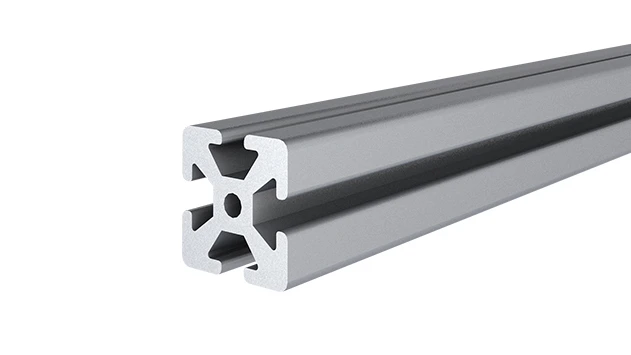
4040F is a 4.00x4.00 CM fractional 40 series square extrusion T-slot profile with four side open T-slots, each side with 4.00cm face. The profile has align-a-grooves to assist in aligning connecting profiles.
Walk into any successful manufacturing facility today, and you'll likely hear the term "lean" thrown around—but lean management is more than just a buzzword. At its core, lean is about one thing: creating more value for customers while wasting less of everything else—time, materials, space, and effort. For decades, companies have focused on optimizing processes, training teams, and refining workflows to achieve this. But here's the thing: even the best processes can stumble if the tools and infrastructure supporting them are stuck in the past.
This is where the right materials come into play. Imagine a workstation that bends to your team's needs, not the other way around. Or a flow rack that adapts to changing production volumes without requiring a complete overhaul. That's the promise of the 4040F EU Standard Aluminum Profile—a humble yet powerful component that's quietly transforming how lean systems operate. In this article, we'll dive into why this specific aluminum extrusion profile has become a cornerstone of modern lean management, how it reduces waste, and why it's a game-changer for efficiency.
The Hidden Cost of Rigid Infrastructure in Traditional Manufacturing
Let's start with a familiar scenario: a mid-sized electronics manufacturer using workbenches made of welded steel and wooden shelves. When the company decides to launch a new product line, the old workbenches are too low for the taller components, so workers hunch over to assemble parts. The wooden shelves, originally built for larger boxes, now leave gaps that small components fall through. To fix this, the team calls in contractors to cut new steel frames and build custom wooden dividers—taking three days of downtime and costing thousands of dollars. Sound familiar?
This is the reality of rigid infrastructure. For years, manufacturers relied on materials like steel and wood for workbenches, racks, and trolleys because they were cheap and readily available. But steel is heavy, hard to modify, and prone to rust. Wood warps, splinters, and can't withstand heavy loads over time. The result? A production floor that's stuck in place, unable to keep up with the fast pace of modern manufacturing. And in lean terms, this rigidity translates directly to waste—specifically, the seven wastes (or "muda") that lean aims to eliminate:
- Transportation waste: Heavy steel trolleys require forklifts to move, slowing down material flow and creating bottlenecks.
- Inventory waste: Fixed-size racks force teams to overstock materials to avoid running out, tying up capital and space.
- Motion waste: Workers stretch, bend, or walk extra steps to reach tools or materials because workbenches aren't customized to their tasks.
- Waiting waste: When production needs change, reconfiguring rigid setups takes days, leaving teams idle.
- Overprocessing waste: Building custom steel structures for one-off tasks adds unnecessary labor and material costs.
The worst part? These wastes are often invisible until you start measuring them. A 2023 study by the Lean Enterprise Institute found that manufacturers using non-modular infrastructure spend up to 15% of their total production time on "unplanned adaptation"—workers adjusting to poorly designed workspaces instead of adding value to products. That's 15% of your team's time, talent, and energy going to waste—all because the tools they use weren't built with flexibility in mind.
Enter the 4040F EU Standard Aluminum Profile: A Lean-Focused Solution
So, what makes the 4040F EU Standard Aluminum Profile different? Let's break it down. First, the "EU Standard" label isn't just a marketing term—it means this profile meets strict European quality standards for strength, consistency, and safety. Unlike generic aluminum extrusions, you won't get variations in thickness or slot alignment that throw off your builds. The "4040" refers to its dimensions: 40mm by 40mm, a sweet spot for balance—small enough to keep structures lightweight, yet large enough to support heavy loads (up to 500kg per linear meter, depending on the setup). And the "F" in 4040F? That's the profile's unique T-slot design—a feature that turns this simple aluminum extrusion into a lean Swiss Army knife.
But the real magic is in the material itself: aluminum extrusion. Unlike steel, aluminum is naturally lightweight (about 1/3 the weight of steel) but surprisingly strong, thanks to the extrusion process that compresses the metal into a dense, uniform shape. It's also corrosion-resistant, so you won't have to worry about rust in humid factories or messy work environments. And because it's non-magnetic and non-sparking, it's safe for sensitive industries like electronics and pharmaceuticals—critical for avoiding costly contamination or accidents.
Then there's the T-slot. Run your finger along the length of a 4040F profile, and you'll notice grooves (slots) along each side. These slots are designed to accept T-nuts, bolts, and accessories—think brackets, shelves, handles, or even wheels—without a single weld. Want to add a tool holder to a workbench? Slide a T-nut into the slot, bolt on the holder, and you're done. Need to raise a shelf by 10cm? Loosen the bolts, adjust, and retighten. This modularity is the key to lean: it turns "permanent" structures into "adaptable" ones, letting you build exactly what you need, when you need it.

How 4040F Aluminum Profile Directly Reduces Lean Waste
Let's get specific: how does the 4040F profile tackle the seven wastes we mentioned earlier? Let's take them one by one.
1. Cutting Transportation Waste: Lightweight, Movable Infrastructure
Transportation waste happens when materials or equipment are moved more than necessary. With traditional steel trolleys, even a small one can weigh 50kg empty—too heavy for a single worker to move. So teams wait for a forklift, or two people struggle to push it, wasting time and energy. The 4040F profile changes this. Since aluminum is 30-50% lighter than steel, a 4040F-based trolley might weigh just 15-20kg empty—light enough for one person to maneuver with ease. Add caster wheels (another key accessory) with brakes, and suddenly, materials glide from station to station without waiting for equipment. This isn't just about speed; it's about flow—one of the core principles of lean. When materials move smoothly, production bottlenecks disappear.
2. Slashing Inventory Waste: Right-Sized Storage with Flow Racks
Inventory waste thrives when storage spaces are too big or too small. A traditional steel rack with fixed shelves might force you to order 100 units of a part to fill the shelf, even if you only need 50. With 4040F, you can build flow racks (a staple of lean material handling) that are sized to your exact needs. For example, a 4040F flow rack for small electronics components might have 3 rows and 3 floors (sound familiar? That's "material rack B" in lean supply terms), with each shelf spaced just 15cm apart to hold exactly 20 units—no more, no less. Add roller tracks (another accessory) to the shelves, and materials slide forward as they're used, following the FIFO (First-In-First-Out) principle to prevent obsolescence. The result? You carry less inventory, free up floor space, and reduce the risk of overstocking.
3. Minimizing Motion Waste: Ergonomic, Custom Workbenches
Motion waste is personal. When a worker has to reach 2 feet to grab a screwdriver 50 times a day, that adds up to 100 feet of unnecessary movement—per worker, per day. Multiply that by 50 workers, and you're looking at 5,000 feet of wasted motion. The 4040F profile solves this with adjustable workbenches that adapt to human needs, not the other way around. Need a taller workbench for assembly? Use longer 4040F legs with height-adjustable feet. Want tools within arm's reach? Add a side shelf using aluminum profile accessories like 90-degree connectors and end caps. Even small touches, like rubber strip inserts in the T-slots to hold pens or small parts, eliminate the need to hunt for tools. The result? Workers move less, focus more, and stay healthier—reducing fatigue and absenteeism.
4. Eliminating Waiting Waste: Fast Reconfiguration for Changing Needs
In manufacturing, change is constant. A customer order might increase, a new part might require a different assembly process, or a team might suggest a better workflow. With traditional infrastructure, adapting to these changes means downtime. With 4040F, it means a quick huddle and a few hours of work. For example, when a medical device manufacturer needed to switch from assembling large monitors to small sensors, their team reconfigured their 4040F workbenches in under two hours: they shortened the tabletop, added smaller bins using T-slot brackets, and lowered the height by 10cm. No contractors, no welding, no downtime. Just a team using basic tools to make the workspace fit the task. That's the power of modularity—waiting waste becomes a thing of the past.
From Concept to Reality: 4040F in Action
Let's put this all together with a real-world example. Take "Acme Electronics," a fictional (but realistic) manufacturer of smartphone components. Before switching to 4040F, Acme's production line struggled with:
- Workers spending 20 minutes per shift searching for tools (motion waste).
- Steel flow racks that rusted, leaving metal shavings on components (quality waste).
- Monthly downtime for reconfiguring workbenches (waiting waste).
Acme's lean team decided to invest in 4040F aluminum profiles and accessories. Here's what changed:
Step 1: Workbench Overhaul – They replaced steel workbenches with 4040F frames, adding height-adjustable legs and tool holders mounted via T-slots. Workers now have tools within 12 inches of their hands, cutting search time to 5 minutes per shift. Ergonomic height adjustment reduced reported back pain by 40%.
Step 2: Flow Rack Redesign – Using 4040F profiles and plastic roller track guide rails (yellow, to match their visual management system), they built flow racks sized for their kanban bins. Each rack now holds exactly 2 days of inventory, cutting overstock by 30% and freeing up 150 sq ft of floor space.
Step 3: Mobile Trolleys – Lightweight 4040F trolleys with caster wheels replaced steel ones. A single worker can now move materials from the warehouse to the line in 5 minutes, down from 15 minutes with the old steel trolleys.
The result? Acme saw a 22% increase in daily production, a 15% drop in material waste, and a 35% reduction in worker absenteeism—all within six months. And because the 4040F system is modular, they've continued to tweak and improve their setup as new products launch. As Acme's plant manager put it: "We used to build our processes around our tools. Now, we build our tools around our processes."
Why "Good Enough" Infrastructure Undermines Lean Success
You might be thinking, "Can't we just use cheaper aluminum profiles or repurpose old steel setups?" The short answer: maybe, but you'll miss out on the full benefits of lean. The 4040F EU Standard isn't just about aluminum—it's about consistency, quality, and compatibility. EU Standard profiles are extruded to precise tolerances, so a 4040F bracket from one supplier will fit a 4040F profile from another. This matters because lean systems thrive on reliability. If your workbench legs are slightly warped or your T-slots don't line up, you'll spend more time fixing janky setups than improving workflows.
Then there's durability. Aluminum extrusion profiles like the 4040F are built to last. Unlike wood, they won't splinter or rot. Unlike steel, they won't rust. And because they're modular, you can replace a single damaged part (like a bent bracket) instead of the entire structure. Over time, this lowers maintenance costs and extends the life of your infrastructure—critical for lean's focus on long-term value.
The Numbers Speak: Cost vs. Value of 4040F
Let's address the elephant in the room: upfront cost. It's true, 4040F aluminum profiles cost more per meter than raw steel or wood. But lean is about total cost , not just initial price. Let's compare a traditional steel workbench to a 4040F aluminum workbench over five years:
| Aspect | Traditional Steel Workbench | 4040F Aluminum Workbench |
|---|---|---|
| Initial Cost | $300 (materials + welding) | $450 (profile + accessories + assembly) |
| Setup Time | 8 hours (requires welding, painting) | 2 hours (bolt-together, no special tools) |
| Reconfiguration Cost (3 times/year) | $200/year (contractors, new steel parts) | $0/year (in-house team, reusable parts) |
| Maintenance Cost | $150/year (rust removal, repainting, welding repairs) | $20/year (occasional T-nut replacement) |
| Waste Reduction Impact | Minimal (fixed design limits adaptability) | Estimated $5,000/year (labor, materials, downtime saved) |
| 5-Year Total Cost | $300 + ($200*5) + ($150*5) = $1,850 | $450 + $0 + ($20*5) = $550 + $5,000 waste savings = Net gain of $4,450 |
The math is clear: while the 4040F workbench costs more upfront, the savings from reduced waste, lower maintenance, and zero reconfiguration costs make it exponentially more valuable over time. For lean-focused companies, this isn't an expense—it's an investment in continuous improvement.
Choosing the Right 4040F Accessories: The Icing on the Lean Cake
A 4040F profile is only as good as the accessories you pair with it. Fortunately, the EU Standard ecosystem offers a wide range of aluminum profile accessories designed to maximize flexibility. Here are the must-haves for lean systems:
- Internal Rotary Aluminum Joints: These allow profiles to pivot, making foldable workbenches or adjustable shelves possible. Perfect for tight spaces or multi-task workstations.
- Plastic Roller Track Guide Rails: Available in yellow or grey, these snap into 4040F profiles to create smooth-flowing material racks. The color-coding helps with visual management (e.g., yellow for incoming materials, grey for outgoing).
- End Caps and Rubber Strips: These finish the ends of profiles, preventing sharp edges and reducing noise when parts are placed on shelves. Small touches, but they add up to a safer, quieter workspace.
- Swivel Roller Balls: 1-inch or 0.5-inch balls that mount to workbench surfaces, letting heavy components glide into place without lifting. A game-changer for reducing motion waste.
The best part? These accessories are designed to work together seamlessly. A 4040F profile, a rotary joint, and a roller track rail can be combined in minutes to build a custom flow rack, workbench, or trolley—no engineering degree required. This accessibility empowers frontline teams to suggest and implement improvements, a core principle of lean's "respect for people" philosophy.
Final Thoughts: Lean Systems Need Lean Tools
At the end of the day, lean management isn't just about processes—it's about creating a system where every tool, every workspace, and every material contributes to value, not waste. The 4040F EU Standard Aluminum Profile embodies this idea. It's lightweight but strong, simple but versatile, and affordable in the long run. By choosing 4040F, manufacturers aren't just buying aluminum—they're investing in a culture of adaptability, where change is easy, waste is minimized, and workers can focus on what they do best: creating value for customers.
So, the next time you walk through your production floor, take a look at your workbenches, racks, and trolleys. Are they holding your team back, or enabling them to thrive? If it's the former, maybe it's time to ask: What would a little flexibility—powered by 4040F—do for your lean journey?