- Company Articles
- Products and Technology
- Product knowledge
- 4040F EU Standard Aluminum Profile in Mechanical Manufacturing: Structural Stability & Durability

4040F EU Standard Aluminum Profile in Mechanical Manufacturing: Structural Stability & Durability
Related Product
4040F EU Standard Aluminum Profile
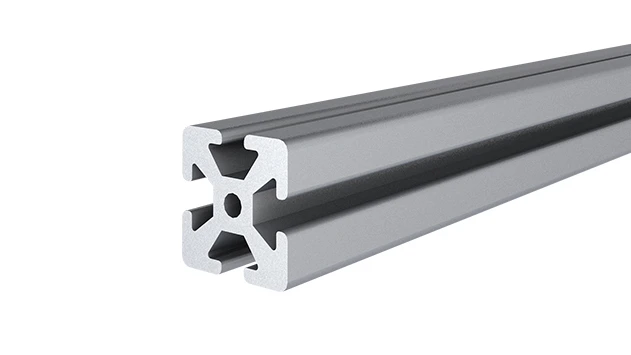
4040F is a 4.00x4.00 CM fractional 40 series square extrusion T-slot profile with four side open T-slots, each side with 4.00cm face. The profile has align-a-grooves to assist in aligning connecting profiles.
In the fast-paced world of mechanical manufacturing, where efficiency, reliability, and adaptability are non-negotiable, the tools and materials we choose can make or break production lines. For decades, manufacturers have searched for solutions that balance strength with flexibility, durability with ease of use, and cost-effectiveness with long-term performance. Enter aluminum extrusion profiles—a game-changer that has quietly revolutionized how factories, assembly plants, and workshops design their workflows. Among these, the 4040F EU Standard Aluminum Profile stands out as a workhorse, trusted by engineers and plant managers alike for its exceptional structural stability and impressive durability. Let's dive into why this unassuming 40x40mm profile has become a cornerstone of modern manufacturing systems.
Meet the 4040F EU Standard Aluminum Profile: More Than Just Metal
Before we explore its technical prowess, let's get to know the 4040F. At first glance, it might seem like just another metal bar, but in reality, it's a precision-engineered component born from the marriage of advanced materials science and practical manufacturing needs. The "4040" in its name refers to its cross-sectional dimensions: 40mm in width and 40mm in height, a size that strikes a perfect balance between compactness and load-bearing capability. The "F" denotes its specific design variant, often characterized by unique T-slot configurations that enhance its versatility when paired with aluminum profile accessories.
What truly sets the 4040F apart is its compliance with EU standards. These standards aren't just bureaucratic checkboxes—they're a promise of quality. From the alloy composition to the extrusion process, every step of its production is governed by strict guidelines to ensure consistency, safety, and performance. Most 4040F profiles are crafted from 6063-T5 aluminum alloy, a material celebrated for its excellent extrudability, high strength-to-weight ratio, and natural resistance to corrosion. This alloy is heated, forced through a die to form the precise 40x40mm shape with integrated T-slots, then aged to achieve optimal hardness. The result? A profile that's not just strong, but also surprisingly lightweight—typically weighing around 1.8-2.2 kg per meter, depending on wall thickness.
But numbers alone don't tell the story. Walk into any modern manufacturing facility, and you'll likely spot the 4040F hard at work: holding up workbenches where technicians assemble delicate electronics, forming the frame of flow racks that keep components moving smoothly along assembly lines, or serving as the backbone of lean systems designed to minimize waste and maximize productivity. Its ubiquity isn't accidental. Manufacturers choose it because it adapts to their needs, not the other way around.
Structural Stability: The Backbone of Reliable Manufacturing Systems
Structural stability is the unsung hero of manufacturing. A wobbly workbench or a sagging flow rack doesn't just slow down production—it can compromise product quality, endanger workers, and lead to costly downtime. The 4040F profile excels here, thanks to a design that prioritizes rigidity and load-bearing capacity without sacrificing flexibility.
Design Features That Enhance Stability
At the heart of the 4040F's stability is its cross-sectional design. Unlike simple square tubes, the 4040F features a closed, rectangular profile with internal reinforcing ribs (depending on the specific variant) that distribute stress evenly across its structure. This design increases the profile's moment of inertia—a key engineering metric that measures resistance to bending. In practical terms, this means when you mount heavy equipment on a 4040F frame or stack materials on a flow rack built with it, the profile is far less likely to warp or flex under pressure.
Then there are the T-slots. Running along the length of the profile, these slots aren't just for attaching accessories—they play a role in structural integrity too. When aluminum profile accessories like brackets, connectors, or panels are secured into the T-slots using bolts or nuts, they create a rigid connection that locks the structure in place. Unlike welded joints, which can weaken over time due to fatigue, T-slot connections allow for controlled distribution of force, reducing stress concentration points and enhancing overall stability.
| Profile Type | Dimensions (mm) | Max Load Capacity (kg/m, vertical) | Moment of Inertia (cm⁴, about X-axis) | Typical Application |
|---|---|---|---|---|
| 4040F EU Standard | 40x40 | 350-450 | 8.5-10.2 | Workbenches, flow racks, machine guards |
| 3030 EU Standard | 30x30 | 200-280 | 3.2-4.1 | Light-duty shelving, small enclosures |
| 4080 EU Standard | 40x80 | 600-750 | 28.3-32.6 | Heavy machinery frames, industrial workstations |
The table above compares the 4040F with two other common profiles, highlighting its sweet spot: it offers nearly double the load capacity of the smaller 3030 profile while remaining significantly lighter and more compact than the larger 4080. This balance makes it ideal for applications where space is limited but strength is still critical—like the workbenches found in electronics assembly plants, where technicians need a stable surface for precise tasks without the bulk of a heavier frame.
Case Study: 4040F Workbench in an Automotive Component Plant
A leading automotive parts manufacturer in Germany recently upgraded its assembly line workbenches from steel to 4040F aluminum profiles. The goal? To reduce weight (making reconfiguration easier) while maintaining the stability needed for torque-sensitive tasks like bolt tightening. After six months of use, the plant reported:
- No measurable sagging or deformation, even with tools and components weighing up to 150 kg placed on the bench surface.
- A 30% reduction in setup time when reconfiguring workstations for new product lines, thanks to the ease of adjusting aluminum profile accessories.
- Lower worker fatigue, as the lighter benches were easier to move and modify.
The plant manager noted, "We were skeptical at first—steel has always been our go-to for stability. But the 4040F proved us wrong. It's just as rigid, and the flexibility is a game-changer."
Rigidity Under Dynamic Stress
Manufacturing environments are rarely static. Conveyor belts vibrate, tools generate mechanical shocks, and workers constantly interact with equipment. The 4040F holds its own here too. Its rigid structure resists resonant vibrations, which can cause loosening of components over time. When paired with locking aluminum profile accessories—like heavy-duty brackets or corner connectors—it forms a system that stays tight even in high-vibration settings, such as near stamping machines or automated assembly robots.

Durability: Built to Last in Demanding Environments
Stability is critical, but what good is a stable structure if it wears out after a year? In manufacturing, durability translates to long-term ROI. A profile that can withstand corrosion, abrasion, and daily wear and tear reduces replacement costs and minimizes downtime. The 4040F excels here, thanks to its material properties and thoughtful finishing processes.
Corrosion Resistance: Fighting the Elements
Aluminum is naturally resistant to corrosion, thanks to a thin oxide layer that forms on its surface when exposed to air. This layer acts as a barrier, preventing further oxidation. For the 4040F, this natural protection is often enhanced through surface treatments. Most EU-standard 4040F profiles undergo anodizing—a process where the oxide layer is thickened electrolytically, making it more durable and resistant to chemicals. Anodized 4040F profiles can withstand exposure to oils, coolants, and mild acids common in manufacturing settings, making them ideal for use in workshops where spills are inevitable.
For even harsher environments—like food processing plants or outdoor manufacturing facilities—some 4040F variants are powder-coated. Powder coating adds a tough, polymer layer that resists chipping, fading, and corrosion. A study by the European Aluminum Association found that properly anodized or powder-coated 6063-T5 aluminum profiles, like the 4040F, can maintain their structural integrity for 15-20 years in indoor industrial environments, and 10-15 years outdoors, even in humid or coastal areas.
Wear Resistance: Standing Up to Daily Use
Manufacturing is a rough business. Profiles get bumped by forklifts, scraped by tools, and have heavy objects slid across them. The 4040F's alloy composition (6063-T5) gives it good wear resistance, but its design helps too. The T-slots, for example, are recessed, protecting the slot edges from direct impact. When aluminum profile accessories like rollers or guides are installed, they take the brunt of the wear, leaving the profile itself unscathed. This modularity means that if an accessory wears out, it can be replaced cheaply, without needing to swap out the entire profile.
Consider a flow rack in a warehouse, where boxes and components slide along rails made from 4040F profiles. Over time, the rollers or guides might wear down, but the profile's structure remains intact. A quick replacement of the worn accessories, and the rack is as good as new. This extendable lifespan is a huge advantage over welded steel structures, where a single damaged component often means replacing the entire frame.
Long-Term Performance: Minimal Maintenance, Maximum Uptime
Durability isn't just about resisting damage—it's about requiring little maintenance to stay functional. The 4040F scores here too. Unlike steel, it doesn't rust, so there's no need for regular painting or rust treatment. Its smooth, anodized surface is easy to clean with mild soap and water, making it suitable for cleanroom environments or industries with strict hygiene standards, like medical device manufacturing.
One electronics manufacturer in Poland reported that their 4040F-based assembly line has been in continuous use for over 8 years with only minor replacements of aluminum profile accessories (like caster wheels and connectors). The profiles themselves show no signs of structural degradation, and the plant hasn't needed to invest in a complete overhaul—a stark contrast to their previous steel setup, which required replacement every 5-6 years due to rust and fatigue.
Practical Applications: How the 4040F Powers Modern Manufacturing
The 4040F's blend of stability and durability makes it a versatile choice for a wide range of manufacturing applications. Let's explore some of the most common ways it's used, and why it's become the go-to profile for these tasks.
Workbenches: The Foundation of Precision Work
Workbenches are the heart of any manufacturing facility, and their stability directly impacts product quality. A shaky bench can lead to misaligned components, inaccurate measurements, and even worker frustration. The 4040F is ideal for building workbenches because it provides a rock-solid base that supports heavy tools, while its T-slots allow for easy integration of accessories like tool holders, monitor arms, and overhead lighting. Whether it's a simple single-deck workbench (without casters) for manual assembly or a complex workstation with integrated ESD protection for electronics, the 4040F ensures the surface stays level and rigid, even during long shifts.
Flow Racks: Keeping Production Moving
Flow racks are essential for lean manufacturing, ensuring materials move smoothly from storage to assembly lines. The 4040F forms the frame of these racks, providing the strength to support stacked boxes or bins while maintaining the slight incline needed for gravity-fed flow. Its durability ensures the rack doesn't warp under the weight of inventory, keeping the flow consistent and reducing jams. In one automotive parts warehouse, 4040F-based flow racks have been in use for over 5 years, handling thousands of component bins daily with zero structural issues.
Lean Systems: Adapting to Change
Lean manufacturing is all about eliminating waste and adapting to changing needs. The 4040F thrives here, thanks to its modular design. Lean systems built with 4040F profiles can be quickly reconfigured—adding a shelf here, extending a conveyor there—without the need for welding or heavy tools. Aluminum profile accessories like swivel joints and quick-release brackets make modifications fast and easy, allowing manufacturers to respond to new product designs or production demands in hours, not days. This agility is a key reason why lean consultants often recommend the 4040F to their clients.
Machine Guards and Enclosures: Safety Without Sacrifice
Safety is paramount in manufacturing, and machine guards must be strong enough to withstand impacts while allowing visibility. The 4040F's rigidity makes it an excellent choice for guards, as it can support transparent panels (like polycarbonate) without flexing. Its corrosion resistance ensures the guards remain functional even in environments with coolants or lubricants, and its lightweight nature makes them easy to install and remove for maintenance.
Other Notable Applications:
Why Choose the 4040F Over Other Profiles?
With so many aluminum profiles on the market, why has the 4040F become a staple in mechanical manufacturing? The answer lies in its balance of size, strength, and cost. Let's break it down:
- Size vs. Strength: At 40x40mm, it's compact enough to fit into tight spaces but strong enough to handle most medium-duty tasks. Larger profiles like the 4080 are stronger but bulkier and more expensive; smaller ones like the 3030 are cheaper but lack the load capacity for many manufacturing needs.
- EU Standards Compliance: For manufacturers exporting to Europe or operating in EU countries, compliance with EU standards is non-negotiable. The 4040F meets strict requirements for material quality, dimensional accuracy, and safety, reducing the risk of regulatory issues.
- Availability of Accessories: The 4040F is one of the most popular profile sizes, which means a vast ecosystem of aluminum profile accessories is available—from brackets and connectors to panels and casters. This makes sourcing parts easy and ensures compatibility across different systems.
- Cost-Effectiveness: While not the cheapest option, the 4040F offers excellent value for money. Its long lifespan, low maintenance, and reusability (profiles can be disassembled and repurposed for new projects) mean lower total cost of ownership over time.
As one manufacturing engineer put it, "The 4040F isn't the best at everything, but it's the best at the things that matter most to us: reliability, flexibility, and cost. It's our Swiss Army knife of profiles."
Conclusion: The 4040F—A Smart Investment for the Future
In the world of mechanical manufacturing, where every decision impacts productivity, quality, and bottom lines, the 4040F EU Standard Aluminum Profile stands out as a reliable, versatile, and cost-effective choice. Its structural stability ensures that workbenches, flow racks, and lean systems remain rigid and secure, even under the demands of daily use. Its durability—backed by corrosion resistance, wear resistance, and minimal maintenance—guarantees long-term performance, reducing downtime and replacement costs.
But perhaps its greatest strength is its adaptability. In an industry that's constantly evolving, the 4040F doesn't just keep up—it enables change. With its modular design and compatibility with a wide range of aluminum profile accessories, it grows with your business, supporting new product lines, shifting workflows, and emerging manufacturing trends.
Whether you're building a new assembly line, upgrading an existing workstation, or designing a lean system from scratch, the 4040F EU Standard Aluminum Profile is more than just a material—it's an investment in stability, durability, and future success. It's no wonder manufacturers across Europe and beyond have made it their profile of choice.