- Company Articles
- Products and Technology
- Solution
- 4040F EU Standard Aluminum Profile in Packaging Machinery: Structural Support Solutions

4040F EU Standard Aluminum Profile in Packaging Machinery: Structural Support Solutions
Related Product
4040F EU Standard Aluminum Profile
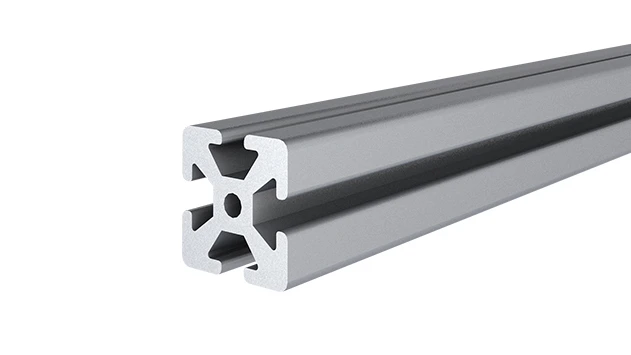
4040F is a 4.00x4.00 CM fractional 40 series square extrusion T-slot profile with four side open T-slots, each side with 4.00cm face. The profile has align-a-grooves to assist in aligning connecting profiles.
Walk into any modern manufacturing facility, and you'll likely hear the hum of packaging machinery working tirelessly. These machines are the unsung heroes of production lines, handling everything from sealing cereal boxes and bottling soda to wrapping electronics and palletizing shipments. They operate at breakneck speeds, often 24 hours a day, 7 days a week, and their reliability directly impacts a company's bottom line. But what keeps these machines standing strong, even under constant stress? The answer lies in their structural backbone—and increasingly, that backbone is made of aluminum profiles. Specifically, the 4040F EU Standard Aluminum Profile has emerged as a go-to choice for engineers and designers tasked with building robust, flexible, and efficient packaging systems. Let's dive into why this unassuming piece of metal has become indispensable in the world of packaging machinery.
The Critical Role of Structural Support in Packaging Machinery
Packaging machinery isn't just about moving products from point A to point B. It's about precision, speed, and durability. Imagine a filling machine that dispenses exactly 500ml of juice into a bottle—even a tiny misalignment in its frame could lead to overflows, underfills, or damaged containers. Or consider a conveyor system transporting fragile electronics: if the structure vibrates excessively, products might shift, scratch, or even fall off. In short, the structural support of packaging machinery is its skeleton. A weak skeleton leads to wobbly operations, frequent breakdowns, and costly downtime.
Traditionally, manufacturers relied on steel frames or welded iron structures to support their machinery. While strong, these materials come with significant drawbacks. Steel is heavy, making machines harder to install, move, or reconfigure. Welded joints are permanent—if a production line needs to adapt to a new product size or packaging format, the entire frame might need to be cut apart and rebuilt. And let's not forget corrosion: in environments like food processing plants, where machines are regularly washed down with water or chemicals, steel frames rust over time, compromising both safety and longevity.
Enter aluminum extrusion profiles. These lightweight, versatile structures have revolutionized how packaging machinery is designed and built. And among the many aluminum profiles available, the 4040F EU Standard Aluminum Profile stands out for its perfect balance of strength, flexibility, and cost-effectiveness. It's not just a material upgrade—it's a complete rethink of how structural support systems should work in dynamic manufacturing environments.
Aluminum Extrusion Profile: A Game-Changer for Modern Machinery
Before we zoom in on the 4040F specifically, let's take a step back and understand why aluminum extrusion profiles have become so popular. Aluminum extrusion is a manufacturing process where heated aluminum billets are pushed through a die to create complex cross-sectional shapes. The result? Profiles with consistent dimensions, smooth surfaces, and integrated features like T-slots—those handy grooves running along the length of the profile that make attaching accessories a breeze.
Aluminum itself brings a host of benefits to the table. It's lightweight (about one-third the weight of steel), which reduces the overall load on machinery and makes installation and reconfiguration much easier. It's naturally corrosion-resistant, thanks to a thin oxide layer that forms on its surface, protecting it from moisture and chemicals—a huge plus in food, beverage, and pharmaceutical packaging facilities. And unlike steel, aluminum doesn't require painting or coating to maintain its integrity, cutting down on maintenance costs.
But what really sets aluminum extrusion profiles apart is their design flexibility. Unlike welded steel frames, which are fixed in shape, aluminum profiles use mechanical connectors to join pieces together. This means you can assemble, disassemble, and reassemble frames as needed—no welding torches or specialized tools required. It's modularity at its finest, and in an industry where production lines are constantly evolving to meet changing consumer demands, this flexibility is priceless.
Of course, not all aluminum profiles are created equal. That's where EU standards come into play. The 4040F EU Standard Aluminum Profile is part of a family of profiles designed to meet strict European union guidelines for dimensions, material quality, and performance. These standards ensure that no matter which manufacturer you buy from, a 4040F profile will have the same width, height, and T-slot dimensions as another. This interchangeability is critical for accessories—things like brackets, connectors, and end caps—ensuring that parts from different suppliers work together seamlessly. For packaging machinery designers, this means less time worrying about compatibility and more time focusing on innovation.

Unpacking the 4040F EU Standard Aluminum Profile
Let's get specific: what makes the 4040F such a standout choice for packaging machinery? First, its dimensions. As the name suggests, the 4040F has a square cross-section measuring 40mm by 40mm. This size strikes a sweet spot between strength and versatility. It's robust enough to support heavy components like motors, conveyors, and tooling, yet compact enough to fit into tight spaces—essential in crowded production lines where every inch counts.
The "F" in 4040F refers to its specific cross-sectional design, which typically includes multiple T-slots. T-slots are the secret sauce of aluminum profiles. These longitudinal grooves run along the profile's length and allow for quick, secure attachment of accessories. Imagine a slot that's shaped like a "T"—you slide a T-nut into the slot, and it stays in place as you tighten a bolt through a bracket or panel. This means you can mount components anywhere along the profile, not just at pre-drilled holes. Need to add a sensor 12.5cm from the end of a frame? No problem—just slide a T-nut into the slot, position your bracket, and tighten the bolt. It's that simple.
Material quality is another key factor. The 4040F is typically made from 6063-T5 aluminum alloy, a popular choice for extrusions due to its excellent strength-to-weight ratio and machinability. T5 tempering (artificial aging) gives the profile added hardness and stability, ensuring it can withstand the vibrations and impacts common in packaging environments. And because it's an EU standard profile, you can trust that the material composition is consistent—no hidden weak spots or impurities that could compromise performance.
To put it in perspective: a single 4040F profile, when properly supported, can easily hold the weight of a small engine or a fully loaded conveyor section. Yet, it's light enough that two people can carry a 3-meter length without straining. This combination of strength and lightness is a game-changer for machinery design, allowing for more agile, energy-efficient systems.
Design Flexibility: Aluminum Profile Accessories and the 4040F
A profile is only as good as the accessories that complement it. The 4040F's true power shines when paired with aluminum profile accessories—small, specialized components that turn a simple length of aluminum into a fully functional structural system. Let's take a closer look at some of these accessories and how they enhance the 4040F's capabilities in packaging machinery.
Connectors: Building Without Welds
Gone are the days of welding every joint. Today, 4040F profiles are joined using mechanical connectors that lock into the T-slots. For example, a 90° aluminum profile connector allows you to join two profiles at a right angle with just a few bolts. These connectors are adjustable, so you can fine-tune the angle for perfect alignment—something impossible with a welded joint. There are also 45° connectors for diagonal bracing, 135° connectors for offset corners, and even 3-way or 4-way connectors for building complex, multi-directional frames.
The beauty of these connectors is their reversibility. If a packaging line needs to be reconfigured—say, to accommodate a new palletizer or shrink-wrapping machine—you can simply loosen the bolts, disassemble the frame, and rebuild it in a new layout. No cutting, no welding, no wasted materials. This adaptability is crucial in an industry where product lifecycles are getting shorter and customization is king.
End Caps and Edge Protectors
Safety is paramount in any manufacturing environment, and the 4040F doesn't skimp here. Aluminum extrusion profiles have open ends, which can be sharp. Enter the 4040 aluminum profile end cap—a simple plastic or rubber accessory that snaps onto the end of the profile, covering sharp edges and preventing injuries. End caps also keep dust, debris, and liquids from entering the profile's internal channels, which could otherwise corrode the material or jam T-slots over time.
T-Slot Nuts and Bolts: The Unsung Heroes
T-slots are useless without T-slot nuts. These small, rectangular nuts have a flange that slides into the T-slot, allowing them to move freely along the profile's length. Once positioned, a bolt is threaded through a bracket or panel and into the T-slot nut, tightening securely. This system means you can attach components anywhere along the profile—no pre-drilled holes required. Need to mount a control panel 20cm from the top of a frame? Slide a T-nut into place, bolt on the panel, and you're done. It's this level of flexibility that makes the 4040F ideal for custom machinery builds.
Gussets and Reinforcements
For high-stress areas—like the base of a heavy-duty packaging machine or the junction of a conveyor and a sorting system—gusset plates add extra strength. These triangular brackets fit into the corners of 4040F frames, distributing weight and reducing stress on connectors. Gusset alp 4040 (a common gusset designed for 40x40 profiles) is a popular choice, as it's lightweight but rigid, ensuring the frame stays stable even under heavy loads or vibrations.
Real-World Applications: 4040F in Action
Talk is cheap—let's look at how the 4040F EU Standard Aluminum Profile is actually used in packaging machinery. From workbenches to roller tracks, this profile is the backbone of countless systems that keep production lines running smoothly.
Workbenches: Where Precision Meets Productivity
Every packaging line needs workstations where operators inspect products, apply labels, or assemble packages. These workbenches must be sturdy enough to support tools, materials, and even heavy product batches, yet adjustable to accommodate different operators (tall or short) and tasks. Enter the 4040F-framed workbench.
A typical workbench design starts with a frame of 4040F profiles. The vertical legs are connected by horizontal crossbars for stability, and a wooden, aluminum, or ESD-safe top is mounted on top via brackets. Below the top, additional profiles can be added to create shelves for storing tools, boxes of labels, or cleaning supplies. Need a light to illuminate the workspace? Attach a lighting fixture to the frame using T-slot nuts and bolts. Want to add a small conveyor to feed products onto the bench? Mount a mini roller track (more on that later) directly to the 4040F frame.
The best part? If the packaging line switches to a larger product—say, from 12-ounce cans to 24-ounce bottles—the workbench can be easily modified. Add longer 4040F sections to extend the top, or raise the height by swapping out the vertical legs for taller ones. No need to buy a new workbench; just reconfigure the existing one. This adaptability saves money and reduces waste, making it a favorite among sustainability-focused manufacturers.
Roller Tracks: Smooth Transitions for Seamless Production
Conveyor systems are the arteries of packaging lines, moving products between machines. Roller tracks—lines of free-spinning rollers mounted on a frame—are a common type of conveyor, ideal for transporting boxes, bottles, or packages with flat bottoms. And the frame supporting these roller tracks? You guessed it: often made of 4040F profiles.
Roller tracks need to be perfectly level and aligned to ensure products glide smoothly. The 4040F's rigid, straight profile provides an excellent base for mounting roller track placon mounts—brackets designed to secure the track to the aluminum frame. These mounts slide into the T-slots of the 4040F, allowing precise positioning of the track. Whether the conveyor is horizontal, slightly inclined, or curved, the 4040F frame can be adjusted to match, ensuring products move without jams or bottlenecks.
Consider a snack packaging line: bags of chips are filled, sealed, and then need to move to a labeling station. A roller track mounted on a 4040F frame carries the bags gently, with minimal friction. If the line speeds up, the aluminum frame's rigidity prevents the track from flexing or vibrating, keeping products on course. And if the chip bag size increases, the track can be widened by adding more 4040F sections and extending the roller track—all without replacing the entire conveyor system.
Why 4040F Beats Traditional Materials in Packaging Machinery
By now, it's clear that the 4040F EU Standard Aluminum Profile offers significant advantages over traditional materials like steel or wood. Let's summarize why it's become the preferred choice for structural support in packaging machinery:
- Lightweight yet strong: Aluminum is 1/3 the weight of steel, making installation, transportation, and reconfiguration easier. Yet, 4040F profiles, especially when reinforced with accessories, can handle heavy loads—perfect for machinery that needs to be both sturdy and mobile.
- Corrosion-resistant: Unlike steel, aluminum doesn't rust. This is critical in wet or chemical-heavy environments (e.g., food processing, pharmaceutical packaging), where machinery is regularly cleaned. The 4040F's oxide layer ensures it stays looking and performing like new for years.
- Modular and reconfigurable: With mechanical connectors and T-slots, 4040F frames can be assembled, disassembled, and modified in minutes. No welding, no cutting—just loosen a few bolts and reconfigure. This is a lifesaver for production lines that need to adapt to new products or packaging formats.
- Cost-effective over time: While aluminum profiles may have a higher upfront cost than steel, they save money in the long run. Lower installation costs (no need for welders), reduced maintenance (no rust removal or repainting), and the ability to reuse components when reconfiguring all add up to significant savings.
- EU standard consistency: EU standards ensure that 4040F profiles and accessories are interchangeable across manufacturers. This means designers can mix and match components from different suppliers, reducing lead times and ensuring parts are always available.
To put it bluntly: the 4040F EU Standard Aluminum Profile isn't just a better material—it's a better way of thinking about machinery design. It prioritizes adaptability, efficiency, and longevity, which are exactly the qualities packaging manufacturers need to stay competitive in today's fast-paced market.
Looking Ahead: The Future of 4040F in Packaging Machinery
As packaging machinery evolves, so too will the role of the 4040F EU Standard Aluminum Profile. Here are a few trends that will shape its future:
Sustainability: Manufacturers are under increasing pressure to reduce their environmental footprint. Aluminum is 100% recyclable, and recycling it uses just 5% of the energy required to produce new aluminum. This makes 4040F profiles an eco-friendly choice, aligning with the green initiatives of many companies.
Collaborative Robotics (Cobots): Cobots—small, flexible robots that work alongside humans—are becoming common in packaging lines for tasks like picking, placing, and palletizing. These robots need lightweight, rigid bases to operate precisely, and 4040F profiles are the perfect fit. Their modularity allows cobot bases to be customized for different tasks, and their light weight ensures the robots can move (if needed) without straining the floor or support structures.
Smart Manufacturing: The rise of Industry 4.0 means packaging lines are getting smarter, with sensors, cameras, and IoT devices monitoring performance in real time. The 4040F's T-slots make it easy to mount these devices exactly where they're needed—whether it's a camera above a conveyor to check for mislabeled packages or a vibration sensor on a motor to predict maintenance needs. This integration of "smart" components is seamless with aluminum profiles, as there's no need to drill holes or modify the frame permanently.
Customization for Small-Batch Production: Consumers crave variety, from limited-edition flavors to personalized packaging. This has led to a rise in small-batch production, where lines need to switch between products quickly. The 4040F's modularity makes it ideal for these "flexible factories," as machinery can be reconfigured in hours instead of days.
Conclusion: The 4040F—More Than a Profile, a Partner in Production
At the end of the day, the 4040F EU Standard Aluminum Profile is more than just a piece of aluminum. It's a solution to the challenges facing modern packaging machinery: the need for strength without weight, rigidity without permanence, and durability without maintenance headaches. It's the reason a snack company can switch from bags to boxes in a weekend, or a beverage manufacturer can increase production speed without rebuilding its entire line.
As packaging machinery continues to advance, the 4040F will undoubtedly evolve with it—whether through new alloys that offer even greater strength, improved accessories that enhance flexibility, or integration with cutting-edge technologies like AI and automation. But one thing remains constant: its role as the silent backbone of efficient, reliable, and adaptable packaging systems.
So the next time you see a packaging line in action, take a moment to look beyond the moving parts and flashing lights. Chances are, you'll spot the 4040F EU Standard Aluminum Profile holding it all together—quietly, steadily, and always ready for whatever the next production challenge may bring.