- Company Articles
- Products and Technology
- Product knowledge
- 4040F EU Standard Aluminum Profile: Key Material for Building Flexible Material Handling Systems

4040F EU Standard Aluminum Profile: Key Material for Building Flexible Material Handling Systems
Related Product
4040F EU Standard Aluminum Profile
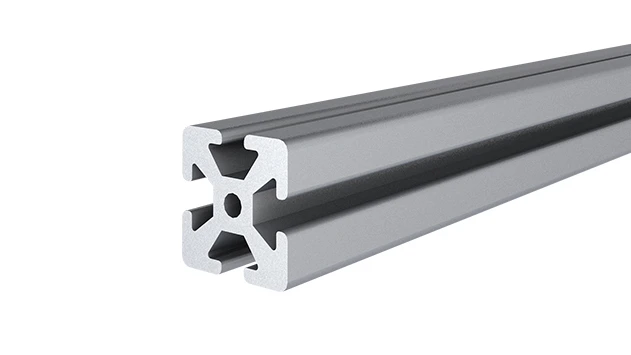
4040F is a 4.00x4.00 CM fractional 40 series square extrusion T-slot profile with four side open T-slots, each side with 4.00cm face. The profile has align-a-grooves to assist in aligning connecting profiles.
Introduction: The Backbone of Modern Material Handling
Walk into any thriving manufacturing plant, warehouse, or assembly facility today, and you'll notice a quiet revolution happening—one that's all about efficiency, adaptability, and reducing waste. At the heart of this revolution lies material handling: the process of moving, storing, and protecting goods as they make their way from raw materials to finished products. It's a behind-the-scenes hero, but when done poorly, it can slow production to a crawl, increase errors, and eat into profits. When done right? It transforms operations, turning chaos into a well-oiled machine.
In recent years, the industry has shifted away from rigid, one-size-fits-all systems toward flexible solutions that can evolve with changing needs. And if there's one material that's leading this shift, it's aluminum extrusion profile. Lightweight yet strong, customizable yet standardized, aluminum profiles have become the go-to choice for building everything from workbenches to flow racks. Among these, the 4040F EU Standard Aluminum Profile stands out as a workhorse—a versatile, reliable, and cost-effective option that's redefining how businesses approach material handling. Let's dive into why this unassuming piece of metal has become a cornerstone of modern industrial design.
What Exactly Is 4040F EU Standard Aluminum Profile?
First things first: let's break down the name. "4040F" refers to the profile's dimensions and design code. The "4040" means it has a square cross-section, 40mm by 40mm—small enough to be lightweight but large enough to handle medium-duty tasks. The "F" is a specific design variant within EU standard aluminum profiles, denoting details like slot size, wall thickness, and groove placement that align with European manufacturing norms. This standardization is key: it ensures compatibility across brands, so you can mix and match accessories from different suppliers without worrying about fit issues.
But what really makes it an aluminum extrusion profile? Extrusion is a manufacturing process where raw aluminum is heated until it's malleable, then forced through a die (a custom-shaped tool) to create long, uniform lengths with complex cross-sections. For the 4040F, this process results in a profile with precise T-slots running along its length—those are the grooves you see on the sides. These slots aren't just for show; they're the secret to its flexibility. They let you attach brackets, shelves, wheels, and other accessories with simple bolts or clips, no welding or drilling required. It's like building with industrial-grade Legos, but for grown-ups.
Most 4040F profiles are made from 6063-T5 aluminum alloy, a material prized for its balance of strength, corrosion resistance, and workability. T5 refers to the heat treatment process, which strengthens the aluminum without making it brittle. The result? A profile that can support up to 200kg per linear meter (depending on setup) while weighing just a fraction of steel. That's a game-changer for anyone who needs sturdy structures that are still easy to move or reconfigure.

Key Features That Make 4040F a Standout Choice
So, what sets the 4040F apart from other aluminum profiles or traditional materials like steel or wood? Let's unpack its most compelling features:
1. The T-Slot Design: Your Ticket to Customization
The T-slots are the star of the show. Imagine a series of parallel grooves running the length of the profile, each shaped like a "T." To attach an accessory—say, a caster wheel for mobility—you simply slide a bolt into the slot, position it where you need it, and tighten a nut. No measuring, no drilling, no waiting for a welder. This means you can build a workbench on Monday, add a shelf on Wednesday, and turn it into a mobile cart by Friday. It's customization at the speed of business.
2. Strength Without the Bulk
Steel might be strong, but it's heavy. Try moving a steel workbench across the factory floor, and you'll need a forklift or a team of people. Aluminum, on the other hand, is about one-third the weight of steel. The 4040F profile leverages this lightweight advantage while still packing a punch. Thanks to its hollow design and 6063-T5 alloy, it can support tools, materials, and even small machinery without bending or warping. For most medium-duty tasks—like assembling electronics, packing orders, or organizing parts—it's more than up to the challenge.
3. Corrosion Resistance: Built to Last
Aluminum naturally forms a thin oxide layer that protects it from rust and corrosion, making it ideal for environments where moisture, chemicals, or humidity are present. Unlike steel, which needs painting or coating to survive, the 4040F profile can handle spills, damp warehouses, or even light outdoor use without deteriorating. This longevity translates to lower maintenance costs and a longer lifespan for your material handling systems.
4. EU Standardization: Consistency You Can Count On
The "EU Standard" part of the name isn't just marketing. It means the 4040F profile adheres to strict European norms for dimensions, tolerances, and material quality. That consistency matters when you're building complex systems. Whether you're ordering from a local supplier or importing from abroad, you know the 40mm width, slot spacing, and wall thickness will be exactly as specified. This reduces errors during assembly and ensures that aluminum profile accessories from different brands will fit together seamlessly.
Why 4040F Beats Traditional Materials (and Even Other Aluminum Profiles)
To really appreciate the 4040F, let's compare it to the alternatives. How does it stack up against steel, wood, or even other aluminum profiles like the 4040A or 4080?
"The 4040F hits the sweet spot between size, strength, and cost. It's not too big for small workbenches, not too small for flow racks, and its standardized design means we can reconfigure our systems in hours, not days." – Maria, Production Manager at a German Automotive Parts Plant
| Feature | 4040F EU Aluminum Profile | Steel Profile (40x40mm) | Wooden Framing | 4080 EU Aluminum Profile (Larger) |
|---|---|---|---|---|
| Weight (per meter) | ~1.8kg | ~10kg | ~3-5kg (varies by wood type) | ~3.2kg |
| Corrosion Resistance | High (natural oxide layer) | Low (requires coating) | Low (prone to rot/warping) | High |
| Customization | High (T-slots, easy accessory attachment) | Low (requires welding/drilling) | Medium (cuts easily but not reusable) | High (but overkill for small projects) |
| Typical Use Case | Workbenches, flow racks, lean systems | Heavy machinery frames, industrial shelving | Temporary workstations, low-budget storage | Large conveyor systems, heavy-duty racks |
| Cost (per meter) | Moderate | High (material + coating) | Low (but short lifespan) | High (30-50% more than 4040F) |
As the table shows, steel is strong but heavy and hard to modify. Wood is cheap but flimsy and short-lived. The 4080 aluminum profile is great for heavy loads but overkill for most medium-duty tasks, adding unnecessary cost and weight. The 4040F, by contrast, offers the best balance: it's light enough to move, strong enough for daily use, customizable enough to adapt, and affordable enough to scale.
Compatibility with Aluminum Profile Accessories: Building Your Dream System
A profile is only as good as the accessories it works with, and the 4040F doesn't disappoint. Thanks to its standardized T-slots, it plays well with a huge range of aluminum profile accessories, turning a simple length of metal into a fully functional system. Let's look at some of the most popular accessories and how they enhance the 4040F's versatility:
Caster Wheels: Mobility at Your Fingertips
Add a set of caster wheels to a 4040F frame, and suddenly your stationary workbench becomes a mobile cart. Need to move tools from one assembly line to another? No problem. Want to reposition a flow rack to accommodate a new product? Just roll it into place. Caster wheels designed for aluminum profiles often come with brakes, so you can lock the cart in place when needed—stability and mobility in one.
Aluminum Guide Rails: Smoother Flow for Materials
For flow racks or conveyor systems, aluminum guide rails (like the aptly named Aluminum Guide Rail A and B from many suppliers) attach directly to 4040F profiles. These rails keep products aligned as they slide down roller tracks, preventing jams and ensuring a steady flow. They're especially useful in lean systems, where minimizing manual handling is key.
Brackets and Joints: Building Strong Connections
Whether you're building a corner joint, a shelf, or a cross-brace, brackets and joints for 4040F profiles are designed to snap into the T-slots and tighten securely. Many are made from the same aluminum alloy as the profile, ensuring a consistent look and matching strength. Some even allow for 360-degree rotation, so you can angle shelves or supports exactly where you need them.
Workbench Tops: From Basic to High-Tech
Top your 4040F frame with a wooden, plastic, or aluminum honeycomb panel, and you've got a sturdy workbench. Add a vice, tool hooks, or a power strip (attached via T-slot brackets), and it becomes a custom workstation tailored to your team's needs. For ESD-sensitive environments (like electronics manufacturing), you can even add an ESD-safe top—all without modifying the 4040F frame itself.
Real-World Applications: How Businesses Are Using 4040F Today
Enough theory—let's look at how the 4040F is making a difference in real facilities. Here are three common applications where it shines:
1. Workbenches: The Heart of the Assembly Line
Workbenches are where the magic happens—where workers assemble parts, test products, and package goods. A poorly designed workbench leads to fatigue, errors, and wasted time. A 4040F workbench, though? It's ergonomic, customizable, and built to last. For example, a small electronics manufacturer in Poland uses 4040F frames with adjustable-height legs (another common accessory) to ensure workers of all heights can stand comfortably. They've added tool rails along the back, bin holders for small parts, and even LED light strips attached via T-slot brackets. When they launched a new product line with larger components, they simply swapped out the top shelf for a wider one—no need to buy a whole new bench.
2. Flow Racks: Streamlining Material Movement
Flow racks are all about gravity: materials sit on roller tracks, and as the front item is taken, the next one slides down automatically. This reduces the need for workers to bend, reach, or lift heavy boxes. A French logistics company specializing in e-commerce fulfillment uses 4040F profiles to build flow racks for small packages. The 4040F frames support roller tracks (another key accessory), and the T-slots let them adjust the angle of the racks to control how fast packages slide. During peak seasons, they can add extra levels to the racks by simply attaching new 4040F crossbars—no tools required beyond a hex key.
3. Lean Systems: Minimizing Waste, Maximizing Efficiency
Lean manufacturing is all about eliminating waste—whether it's time, materials, or space. The 4040F's modularity makes it perfect for lean systems, where flexibility and adaptability are critical. A Swedish furniture manufacturer, for example, uses 4040F to build kanban racks (used to signal when materials need restocking), work-in-progress carts, and even temporary storage structures. When they redesigned their assembly process to reduce lead times, they were able to reconfigure their entire 4040F-based system in a weekend, saving weeks of downtime compared to if they'd used welded steel frames.
The Future of 4040F: Where Does It Go From Here?
As manufacturing continues to evolve—with trends like Industry 4.0, automation, and sustainability taking center stage—the 4040F is poised to play an even bigger role. Here's why:
Sustainability: Aluminum is 100% recyclable, and the extrusion process uses far less energy than steel production. As companies aim to reduce their carbon footprints, 4040F systems offer a greener alternative to disposable wooden frames or energy-intensive steel. Plus, since they're modular, they can be reused or repurposed instead of being thrown away when needs change.
Automation Integration: As more facilities add robots or automated guided vehicles (AGVs), 4040F profiles provide a lightweight, easy-to-modify framework for integrating sensors, cameras, or robot mounts. The T-slots make it simple to attach these tech upgrades without rebuilding the entire system.
Global Supply Chains: With EU standardization, 4040F profiles are available from suppliers worldwide. This makes it easier for multinational companies to standardize their material handling systems across factories in different countries, reducing training costs and ensuring consistent processes.
Conclusion: Why 4040F Is More Than Just a Profile—It's a Strategic Investment
At the end of the day, the 4040F EU Standard Aluminum Profile isn't just a piece of metal. It's a tool for innovation, a catalyst for efficiency, and a foundation for growth. Its combination of strength, flexibility, and affordability makes it ideal for businesses of all sizes—from small workshops to large manufacturing plants. Whether you're building a simple workbench, a complex flow rack, or a lean system designed to adapt to the future, the 4040F delivers.
So, if you're looking to upgrade your material handling systems, don't overlook this unassuming profile. It might not have the flash of high-tech automation, but it's the quiet workhorse that makes those technologies possible. As more businesses discover its benefits, the 4040F is set to remain a key player in the future of manufacturing—one T-slot at a time.