- Company Articles
- Products and Technology
- Product knowledge
- 4040F EU Standard Aluminum Profile: Key Role in Building Modular Workstations

4040F EU Standard Aluminum Profile: Key Role in Building Modular Workstations
Related Product
4040F EU Standard Aluminum Profile
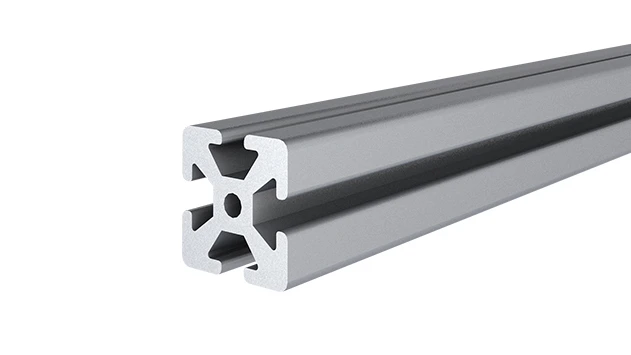
4040F is a 4.00x4.00 CM fractional 40 series square extrusion T-slot profile with four side open T-slots, each side with 4.00cm face. The profile has align-a-grooves to assist in aligning connecting profiles.
The unsung hero behind flexible, durable, and efficient workspace solutions
Walk into any modern manufacturing plant, electronics assembly line, or even a bustling workshop, and you'll notice something different about the workspaces: they're not static. Gone are the days of heavy, fixed workbenches bolted to the floor, impossible to reconfigure when production needs shift. Today's facilities thrive on adaptability—and at the heart of this transformation lies modular workstations. These dynamic setups adjust to new tasks, team sizes, and workflow changes with ease. But what makes them so versatile? The answer often comes down to a humble yet powerful component: the 4040F EU Standard Aluminum Profile.
In this article, we'll dive into why the 4040F aluminum profile has become the backbone of modular workstation design. We'll explore its features, its role in creating efficient workspaces, and how it supports everything from lean manufacturing principles to rapid prototyping. Whether you're a facility manager looking to upgrade your production floor or a small business owner building a flexible workshop, understanding the 4040F profile will help you make smarter, more future-proof decisions.
What Exactly Is the 4040F EU Standard Aluminum Profile?
Before we unpack its role in modular workstations, let's start with the basics: What is the 4040F EU Standard Aluminum Profile, and why does the "EU Standard" label matter?
Breaking Down the Name: 4040F
Let's decode the label. The "4040" refers to its cross-sectional dimensions: 40mm by 40mm. That square shape is no accident—it provides balanced strength in all directions, making it ideal for building frames, supports, and structures that need to withstand both vertical and horizontal loads. The "F" suffix, while not universal across all manufacturers, typically indicates a specific groove design or flange configuration. In most cases, this means the profile has T-slots (longitudinal grooves) running along its length, spaced at standardized intervals. These slots are critical: they allow accessories like brackets, panels, and shelves to be attached quickly without drilling or welding.
Why EU Standard Matters
The "EU Standard" designation is more than just a stamp of approval—it's a promise of consistency, quality, and safety. EU standards for aluminum profiles (like EN 755) set strict guidelines for material composition, dimensional accuracy, mechanical properties, and surface treatment. For example, the 4040F profile is typically made from 6063-T5 aluminum alloy, a heat-treated grade known for its excellent strength-to-weight ratio and corrosion resistance. This alloy ensures the profile is lightweight enough to move (when needed) but strong enough to support heavy tools, equipment, and materials.
EU standards also mandate tight tolerances. That 40x40mm cross-section? It won't vary by more than a fraction of a millimeter, ensuring that accessories from different suppliers (think brackets, hinges, or aluminum profile accessories like end caps) fit seamlessly. This interoperability is a game-changer for modular design—you're not locked into one brand's ecosystem.
How It's Made: The Extrusion Advantage
The 4040F profile is created using aluminum extrusion, a process that involves forcing heated aluminum billets through a die (a steel mold) to form the desired shape. This method is efficient, cost-effective, and allows for complex cross-sectional designs—like the T-slots in the 4040F. After extrusion, the profiles are heat-treated to strengthen the material, then cut to standard lengths (often 2m, 3m, or 6m) and finished with anodizing or powder coating. Anodizing, a common treatment, creates a hard, protective oxide layer on the surface, enhancing durability and giving the profile a sleek, matte silver finish that resists scratches and wear.
Key Features of 4040F Aluminum Profile
What sets the 4040F apart from other materials (or even other aluminum profiles)? Let's break down its standout features:
Lightweight Yet Strong
Aluminum is about one-third the weight of steel, making 4040F profiles easy to handle during assembly and reconfiguration. Yet, thanks to the 6063-T5 alloy, they can support impressive loads—often up to 200kg per linear meter for vertical applications. This balance is crucial for workstations that need to be both mobile and sturdy.
T-Slot Versatility
The T-slots along the 4040F's length are its secret weapon. Using T-nuts, bolts, and brackets, you can attach almost anything: work surfaces, tool hooks, monitor arms, or even roller track for material flow. No drilling, no welding—just slide the accessory into place and tighten. This makes reconfiguring a workstation from assembly to packaging (or vice versa) a task that takes minutes, not hours.
Corrosion and Wear Resistance
Anodized or powder-coated finishes protect the 4040F from rust, chemicals, and daily wear. In environments like electronics manufacturing, where cleanliness is critical, this resistance to corrosion ensures the profile stays looking and performing like new for years—even with frequent cleaning.

The Key Role of 4040F in Modular Workstations
Modular workstations are all about flexibility, efficiency, and longevity. Let's explore how the 4040F profile enables each of these:
1. Building the Foundation: Frames That Adapt
At its core, a modular workstation is a frame—and the 4040F profile is the perfect building block for that frame. Whether you're constructing a simple workbench or a complex multi-tiered assembly station, 4040F profiles form the vertical legs, horizontal rails, and cross-braces that hold everything together. Their square shape ensures stability, while their lightweight nature makes it easy to add or remove sections as needed.
Consider a scenario: A small electronics company lands a new contract requiring a larger assembly team. With a 4040F-based workstation, they don't need to buy a whole new bench. Instead, they can extend the existing frame by adding two more 4040F uprights and a few cross-rails, then attach an extra work surface. The entire process takes an hour, not a week—and there's no waste from discarding old equipment.
2. Supporting Lean Manufacturing Principles
Lean manufacturing is all about eliminating waste—whether that's time, space, or materials. The 4040F profile aligns perfectly with this philosophy. Its modularity means you only build what you need, when you need it. No overbuilding, no excess inventory of custom parts. For example, a lean system might require a workstation that adapts to different product sizes. With 4040F, you can adjust shelf heights, add tool holders, or integrate flow rack for parts delivery—all without redesigning the entire setup.
Waste reduction extends to maintenance, too. If a section of the workstation gets damaged (say, a rail gets bent), you don't replace the whole bench—just the affected 4040F profile. This "replaceable parts" approach cuts downtime and keeps costs low.
3. Integrating Accessories for a Complete Workspace
A workstation isn't just a frame—it's a complete ecosystem of tools, storage, and equipment. The 4040F's T-slots make it easy to integrate aluminum profile accessories that turn a basic frame into a fully functional workspace. Here are just a few examples:
- Work surfaces: Attach plywood, MDF, or aluminum honeycomb panels using brackets that slide into the T-slots.
- Storage solutions: Add shelves, bins, or pegboards for tools and parts, positioned exactly where the operator needs them.
- Material handling: Mount roller track along the back of the workstation to feed components directly to the operator, reducing reaching and wasted motion.
- Lighting and power: Run cables through the T-slots or attach LED light bars to illuminate the workspace—no messy wires hanging down.
4. Durability for Long-Term Value
Investing in modular workstations should pay off over time—and 4040F profiles ensure they do. Unlike plastic or wood, aluminum doesn't warp, rot, or degrade with age. Even after years of reconfigurations, disassemblies, and reassemblies, the profiles retain their strength and precision. This durability makes 4040F-based workstations a sustainable choice, too—they can be repurposed for new tasks or even sold to other businesses when no longer needed, reducing landfill waste.
How 4040F Stacks Up Against Other Aluminum Profiles
Not all aluminum profiles are created equal. Let's compare the 4040F with two common alternatives—the 4040A (a basic 40x40mm profile) and the 4080 (a larger 40x80mm profile)—to see why it's the top choice for modular workstations:
| Feature | 4040F EU Standard | 4040A EU Standard | 4080 EU Standard |
|---|---|---|---|
| Dimensions | 40mm x 40mm | 40mm x 40mm | 40mm x 80mm |
| T-Slot Design | 4 slots (1 per side), optimized for accessories | 4 slots, basic design | 6 slots (2 per long side, 1 per short side) |
| Weight Capacity (Vertical) | Up to 200kg/m | Up to 150kg/m | Up to 300kg/m |
| Common Uses | Workstations, benches, small material racks | Light-duty frames, shelving | Heavy-duty workstations, conveyor frames, industrial machinery |
| Best For | Modular workstations (balance of strength, weight, cost) | Budget-friendly, light applications | High-load or large-scale setups |
*Values are approximate and may vary by manufacturer.
Real-World Applications: 4040F in Action
To truly understand the impact of 4040F profiles, let's look at how they're used across different industries:
Electronics Assembly
In electronics manufacturing, precision and cleanliness are critical. 4040F-based workstations shine here, with ESD (electrostatic discharge) compatible accessories like conductive work surfaces and grounding brackets. Operators can customize their stations with anti-static mats, tool organizers for small components, and integrated roller track to feed PCBs or components directly into the assembly line. When product lines change (e.g., from smartphones to tablets), the workstation adapts—no need for costly retooling.
Automotive Parts Production
Automotive workshops deal with heavy tools and constant workflow changes. 4040F profiles form the basis of durable workbenches that support pneumatic tools, torque wrenches, and even small machinery. Some setups include overhead gantries built from 4040F to hold hoists or lighting, while others integrate flow rack for storing parts kits. When a new car model is introduced, the workstations reconfigure to accommodate different part sizes and assembly steps—keeping production on track.
Small-Batch Manufacturing
For small businesses or makerspaces, budget and space are often tight. 4040F profiles offer an affordable, space-saving solution. A single modular workstation can switch from woodworking to 3D printing to packaging, thanks to removable tool holders and adjustable surfaces. When the business grows, adding more 4040F sections expands the workspace without disrupting existing operations.
The Future of Modular Workstations: What's Next for 4040F?
As manufacturing and workspace design continue to evolve, the 4040F profile is poised to play an even bigger role. Here are a few trends to watch:
- Smart Workstations: With the rise of Industry 4.0, expect to see 4040F profiles integrated with sensors, IoT devices, and data tracking tools. For example, weight sensors in workbench surfaces could alert operators when parts inventory is low, or RFID tags on tools could track usage—all powered by cables routed through the profile's T-slots.
- Sustainability Focus: As businesses prioritize eco-friendly practices, the recyclability of aluminum will become even more valuable. Manufacturers may also develop 4040F profiles using recycled aluminum alloys, reducing the carbon footprint of production.
- Customization Tools: Digital tools like 3D modeling software and online configurators will make it easier than ever to design 4040F-based workstations. Users can drag-and-drop components, see load capacities in real time, and order pre-cut profiles and accessories—streamlining the build process.
Conclusion: Why 4040F Is the Backbone of Modern Workspaces
Modular workstations are transforming how we work—making spaces more adaptable, efficient, and user-centric. And at the heart of this revolution is the 4040F EU Standard Aluminum Profile. Its unique blend of strength, flexibility, and compatibility with aluminum profile accessories makes it the ideal choice for building workspaces that grow and change with your needs.
Whether you're a large manufacturer optimizing production lines or a small business owner creating a versatile workshop, the 4040F profile offers a cost-effective, durable, and sustainable solution. It's not just a piece of metal—it's a tool for innovation, enabling businesses to stay agile in an ever-changing world.
So the next time you walk into a modern workspace, take a closer look at the frames holding it all together. Chances are, you'll see the 4040F profile—quietly doing its job, and doing it well.