- Company Articles
- Products and Technology
- Product knowledge
- 4040F EU Standard Aluminum Profile: Reusable Solutions for Sustainable Manufacturing

4040F EU Standard Aluminum Profile: Reusable Solutions for Sustainable Manufacturing
Related Product
4040F EU Standard Aluminum Profile
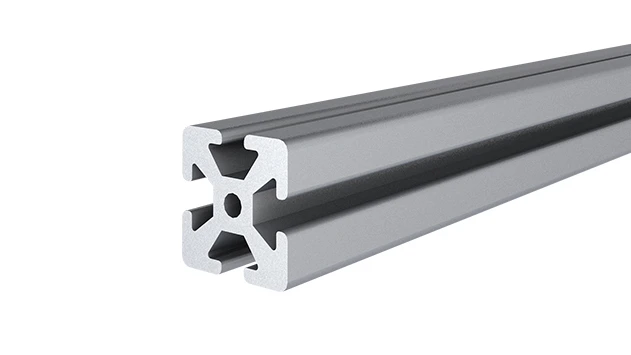
4040F is a 4.00x4.00 CM fractional 40 series square extrusion T-slot profile with four side open T-slots, each side with 4.00cm face. The profile has align-a-grooves to assist in aligning connecting profiles.
In today's fast-paced manufacturing landscape, the pressure to balance efficiency, cost-effectiveness, and environmental responsibility has never been greater. Factories and production facilities worldwide are rethinking traditional workflows, seeking solutions that not only boost productivity but also align with global sustainability goals. Enter the 4040F EU Standard Aluminum Profile —a modular, adaptable, and eco-friendly building block that's transforming how manufacturers design, build, and rebuild their workspaces. More than just a piece of metal, this aluminum extrusion profile is a catalyst for leaner operations, reduced waste, and a greener future. Let's dive into why it's becoming the backbone of sustainable manufacturing.
Understanding the 4040F EU Standard Aluminum Profile
First, let's break down what makes the 4040F profile unique. As part of the EU standard aluminum extrusion profile family, it's defined by its dimensions: 40mm in width and 40mm in height, with a "F" designation that refers to its specific slot configuration and wall thickness. But numbers alone don't tell the story. What truly sets it apart is the extrusion process—molten aluminum is forced through a die to create a consistent, high-strength shape with integrated T-slots running along its length. These slots are the secret to its versatility, allowing for easy attachment of aluminum profile accessories like brackets, connectors, and panels without the need for welding or drilling.
Aluminum, by nature, is a material champion. It's lightweight yet surprisingly strong, corrosion-resistant, and—crucially—100% recyclable. Unlike plastic, which degrades over time, or steel, which rusts and loses integrity, aluminum retains its properties through countless recycling cycles. For manufacturers aiming to reduce their carbon footprint, this is a game-changer. The 4040F profile takes these benefits a step further by combining aluminum's inherent sustainability with modular design, making it a cornerstone of circular manufacturing practices.
Sustainability at the Core: Reusability and Recyclability
In an industry where waste has long been seen as an unavoidable byproduct, the 4040F profile flips the script. Traditional manufacturing setups often rely on fixed, custom-built structures—think welded steel workbenches or wooden material racks. When production lines change, these structures become obsolete, ending up in landfills or requiring costly modifications. The 4040F profile, however, is built for reusability.
Imagine a scenario: A electronics manufacturer needs to reconfigure its assembly line to accommodate a new product. With traditional steel workbenches, this might mean cutting, welding, or even replacing entire units. With 4040F profiles, the process is. Using simple hand tools and aluminum profile accessories like 90° connectors or end caps, the existing workbench can be disassembled, and its components repurposed to build a new layout. No waste, no excess material—just adaptability.
Recyclability adds another layer of sustainability. Even if a component reaches the end of its useful life (a rare occurrence with aluminum), it can be melted down and reformed into new profiles with minimal energy input. In fact, recycling aluminum uses just 5% of the energy required to produce it from raw ore. For manufacturers tracking their lifecycle environmental impact, this translates to significant reductions in both carbon emissions and resource depletion.
| Metric | 4040F Aluminum Profile | Steel (Welded) | Plastic (PVC/ABS) |
|---|---|---|---|
| Recyclability Rate | 100% (infinite cycles) | 85% (loses strength over cycles) | ~9% (limited recycling options) |
| Energy Use (Production) | Low (especially recycled aluminum) | High (mining, smelting, welding) | High (fossil fuel-based) |
| Lifespan in Manufacturing | 10+ years (reusable/reconfigurable) | 5–7 years (fixed, prone to rust) | 2–3 years (degrades, warps under heat) |
| Waste Generated (Lifecycle) | Minimal (reusable components, recyclable scrap) | High (welding slag, obsolete structures) | High (non-biodegradable, single-use) |

Modularity: The Key to Lean Manufacturing
Sustainability aside, the 4040F profile's modular design is a boon for lean system implementation. Lean manufacturing, at its heart, is about eliminating waste—whether it's time, materials, or space. The 4040F profile supports this by enabling quick, tool-free adjustments to production setups. Let's take a closer look at how this works in practice.
Consider a typical factory floor. Production needs change constantly—new product lines, seasonal demand spikes, or process optimizations all require adjustments to workbenches, material racks, or conveyor systems. With traditional fixed structures, these changes are time-consuming and costly. The 4040F profile, however, turns reconfiguration into a routine task. Need to add a shelf to a workbench? Slide a bracket into the T-slot and secure it with a bolt. Want to extend a material rack? Connect two profiles with an internal straight aluminum joint. Even complex setups, like multi-level assembly stations, can be modified in hours instead of days.
This flexibility also reduces the need for overproduction of custom parts. Instead of ordering a new steel frame for every product iteration, manufacturers can stock a few standard 4040F profiles and a range of aluminum profile accessories, then mix and match as needed. It's like building with industrial-grade Legos—only stronger, more durable, and infinitely more sustainable.
Real-World Applications: From Workbenches to Whole Factories
The 4040F profile isn't just a theoretical solution—it's already transforming manufacturing spaces across industries. Let's explore some common applications where it shines:
Workbenches: The Foundation of Productivity
A well-designed workbench is the cornerstone of any assembly line. The 4040F profile excels here, offering a stable, customizable surface that adapts to specific tasks. For example, a electronics manufacturer might use it to build an ESD (electrostatic discharge) workstation, attaching anti-static panels to the profile's T-slots and adding integrated tool holders for screwdrivers and soldering irons. A automotive parts supplier, on the other hand, could opt for a heavy-duty version with reinforced aluminum honeycomb panels to support bulky components. The key is that each workbench is tailored to the job, reducing unnecessary movement and streamlining workflows.
Material Racks and Flow Systems
Efficient material handling is critical for lean operations, and the 4040F profile excels here too. Material racks built with 4040F profiles are lightweight enough to be moved (with casters, another handy accessory) but strong enough to hold heavy inventory. Take the "Material Rack B (3 row and 3 floor)" design—a popular configuration that maximizes vertical space while keeping parts organized and accessible. By integrating roller tracks (fitted via T-slots, of course), these racks become flow systems, allowing materials to glide smoothly to the point of use, reducing pick-and-place time.
Lean Cells and Production Lines
For larger-scale operations, 4040F profiles form the backbone of lean cells—self-contained production units that minimize waste by grouping related processes. Imagine a cell where components arrive via a conveyor (built with 4040F rails and roller track connectors), are assembled on a 4040F workbench, and then move to quality control on a tilted roller track. Every element is connected, adjustable, and reusable. When production needs shift, the entire cell can be reconfigured without dismantling or replacing parts.
The Environmental Impact: Beyond the Factory Floor
To truly appreciate the 4040F profile's sustainability, let's zoom out and consider its lifecycle impact. From raw material extraction to end-of-life disposal, aluminum's environmental footprint is significantly lower than alternatives. Let's crunch some numbers:
- Reduced Energy Use: Producing aluminum from recycled scrap uses 95% less energy than producing it from bauxite ore. For a manufacturer using 1 ton of recycled 4040F profiles, this translates to saving approximately 14,000 kWh of electricity—enough to power a small factory for a month.
- Lower Carbon Emissions: The aluminum industry has committed to carbon neutrality by 2050, and recycled aluminum plays a key role. Using recycled 4040F profiles reduces CO2 emissions by up to 90% compared to using virgin aluminum.
- Waste Reduction: A study by the European Aluminum Association found that modular aluminum systems like the 4040F profile reduce construction waste by 70% compared to traditional steel setups. Over a facility's lifetime, this adds up to thousands of tons of material diverted from landfills.
These aren't just abstract statistics—they're tangible benefits that improve a company's ESG (Environmental, Social, Governance) metrics, a growing priority for investors, customers, and regulators alike. In an era where sustainability is no longer optional, the 4040F profile gives manufacturers a competitive edge by aligning operational efficiency with environmental responsibility.
Choosing the Right Supplier: More Than Just a Product
To fully leverage the 4040F profile's benefits, partnering with the right supplier is essential. Not all aluminum profile suppliers are created equal—look for those that offer:
- A Comprehensive Range of Accessories: The best suppliers stock everything from basic brackets to specialized components like internal rotatary aluminum joints or swivel roller balls. This ensures you can build exactly what you need without sourcing from multiple vendors.
- Quality Certifications: EU standard compliance is a must, but look for additional certifications like ISO 9001 (quality management) or ISO 14001 (environmental management) to ensure the supplier shares your sustainability values.
- Technical Support: Modular design is intuitive, but complex projects benefit from expert guidance. A good supplier will offer design assistance, CAD models, and even on-site support to help you optimize your setup.
- Customization Options: While standard profiles work for most applications, sometimes you need a tailored solution. Suppliers that offer custom cutting, anodizing, or slot modifications can help you push the boundaries of what's possible with the 4040F profile.
Case Study: A Small Manufacturer's Lean, Green Transformation
Let's put this all into context with a real-world example. Consider a small automotive parts manufacturer with 50 employees. Prior to adopting the 4040F profile, their factory relied on welded steel workbenches and wooden material racks. When they decided to launch a new product line, they faced a dilemma: invest in new custom steel structures (costing $20,000 and taking 6 weeks to build) or find a more flexible solution.
They chose the 4040F profile. Working with a local supplier, they purchased standard profiles, aluminum profile accessories, and a few custom-cut panels. In just 3 days, their team assembled two new workbenches, a 3-row material rack, and a small conveyor system. Total cost? $8,000—less than half the price of steel. But the savings didn't stop there.
Six months later, demand for the new product surged, requiring a production line expansion. Instead of buying new equipment, they disassembled one of the original workbenches and repurposed its 4040F components to build an additional assembly station. The process took 8 hours and cost just $500 in new accessories. Over the next year, they reconfigured their setup three more times, saving an estimated $35,000 in equipment costs and diverting 2 tons of steel from landfills.
Today, their factory floor is a model of lean, sustainable manufacturing—all thanks to the 4040F profile's adaptability and reusability.
The Future of Manufacturing: Building for Tomorrow
As manufacturing continues to evolve, the 4040F EU Standard Aluminum Profile is poised to play an even larger role. Emerging trends like smart factories and Industry 4.0 demand flexible, connected systems—and the 4040F profile is ready. Imagine T-slots housing sensors or IoT devices that monitor production in real time, or profiles integrated with 3D-printed custom accessories for hyper-specific tasks. The possibilities are endless.
But perhaps the most exciting prospect is the profile's potential to democratize sustainable manufacturing. Small and medium-sized enterprises (SMEs), which often lack the resources for large-scale sustainability initiatives, can now access a tool that delivers both environmental and economic benefits. By choosing the 4040F profile, these businesses aren't just keeping up with industry giants—they're leading the way in building a more sustainable future.
Conclusion: More Than a Profile—A Commitment to Sustainability
The 4040F EU Standard Aluminum Profile is more than just a building material; it's a statement. It says that sustainability and efficiency can go hand in hand, that waste is avoidable, and that manufacturing can be a force for environmental good. Whether you're building a single workbench or an entire factory, the 4040F profile offers a path to leaner, greener operations—one T-slot, one aluminum profile accessory, and one reusable component at a time.
So, to all the manufacturers out there: The next time you're planning a production line upgrade or a new workspace, consider the 4040F profile. It's not just an investment in your business—it's an investment in a more sustainable, adaptable, and prosperous future for us all.