- Company Articles
- Products and Technology
- Product knowledge
- 4040F EU Standard Aluminum Profile vs 4080F: When to Choose a Smaller Profile?

4040F EU Standard Aluminum Profile vs 4080F: When to Choose a Smaller Profile?
Related Product
4040F EU Standard Aluminum Profile
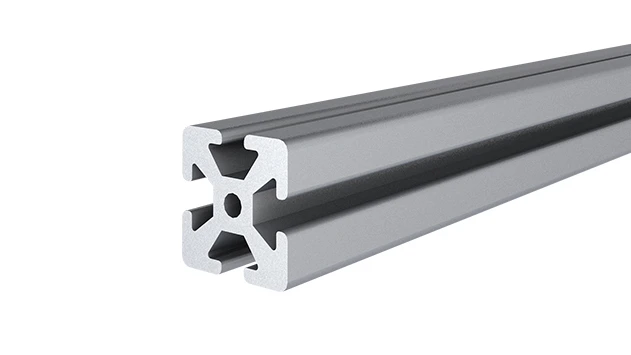
4040F is a 4.00x4.00 CM fractional 40 series square extrusion T-slot profile with four side open T-slots, each side with 4.00cm face. The profile has align-a-grooves to assist in aligning connecting profiles.
Walk into any modern manufacturing facility, and you'll notice a quiet revolution happening on the factory floor. It's not in the high-tech robots or the fancy software (though those help). It's in the structure of the place itself—the workbenches where assemblers piece together components, the racks holding raw materials, the trolleys gliding between stations. These elements, often overlooked, are the backbone of efficient production. And more often than not, they're built from one unsung hero: aluminum profiles.
Aluminum profiles have become the go-to building blocks for lean manufacturing systems, and for good reason. They're lightweight, strong, and infinitely customizable. But here's the thing: not all profiles are created equal. When it comes to EU standard aluminum profiles, two names often pop up in design meetings: 4040F and 4080F. At first glance, the choice might seem simple—bigger is better, right? After all, 4080F has a larger cross-section, so it must be stronger. But in the world of lean systems, where waste reduction and precision matter most, "bigger" isn't always "better." Sometimes, the smaller 4040F profile is the smarter choice.
In this article, we're diving deep into the 4040F vs. 4080F debate. We'll break down what makes each profile unique, explore real-world scenarios where the smaller 4040F shines, and help you decide when to opt for compactness over size. Whether you're setting up a new assembly line, upgrading your workbenches, or designing material racks, this guide will help you choose the profile that aligns with your goals—without overspending or overcomplicating your process.
Meet the Contenders: What Are 4040F and 4080F EU Standard Aluminum Profiles?
Before we jump into when to choose 4040F, let's make sure we're all on the same page about what these profiles actually are. Both 4040F and 4080F are part of the EU standard aluminum extrusion profile family—a set of specifications that ensures compatibility across suppliers, making it easy to mix and match components (a huge win for lean systems that might need to expand or reconfigure down the line).
First, let's talk about how these profiles are made. They're created through a process called extrusion, where heated aluminum billets are forced through a die to form a specific cross-sectional shape. This is why they're often referred to as aluminum extrusion profiles —the die "extrudes" the metal into the desired design. The "F" in their names? That typically refers to the profile's groove design (often a T-slot) which allows for easy attachment of accessories like brackets, panels, or shelves.
Now, the numbers: 4040F and 4080F get their names from their cross-sectional dimensions. 4040F is a square profile, measuring 40mm by 40mm. 4080F, on the other hand, is rectangular, at 40mm by 80mm. That extra 40mm in height might not seem like much, but it changes everything from load capacity to weight to cost. Let's break down their key differences at a glance.
| Feature | 4040F EU Standard Aluminum Profile | 4080F EU Standard Aluminum Profile |
|---|---|---|
| Cross-Section Dimensions | 40mm x 40mm (square) | 40mm x 80mm (rectangular) |
| Weight per Meter | ~1.8–2.5 kg/m (varies by wall thickness) | ~3.5–4.5 kg/m (varies by wall thickness) |
| Typical Static Load Capacity* | 200–300 kg (for a 1m span, evenly distributed) | 500–700 kg (for a 1m span, evenly distributed) |
| Typical Dynamic Load Capacity* | 100–150 kg (for moving applications like trolleys) | 250–350 kg (for moving applications like trolleys) |
| Common Applications | Compact workbenches, lightweight trolleys, small material racks, prototypes | Heavy-duty workbenches, large material racks, vertical structures, high-load assemblies |
| Cost (Estimated) | Lower (30–40% less per meter than 4080F) | Higher (due to larger cross-section and more material) |
| Space Requirement | Compact; ideal for tight layouts | Bulky; requires more clearance |
*Note: Load capacities are approximate and depend on factors like span length, wall thickness, and support configuration. Always consult manufacturer specs for your specific use case.
When Smaller is Smarter: The Case for 4040F EU Standard Aluminum Profile
Now that we know the basics, let's get to the heart of the matter: when should you choose the smaller 4040F over the larger 4080F? The answer lies in aligning the profile's capabilities with your actual needs. Lean systems thrive on eliminating waste, and using a 4080F where a 4040F would suffice is a classic example of waste—waste of material, waste of space, and waste of money. Let's explore five scenarios where 4040F is the clear winner.
Scenario 1: Compact Workbenches for Precision Tasks
Imagine a team of technicians assembling small electronic components—think circuit boards for smartphones or medical devices. Their workbenches need to be stable, yes, but they don't need to support the weight of a car engine. A typical electronics workbench might hold a few tools, a magnifying lamp, and a small ESD mat (to prevent static damage). In this case, a 4040F frame is more than up to the task.
Why? Let's do the math. A standard workbench top (say, 1200mm long x 600mm deep) made of plywood or MDF weighs around 15–20 kg. Add tools, components, and a worker leaning on it (another 70–80 kg), and the total load is roughly 100 kg. The 4040F profile, with a static load capacity of 200–300 kg over a 1m span, has more than enough margin for safety. Using a 4080F here would be overkill—it would add unnecessary weight to the bench (making it harder to move if needed) and increase the cost of materials by 30–40%.
But it's not just about weight. Compact workbenches in electronics or precision assembly lines often need to fit into tight spaces. A 4040F frame has a smaller footprint, leaving more room for workers to move around or for additional stations. Plus, the lighter weight of 4040F makes it easier to add features like height-adjustable legs or casters (for mobile workbenches), without turning the bench into a cumbersome behemoth.
Scenario 2: Lightweight Material Handling Trolleys
In lean systems, material handling is all about efficiency. Trolleys that move parts from storage to assembly lines need to be easy to push, maneuverable, and durable. But "durable" doesn't always mean "heavy." If your team is moving small batches of lightweight components—like plastic injection molded parts or small metal fasteners—a trolley built with 4040F is the way to go.
Consider a trolley designed to carry 50 kg of parts. The frame needs to support the load, but it also needs to be light enough for a single worker to push, even up slight inclines or over uneven floors. A 4040F frame, with its ~2 kg/m weight, keeps the total trolley weight low (often under 20 kg empty). Compare that to a 4080F frame, which could add another 15–20 kg to the trolley's weight. That extra weight isn't just hard on workers' backs—it slows down production. In a busy facility, a few extra seconds per trolley push adds up to hours of lost productivity over a week.
Another bonus? 4040F trolleys are easier to store when not in use. Their compact size means they can be nested or stacked, saving valuable floor space—a critical factor in facilities where every square meter counts.
Scenario 3: Low-Load Material Racks in Tight Spaces
Not all material racks are created equal. A rack holding pallets of steel sheets needs to be industrial-grade, but a rack holding bins of screws, washers, or small plastic parts? That's a job for 4040F. Let's say you run a small machine shop, and you need a rack to hold 10 bins of fasteners, each weighing 5 kg. Total load: 50 kg. A 4040F rack with 3–4 shelves will handle that with ease, and it won't take up half the workshop.
Space is often the biggest constraint here. Many small to medium-sized facilities don't have the luxury of wide aisles. A 4040F rack, with its 40mm depth per upright, is slimmer than a 4080F rack, allowing aisles to stay narrow while still providing access to parts. This is especially true in "supermarket" setups—lean systems where materials are stored in small quantities near the assembly line. A 4040F rack fits neatly into these mini-storage zones without disrupting workflow.
And let's not forget installation. 4040F profiles are lighter, so mounting them to walls or assembling free-standing racks is a one-person job. 4080F, on the other hand, often requires two people to maneuver, adding time and labor costs to the setup process.
Scenario 4: Cost-Conscious Startups and Small Batch Production
Startups and small manufacturers operate on tight budgets. Every euro saved on materials is a euro that can go into R&D, marketing, or hiring. If you're producing small batches (say, 100 units per month) or prototyping a new product line, 4040F lets you build the infrastructure you need without breaking the bank.
Let's say you need to build three workbenches and two material racks for your startup's assembly line. Using 4040F instead of 4080F could save you hundreds, if not thousands, of euros. For example, a 3-meter length of 4040F costs around €25–€35, while a 3-meter 4080F is €40–€60. Multiply that by the number of profiles needed for your project, and the savings add up fast. Those savings can then be invested in other lean tools, like better inventory management software or worker training—investments that drive long-term efficiency.
But it's not just upfront cost. 4040F is also cheaper to ship (thanks to lower weight) and easier to modify. If your product design changes and you need to reconfigure your workbenches, 4040F profiles are lighter and easier to disassemble, reducing downtime and labor costs during retooling.
Scenario 5: Prototyping and Rapid Reconfiguration
In today's fast-paced manufacturing world, the ability to prototype and iterate quickly is a competitive advantage. Whether you're testing a new assembly process or designing a custom workstation, you need a flexible system that can be built, tested, and modified in days—not weeks. 4040F is perfect for this.
Why? Because it's lightweight and easy to work with. Unlike 4080F, which requires more effort to cut, drill, and assemble, 4040F can be handled with basic tools. This means your team can build a prototype workbench or rack in a afternoon, test it, and tweak the design the next day. For example, if you realize the prototype rack is too tall, you can saw a 4040F profile down to size without struggling with its weight. Try doing that with a 4080F profile, and you'll need a helper (and maybe a power saw) just to hold it steady.
Rapid reconfiguration is also key for lean systems that follow the "Kaizen" philosophy of continuous improvement. A production line that's set in stone with heavy 4080F structures is hard to adapt. But a line built with 4040F can be reorganized in a weekend—adding a new workstation here, moving a rack there—all without calling in a team of engineers. It's lean manufacturing in action: flexible, responsive, and focused on progress, not perfection.

When to Think Twice: Limitations of 4040F
To be clear, 4040F isn't a one-size-fits-all solution. There are times when its smaller size becomes a liability. Let's be honest about its limitations so you don't end up with a wobbly rack or a failed workbench.
High Load Requirements: If you need to support more than 300 kg over a 1m span, 4040F might not cut it. For example, a workbench holding a large CNC machine (weighing 500+ kg) or a vertical rack storing heavy metal sheets (each 20 kg, stacked 20 high) needs the extra strength of 4080F. Pushing 4040F beyond its limits isn't just risky—it's dangerous. A collapsed rack could damage materials, injure workers, or shut down production.
Heavy-Duty Assembly Lines: In automotive or aerospace manufacturing, where parts are large and heavy, 4080F is often necessary. A trolley moving engine blocks (weighing 200+ kg) needs a frame that won't bend under the load. 4040F would flex, leading to instability and potential safety hazards.
Vertical Structures with Overhang: If you're building a structure that extends far beyond its supports—like a cantilever rack with a 1m overhang—4040F may not have the rigidity to prevent sagging. The extra height of 4080F provides better resistance to bending, making it a better choice for these applications.
The Role of Accessories: Making 4040F Work Harder
Here's a little-known secret: even with its limitations, 4040F can punch above its weight with the right aluminum profile accessories . Think of it like a smartphone—great on its own, but even better with a protective case or a power bank. The same goes for 4040F: brackets, gussets, and reinforced connectors can turn it from a "light-duty" profile into a versatile workhorse.
Heavy-Duty Brackets and Gussets: A basic 90° connector might be enough for a simple shelf, but if you need to strengthen a joint (say, on a workbench that gets a lot of use), add a gusset. Gussets are triangular metal plates that distribute weight across the joint, reducing stress on the profile. For example, adding a gusset to the corner of a 4040F workbench can increase its load capacity by 20–30%.
Reinforced Casters: Want to make a 4040F trolley carry more weight? Use heavy-duty casters with larger wheels and locking brakes. The casters bear the brunt of the load, so the 4040F frame just needs to hold them steady. It's a simple hack that turns a lightweight trolley into a reliable workhorse for medium loads.
Cross-Bracing: For tall structures like racks, cross-bracing (diagonal profiles connecting uprights) can add stability without increasing the size of the main frame. A 4040F rack with cross-bracing will wobble less than one without, even when fully loaded. It's a classic engineering trick—using geometry to make up for size.
Real-World Success Stories: 4040F in Action
Still not convinced that 4040F can hold its own? Let's look at two real-world examples of companies that chose 4040F and never looked back.
Case Study 1: Precision Electronics Assembly Workshop
A small electronics manufacturer in Germany specializing in medical device components was struggling with cluttered workbenches and inefficient material flow. Their old workbenches were heavy, fixed in place, and made of steel—great for strength, but terrible for flexibility. They needed a solution that would free up space, reduce setup time, and support their lean initiative.
After consulting with an aluminum profile supplier, they opted for 4040F frames for their new workbenches. Each bench was custom-built with 4040F uprights, a plywood top, and accessories like tool holders and small parts bins (all attached via T-slot connectors). The result? Workbenches that were 30% lighter than the old steel ones, easy to move (they added casters for mobility), and 40% cheaper to build. Best of all, the team could reconfigure the benches in minutes—adding a shelf here, moving a tool holder there—to adapt to new product designs. Within six months, assembly time per unit dropped by 15%, and workers reported less fatigue from pushing heavy trolleys.
Case Study 2: Small-Batch Automotive Parts Supplier
A family-owned automotive parts supplier in Poland needed to expand their production line to meet a new contract, but they had limited space and budget. They needed material racks for small plastic components and mobile workstations for quality control checks. Their initial thought was to go with 4080F—"better safe than sorry," they said. But after running the numbers, they realized 4080F would cost twice as much and take up too much floor space.
Instead, they went with 4040F for both the racks and the workstations. The racks, designed to hold 10 bins per shelf (total load 50 kg per shelf), were sturdy and compact, fitting into the narrow aisles between production machines. The mobile workstations, built with 4040F frames and ESD tops, were light enough for quality inspectors to push around the shop floor. The total cost? 35% less than the 4080F plan. And when the contract ended and they needed to retool for a new client, they disassembled the racks and workstations in a day, repurposing the 4040F profiles for new projects. As the plant manager put it: "4040F didn't just save us money—it saved us from being stuck with equipment we couldn't use."
Conclusion: Choosing the Right Profile for Your Lean System
At the end of the day, the choice between 4040F and 4080F EU standard aluminum profiles isn't about "better" or "worse." It's about matching the profile to the job. 4080F is a powerhouse for heavy loads and industrial applications, but 4040F is the unsung hero of lean systems—flexible, affordable, and surprisingly strong for its size.
If you're building compact workbenches, lightweight trolleys, low-load racks, or prototypes, 4040F is the way to go. It reduces waste (of material, space, and money), makes your team more agile, and supports the continuous improvement mindset that defines lean manufacturing. And with the right aluminum profile accessories, it can handle more than you might think.
So the next time you're designing a new workstation or rack, ask yourself: What's the actual load? How much space do I have? What's my budget? Chances are, you'll find that 4040F is more than enough. After all, in lean systems, the goal isn't to build something that can do everything—it's to build something that does exactly what you need, and nothing more. And that's where 4040F shines.