- Company Articles
- Products and Technology
- Product knowledge
- 4040r EU Standard Aluminum Profile for Conveyors: Smooth Material Flow

4040r EU Standard Aluminum Profile for Conveyors: Smooth Material Flow
Related Product
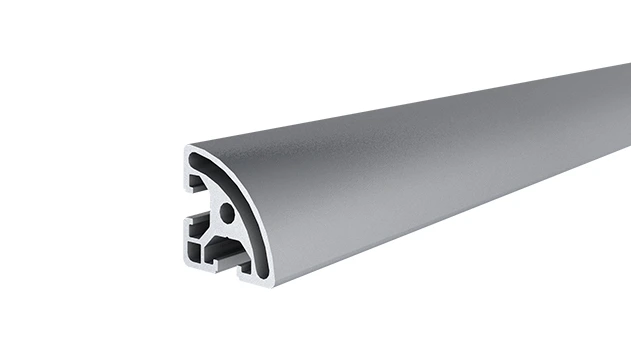
4040R EU Standard Aluminum Profile
4040R is a 4.00x4.00 CM fractional 40 series square extrusion T-slot profile with two side open T-slots, each side with 4.00cm face,the other side is round face. The profile has align-a-grooves to assist in aligning connecting profiles.
Walk into any busy manufacturing facility, and you'll quickly notice the unsung heroes keeping operations moving: conveyors. These systems are the circulatory system of production, ferrying parts, components, and finished goods from one station to the next. But here's the thing—even the best conveyor can feel clunky, unreliable, or rigid if built with the wrong materials. That's where the 4040r EU Standard Aluminum Profile comes in. It's not just a piece of metal; it's the backbone of seamless material flow, designed to adapt, endure, and elevate how your conveyor systems perform. Let's dive into why this profile has become a go-to for engineers and plant managers who refuse to settle for anything less than smooth, efficient operations.
What Exactly Is the 4040r EU Standard Aluminum Profile?
First, let's break down the name. "4040r" tells you two key things: the dimensions and the design. The profile measures 40mm by 40mm—square, sturdy, and versatile enough for most conveyor frame needs. The "r" stands for "rounded," a subtle but critical detail we'll circle back to later. Then there's "EU Standard," which isn't just a label. It means this profile meets strict European union guidelines for quality, safety, and compatibility. That's a big deal if you're operating across borders or sourcing components from multiple suppliers—you know it will play nice with other EU-standard parts.
At its core, this profile is made from high-grade aluminum alloy, typically 6063-T5. Why that alloy? It's a sweet spot of strength, lightness, and corrosion resistance. Unlike steel, which can rust and weigh down your system, aluminum holds up to moisture, oils, and the daily grind of factory life without adding unnecessary bulk. And because it's extruded—pulled through a die to create its shape—the 4040r has consistent dimensions and a smooth finish, ensuring every piece you buy is identical to the last. No more guessing if a new batch will fit your existing setup.
Key Features That Make 4040r a Conveyor Game-Changer
Let's get into the nitty-gritty of what makes the 4040r stand out. These features aren't just checkboxes—they directly impact how well your conveyor handles material flow.
- T-Slot Design: Run your finger along the length of the profile, and you'll feel the T-shaped grooves (T-slots) on all four sides. These slots are like built-in mounting points for just about anything: roller tracks, guides, guards, sensors, or even workbench surfaces. No drilling, no welding—just slide in a bolt or bracket, tighten, and you're done. This flexibility means you can reconfigure your conveyor on the fly if production needs change.
- Rounded Edges (The "r" Factor): Remember that "r" for rounded? Sharp edges in a factory are a safety hazard—think scraped knuckles or damaged packaging. The 4040r's rounded corners reduce those risks, making the workspace safer for operators. Plus, they prevent snags on materials like fabric or thin plastic, keeping your flow uninterrupted.
- Lightweight but Strong: Aluminum's natural lightness makes installation a breeze. You won't need a crane to position a 4040r frame—two people can carry and mount sections without breaking a sweat. But don't let the weight fool you: this profile can handle up to 150 kg per linear meter (depending on the setup), easily supporting heavy roller tracks, loaded bins, or metal parts.
- Corrosion Resistance: Factories are messy places. Coolant, lubricants, and even humidity can take a toll on metal. The 4040r's aluminum alloy forms a thin oxide layer that acts like a shield, preventing rust and deterioration. This means less maintenance, longer lifespans, and fewer unexpected breakdowns.

Why It's the Perfect Match for Conveyors
Conveyors aren't one-size-fits-all. Some move small electronic components, others haul heavy automotive parts. Some need to tilt, curve, or integrate with workbenches. The 4040r profile adapts to all these scenarios, and here's how:
1. It's the Foundation for Smooth Roller Tracks
A conveyor's ability to move materials smoothly hinges on its roller track. And roller tracks need a stable, adjustable frame to sit on—that's where 4040r shines. The T-slots make mounting roller tracks a cinch. Whether you're using steel roller tracks for heavy loads or lightweight aluminum ones for delicate parts, you can secure them directly to the profile with bolts or specialized roller track connectors. No more wobbly tracks or misaligned rollers that jam boxes or slow down flow.
Need to adjust the track height? Just loosen the bolts, slide the mounting brackets up or down the T-slot, and retighten. Want to angle the track for gravity-fed flow? Tilt the 4040r frame using hinge brackets (another EU-standard accessory) and lock it in place. This adjustability is a lifesaver when you retool your line for a new product or need to fine-tune material speed.
2. Compatibility with Aluminum Profile Accessories
A profile is only as good as the accessories it works with, and the 4040r plays well with a whole ecosystem of aluminum profile accessories. Think corner codes that let you build 90-degree angles without welding, end caps that seal the profile ends to keep out dust, or pipe clamps that attach side rails to prevent materials from sliding off the conveyor. These accessories are designed to snap into the T-slots, so you can build a fully customized system without hiring a fabricator.
For example, if you're running a conveyor that feeds parts to a workbench, you can use the same 4040r profile to build the workbench frame. That means the conveyor and workbench align perfectly—no gaps, no height mismatches—creating a seamless handoff from "moving" to "working." It's this kind of integration that turns a jumbled production floor into a cohesive, efficient workspace.
3. Lightweight Design = Easier Installation and Upgrades
Let's talk about installation day. Steel profiles require heavy lifting equipment and often welding, which adds time and labor costs. With 4040r, a small team can carry, position, and assemble the frame in hours, not days. Since there's no welding, you can make adjustments on the spot if measurements are off. And when it's time to upgrade—say, adding a second track or extending the conveyor—you can disassemble and reconfigure the profile without cutting or damaging it. This modularity is a game-changer for facilities that need to pivot quickly.
Real-World Impact: How 4040r Solves Common Conveyor Headaches
Let's ground this in real problems manufacturers face. Imagine a electronics plant where small circuit boards kept getting stuck on a conveyor with a steel frame. The steel was heavy, so the frame had warped slightly over time, creating uneven spots. The tracks were welded on, so adjusting them meant cutting and rewelding—costly and time-consuming. After switching to 4040r, they mounted aluminum roller tracks with adjustable brackets. The lightweight frame didn't warp, the tracks stayed level, and stuck boards became a thing of the past. Plus, when they introduced a new, slightly larger board, they just loosened the brackets and widened the track—done in 20 minutes.
Or take a food packaging facility where corrosion was an issue. Their old steel conveyor frames would rust near washdown areas, leaving unsightly stains and risking contamination. The 4040r profile's corrosion resistance meant they could clean the area without worrying about rust, and the rounded edges made wiping down the frame faster (no sharp corners to trap gunk). Maintenance time dropped by 30%, and the conveyor looked newer, longer.
Comparing 4040r to Other Profiles: Why It Stands Out
You might be thinking, "There are other 40x40 aluminum profiles out there—why 4040r?" Let's put it head-to-head with two common alternatives: the 4040a EU Standard (square edges) and a generic 30x30 non-standard profile.
| Feature | 4040r EU Standard | 4040a EU Standard (Square Edges) | Generic 30x30 Non-Standard |
|---|---|---|---|
| Dimensions | 40x40mm, rounded edges | 40x40mm, square edges | 30x30mm, variable edge design |
| Max Load Capacity | ~150 kg/m (depending on setup) | ~150 kg/m (same alloy) | ~80 kg/m (thinner walls) |
| Safety | Rounded edges reduce injury risk | Square edges may cause scrapes | Edges often sharp/unfinished |
| Accessory Compatibility | Full EU-standard accessory range | Same as 4040r | Limited; may require custom parts |
| Best For | Conveyors, workbenches, material racks | Heavy-duty frames (less safety focus) | Light, low-budget, non-critical setups |
The 4040a is strong, but the rounded edges of 4040r make it safer for operators who interact with the conveyor daily. The generic 30x30 is cheaper upfront, but its lower load capacity and limited accessories mean you'll likely replace it sooner or face workarounds that hurt efficiency. The 4040r strikes that balance of safety, strength, and compatibility that keeps operations running smoothly long-term.
Installation Tips: Getting the Most Out of Your 4040r Conveyor Frame
Installing a 4040r-based conveyor is straightforward, but a few tips will save you time and headaches:
- Measure twice, tighten once: The T-slots make adjustments easy, but taking accurate measurements first avoids unnecessary tweaks. Use a laser level to ensure the frame is straight—even a small dip can cause material jams.
- Don't over-tighten bolts: Aluminum is strong, but over-tightening can strip the T-slots or warp the profile. Snug is enough—most accessories have built-in stoppers to prevent overtightening.
- Use the right accessories: Stick to EU-standard aluminum profile accessories. Off-brand parts might fit loosely or wear out faster, defeating the profile's durability.
- Test load gradually: Once installed, start with light loads to check for wobbles or misalignment before ramping up to full capacity. Better to catch issues early!
Final Thoughts: Investing in Smooth Flow
At the end of the day, a conveyor system is only as good as its frame. The 4040r EU Standard Aluminum Profile isn't just a component—it's an investment in reliability, flexibility, and safety. It turns clunky, rigid conveyors into adaptable, low-maintenance workhorses that keep your material flow smooth, your operators happy, and your production on track.
Whether you're building a new conveyor from scratch or upgrading an old one, don't overlook the backbone. Choose 4040r, and you'll wonder how you ever managed with anything else. After all, in manufacturing, smooth flow isn't a luxury—it's the difference between meeting deadlines and falling behind. And with 4040r, you're not just keeping up—you're staying ahead.