- Company Articles
- Products and Technology
- Product knowledge
- 4040r EU Standard Aluminum Profile for Medical Workstations: Cleanroom Compatibility

4040r EU Standard Aluminum Profile for Medical Workstations: Cleanroom Compatibility
Related Product
4040R EU Standard Aluminum Profile
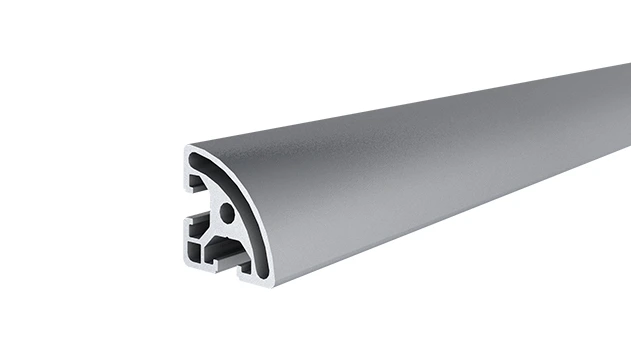
4040R is a 4.00x4.00 CM fractional 40 series square extrusion T-slot profile with two side open T-slots, each side with 4.00cm face,the other side is round face. The profile has align-a-grooves to assist in aligning connecting profiles.
Walk into any medical cleanroom—whether it's a surgical suite, a pharmaceutical compounding lab, or a medical device manufacturing facility—and you'll notice something immediately: every surface, every tool, every piece of furniture feels intentional. There's no room for clutter, no rough edges collecting dust, no materials that might shed particles or harbor bacteria. In these environments, where a single contaminated surface could compromise patient safety or ruin a batch of life-saving medication, the stakes are impossibly high. That's why the workstations at the heart of these spaces aren't just "tables" or "benches"—they're precision-engineered systems built to meet the strictest standards of cleanliness, durability, and functionality. And today, we're diving into one component that's quietly revolutionizing how these workstations are designed: the 4040r EU Standard Aluminum Profile.
If you're not familiar with aluminum profiles, think of them as the building blocks of modern industrial furniture. They're lightweight, strong, and infinitely customizable, thanks to their modular design. But the 4040r isn't just any profile. With its rounded edges, EU-certified materials, and cleanroom-optimized features, it's become the go-to choice for medical facilities that refuse to compromise on sterility. Let's unpack why this unassuming aluminum extrusion has become a cornerstone of cleanroom design—and how it's making healthcare spaces safer, more efficient, and easier to maintain.
What Is the 4040r EU Standard Aluminum Profile, Anyway?
First things first: let's break down the name. "4040" refers to the profile's cross-section dimensions—40mm by 40mm. That's a common size for workstations, offering a balance of stability and flexibility (not too bulky, not too flimsy). The "r" stands for "radius," which is a game-changer for cleanrooms: instead of sharp, 90-degree corners, the edges are gently rounded. We'll circle back to why that matters in a minute. Then there's "EU Standard"—this isn't just marketing jargon. It means the profile meets strict European union regulations for materials, safety, and performance, including standards like EN 1090 (for structural aluminum) and ISO 14644 (for cleanroom classification). For medical facilities, that certification isn't optional; it's a legal and ethical requirement.
Aluminum Extrusion: The Secret to Its Strength and Cleanliness
The 4040r is made using a process called aluminum extrusion, where raw aluminum alloy is heated and forced through a die to create its precise shape. This method does more than just produce consistent dimensions—it results in a surface that's smooth, non-porous, and inherently resistant to corrosion. Unlike steel, which can rust if scratched, or wood, which absorbs moisture and bacteria, aluminum's natural oxide layer acts as a barrier, preventing contaminants from seeping in. That's a big deal in cleanrooms, where even tiny cracks or pores can become breeding grounds for microbes.
But it's not just the material itself—it's the way it's engineered. The 4040r's extrusion includes T-slots (longitudinal grooves along its length) that allow for easy attachment of accessories: shelves, brackets, tool holders, even entire work surfaces. This modularity means medical teams can customize their workstations on the fly, adding a new shelf for surgical instruments or a holder for a compounding pump without needing to drill holes or weld parts. And because the T-slots are integrated into the profile (not added later), there are no gaps or crevices where dust or liquids can collect—another win for cleanliness.
Cleanroom Compatibility: Why the 4040r Stands Out
Cleanrooms are classified by how many particles they allow per cubic meter of air. For example, an ISO 5 cleanroom (common in sterile pharmaceutical manufacturing) permits no more than 3,520 particles of 0.5μm or larger per cubic meter. To put that in perspective, outdoor air in a city might have millions of such particles. Achieving that level of cleanliness requires more than just HEPA filters and regular cleaning—it requires every surface in the room to be a "cleanliness partner." Let's walk through the key cleanroom requirements and how the 4040r checks each box.
1. Rounded Edges: No More Dust Traps
Remember that "r" in 4040r? Rounded edges might seem like a small detail, but in cleanrooms, they're a game-changer. Sharp, 90-degree corners act like tiny dust magnets—airflow eddies around them, depositing particles that are hard to wipe away. Over time, those particles can accumulate, becoming a contamination risk. The 4040r's rounded edges eliminate this problem: air flows smoothly over the surface, and cleaning staff can wipe them down with a disinfectant cloth without missing a spot. It's a simple fix, but one that reduces the time and effort needed to maintain sterility.
2. Non-Porous, Corrosion-Resistant Surface
Medical cleanrooms use aggressive disinfectants—think hydrogen peroxide, alcohol, or quaternary ammonium compounds—to kill bacteria and viruses. These chemicals can eat away at lesser materials, causing pitting, discoloration, or even degradation. The 4040r, made from high-grade aluminum alloy (typically 6063-T5, a common choice for structural applications), is resistant to most industrial cleaners. Its smooth, non-porous surface doesn't absorb liquids, so spills can be wiped up immediately without staining or weakening the material. This durability means the profile can withstand daily cleaning regimens for years without showing signs of wear—critical for facilities looking to avoid frequent replacements.
3. Low Particle Generation
In cleanrooms, even the furniture can be a source of contamination. Materials like wood or plastic might shed fibers or particles as they age; painted steel can chip, releasing flakes into the air. Aluminum extrusion, by contrast, is a homogeneous material—no layers to peel, no coatings to chip. The 4040r's surface is anodized (an electrolytic process that thickens the natural oxide layer), which not only enhances corrosion resistance but also creates a hard, smooth finish that doesn't shed particles. In testing, aluminum profiles like the 4040r have been shown to generate fewer than 10 particles (≥0.5μm) per square meter per hour—well below the limits set by ISO 14644 for even the strictest cleanroom classes.
4. ESD Compatibility (When Needed)
While not all medical cleanrooms require electrostatic discharge (ESD) protection, some—like those manufacturing electronic medical devices or handling sensitive lab equipment—do. Static electricity can damage delicate components or attract charged particles, which then stick to surfaces. The 4040r can be modified with ESD-safe anodizing or conductive accessories (like ESD-compliant caster wheels or brackets) to dissipate static charges, ensuring compatibility with ESD-sensitive workflows. This versatility makes it a one-size-fits-most solution for diverse cleanroom needs.

Beyond the Profile: Aluminum Profile Accessories That Enhance Cleanroom Functionality
A profile is only as good as the accessories that bring it to life. The 4040r's T-slot design means it works seamlessly with a range of aluminum profile accessories, each engineered to maintain the same cleanroom standards as the profile itself. Let's look at a few that are particularly valuable in medical settings:
Caster Wheels: Mobility Without Compromise
Many medical workstations need to be mobile—think of a surgical instrument cart that moves from prep area to OR, or a lab bench that needs to be repositioned for deep cleaning. Caster wheels make this possible, but not all casters are cleanroom-friendly. The best options for 4040r workstations are flat swivel castor wheels with brakes (a keyword from our list!)—they're designed with sealed bearings to prevent lubricant leakage (which can contaminate cleanrooms) and smooth, non-marking treads that won't shed particles. Look for casters with stainless steel frames (resistant to corrosion) and easy-to-clean surfaces—no crevices for dust to hide.
Adjustable Leveling Feet: Stability on Uneven Floors
Cleanroom floors are usually smooth, but even small imperfections can make workstations wobble—a hazard when handling delicate equipment or sterile materials. Anti-slip adjustable leveling feet (another key accessory) screw into the base of 4040r profiles, allowing staff to height and ensure the workstation sits perfectly flat. These feet often have rubber or plastic pads that grip the floor without scratching, and their simple design (no moving parts, no hidden gaps) makes them easy to clean.
Work Surface Panels: Seamless, Sterile Tops
The 4040r is just the frame; the work surface is where the action happens. Medical facilities often pair the profile with aluminum honeycomb panels or stainless steel tops. Honeycomb panels are lightweight but strong, with a core of aluminum hexagons sandwiched between thin aluminum sheets—no voids, no moisture absorption. Stainless steel, meanwhile, is a classic choice for its heat resistance and easy-clean properties. Both options attach to the 4040r via T-slot brackets, creating a seamless, gap-free surface that's a breeze to disinfect.
Real-World Impact: A Case Study
Let's take a quick detour to a real example. A mid-sized pharmaceutical company in Germany was struggling with contamination issues in their cleanroom compounding area. Their old workstations, made from painted steel, had started to chip around the edges, and the sharp corners were collecting dust despite daily cleaning. After switching to workstations built with 4040r profiles and aluminum honeycomb tops, they saw a 40% reduction in particle counts during routine air sampling. "We used to spend hours scrubbing those steel benches, and we still had occasional spikes in contamination," said the facility manager. "Now, the rounded edges and smooth aluminum surfaces mean we can clean a workstation in half the time, and the results speak for themselves."
Comparing 4040r to Other Materials: Why Aluminum Extrusion Wins for Cleanrooms
You might be wondering: why not use steel? Or plastic? Or even wood? Let's break down how the 4040r stacks up against common alternatives in key cleanroom categories:
| Feature | 4040r Aluminum Profile | Painted Steel | Plastic (e.g., PVC) | Wood (Sealed) |
|---|---|---|---|---|
| Cleanability | Excellent: Smooth, non-porous surface; rounded edges for easy wiping | Poor: Paint chips; sharp corners trap dust; prone to rust if scratched | Fair: Smooth but can warp with heat; may absorb chemicals over time | Poor: Porous even when sealed; can harbor bacteria in tiny cracks |
| Particle Generation | Very Low: Anodized surface doesn't shed; homogeneous material | High: Paint chips; rust flakes; welds may degrade | Moderate: May shed microplastics with wear; joints can loosen | High: Sealer can peel; wood fibers may release over time |
| Durability | Excellent: Resistant to corrosion, dents, and chemicals; 10+ year lifespan | Fair: Rusts if paint is damaged; heavy and prone to bending | Poor: Prone to cracking, warping, and chemical damage | Poor: Susceptible to moisture damage; scratches easily |
| Modularity | Excellent: T-slots allow easy accessory attachment; reconfigurable | Poor: Requires welding or drilling to modify; fixed design | Fair: Some modular options, but limited load capacity | Poor: Fixed design; difficult to modify without damaging |
| Weight | Lightweight: ~2.5kg/m (easy to move with casters) | Heavy: ~8kg/m (hard to reposition; strains floors) | Light: ~1.5kg/m (but low strength) | Moderate: ~5kg/m (varies by wood type) |
The takeaway? While other materials might work in less demanding environments, the 4040r's combination of cleanability, durability, and flexibility makes it the clear choice for medical cleanrooms. It's not just about meeting standards—it's about exceeding them, day in and day out.
EU Standards: Why Certification Matters
The "EU Standard" label on the 4040r isn't just a marketing tool—it's a promise of quality. In Europe, medical devices and equipment must comply with the Medical Device Regulation (MDR) or In Vitro Diagnostic Regulation (IVDR), depending on their use. While the profile itself isn't a medical device, the workstations built with it are often classified as "ancillary equipment" and must meet general safety and performance requirements. The 4040r's EU certification ensures it meets standards like:
- EN 1090 : Ensures structural integrity, with strict controls on material quality and manufacturing processes.
- ISO 11135 : Validates compatibility with ethylene oxide sterilization (common in medical settings).
- REACH : Restricts the use of hazardous substances, ensuring the profile is safe for both staff and patients.
For medical facilities, this certification isn't just about compliance—it's about trust. When you choose a 4040r profile from a reputable supplier, you're not guessing whether it will hold up in a cleanroom; you're relying on third-party testing and oversight to confirm it meets the highest standards. This peace of mind is invaluable in an industry where mistakes can have life-altering consequences.
Designing with the 4040r: Tips for Medical Workstation Success
So, you're convinced the 4040r is right for your cleanroom. Now what? Designing a workstation with this profile is a collaborative process, but here are a few tips to ensure you get the most out of it:
Start with the Workflow
Before picking accessories or dimensions, map out how the workstation will be used. Will staff stand or sit? What tools or equipment need to be within arm's reach? How often will the workstation be repositioned? For example, a surgical instrument prep station might need multiple shelves for different tool categories, while a compounding bench might require a larger work surface and integrated storage for ingredients. The 4040r's modularity means you can design around the workflow, not the other way around.
Prioritize Accessibility for Cleaning
Even the best profile can't compensate for poor design. Leave at least 15cm of clearance between the workstation and the wall to allow for easy cleaning behind it. Avoid overcrowding the T-slots with unnecessary accessories—each bracket or shelf adds a potential dust trap. And if you're using casters, opt for models with a brake that's easy to engage/disengage without bending down (reducing strain on staff and ensuring the workstation stays put during use).
Choose Accessories Wisely
Not all aluminum profile accessories are created equal. Stick to those explicitly labeled as "cleanroom-compatible" or "low particle generation." For example, roller track and accessories (used for moving materials along the workstation) should have smooth, sealed bearings to prevent particle buildup. Similarly, cable management clips should be made from the same aluminum alloy as the profile to avoid galvanic corrosion (a reaction between dissimilar metals). Your supplier should be able to provide a list of compatible accessories—don't hesitate to ask for test reports or certifications.
The Future of Cleanroom Workstations: Why the 4040r Is Here to Stay
As medical technology advances, cleanroom requirements are only getting stricter. New regulations, more sensitive equipment, and a growing focus on infection control mean facilities need furniture that can adapt. The 4040r's modular design makes it future-proof—if your needs change (e.g., you need to add a new shelf, integrate a monitor arm, or reconfigure the entire workstation), you can do so without replacing the entire frame. This adaptability reduces long-term costs and minimizes downtime during upgrades.
Additionally, as sustainability becomes a priority in healthcare, aluminum's recyclability is a major plus. Unlike steel or plastic, which may end up in landfills, aluminum can be recycled indefinitely without losing quality. The 4040r's long lifespan (often 15+ years in medical settings) further reduces its environmental footprint, making it a choice that's good for both patients and the planet.
Final Thoughts: More Than a Profile—A Partner in Patient Safety
At the end of the day, the 4040r EU Standard Aluminum Profile is more than just a piece of metal. It's a silent partner in the work of saving lives. It's the bench where a pharmacist compounds a life-saving medication, the cart that delivers sterile instruments to a surgical team, the workstation where a lab technician analyzes a patient's blood sample. In each of these roles, it doesn't just meet standards—it elevates them, ensuring that the spaces where healthcare happens are as safe, efficient, and reliable as the professionals who work in them.
So, the next time you step into a medical cleanroom, take a closer look at the workstations. Chances are, you'll spot the telltale rounded edges and smooth aluminum finish of the 4040r. And now, you'll know why it's there: because in healthcare, every detail matters. And when it comes to cleanroom compatibility, the 4040r doesn't just check the boxes—it rewrites them.