- Company Articles
- Products and Technology
- Product knowledge
- 4040r EU Standard Aluminum Profile for Modular Shelving: Warehouse Optimization

4040r EU Standard Aluminum Profile for Modular Shelving: Warehouse Optimization
Related Product
4040R EU Standard Aluminum Profile
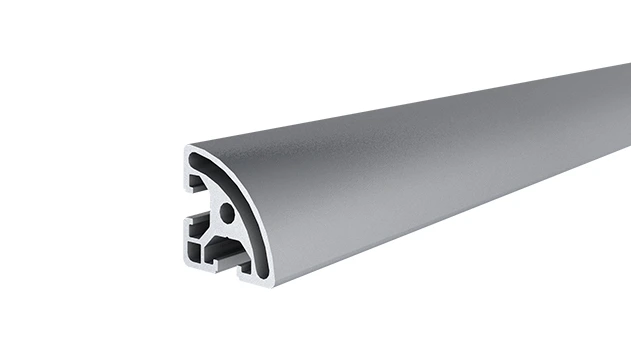
4040R is a 4.00x4.00 CM fractional 40 series square extrusion T-slot profile with two side open T-slots, each side with 4.00cm face,the other side is round face. The profile has align-a-grooves to assist in aligning connecting profiles.
Walk into any modern warehouse, and you'll quickly realize: the difference between a smooth, efficient operation and a chaotic one often comes down to how well the space is organized. Warehouses today face a unique set of challenges—rising demand for faster order fulfillment, fluctuating inventory levels, and the need to adapt to new products or seasonal spikes. Fixed, one-size-fits-all shelving systems? They just can't keep up. That's where modular shelving steps in, and at the heart of this flexible revolution lies a component that's quietly transforming warehouses worldwide: the 4040r EU Standard Aluminum Profile. Let's dive into how this unassuming piece of engineering is redefining warehouse optimization, making spaces more adaptable, durable, and cost-effective than ever before.
The Problem with Traditional Warehouse Shelving: Why Flexibility Matters
For decades, warehouses relied on heavy steel racks or wooden shelves—sturdy, but static. If your business expanded, or you needed to store larger items, you'd either have to buy entirely new shelving or hire contractors to modify existing structures. Time-consuming? Absolutely. Costly? You bet. And let's not forget about space: rigid systems often leave gaps or waste vertical space, forcing warehouses to either overcrowd aisles or lease extra square footage.
Then there's the issue of assembly. Traditional steel shelving requires welding, bolts, and specialized tools, meaning even small adjustments can take hours (or days). For a warehouse manager juggling tight deadlines, that's downtime you can't afford. What if there was a way to build, modify, and expand shelving systems in hours—not weeks—without sacrificing strength or safety? Enter modular shelving, and its secret weapon: the 4040r EU Standard Aluminum Profile.
What Is the 4040r EU Standard Aluminum Profile? A Closer Look
At first glance, the 4040r aluminum profile might seem like just another metal bar. But look closer, and you'll see why it's become a staple in modern warehouse design. Let's break it down:
- EU Standard Compliance: The "EU Standard" label isn't just a marketing term. It means the profile meets strict European union regulations for quality, safety, and precision. That translates to consistent dimensions, reliable performance, and compatibility with a wide range of accessories—no guessing if a connector from one brand will fit another.
- 40x40mm Dimensions: The "4040" refers to its cross-section: 40mm by 40mm. This size strikes a perfect balance between strength and versatility. It's robust enough to support heavy loads (think pallets of electronics or bulk goods) but lightweight enough to handle during assembly, reducing the risk of worker strain.
- The "r" Factor: While exact specs can vary by manufacturer, the "r" often denotes a rounded edge or reinforced design, enhancing both safety (no sharp corners to snag on boxes or injure workers) and structural integrity. Some versions also feature reinforced T-slots—those grooves running along the length of the profile—that make attaching accessories a breeze.
- Material Matters: Aluminum's Hidden Advantages Why aluminum, you ask? Unlike steel, aluminum is naturally corrosion-resistant, so it won't rust in humid warehouses or cold storage facilities. It's also 30% lighter than steel, making it easier to transport, lift, and assemble—no need for heavy machinery. And here's a bonus for eco-conscious businesses: aluminum is 100% recyclable, aligning with sustainability goals without compromising on durability.

Modular Shelving with 4040r: The Power of "Build-as-You-Go"
The true magic of the 4040r profile lies in its modularity. Unlike traditional shelving, which is built to a fixed design, modular systems using 4040r profiles let you create custom setups tailored to your warehouse's unique needs. Here's how it works:
T-Slots: The Key to Versatility Run your finger along the length of a 4040r profile, and you'll notice evenly spaced T-shaped slots. These slots are where the flexibility happens. Using aluminum profile accessories—like brackets, connectors, end caps, or even wheels—you can attach shelves, dividers, bins, or even conveyor tracks (more on that later) anywhere along the profile. Need to add a shelf at 18 inches instead of 24? No problem. Just slide a bracket into the T-slot, tighten a screw, and you're done. No drilling, no welding, no hassle.
From Shelving to Workbenches: Endless Configurations The 4040r profile isn't limited to just shelves. Pair it with a sturdy worktop (like an aluminum honeycomb panel) and some casters, and you've got a mobile workbench—perfect for assembly lines or packing stations. Need a flow rack to keep inventory moving smoothly? Use 4040r as the frame, then attach roller tracks (another modular essential) to create gravity-fed lanes for boxes or totes. The possibilities are nearly endless, and best of all, you're not locked into one design. Seasonal inventory spike? Add a few extra shelves. Launching a new product line with bulkier items? Reconfigure the racking in an afternoon.
Why 4040r Aluminum Profiles Outperform Traditional Materials
Still on the fence about switching from steel or wood? Let's put the 4040r profile head-to-head with traditional materials to see how it stacks up:
| Feature | 4040r Aluminum Profile | Traditional Steel Shelving | Wooden Shelving |
|---|---|---|---|
| Weight | Lightweight (30% lighter than steel of the same strength) | Heavy; requires machinery for assembly | Moderate, but prone to warping over time |
| Assembly Time | Hours (no welding; uses simple tools) | Days (requires welding/bolting by professionals) | Days (cutting, sanding, and securing) |
| Flexibility | Highly adjustable; reconfigure anytime with accessories | Fixed; modifications require cutting/welding | Fixed; modifications damage the structure |
| Durability | Corrosion-resistant; withstands humidity/temperature changes | Prone to rust if not coated; heavy impact can bend | Scratches easily; rots in moisture; pest risk |
| Cost Over Time | Higher upfront, but lower long-term (no replacement costs for adjustments) | Low upfront, but high replacement/modification costs | Low upfront, but frequent replacements due to wear |
The verdict? While 4040r aluminum profiles might have a slightly higher initial cost than basic steel or wood, their durability, flexibility, and ease of modification make them a smarter long-term investment. For warehouses looking to scale or adapt, the savings in time and labor alone often offset the upfront expense within a year.
Real-World Applications: How 4040r Profiles Optimize Warehouses
Theory is great, but let's look at how 4040r profiles are making a difference in actual warehouses. Here are three common use cases where they shine:
1. Flow Racks for Just-In-Time Inventory
Many warehouses today operate on a "just-in-time" model, where inventory moves quickly from receiving to shipping. Flow racks—tilted shelves with roller tracks—let gravity do the work, ensuring items slide forward as the front ones are picked. The 4040r profile provides the perfect frame for these racks: strong enough to support stacked boxes, lightweight enough to angle for optimal flow, and compatible with roller track accessories (like plastic or steel rollers) that attach directly to the T-slots. One electronics warehouse in Germany reported a 25% increase in picking speed after switching to 4040r-based flow racks, thanks to reduced reaching and faster access to inventory.
2. Mobile Workbenches for Assembly Lines
Assembly lines need workspaces that can keep up with changing production needs. A 4040r-based workbench (like the "Workbench E (single deck-without caster)" from many suppliers) is customizable: add tool hooks, bins, or even a small conveyor belt (using, you guessed it, 4040r frames) to create a workstation tailored to specific tasks. Need to move the bench to a new line? Add casters (another aluminum profile accessory) and roll it into place. A automotive parts manufacturer in Poland cut setup time for new assembly lines by 60% after replacing fixed wooden workbenches with 4040r modular ones—no more waiting for carpenters to build custom tables.
3. Conveyor Systems for Seamless Material Flow
Conveyors are the arteries of a warehouse, moving goods from one station to another. Traditional conveyor frames are often bulky and hard to modify. 4040r profiles, however, let you build lightweight, adjustable conveyor supports. Attach roller tracks or belt conveyor components directly to the T-slots, and you've got a system that can be extended, shortened, or reangled as needed. A food distribution center in France used 4040r profiles to build a modular conveyor system that adapts to seasonal produce—longer in summer (for fruits) and shorter in winter (for root vegetables)—saving them the cost of two separate fixed conveyors.
Choosing the Right Accessories: Making the Most of Your 4040r Profiles
A 4040r profile is only as good as the accessories you pair with it. Luckily, the EU standard ensures compatibility across brands, so you can mix and match to create your ideal setup. Here are the must-have aluminum profile accessories to consider:
- Connectors and Joints: These are the "glue" of modular systems. Look for 90° aluminum profile connectors, 45° angle codes, or three-way joints to build corners, T-junctions, or multi-level shelves.
- End Caps: Simple but essential. These plastic or aluminum caps fit over the ends of profiles to prevent snags on boxes or injuries to workers.
- Roller Tracks: For flow racks or conveyors, roller tracks (like plastic roller track guide rails in yellow or grey) attach to 4040r profiles to create smooth, gravity-driven movement for items.
- Casters: Add mobility to workbenches or carts with swivel caster wheels. Look for brake-equipped options to keep setups stable when in use.
- Shelving Panels: Pair 4040r frames with aluminum honeycomb panels or plywood shelves for a flat, sturdy surface. Some panels even have anti-slip coatings for extra safety.
Pro tip: Start with a basic frame, then add accessories as needed. Many suppliers offer starter kits with profiles, connectors, and end caps, making it easy to experiment before scaling up.
Sustainability: Why Aluminum Profiles Are a Green Choice
In today's world, sustainability isn't just a buzzword—it's a business imperative. Warehouses are under pressure to reduce their carbon footprint, and 4040r aluminum profiles deliver here, too. Aluminum is 100% recyclable, and recycling it uses just 5% of the energy needed to produce new aluminum. When your warehouse eventually needs to upgrade or reconfigure, old profiles can be melted down and reused, cutting down on waste. Plus, aluminum's corrosion resistance means you won't have to replace rusted parts, further reducing material waste. For companies aiming for LEED certification or green supply chain goals, 4040r profiles are a simple way to make a meaningful impact.
Conclusion: The Future of Warehouse Optimization Is Modular
Warehouses are no longer just storage spaces—they're dynamic hubs that need to adapt to ever-changing demands. Traditional shelving systems can't keep pace, but modular solutions built around the 4040r EU Standard Aluminum Profile? They're designed for change. With their lightweight strength, easy assembly, and endless customization options, these profiles are helping warehouses of all sizes optimize space, reduce downtime, and stay ahead of the competition.
Whether you're running a small e-commerce fulfillment center or a large-scale manufacturing facility, the question isn't whether you need modular shelving—it's when you'll make the switch. And when you do, you'll wonder how you ever managed without the 4040r profile: the unsung hero of modern warehouse optimization.