- Company Articles
- Products and Technology
- Product knowledge
- 4040r EU Standard Aluminum Profile in Lean Workbenches: Workbench E Applications

4040r EU Standard Aluminum Profile in Lean Workbenches: Workbench E Applications
Related Product
4040R EU Standard Aluminum Profile
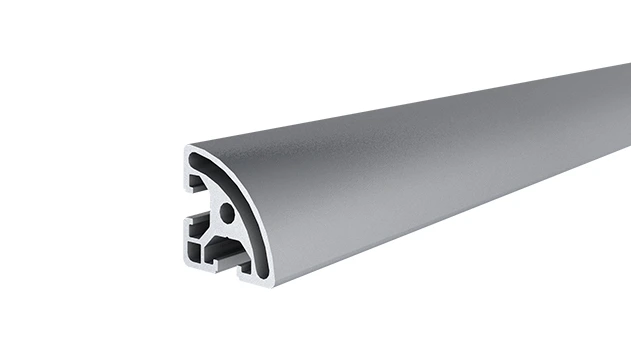
4040R is a 4.00x4.00 CM fractional 40 series square extrusion T-slot profile with two side open T-slots, each side with 4.00cm face,the other side is round face. The profile has align-a-grooves to assist in aligning connecting profiles.
Lean Manufacturing: Where Every Detail Matters
Before we get into the nuts and bolts of aluminum profiles and workbenches, let's take a step back and talk about lean manufacturing. At its core, lean is all about eliminating waste —waste of time, waste of space, waste of effort. It's about creating systems that flow smoothly, where every tool, every part, and every movement has a purpose. In this world, the workbench isn't just a surface to put things on; it's a command center. It needs to be sturdy enough to handle daily wear, flexible enough to adapt to changing tasks, and organized enough to keep tools within arm's reach. A poorly designed workbench can turn even the most skilled worker into a frustrated one, wasting minutes hunting for tools or adjusting unstable surfaces. A great one? It makes the work feel almost effortless.
So, what makes a workbench "lean"? It starts with the materials. Heavy, rigid materials like solid steel might seem like a good idea for durability, but they're hard to move, expensive to customize, and can weigh down the entire system. Wood, while cheap, warps over time, can't handle heavy loads, and doesn't play well with the modularity lean systems demand. That's where aluminum comes in—and not just any aluminum, but precision-engineered aluminum extrusion profiles like the 4040r. These profiles are the building blocks of lean workbenches because they balance strength, flexibility, and cost in a way few other materials can.
Meet the 4040r EU Standard Aluminum Profile: The Backbone of Lean Workbenches
Let's start with the basics: What exactly is the 4040r EU Standard Aluminum Profile? The "4040" part refers to its dimensions—40mm by 40mm, a square cross-section that's become a gold standard in industrial framing. The "r" stands for "rounded," which means the edges are slightly curved, a small detail that makes a big difference in safety (no sharp corners to catch on clothing or skin) and aesthetics (it looks cleaner and more modern). But the real magic isn't in the name or the shape—it's in how it's made and what it can do.
Why Extrusion Matters: Strength in Precision
The 4040r is an aluminum extrusion profile , which means it's formed by pushing heated aluminum through a die to create a consistent, uniform shape. This process isn't just efficient; it results in a material that's incredibly strong for its weight. Unlike welded steel frames, which can have weak points at the joints, extruded aluminum profiles have a continuous, seamless structure that distributes weight evenly. For a workbench, this translates to stability—no wobbling when you're hammering, no flexing when you place heavy tools on it. And because aluminum is naturally resistant to corrosion, you don't have to worry about rust eating away at your bench, even in humid or messy workshop environments.
T-Slots: The Secret to Modularity
If there's one feature that makes the 4040r profile indispensable for lean workbenches, it's the T-slots. Run your finger along the length of the profile, and you'll notice long, narrow grooves (the "T" shape) running parallel to the edges. These slots are like the profile's "universal connectors"—they let you attach just about anything without drilling holes or welding. Need to add a shelf? Slide a bracket into the T-slot and tighten a screw. Want to mount a tool holder? Use a T-nut to secure it in place. This modularity is a game-changer for lean systems because it means your workbench can evolve with your needs. Today, you might need a simple flat surface for assembly; tomorrow, you might add a monitor arm for digital work instructions or a bin rail for small parts. With T-slots, you don't have to buy a whole new bench—you just reconfigure the one you have.
"We used to have steel workbenches that weighed a ton. If we needed to add a shelf, we'd have to drill holes, which always chipped the paint and left rust spots. Now, with the 4040r aluminum profiles, our team can reconfigure their benches in 10 minutes flat using T-slot accessories. It's like having a workbench that grows with us." — Maria, Production Supervisor at a Mid-Sized Electronics Plant

Workbench E: A Case Study in Lean Design
Now that we understand why the 4040r profile is such a big deal, let's zoom in on a specific application: Workbench E. If you look at the list of workbench types, Workbench E is described simply as "single deck-without caster." That might sound basic, but in lean terms, "basic" is often a compliment. It means no unnecessary frills, just the essentials. Let's break down what makes Workbench E tick, and how the 4040r profile is the star of the show.
Design 101: Single Deck, No Casters—Why?
First, let's talk about the "single deck" part. Unlike double-deck workbenches, which have a lower shelf for storage, Workbench E keeps things streamlined with just one main surface. This is intentional. In many lean setups, especially those focused on 5S (sort, set in order, shine, standardize, sustain), having a cluttered lower shelf can quickly become a dumping ground for unused tools or parts—exactly the kind of waste lean aims to eliminate. By sticking to a single deck, Workbench E encourages workers to keep only what they need on the surface, with storage solutions (like wall-mounted racks or rolling carts) kept nearby but out of the immediate workspace. It's a subtle nudge toward organization.
Then there's the "without caster" detail. Casters are great for mobility, but they add complexity. They can lock, but even locked casters have a tiny bit of play, which can make the bench feel unstable during precision work. For tasks that require steady hands—like assembling small electronics, soldering, or quality inspection—stability is non-negotiable. Workbench E trades mobility for rock-solid stability, making it ideal for jobs where even a millimeter of wobble could ruin a part. And because it doesn't have casters, the base can be lower to the ground, which improves ergonomics—no more reaching up or bending down to work comfortably.
The 4040r Frame: Building Stability from the Ground Up
So, how does the 4040r profile factor into Workbench E? Let's visualize the bench: it has four vertical legs, connected by horizontal rails at the top and bottom (for bracing), and a single deck surface. The legs and rails are almost always made from 4040r profiles. Why? Because 40x40mm is the sweet spot for a workbench frame. It's thick enough to support heavy loads (we're talking 200kg+ on the deck) but not so thick that it wastes space. The rounded edges (the "r" in 4040r) also make the frame safer—no sharp corners to bump into when moving around the bench.
The frame is assembled using aluminum profile accessories like 90° connectors, which slide into the T-slots and lock in place with bolts. This creates a joint that's tight and rigid, but still if you need to take the bench apart for moving or storage. Compare this to a welded steel frame: if you ever need to adjust the height or width, you're out of luck. With the 4040r and its accessories, you can tweak the dimensions by swapping out a rail or adding an extension—all without a welder.
Deck Options: Matching the Surface to the Task
While the frame is all about the 4040r profile, the deck of Workbench E is where functionality meets the task at hand. Common deck materials include plywood (affordable and easy to replace), MDF with a laminate top (smooth and easy to clean), or steel (for heavy-duty applications like metalworking). The deck is attached to the 4040r frame using angle brackets or special deck mounts that fit into the T-slots. This secure connection ensures the deck doesn't shift or sag, even under heavy use. For example, in a automotive parts assembly line, Workbench E with a steel deck might handle the weight of engine components, while in a electronics lab, a laminate deck would provide a static-free surface to protect sensitive circuit boards.
4040r vs. Other Profiles: Why It's the Go-To for Workbench E
You might be wondering: there are plenty of aluminum profiles out there—3030, 2020, 4080—so why does Workbench E (and many other lean workbenches) rely so heavily on the 4040r? Let's break it down with a quick comparison. The table below highlights how the 4040r stacks up against other common profiles for workbench frames:
| Profile Type | Dimensions (mm) | Weight Capacity (Deck, approx.) | Best For | Drawbacks for Workbench E |
|---|---|---|---|---|
| 4040r EU Standard | 40x40 (rounded edges) | 200-300kg | General assembly, heavy tools, multi-purpose workbenches | Slightly heavier than 3030 (but still lighter than steel) |
| 3030 EU Standard | 30x30 | 100-150kg | Light-duty tasks, shelving, small workbenches | Not sturdy enough for heavy loads; T-slots smaller, limiting accessory options |
| 4080 EU Standard | 40x80 | 400kg+ | Industrial machinery frames, ultra-heavy workbenches | Bulky, takes up more space; overkill for most Workbench E applications |
| 2020 EU Standard | 20x20 | 50-80kg | Light shelving, DIY projects, hobby workbenches | Too flimsy for production use; frame would wobble under regular use |
As you can see, the 4040r hits the sweet spot for Workbench E. It's strong enough to handle daily production tasks without being overkill, and its size makes it compatible with a wide range of aluminum profile accessories —from simple brackets to complex tool holders. The rounded edges also make it more user-friendly than sharp-cornered profiles, which is a big plus in busy workshops where people are constantly moving around.
Beyond the Bench: 4040r in the Wider Lean System
Workbench E is just one piece of the lean puzzle, and the 4040r profile doesn't stop at the workbench. In fact, it's often the common thread that ties together an entire lean system. Let's say you have a row of Workbench E stations for assembly. The parts feeding these workbenches might come from flow racks —another lean staple—built with the same 4040r profiles. This consistency means that accessories like bin rails, label holders, or even lighting can be shared between the workbenches and the racks, reducing costs and simplifying maintenance. It also makes training easier: once your team knows how to use T-slot accessories on the workbench, they can apply that knowledge to other 4040r-based systems around the shop.
Another example is material handling. Even though Workbench E doesn't have casters, the 4040r profile is often used in turnover trolleys that transport parts to and from the bench. Because the trolleys use the same profile, you can design them to perfectly fit the height of Workbench E, making it easy to slide parts from the trolley to the bench without bending or lifting—another win for eliminating waste (in this case, waste of physical effort).
Sustainability: Lean for the Planet, Too
Lean isn't just about efficiency—it's also about sustainability. Aluminum is 100% recyclable, and because the 4040r profiles are modular, they're less likely to end up in a landfill when your needs change. Unlike steel, which is heavy and energy-intensive to recycle, aluminum can be melted down and reused with minimal energy loss. This makes the 4040r a choice that's good for your bottom line and the planet—a double win for any lean system that values long-term thinking.
Putting It All Together: Building Your Own Lean Workbench E
If you're inspired to bring the 4040r magic to your own workshop, building a Workbench E is surprisingly straightforward—no engineering degree required. Here's a quick overview of the process:
- Plan Your Dimensions: Decide on the height (standard is 750-800mm for standing work), width (1200-1500mm is common), and depth (600-800mm). These will determine how many 4040r profiles you need for the legs and rails.
- Choose Your Accessories: You'll need 90° connectors for the corners, end caps to cover the profile ends (for safety and aesthetics), and brackets to attach the deck. Don't forget T-nuts and screws—these are the "glue" that holds everything together.
- select a Deck Material: Plywood is budget-friendly; steel is durable; laminate is easy to clean. Make sure the deck is cut to your exact dimensions for a snug fit.
- Assemble the Frame: Start with the legs and horizontal rails, using the connectors to join the profiles. Add diagonal bracing if you need extra stability (common for heavy-load applications).
- Attach the Deck: Use angle brackets or deck mounts to secure the deck to the frame. Tighten everything down—you want zero wobble.
- Add Finishing Touches: Install leveling feet (to adjust for uneven floors), tool holders, or bin rails using T-slot accessories. Customize it to your task!
The best part? If you make a mistake or need to change the design later, you can simply disassemble the frame and start over. That's the beauty of modularity.
Final Thoughts: The 4040r Profile—Small Part, Big Impact
As we wrap up, it's clear that the 4040r EU Standard Aluminum Profile is more than just a piece of metal. It's a symbol of lean thinking: simple, adaptable, and focused on value. When paired with Workbench E, it creates a workspace that's not just functional, but intentional —designed to make work easier, faster, and more satisfying. In a world where manufacturing is constantly evolving, the ability to adapt is key, and the 4040r profile gives you that adaptability in spades.
So, the next time you walk into a workshop and see a row of sleek, efficient workbenches, take a closer look. Chances are, you'll spot the 4040r's rounded edges and T-slots, quietly doing their job. And when you do, you'll know the story behind them: a story of how the right material, in the right design, can turn a ordinary workbench into the heart of a lean, productive operation. Whether you're building a single Workbench E or an entire factory floor, remember this: great systems aren't built on complexity—they're built on smart choices. And the 4040r EU Standard Aluminum Profile? That's one smart choice.