- Company Articles
- Products and Technology
- Product knowledge
- 4040r EU Standard Aluminum Profile Load Capacity: Technical Data Sheet

4040r EU Standard Aluminum Profile Load Capacity: Technical Data Sheet
Related Product
4040R EU Standard Aluminum Profile
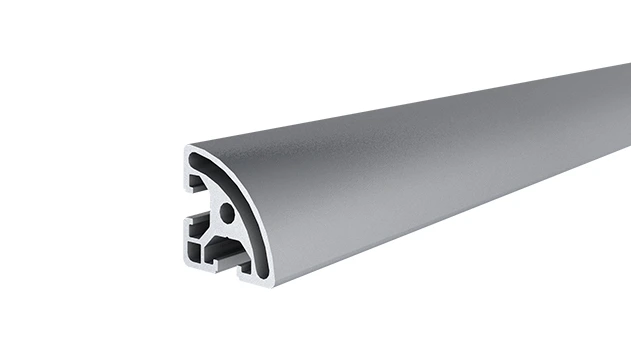
4040R is a 4.00x4.00 CM fractional 40 series square extrusion T-slot profile with two side open T-slots, each side with 4.00cm face,the other side is round face. The profile has align-a-grooves to assist in aligning connecting profiles.
Walk into any modern factory, workshop, or assembly line, and you'll likely spot a silent workhorse holding everything together: aluminum profiles. These unassuming metal structures are the backbone of lean manufacturing, providing the flexibility to build custom workbenches, material racks, conveyor systems, and more. Among the countless profiles available, the 4040r EU Standard Aluminum Profile stands out as a favorite for engineers and facility managers. Why? Its perfect blend of strength, adaptability, and compliance with strict EU standards makes it ideal for medium to heavy-duty applications. But what truly sets it apart is its impressive load capacity—a critical factor when safety, efficiency, and durability are on the line. In this article, we'll unpack everything you need to know about the 4040r's load capacity, from the technical specs to real-world applications, and how to maximize its performance with the right aluminum profile accessories .
Understanding the 4040r EU Standard Aluminum Profile
Before diving into load capacity, let's get familiar with the star of the show: the 4040r EU Standard Aluminum Profile. At first glance, it's a deceptively simple structure—a square tube with a 40mm x 40mm cross-section. But beneath that simplicity lies careful engineering. The "4040" refers to its width and height (40mm each), while the "r" typically denotes a specific groove design or rounded edges, which can enhance safety and ease of assembly. What makes it "EU Standard"? It adheres to EN 755, a set of European norms that dictate mechanical properties, dimensional tolerances, and material quality for aluminum extrusions—ensuring consistency and reliability across suppliers.
The 4040r is crafted using the aluminum extrusion profile process, where heated aluminum alloy is pushed through a die to create its signature shape. Most manufacturers use 6063-T5 alloy, a heat-treated aluminum-magnesium-silicon blend prized for its excellent strength-to-weight ratio, corrosion resistance, and machinability. This alloy gives the 4040r the muscle to handle heavy loads while remaining lightweight enough for easy installation and reconfiguration—key for lean systems that evolve with production needs.
Note:
Not all 4040 profiles are created equal. The "r" variant often includes reinforced internal ribs or thicker walls compared to basic 4040 models, directly impacting load capacity. Always check the manufacturer's datasheet for exact specifications!
Key Factors That Shape Load Capacity
Load capacity—the maximum weight a profile can support without permanent deformation or failure—isn't a one-size-fits-all number. It depends on a handful of critical factors, each playing a role in how the 4040r performs under stress. Let's break them down:
1. Material Thickness and Alloy Strength
The 4040r's wall thickness is a primary driver of load capacity. A thicker wall (e.g., 2.0mm vs. 1.5mm) means more material to resist bending, translating to higher load limits. The 6063-T5 alloy itself contributes here too: with a typical tensile strength of ~180 MPa and yield strength of ~110 MPa, it strikes a balance between flexibility (to absorb shocks) and rigidity (to hold heavy weights).
2. Support Spacing: The Closer, the Stronger
Imagine holding a ruler at both ends versus holding it by one end—obviously, it bends more when unsupported. The same applies to aluminum profiles. The distance between supports (e.g., brackets, frames, or floor mounts) directly affects load capacity. A 4040r with supports 500mm apart can handle far more weight than one spanning 2000mm. This is why engineers carefully calculate support spacing based on the intended load.
3. Mounting Orientation and Load Direction
How you mount the 4040r matters. A profile loaded vertically (weight pushing down on its length) performs differently than one loaded horizontally (weight pulling or pushing sideways). Cantilevered setups (one end fixed, one end free) are the weakest, while profiles supported at both ends or continuously along their length are the strongest. Always align the load direction with the profile's strongest axis!
4. Environmental Conditions
Aluminum is durable, but extreme environments can weaken it. High temperatures (above 100°C) reduce alloy strength, while prolonged exposure to moisture (without proper coating) may cause minor corrosion over time. Even vibration—common in factories—can loosen joints, indirectly reducing effective load capacity by creating stress points.

Technical Data Sheet: 4040r Load Capacity Under Real-World Conditions
To turn theory into practice, let's look at real load capacity data for a standard 4040r EU profile (6063-T5 alloy, 2.0mm wall thickness). The table below shows maximum safe loads under different support spacings and mounting configurations, based on industry testing and manufacturer guidelines. Note: These values are for static loads (non-moving weight). Dynamic loads (e.g., items sliding or vibrating) require a 20-30% safety margin.
| Support Spacing (mm) | Mounting Configuration | Vertical Load Capacity (kg) | Horizontal Load Capacity (kg) | Max Deflection (mm) at Rated Load | Safety Factor |
|---|---|---|---|---|---|
| 500 | Both ends fixed (fully supported) | 340 – 360 | 270 – 290 | 1.0 – 1.3 | 2.5:1 |
| 1000 | Both ends fixed | 210 – 230 | 170 – 190 | 3.2 – 3.7 | 2.5:1 |
| 1500 | Both ends fixed | 140 – 160 | 110 – 130 | 7.5 – 8.0 | 2.5:1 |
| 2000 | Both ends fixed | 85 – 95 | 70 – 80 | 11.8 – 12.5 | 2.5:1 |
| 500 | Cantilever (1 end fixed, 1 end free) | 280 – 300 | 220 – 240 | 1.6 – 1.9 | 2.0:1 |
| 1000 | Cantilever | 110 – 130 | 90 – 105 | 4.8 – 5.3 | 2.0:1 |
| 500 | Continuous support (e.g., mounted to a wall) | 400 – 420 | 320 – 340 | 0.8 – 1.0 | 3.0:1 |
What's "deflection"? It's the amount the profile bends under load. For most applications (e.g., workbenches), deflection under 10mm is acceptable. Excessive bending can damage sensitive equipment or create ergonomic issues for workers.
Practical Applications: Where the 4040r Shines
Armed with this data, how do manufacturers actually use the 4040r? Its load capacity makes it a jack-of-all-trades for medium-duty tasks. Here are a few common scenarios:
Workbenches: The Heart of the Workshop
A typical assembly workbench uses 4040r frames with supports every 1000mm. With a vertical load capacity of ~220kg, it easily handles tools, fixtures, and even small machinery. Pair it with a plywood or aluminum honeycomb top, and you've got a sturdy, customizable workspace that won't sag under daily use.
Material Racks: Storing Inventory Safely
Material racks (think shelves for parts bins or raw materials) rely on 4040r's horizontal load capacity. With supports at 1500mm, each shelf can hold 110-130kg—enough for 3-4 heavy bins. For heavier items, support spacing to 1000mm to boost capacity to 170-190kg per shelf.
Conveyor Systems: Guiding the Flow
In conveyor setups, 4040r often serves as the frame for roller tracks or belt systems. When paired with aluminum guide rail a (a grooved accessory that keeps items on track), it provides the rigidity needed to support moving loads without flexing. For example, a 2000mm section with both ends fixed can safely guide 70-80kg packages as they glide along the line.
Assembly Line Structures: Supporting Production
From overhead tool holders to side-mounted part trays, 4040r's versatility shines in assembly lines. Its ability to handle cantilevered loads (e.g., a 500mm arm holding 280kg) makes it perfect for mounting jigs or fixtures that need to extend over the production area without extra supports.
Accessories That Boost Performance: It's All in the Details
A profile is only as strong as its accessories. The right aluminum profile accessories can enhance load capacity, simplify installation, and extend the 4040r's lifespan. Here are the must-haves:
- Connectors: 90° and 45° aluminum profile connectors lock profiles together at joints, distributing weight evenly. Look for heavy-duty versions with reinforced bolts for high-load setups.
- End Caps: 4040 aluminum profile end caps seal the profile's ends, preventing dust buildup and adding a finished look—small, but critical for long-term durability.
- Gussets: Gusset alp 4040 brackets reinforce corner joints, reducing stress on connectors and increasing overall frame rigidity by up to 15%.
- Aluminum Guide Rail A: As mentioned earlier, this accessory creates a smooth, low-friction surface for sliding materials, reducing lateral stress on the profile itself.
- Leveling Feet: Adjustable feet ensure the 4040r frame sits evenly on uneven floors, preventing rocking that could create stress points and reduce effective load capacity.
Installation Tips to Maximize Load Capacity
Even the strongest profile will underperform if installed poorly. Follow these best practices to get the most out of your 4040r:
- Tighten Joints Properly: Use a torque wrench to tighten connectors to the manufacturer's specs (typically 4-6 Nm for M8 bolts). Over-tightening can strip threads; under-tightening creates wobble.
- Align Supports Carefully: Ensure supports are parallel and vertically straight. Misaligned supports create uneven weight distribution, leading to premature failure.
- Distribute Weight Evenly: Avoid concentrating heavy items in one spot. For example, on a workbench, spread tools across the surface instead of piling them in the center.
- Add Reinforcements for Overhangs: Cantilevered sections (e.g., a shelf extending beyond the frame) benefit from diagonal braces or gussets to reduce deflection.
Maintenance: Keeping Your 4040r Strong for Years
Like any equipment, the 4040r needs basic care to maintain its load capacity over time:
- Inspect Joints Quarterly: Check for loose bolts or cracked connectors—tighten or replace as needed.
- Clean Regularly: Wipe down profiles with a damp cloth to remove dust and debris, especially in grooves where accessories mount.
- Lubricate Moving Parts: If using the 4040r with sliding accessories (e.g., aluminum guide rail a), apply a light silicone lubricant to reduce friction and wear.
- replace Worn Accessories: Damaged end caps or bent connectors compromise structural integrity—swap them out at the first sign of wear.
Conclusion: Why the 4040r Is a Lean Manufacturing Staple
The 4040r EU Standard Aluminum Profile isn't just a piece of metal—it's a foundation for efficiency. With its robust load capacity (up to 360kg under optimal conditions), compliance with EU standards, and compatibility with a wide range of aluminum profile accessories , it balances strength, flexibility, and cost-effectiveness. Whether you're building a workbench, a material rack, or a conveyor system, understanding its load capacity and how to maximize it ensures your setup is safe, durable, and ready to adapt as your production needs change.
So, the next time you walk through a factory, take a closer look at those aluminum frames. Chances are, they're 4040r profiles—quietly doing the heavy lifting that keeps manufacturing moving forward.