- Company Articles
- Products and Technology
- Product knowledge
- 4080 Aluminum Profile End Caps vs 3030: Which Saves Costs?

4080 Aluminum Profile End Caps vs 3030: Which Saves Costs?
Related Product
4080 Aluminum Profile End Cap
The aluminum profile end cap adds a finishing touch to your project and closes off profile ends to limit dust and debris buildup, also it can avaid some scratch for material and labor during the assemble work.
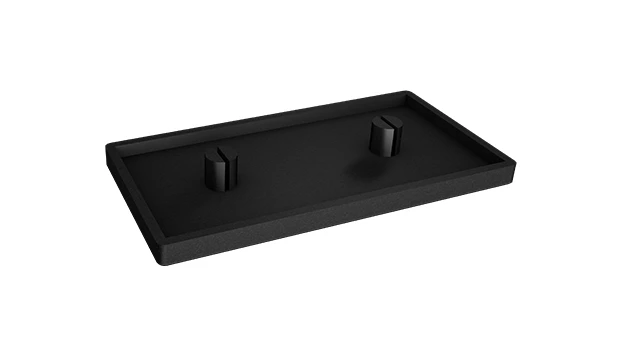
In the world of manufacturing and workshop design, every decision—from the big machinery down to the smallest (accessories)—shapes your bottom line. If you've ever worked with aluminum extrusion profiles, you know they're the backbone of everything from workbenches to material racks. But here's a question that often flies under the radar: when it comes to aluminum profile end caps, does size really matter for cost savings? Today, we're diving into two of the most common options: 4080 aluminum profile end caps and 3030 aluminum profile end caps. By the end, you'll know which one deserves a spot in your next project—and which could be costing you more than necessary.
First Things First: What Even Are Aluminum Profile End Caps?
Before we compare sizes, let's make sure we're on the same page. Aluminum extrusion profiles are those versatile, T-slot rails you see holding up workbenches, guiding conveyor belts, or forming the frames of material racks. They're strong, lightweight, and infinitely customizable—thanks in large part to aluminum profile accessories that let you connect, reinforce, and finish them. And that's where end caps come in.
Think of end caps as the "caps" (no surprise there) that seal off the open ends of aluminum profiles. At first glance, they might seem like an afterthought—just a little plastic or metal piece to cover a hole. But their job is more critical than you'd think. They keep dust, debris, and moisture from getting inside the profile, which can corrode the metal over time. They also prevent sharp edges, turning a potentially hazardous raw profile into a safe, finished surface for workers. And let's not forget aesthetics: a clean, capped end gives your setup a polished look, which matters if clients or auditors visit your shop.
But here's the kicker: not all end caps are created equal. The 4080 and 3030 variants are designed for specific profile sizes, and choosing the wrong one can lead to wasted money, whether through overspending on unnecessary material or replacing flimsy caps that fail too soon. So let's break down what makes these two end caps different—and how those differences impact your wallet.
The Basics: 4080 vs 3030 Aluminum Profiles (and Their End Caps)
First, let's clarify the profiles themselves, since the end caps are tailored to fit them. Aluminum extrusion profiles are named by their cross-sectional dimensions: a "4080 profile" is 40mm wide and 80mm tall, while a "3030 profile" is 30mm by 30mm. These sizes aren't arbitrary—they're engineered to handle different loads and applications. A 4080 profile, with its larger surface area, is built for heavier-duty tasks: think industrial workbenches, heavy material racks (like the 3-row, 3-floor material rack B you might use for storing bulky parts), or conveyor supports. A 3030 profile, being smaller and lighter, is perfect for lighter setups: small workstations, mobile trolleys, or shelving for lightweight components.
Now, the end caps. A 4080 aluminum profile end cap is designed to snugly fit the open end of a 4080 profile, while a 3030 aluminum profile end cap does the same for 3030 profiles. At first glance, the difference seems simple: one is bigger than the other. But size impacts everything from material usage to installation time to long-term durability—all of which feed into your costs.

Cost Breakdown: Why Size Impacts Your Budget
Let's get granular. To figure out which end cap saves costs, we need to look at the total cost of ownership (TCO)—not just the upfront price tag, but every expense from purchase to replacement. Here's how 4080 and 3030 end caps stack up in key areas:
1. Raw Material Costs: More Plastic = Higher Price?
It makes sense: a larger end cap requires more raw material. Most aluminum profile end caps are made from plastic (nylon or PP) or rubber, and plastic isn't free. A 4080 end cap, being wider and taller, uses roughly 30-40% more material than a 3030 end cap. If you're buying in bulk—say, 500 end caps for a workshop renovation—that difference adds up. For example, if a 3030 end cap costs $0.80 each, a 4080 might run $1.10. Multiply by 500, and you're looking at $550 vs. $400—a $150 difference right out the gate.
But wait: not all end caps are created equal in quality. Some 3030 end caps might use cheaper, thinner plastic to cut costs, leading to cracks or looseness over time. Similarly, a poorly made 4080 end cap might not fit tightly, letting dust in and defeating the purpose. So while 3030 end caps often have a lower per-unit price, you need to compare apples to apples—same material quality, same brand—before assuming they're the cheaper choice.
2. Installation Time: Does Size Slow You Down?
Time is money, especially in a busy workshop. Installing end caps might seem like a quick task, but when you're outfitting hundreds of profiles, even a few extra seconds per cap add up. So which is faster to install: 4080 or 3030?
In most cases, 3030 end caps are easier and quicker to install. Their smaller size means they require less force to snap into place—no need to wrestle with a bulky cap that might misalign. A worker might install 10 3030 end caps in the time it takes to install 8 4080 caps. If your team is paid $25/hour, and you're installing 200 caps, that's 20 minutes for 3030 (200 caps / 10 per minute = 20 minutes) vs. 25 minutes for 4080 (200 / 8 per minute = 25 minutes). Over time, those 5-minute differences per project turn into hours of labor saved with 3030.
But there's an exception: if your 4080 end caps are designed with better locking mechanisms (like built-in clips or friction-fit tabs), they might actually install faster than a low-quality 3030 cap that slips or cracks during installation. Again, quality matters here.
3. Durability and Replacement Costs: When "Bigger" Might Mean "Longer-Lasting"
Upfront savings are great, but what if you have to replace end caps every few months? That's where durability comes in. A 4080 aluminum profile end cap, with its larger surface area and thicker plastic, often holds up better in high-traffic areas. Imagine a busy material rack where workers are constantly sliding parts on and off—over time, the end caps might get bumped or stepped on. A 4080 cap, being sturdier, is less likely to crack or pop off compared to a smaller 3030 cap. If a 3030 cap needs replacement every 6 months, but a 4080 cap lasts 2 years, the math shifts.
Let's crunch numbers: Suppose a 3030 cap costs $0.80 and lasts 6 months, while a 4080 cap costs $1.10 and lasts 24 months. Over 2 years, you'd buy 4 sets of 3030 caps (4 x $0.80 = $3.20) vs. 1 set of 4080 caps ($1.10). Suddenly, the "cheaper" upfront option becomes 3x more expensive over time. This is a classic TCO scenario—don't let the initial price fool you.
But here's the catch: durability only matters if the end cap is actually under stress. If you're using 3030 profiles for a lightweight shelf that rarely gets touched, a 3030 cap might last just as long as a 4080 cap. In low-traffic, low-impact setups, the 3030's lower upfront cost is unbeatable.
4. Compatibility: Avoiding Costly Mistakes
One hidden cost nobody talks about? Buying the wrong end cap. If you accidentally order 4080 end caps for 3030 profiles (or vice versa), you're stuck with useless inventory. 4080 caps won't fit 3030 profiles—they'll be too loose, falling off and leaving the profile exposed. 3030 caps on 4080 profiles will rattle around, letting dust in and looking unprofessional. Returning or reordering adds time and shipping costs, not to mention delays in your project.
This is where aluminum profile accessories suppliers can help—reputable suppliers will clearly label end caps by profile size, and some even offer sample kits so you can test fit before buying bulk. But the best defense is knowing your profiles: if your workshop uses mostly 3030 profiles for lightweight tasks, stick to 3030 end caps. If you're all-in on 4080 for heavy-duty setups, 4080 caps are the way to go. Mixing sizes? That's where costs creep in.

Real-World Applications: When to Choose 4080 vs. 3030 End Caps
Cost savings aren't one-size-fits-all—they depend on how you use the profiles. Let's look at common scenarios where one end cap clearly outperforms the other in terms of cost efficiency.
Case Study 1: Small Electronics Workshop
A small electronics manufacturer uses 3030 aluminum extrusion profiles to build workstations for assembling circuit boards. The workstations are lightweight, with shelves holding small components (resistors, capacitors, etc.). The workshop has 20 workstations, each with 8 profile ends (4 vertical posts, 2 horizontal rails per post). That's 160 end caps needed.
They opt for 3030 aluminum profile end caps at $0.80 each ($128 total). The workstations see light use—workers rarely bump the profiles, and the environment is clean (minimal dust). After 3 years, only 5 end caps have cracked (mostly from accidental tool drops), costing $4 to replace. Total cost over 3 years: $132.
If they'd chosen 4080 end caps (which don't fit 3030 profiles, but let's assume they forced them), they'd have paid $1.10 each ($176 upfront) and still faced the same 5 replacements ($5.50), totaling $181.50. Worse, the ill-fitting caps would have fallen off constantly, letting dust into the profiles and requiring frequent rechecks—wasting labor time.
Result: 3030 end caps save $49.50 and countless headaches.
Case Study 2: Automotive Parts Warehouse
An automotive parts warehouse uses 4080 aluminum profiles to build heavy-duty material racks (similar to material rack B, 3 rows and 3 floors) for storing engine components. Each rack has 12 vertical posts and 18 horizontal rails, totaling 60 profile ends per rack. They have 10 racks, so 600 end caps needed.
They initially choose 3030 end caps to save money ($0.80 x 600 = $480). But the racks are in a busy area—forklifts pass by, workers load/unload heavy parts, and caps get bumped daily. Within 8 months, 40% of the 3030 caps have cracked or fallen off ($0.80 x 240 replacements = $192). After 2 years, they've replaced 1200 caps (total $960) and spent 20 hours of labor reattaching caps (at $30/hour = $600). Total cost: $480 + $960 + $600 = $2040.
A neighboring warehouse uses 4080 end caps for the same setup: $1.10 x 600 = $660 upfront. Over 2 years, only 5% of caps need replacement ($1.10 x 30 = $33), and labor for checks/replacements is just 5 hours ($150). Total cost: $660 + $33 + $150 = $843.
Result: 4080 end caps save $1197 over 2 years—despite the higher upfront cost.
The Comparison Table: At a Glance
| Factor | 4080 Aluminum Profile End Cap | 3030 Aluminum Profile End Cap |
|---|---|---|
| Upfront Cost | Higher ($1.00–$1.30 per cap) | Lower ($0.60–$0.90 per cap) |
| Material Usage | 30–40% more plastic/rubber | Less material, lighter weight |
| Installation Time | Slightly longer (bulkier, may require alignment) | Faster (smaller, easier to snap in) |
| Durability (High-Traffic Areas) | Excellent (resists cracks, stays in place) | Fair (may crack or loosen under heavy use) |
| Durability (Low-Traffic Areas) | Good (overkill, but no issues) | Good (matches the profile's light use) |
| Best For | Heavy workbenches, material racks, high-traffic setups | Light workstations, mobile trolleys, low-impact shelves |
| Total Cost Over 2 Years (High-Traffic) | $1.10–$1.50 per cap (including replacements) | $3.00–$3.50 per cap (frequent replacements) |
| Total Cost Over 2 Years (Low-Traffic) | $1.10–$1.30 per cap (no replacements needed) | $0.60–$0.90 per cap (no replacements needed) |
The Verdict: It Depends on Your "Why"
So, which end cap saves costs? The answer isn't "4080" or "3030"—it's "it depends on how you use your aluminum extrusion profiles." Here's a quick guide to deciding:
Choose 3030 aluminum profile end caps if:
- You're using 3030 profiles for lightweight, low-traffic setups (e.g., small workbenches, mobile trolleys).
- Upfront cost is your top priority, and you don't expect heavy wear and tear.
- Your project is temporary (e.g., a pop-up workshop or short-term production line).
Choose 4080 aluminum profile end caps if:
- You're using 4080 profiles for heavy-duty applications (e.g., material racks, industrial workbenches).
- Long-term durability matters more than upfront savings (high-traffic areas, frequent use).
- You want to minimize maintenance time (fewer replacements = less labor).
Remember, the goal isn't to pick the "cheapest" end cap—it's to pick the one that aligns with your profiles' use case. A 3030 cap on a 4080 profile is a waste of money (it won't fit), and a 4080 cap on a 3030 profile is overkill (you're paying for material you don't need). The real cost savings come from matching the end cap to the profile and its purpose.