- Company Articles
- Products and Technology
- Product knowledge
- 4080A EU Standard Aluminum Profile for 3C Product Assembly: Tool-less Modular Design

4080A EU Standard Aluminum Profile for 3C Product Assembly: Tool-less Modular Design
Related Product
4080A EU Standard Aluminum Profile
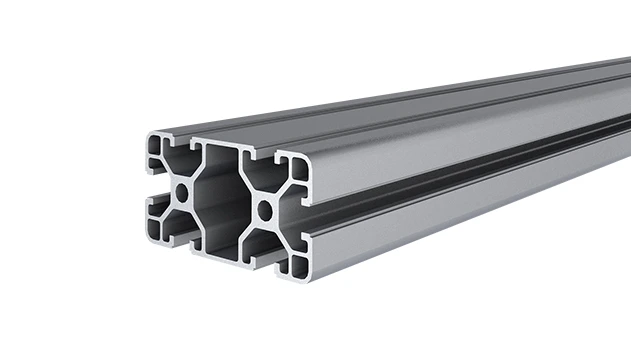
4080A is a 4.00x8.00 CM fractional 40 series square extrusion T-slot profile with two side open T-slots, each side with 4.00cm face, two side with 8.00cm face. The profile has align-a-grooves to assist in aligning connecting profiles.
In the fast-paced world of 3C manufacturing—where smartphones, laptops, and wearables evolve faster than seasonal fashion trends—efficiency isn't just a buzzword; it's the backbone of survival. Imagine a production line where reconfiguring workstations for a new model takes days, or where a single broken part grinds assembly to a halt. For manufacturers, these scenarios aren't just frustrating—they eat into profits and delay product launches. That's where the 4080A EU Standard Aluminum Profile steps in, a yet revolutionary solution that's quietly transforming how 3C products are built. More than just a piece of metal, it's the building block of a lean system, designed to adapt, endure, and empower teams to keep up with the relentless pace of innovation.
Why 3C Assembly Needs More Than Just "Good Enough" Solutions
3C products are marvels of miniaturization, packing complex components into sleek, lightweight frames. But that complexity trickles down to the assembly line. Each new model brings tweaks to part sizes, wiring layouts, or testing procedures. A rigid, one-size-fits-all production setup simply can't keep up.;;,.
Workers on the line know the struggle firsthand. Maria, a production supervisor at a major electronics plant in Shenzhen, recalls a particularly stressful launch: "We had to switch from assembling a 6.7-inch phone to a 6.1-inch model in under a week. The old steel workbenches? We had to cut and reweld parts, which took two full days. By the time we were ready, we were already behind schedule." Stories like Maria's highlight a critical need: assembly systems must be as flexible as the products they build. They need to be tool-less, so anyone on the team can make adjustments. They need to be modular, so components can be swapped in minutes, not days. And they need to be durable enough to handle the daily grind of repetitive tasks, from screwdriving to component testing.
Enter the 4080A EU Standard Aluminum Profile: A Profile Built for 3C's Unique Demands
At first glance, the 4080A might look like any other aluminum extrusion profile—long, silver, and with a cross-section that resembles a rectangle with grooves. But those grooves, known as T-slots, are where the magic happens. They're the reason this profile has become a staple in 3C factories worldwide. Unlike traditional materials, the 4080A isn't just a static structure; it's a canvas for customization. Let's break down what makes it stand out:
Tool-Less Modularity: No Wrenches, No Waiting
The most game-changing feature of the 4080A is its tool-less design. Thanks to the T-slots and a range of aluminum profile accessories—like internal rotatary aluminum joints, quick-clip brackets, and snap-on end caps—assembling or reconfiguring a workstation doesn't require a toolbelt. A worker can loosen a lever, slide a joint into place, and tighten it by hand in under a minute. Compare that to traditional steel setups, where even minor adjustments might need a drill, welding torch, or a call to maintenance. For 3C plants, where line changes happen monthly (or even weekly), this isn't just convenient—it's transformative.
Take, for example, a material rack B (3 row and 3 floor) used to store small components like camera modules or charging ports. With the 4080A, if a new component is slightly larger, a worker can adjust the shelf height by unscrewing a few brackets and sliding them up the T-slots. No need to order a new rack, no need to wait for a technician. It's adaptability at its simplest, and it keeps the line moving.
Strength Without the Weight: Aluminum's Hidden Advantage
Aluminum often gets a bad rap for being "weaker" than steel, but the 4080A defies that stereotype. Made from high-grade aluminum alloy, it balances strength and weight in a way that's perfect for 3C assembly. A single meter of 4080A profile weighs around 2.8 kg—light enough for two workers to carry and install without heavy machinery—yet it can support up to 200 kg/m when properly braced. That means it can hold everything from circuit board trays to testing equipment without bending or warping, even during long shifts.
Contrast this with plastic profiles, which might warp under heat from soldering stations, or stainless steel pipes, which are strong but so heavy that moving a workstation requires a forklift. For 3C lines, where ergonomics matter (workers often stand for 8+ hours), the lighter weight of aluminum reduces fatigue. It also makes turnover trolleys—used to transport parts between stations—easier to maneuver, cutting down on the time wasted pushing heavy carts across the factory floor.
Precision Engineering: The EU Standard Difference
The "EU Standard" label isn't just for show. 4080A profiles are manufactured to strict tolerances, with consistent T-slot widths, straight edges, and smooth surfaces. This precision ensures that accessories from different suppliers—whether a roller track placon mount from Germany or a caster wheel from China—fit together seamlessly. In 3C assembly, where even a 1mm misalignment can throw off component placement, this uniformity is critical.
Consider a workbench E (single deck-without caster) used for final product testing. The 4080A's precise dimensions ensure that the testing fixtures, monitor mounts, and cable management systems align perfectly, reducing the risk of errors during quality checks. For workers like Li Wei, a tester at a Shanghai-based 3C plant, this consistency is a game-changer: "With the old wooden workbenches, the surface would warp over time, and the fixtures would shift. Now, with the aluminum profile, everything stays in place. I spend less time adjusting tools and more time actually testing products."

Beyond the Profile: How Accessories Turn 4080A Into a Complete System
A profile alone is just a piece of metal. It's the aluminum profile accessories that turn it into a versatile, all-in-one solution for 3C assembly. Let's take a closer look at the unsung heroes that make the 4080A system tick:
Joints: The "Glue" That Holds It All Together
Internal rotatary aluminum joints are the Swiss Army knives of the 4080A system. These small, cylindrical connectors fit into the T-slots and can rotate 360 degrees, allowing workbenches, shelves, or conveyor rails to be angled precisely. Need a workstation with a 15-degree tilt for easier access to a phone's motherboard? A quick twist of the joint, and it's done. Unlike fixed steel brackets, which lock you into 90-degree angles, these joints let you adapt to the unique needs of each product.
Then there are parallel fixation aluminum pipe joints, which secure two profiles side by side for extra stability. When building a heavy-duty assembly line table that needs to support multiple testing machines, these joints distribute weight evenly, preventing sagging over time. It's the kind of detail that might go unnoticed until something breaks—but with 4080A, it's built in.
Roller Tracks: Keeping Parts Moving Smoothly
In 3C assembly, parts rarely stay in one place. From circuit boards to display screens, components need to glide from one workstation to the next without jostling or damage. That's where roller tracks come in, and the 4080A system pairs perfectly with them. Plastic roller track guide rails (yellow or grey, depending on the factory's color-coding system) snap into the T-slots, while swivel roller balls (1 inch or 0.5 inch) provide a frictionless surface for parts to slide on.
For example, a 40 steel roller track with black ESD wheels is a common sight on 3C lines. ESD (electrostatic discharge) protection is critical when handling sensitive electronics, and these wheels prevent static buildup that could fry a smartphone's motherboard. The track itself, mounted to 4080A profiles with roller track placon mount brackets, can be adjusted for height or angle in minutes, ensuring parts flow smoothly from soldering to testing.
Casters: Mobility When You Need It
Not every workstation needs to be stationary. Turnover trolleys, used to transport finished subassemblies between buildings, or mobile testing stations that need to be moved for deep cleaning, rely on casters for flexibility. The 4080A system pairs with heavy-duty caster wheels and caster installation bases, which bolt directly into the T-slots. What's special here is the stability—even with a loaded trolley, the casters lock securely, preventing wobbling during assembly. And when it's time to move, a quick flip of the brake lever, and the trolley glides effortlessly, even over factory floor cracks.
A Side-by-Side Look: How 4080A Stacks Up Against Other Profiles
Not all aluminum profiles are created equal. While the 4080A is a standout for 3C assembly, it's helpful to see how it compares to other common profiles. The table below breaks down key specs, load capacities, and typical uses to show why the 4080A is the top choice for 3C manufacturers.
| Profile Type | Cross-Section Dimensions (mm) | Material Thickness (mm) | Max Load Capacity (kg/m) | Typical 3C Applications |
|---|---|---|---|---|
| 4080A EU Standard Aluminum Profile | 40 x 80 | 2.0 | 200 | Heavy workbenches, material racks, conveyor supports |
| 4040A EU Standard Aluminum Profile | 40 x 40 | 1.5 | 120 | Light shelving, small component bins |
| 3030A EU Standard Aluminum Profile | 30 x 30 | 1.2 | 80 | Mobile carts, lightweight testing jigs |
The 4080A's larger cross-section and thicker material make it ideal for the heavy lifting in 3C assembly. While 4040A or 3030A profiles work well for smaller tasks, the 4080A is the workhorse, supporting everything from full-size assembly workbenches to multi-tiered material racks. Its 200 kg/m load capacity means it can handle the weight of automated screwdrivers, thermal testing machines, and even stacks of finished products without bending—a critical feature in high-throughput 3C plants.
Real-World Impact: How 4080A Transforms 3C Factories
Numbers and specs tell part of the story, but it's the real-world results that matter. Let's look at how two 3C manufacturers leveraged the 4080A system to overcome common challenges.
Case Study 1: Reducing Changeover Time by 70%
A mid-sized phone manufacturer in Dongguan was struggling with monthly model changes. Each new phone required reconfiguring 12 workstations, a process that involved welding steel frames, drilling new holes, and replacing custom-built shelves. The entire process took 3-4 days, eating into production time and causing delays. After switching to 4080A profiles and aluminum profile accessories, they cut changeover time to just 1 day. Workers used internal rotatary joints to adjust bench heights, swapped out roller tracks with plastic guide rails, and repositioned material racks—all without tools. The result? They regained 12 production days per year, enough to assemble an extra 50,000 phones.
Case Study 2: Cutting Downtime with Replaceable Parts
A laptop assembly plant in Suzhou was losing 2-3 hours per week to broken equipment. Their old steel conveyor system used custom-welded parts; when a roller track bent or a bracket snapped, they had to wait for a machinist to fabricate a replacement. After switching to 4080A-based conveyors with standard roller track placon mount connectors, they kept spare parts on hand. Now, when a part breaks, a worker can pop out the old connector and snap in a new one in 15 minutes. Downtime dropped by 90%, and the maintenance team was freed up to focus on bigger issues.
Why Choose a Lean System Built on 4080A?
At its core, the 4080A EU Standard Aluminum Profile is more than just a component—it's the foundation of a lean system. Lean manufacturing is all about eliminating waste: waste of time, waste of materials, waste of effort. The 4080A system aligns perfectly with this philosophy by:
- Reducing setup time: Tool-less adjustments mean less time waiting and more time producing.
- Minimizing downtime: Standardized, replaceable parts mean broken components don't halt the line.
- Optimizing space: Modular design lets you build upward (with tall material racks) or outward (with extendable workbenches), making the most of tight factory floors.
- Empowering workers: No special training needed to make adjustments, giving teams more control over their workspace.
For 3C manufacturers, where margins are tight and competition is fierce, these benefits translate directly to the bottom line. A lean system built on 4080A doesn't just make assembly easier—it makes it smarter.
The Future of 3C Assembly: What's Next for Aluminum Profiles?
As 3C products continue to shrink in size and grow in complexity, the demand for flexible assembly solutions will only increase. The 4080A EU Standard Aluminum Profile is already evolving to meet these needs. Manufacturers are experimenting with integrated smart features, like embedded sensors in profiles to monitor weight loads or detect wear, alerting teams before a part fails. There's also a push for more sustainable materials, with recycled aluminum alloys being used to reduce environmental impact—an important consideration for brands focused on green manufacturing.
Accessories are getting smarter too. Imagine roller tracks with built-in RFID tags that track parts as they move through the line, or casters with auto-locking brakes that engage when a workstation is in use. These innovations won't replace the 4080A's core strength—its simplicity—but they'll make it even more powerful.
Final Thoughts: Why 4080A Isn't Just a Profile—It's a Game Changer
In the high-stakes world of 3C manufacturing, success depends on the ability to adapt, innovate, and stay ahead of the curve. The 4080A EU Standard Aluminum Profile may not have the flash of a new smartphone, but it's the unsung hero that makes those phones possible. Its tool-less modular design, paired with a robust ecosystem of aluminum profile accessories, turns rigid assembly lines into flexible, responsive systems that can keep up with the fastest-paced industry on the planet.
For manufacturers still relying on outdated steel setups or one-size-fits-all solutions, the message is clear: the future of 3C assembly isn't about working harder—it's about working smarter. And with the 4080A as your foundation, smart work isn't just possible; it's inevitable. After all, in a world where change is the only constant, the best systems are the ones that change with you.