- Company Articles
- Products and Technology
- Product knowledge
- 4080A EU Standard Aluminum Profile for Automated Guided Vehicles (AGVs)

4080A EU Standard Aluminum Profile for Automated Guided Vehicles (AGVs)
Related Product
4080A EU Standard Aluminum Profile
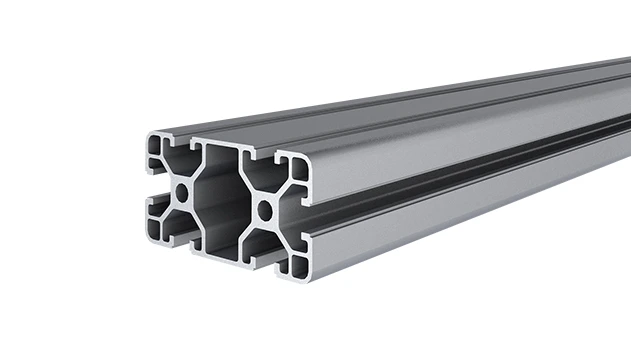
4080A is a 4.00x8.00 CM fractional 40 series square extrusion T-slot profile with two side open T-slots, each side with 4.00cm face, two side with 8.00cm face. The profile has align-a-grooves to assist in aligning connecting profiles.
Picture this: a sprawling manufacturing plant where the hum of machinery blends with the soft whir of small, boxy vehicles gliding across the floor. These aren't just any vehicles—they're Automated Guided Vehicles (AGVs), the unsung heroes of modern factories, shuttling raw materials, components, and finished products between workstations with pinpoint precision. They keep production lines moving, reduce human error, and turn chaotic warehouses into models of efficiency. But have you ever stopped to wonder what makes these hardworking machines so reliable, adaptable, and cost-effective? The answer lies in a humble yet mighty component: the 4080A EU Standard Aluminum Extrusion Profile.
In the world of automation, where every millimeter of space and every gram of weight matters, the materials that build AGVs can make or break their performance. Steel is strong but heavy, plastic is lightweight but flimsy, and wood? Let's just say it's not built for the rigors of 24/7 factory life. That's where aluminum extrusion profiles step in—and the 4080A EU Standard, in particular, has become the backbone of AGV design. It's the reason these vehicles can carry heavy loads without bogging down, adapt to new tasks with minimal rework, and integrate seamlessly into the lean systems that drive today's most efficient manufacturing operations.
What Exactly Is the 4080A EU Standard Aluminum Extrusion Profile?
Let's start with the basics. The term "aluminum extrusion profile" might sound technical, but it's actually a simple concept: imagine squeezing toothpaste out of a tube. In extrusion, molten aluminum is forced through a custom-shaped die, creating a long, continuous piece with a precise cross-section. The 4080A EU Standard takes this process a step further by adhering to strict European union guidelines for quality, dimensions, and performance.
The "4080A" in its name refers to its dimensions: 40 millimeters in width and 80 millimeters in height. This specific size strikes a perfect balance between strength and versatility, making it ideal for AGVs that need to support heavy payloads while remaining agile. Unlike generic aluminum bars, EU Standard profiles are engineered for consistency—every piece you order will match the last in terms of straightness, thickness, and structural integrity. This predictability is a game-changer for manufacturers, who can design AGVs with confidence, knowing their components will fit together like puzzle pieces.
But what really sets the 4080A apart is its material composition. Made from high-grade aluminum alloys (typically 6063-T5, a workhorse in the industry), it's lightweight yet surprisingly strong. To put it in perspective: a meter-long 4080A profile weighs just around 2.5 kilograms, but it can support static loads of up to 500 kilograms or more, depending on how it's mounted. That's the kind of strength-to-weight ratio that makes AGVs nimble enough to navigate tight factory aisles while hauling crates of components or stacks of finished goods.
Another key feature? Its corrosion resistance. Factories are messy places—oils, coolants, and even humidity can take a toll on metal components. But aluminum forms a natural oxide layer that protects it from rust, ensuring the 4080A profile stays durable even in harsh industrial environments. This longevity means AGVs built with 4080A profiles have longer lifespans, reducing the need for frequent replacements and keeping maintenance costs low.
Why AGVs Can't Afford to Skimp on Aluminum Profiles
AGVs are more than just "robot carts"—they're precision tools designed to meet the unique demands of modern manufacturing. Let's break down what those demands are, and why the 4080A EU Standard profile is the perfect fit for each.
1. Weight Efficiency: Less Bulk, More Bounce AGVs run on batteries, and every extra kilogram of weight drains power faster. A steel frame might be tough, but it adds unnecessary heft, forcing AGVs to recharge more often and reducing their runtime. The 4080A profile's lightweight aluminum design solves this problem. By cutting down on weight, AGVs can operate longer between charges, cover more ground, and even move faster—all without sacrificing strength. For factories running 24/7 shifts, those extra hours of operation translate to real productivity gains.
2. Customization: Built for Your Factory, Not a One-Size-Fits-All World No two factories are identical. One might need AGVs to carry small electronic parts between workbenches, while another requires them to transport heavy automotive components. The 4080A profile's modular design makes customization a breeze. Thanks to its T-slot grooves (the long, narrow channels running along its length), manufacturers can easily attach aluminum profile accessories like brackets, sensors, roller tracks, or even custom workbenches. Need to add a shelf for tools? Screw a bracket into the T-slot. Want to mount a barcode scanner? Slide a nut into the groove and tighten. It's like building with industrial Legos—fast, flexible, and infinitely adaptable.
3. Durability: Tough Enough for the Long Haul Factory floors are no playground. AGVs bump into walls, navigate uneven surfaces, and carry loads that would strain weaker materials. The 4080A profile's aluminum alloy is naturally resistant to dents and scratches, and its rigid structure minimizes flexing under heavy loads. Unlike plastic, which can crack or warp over time, or wood, which absorbs moisture and rots, aluminum holds its shape and strength for years. This durability means AGVs spend less time in the repair shop and more time doing what they do best: keeping your production line moving.
4. Compatibility: Playing Nice with Other Systems AGVs don't work in isolation—they're part of a larger ecosystem that includes conveyor belts, roller tracks, and workstations. The 4080A EU Standard profile is designed to play well with others. Its standardized dimensions ensure it can connect with other EU-standard components, from roller track connectors to caster wheels, without the need for custom adapters. This compatibility reduces assembly time and ensures your AGVs can seamlessly integrate with existing equipment, whether you're upgrading an old line or building a brand-new smart factory.

Aluminum Profile Accessories: The Unsung Heroes of AGV Assembly
If the 4080A profile is the backbone of an AGV, then aluminum profile accessories are the joints, muscles, and nerves that bring it to life. These small but critical components turn a simple aluminum bar into a fully functional AGV frame, and they're just as important as the profile itself. Let's take a closer look at some of the most essential ones.
T-Slot Nuts and Bolts These tiny hardware pieces are the glue that holds everything together. T-slot nuts slide into the profile's grooves, allowing bolts to secure accessories like brackets or shelves without drilling holes. They're reusable, too—so if you need to reconfigure your AGV later, just loosen the bolts, slide the nuts to a new position, and tighten. No wasted materials, no permanent modifications.
Corner Brackets and Connectors When you need to join two profiles at a 90-degree angle (like building the frame of an AGV), corner brackets are your best friend. They reinforce the connection, adding strength and stability. Some brackets even pivot, letting you adjust angles slightly for a perfect fit. For more complex shapes, there are three-way or four-way connectors, which let you branch profiles in multiple directions—ideal for adding side extensions or extra support beams.
Roller Track Guides Many AGVs use roller tracks to slide materials on and off their decks. Aluminum profile accessories like plastic roller track guide rails (available in colors like yellow or grey) attach directly to the 4080A profile, creating a smooth surface for boxes or pallets to glide across. They're low-friction, so even heavy loads slide easily, reducing the strain on the AGV's motor.
Caster Wheels While AGVs have their own drive wheels, caster wheels (and their accessories, like brakes or swivel locks) are often used on auxiliary components, like fold-out ramps or detachable carts. The 4080A profile's T-slots make mounting caster wheels a snap, letting you add mobility to almost any part of the AGV.
The beauty of these accessories is that they're designed to work together seamlessly. You don't need to hunt for compatible parts or hire a machinist to custom-make components—everything clicks into place, saving time and reducing frustration during assembly. For small manufacturers or startups, this ease of use is a game-changer, making it possible to build custom AGVs without a huge engineering team.
4080A and Lean Systems: Building Efficiency from the Ground Up
In manufacturing, "lean system" is more than just a buzzword—it's a philosophy focused on reducing waste, improving flow, and maximizing value. AGVs are a cornerstone of lean systems, but their effectiveness depends on the tools they're built with. Here's how the 4080A EU Standard profile helps AGVs live up to lean principles.
1. Minimizing Downtime: Fast Repairs, Faster Results In lean manufacturing, downtime is the enemy. Every minute an AGV is out of service delays production and wastes resources. The 4080A profile's modular design makes repairs lightning-fast. If a bracket breaks or a roller track gets damaged, you don't need to replace the entire frame—just swap out the faulty accessory. With aluminum profile accessories readily available, you can keep spares on hand and get the AGV back on the floor in minutes, not hours.
2. Adapting to Change: From Small Parts to Big Loads (and Back Again) Lean systems thrive on flexibility. A factory might start by using AGVs to carry small circuit boards, then shift to larger components as production needs change. The 4080A profile's T-slot design makes reconfiguring AGVs a cinch. Add a new shelf, swap out a roller track for a flat workbench, or mount a larger battery—all without rebuilding the entire vehicle. This adaptability means your AGV fleet can grow and change with your business, eliminating the need to buy new vehicles every time your needs evolve.
3. Reducing Waste: Less Material, More Value Lean systems hate waste, and aluminum extrusion profiles are inherently waste-efficient. Unlike cutting steel plates or welding frames, extrusion produces minimal scrap, and the 4080A's precise dimensions mean you use exactly what you need—no extra material, no excess cost. Even better, aluminum is 100% recyclable, so if an AGV eventually reaches the end of its life, its profile can be melted down and reused, aligning with sustainability goals that are increasingly important in modern manufacturing.
4. Streamlining Workflow: Smoother Moves, Faster Cycles At the heart of lean manufacturing is the idea of "flow"—ensuring materials move from one step to the next without unnecessary delays. AGVs equipped with 4080A profiles and roller tracks excel here. The low-friction roller tracks let materials slide on and off quickly, reducing loading/unloading times. Meanwhile, the profile's lightweight design lets AGVs accelerate faster and stop more precisely, cutting down on cycle times. When every second counts, these small gains add up to big improvements in overall workflow.
How Does 4080A Stack Up Against Other Profiles? Let's Compare
Not all aluminum profiles are created equal. While the 4080A EU Standard is a star for AGVs, other profiles like the 4040, 3030, or 2020 have their own strengths and weaknesses. Let's take a look at how they compare in key areas like load capacity, weight, and application—so you can see why the 4080A is the top choice for AGVs.
| Profile Type | Dimensions (mm) | Approx. Weight (kg/m) | Max Static Load (kg)* | Best For |
|---|---|---|---|---|
| 4080A EU Standard | 40x80 | 2.5 | 500+ | Heavy-duty AGVs, large payloads, custom frames |
| 4040 EU Standard | 40x40 | 1.8 | 300-400 | Light AGVs, small parts transport, workbench frames |
| 3030 EU Standard | 30x30 | 1.2 | 150-250 | Micro-AGVs, lightweight tools, shelving units |
| 2020 EU Standard | 20x20 | 0.7 | 50-100 | Small accessories, sensor mounts, mini-AGVs |
*Load capacity depends on mounting method and support spacing.
As you can see, the 4080A profile strikes the perfect balance between weight and strength. Its 40x80mm dimensions give it a larger surface area than the 4040, allowing it to distribute weight more evenly and support heavier loads. At the same time, it's still lightweight enough to keep AGVs efficient—unlike bulkier steel profiles. For AGVs that need to carry anything from small boxes to heavy pallets, the 4080A is the sweet spot between too much and too little.
Another advantage? Its size makes it ideal for mounting larger accessories. Whether you need to attach a wide roller track, a battery pack, or a custom workbench, the 4080A's 80mm height provides plenty of space for T-slot nuts and brackets. Smaller profiles like the 2020 or 3030 can feel cramped when adding multiple accessories, limiting their flexibility.
Real-World Success: 4080A AGVs in Action
Talk is cheap—let's look at how the 4080A EU Standard profile is making a difference in real factories.
Case Study 1: Automotive Parts Manufacturer A mid-sized automotive supplier was struggling with slow material transport between its welding and assembly lines. Workers were spending hours pushing heavy carts, leading to delays and fatigue. The company invested in 10 AGVs built with 4080A profiles and roller tracks. The results? AGVs could carry 500kg loads (the weight of several car door panels) at speeds of 1.2m/s, cutting transport time by 40%. The T-slot design let them add custom shelves for tools, and the lightweight aluminum frame extended battery life to 8 hours—enough for a full shift. Within six months, the company saw a 25% increase in assembly line output, and workers were redeployed to more skilled tasks.
Case Study 2: Electronics Factory A manufacturer of smartphones needed AGVs to transport delicate circuit boards between workstations without damaging them. They chose 4080A profiles with soft, plastic roller track guide rails (grey, to reduce glare under factory lights) and added custom foam padding to the decks. The profiles' precision fit ensured the roller tracks were perfectly aligned, preventing jams, while the lightweight design let AGVs navigate tight spaces between workbenches. Best of all, when the factory introduced a new phone model with larger circuit boards, they simply adjusted the roller track spacing using T-slot nuts—no need for new AGVs.
Case Study 3: E-Commerce Warehouse An online retailer's warehouse was struggling to keep up with order volumes during peak seasons. They deployed AGVs with 4080A frames to move bins of products from storage to packing stations. The profiles' durability stood up to 24/7 operation, and the ability to attach barcode scanners via T-slot brackets let AGVs automatically sort bins by destination. When the warehouse expanded, they added more AGVs using the same 4080A components, ensuring compatibility with existing systems. Today, the AGV fleet handles 60% of all bin transport, reducing packing times by 35%.
The Future of AGVs: Why 4080A Will Remain a Star
As factories grow smarter and automation becomes more advanced, AGVs are evolving too. Future AGVs might feature AI-driven navigation, collaborative capabilities (working safely alongside humans), or even integration with drones for aerial-ground coordination. Through it all, the 4080A EU Standard aluminum extrusion profile will remain a key player—and here's why:
1. It's Ready for New Tech AI sensors, cameras, and LiDAR systems add new components to AGVs, but the 4080A's T-slot design makes mounting them easy. Whether it's a 360-degree camera on the roof or a proximity sensor on the front, aluminum profile accessories can secure these tools without compromising the AGV's structure. As tech advances, the profile will adapt—no redesign required.
2. Sustainability Matters More Than Ever With governments and consumers pushing for greener manufacturing, aluminum's recyclability is a huge advantage. The 4080A profile's long lifespan and low maintenance needs also reduce waste, aligning with sustainability goals. As companies prioritize eco-friendly practices, aluminum AGVs will become even more appealing.
3. Smaller Factories, Bigger Dreams Not every manufacturer is a giant corporation. Small and medium-sized businesses (SMBs) are increasingly adopting automation, and they need affordable, flexible AGVs. The 4080A's modular design and low cost (compared to custom steel frames) make it perfect for SMBs. They can start with one AGV, add more as they grow, and reconfigure as needed—all without breaking the bank.
Final Thoughts: The Quiet Hero of Your Factory
At the end of the day, the 4080A EU Standard aluminum extrusion profile might not be the flashiest part of your AGV. It won't grab headlines or win awards for innovation. But without it, your AGVs wouldn't be the reliable, adaptable workhorses that keep your factory running. It's the foundation that turns raw materials into finished products, the flexibility that lets your business grow, and the efficiency that keeps you competitive in a fast-paced world.
So the next time you see an AGV gliding across a factory floor, take a moment to appreciate the 4080A profile beneath its surface. It's not just a piece of aluminum—it's the backbone of modern automation, and a testament to how smart material choices can transform the way we make things.
Whether you're building your first AGV or upgrading an entire fleet, remember: the right profile makes all the difference. And when it comes to AGVs, there's no better choice than the 4080A EU Standard Aluminum Extrusion Profile.