- Company Articles
- Products and Technology
- Product knowledge
- 4080A EU Standard Aluminum Profile for Automotive Manufacturing Workstations

4080A EU Standard Aluminum Profile for Automotive Manufacturing Workstations
Related Product
4080A EU Standard Aluminum Profile
4080A is a 4.00x8.00 CM fractional 40 series square extrusion T-slot profile with two side open T-slots, each side with 4.00cm face, two side with 8.00cm face. The profile has align-a-grooves to assist in aligning connecting profiles.
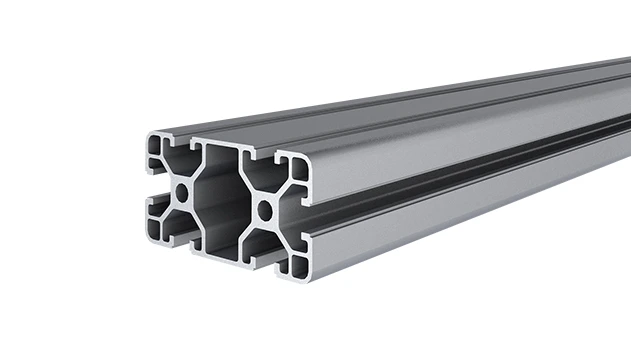
Walk into any modern automotive manufacturing plant, and you'll feel the hum of precision, speed, and relentless innovation. Every second counts, every square foot of floor space matters, and every workstation must keep up with shifting production demands—whether it's assembling intricate engine components, testing electronic systems, or prepping parts for final assembly. In this high-stakes environment, the tools and infrastructure that teams rely on can make or break efficiency. That's where the 4080A EU standard aluminum profile comes in. More than just a piece of metal, it's the backbone of workstations that adapt, endure, and empower teams to do their best work—all while aligning with the lean principles that drive modern manufacturing.
Automotive manufacturing isn't static. New models roll out, technologies evolve, and production lines reconfigure overnight. A workstation that works perfectly for today's sedan might need a complete overhaul for tomorrow's electric vehicle. Traditional steel workbenches? They're heavy, hard to modify, and prone to rust in busy, sometimes humid factory floors. Plastic? Too flimsy for heavy tools and constant use. What manufacturers need is a solution that's lightweight yet tough, customizable yet consistent, and built to grow with their needs. Enter the 4080A aluminum extrusion profile—a product born from the demands of precision engineering and the flexibility of modular design. Let's dive into why this profile has become a game-changer for automotive workstations, and how it pairs with aluminum profile accessories to create systems that don't just meet standards, but set them.
What Makes 4080A EU Standard Aluminum Profile the Backbone of Modern Workstations?
First, let's get technical— but in a way that matters to the people on the factory floor. The 4080A profile gets its name from its dimensions: 40mm in width and 80mm in height. That might sound arbitrary, but those numbers are a sweet spot for workstation design. It's wide enough to support heavy loads (think power tools, assembly jigs, or stacks of component boxes) yet slim enough to keep workstations from feeling bulky. But the real magic is in the material and the process that creates it.
Made from high-grade aluminum alloy (typically 6063-T5, a favorite in manufacturing for its strength-to-weight ratio), the 4080A profile is extruded—meaning it's pushed through a die to create its consistent shape. This extrusion process ensures every inch of the profile is uniform, with precise T-slots running along its length. Those T-slots? They're the secret to its versatility. They let you slide in bolts, brackets, or accessories without drilling holes, making adjustments and upgrades a breeze. Compare that to steel, where welding or drilling is often needed to add a shelf or reposition a tool hook—wasting time and risking structural damage.
But why aluminum? Let's talk about weight. A 1-meter length of 4080A aluminum profile weighs roughly 2.5kg, while a steel profile of similar dimensions might hit 7kg or more. That might not sound like much, but when you're building a workstation with multiple shelves, or need to move a bench to a new line, that difference adds up. Lighter workstations mean easier reconfiguration (no need for forklifts every time you tweak the layout) and less strain on factory floors. Yet, don't let the weight fool you—this aluminum alloy is tough. It can handle static loads of up to 500kg per meter (depending on support), more than enough for most automotive tools and parts. And unlike steel, it's naturally corrosion-resistant, so even in environments with coolant spills or humidity, it won't rust or degrade over time. That's a big win for longevity—no more replacing workstations every few years because of wear and tear.
Then there's the "EU Standard" part. In automotive manufacturing, compliance isn't optional. EU standards ensure the profile meets strict criteria for material safety, dimensional accuracy, and structural integrity. That means when you order 4080A from a reputable supplier, you're not just getting a piece of aluminum—you're getting a product tested for consistency, durability, and compatibility with other EU-standard components. For global manufacturers, this uniformity is critical. A workstation built in a German plant using 4080A can be replicated exactly in a Spanish or Czech facility, using the same tools and accessories, with zero guesswork. That's the kind of reliability that keeps production lines running smoothly, no matter where they are.
Aluminum Profile Accessories: Turning a Profile into a Custom Workstation
A great profile is just the starting point. What truly makes the 4080A system shine is how it pairs with aluminum profile accessories —the nuts, bolts, brackets, and connectors that turn a simple extrusion into a fully functional workstation. Think of it like building with Legos, but for adults who need their creations to hold 200kg of tools and survive 12-hour shifts. These accessories are designed with one goal in mind: making customization easy, fast, and repeatable.
Let's start with the basics: connectors. The T-slots in the 4080A profile are like a grid of attachment points, and connectors are the keys that lock everything into place. Need to join two profiles at a right angle? Grab a 90° aluminum profile connector . Working on a corner that needs a 45° angle? There's a 45° aluminum profile connector for that. These connectors slide into the T-slots, tighten with a hex key, and create a bond strong enough to handle vibrations from power tools or the constant movement of parts. And since they're reusable, you can take apart a workstation at the end of a production run and rebuild it for the next project—no waste, no extra cost.
Then there are the gusset plates—small, triangular brackets that add extra strength to joints. In automotive workstations, where tools might be dropped or heavy parts set down with force, stability is non-negotiable. Gusset plates (like the "gusset alp 4040" or "gusset alp 3030" from accessory lists) reinforce connections, preventing wobbling or flexing over time. They're simple, affordable, and often overlooked—until you compare a workstation with them to one without. The difference in durability is night and day.
End caps might seem like a small detail, but in a busy factory, they matter. The 4080A profile's ends are smooth, but without a cap, they can collect dust, debris, or even sharp edges that catch on gloves or clothing. 4080 aluminum profile end caps snap into place, sealing the ends to keep out grime and protect workers. They also give the workstation a clean, finished look—because even in industrial settings, professionalism matters.
To give you a clearer picture, here's a breakdown of some essential accessories and how they enhance the 4080A workstation:
| Accessory Type | Function | Why It Matters for Automotive Workstations |
|---|---|---|
| 90° Aluminum Profile Connector | Joins two profiles at a right angle (e.g., table legs to a tabletop frame) | Creates stable, square corners for workbench frames, ensuring tools and parts don't slide off uneven surfaces. |
| T-Slot Rubber Seal Cover | Fits into T-slots to seal out dust, debris, and moisture | Prevents gunk buildup in slots, keeping accessories easy to adjust even after months of use. |
| Aluminum Gusset Plate (4040) | Reinforces joints between profiles | Adds rigidity to high-stress areas, like shelves holding heavy engine components or tool racks. |
| Adjustable Foot Bracket | Attaches to profile ends to level workstations on uneven floors | Keeps workbenches stable, even in old factories with sloped or cracked concrete floors. |
| Aluminum Hinge | Connects profiles with a pivot point (e.g., fold-down work surfaces) | Adds flexibility, like foldable side shelves that save space when not in use. |
The beauty of these accessories is that they're designed to work together seamlessly. You don't need special tools or custom parts—just a hex key and a little know-how. A team lead can reconfigure a workstation in an hour, adding a shelf for new tools or adjusting the height to fit a taller operator, without calling in a maintenance crew. That kind of agility is priceless in automotive manufacturing, where downtime equals lost revenue.

Building the Perfect Workstation: From Concept to Reality
Let's put this all together. Imagine a team on the automotive assembly line needs a new workstation for inspecting wiring harnesses. These harnesses are delicate, require good lighting, and need to be laid out flat for inspection. The workstation must also hold a small microscope, a set of precision tools, and bins for sorting connectors. And—because the next model's harness is slightly longer—it needs to be extendable by 30cm in the future. With 4080A and aluminum profile accessories, here's how that workstation comes to life:
First, the frame: 4080A profiles cut to length for the tabletop (120cm long) and legs (80cm tall). Using 90° connectors, the team assembles the basic rectangle. They add gusset plates at the corners for stability, then attach adjustable foot brackets to level the workstation on the factory floor. For the tabletop, they mount a lightweight aluminum honeycomb panel (another accessory) to the frame—sturdy enough to support the microscope, but light enough to keep the overall weight manageable.
Next, the details. Along the back edge of the tabletop, they add a 4080A profile vertically to mount LED task lights. Using T-slot nuts, they slide the light brackets into place and angle them for optimal illumination. On the side, they attach a small tool rack using 45° connectors, with hooks for pliers and screwdrivers. For the bins, they install a shelf halfway up the legs, using parallel connectors to ensure it's level. And because the harnesses need to be laid flat, they add a smooth, anti-static mat on top of the honeycomb panel—secured with adhesive strips that won't damage the aluminum.
Six months later, when the new model's longer harnesses arrive, the team doesn't need a new workstation. They simply order two more 4080A profiles, cut them to 30cm, and use straight connectors to extend the tabletop frame. The honeycomb panel is replaced with a longer one, and the LED lights are repositioned—all in under two hours. That's the power of modular design. This isn't just a workstation; it's a system that grows with the team's needs, reducing waste and keeping production moving forward.
This example isn't hypothetical. Automotive manufacturers around the world are using 4080A-based workstations for everything from engine assembly to quality control. They're durable enough to withstand daily use, flexible enough to adapt to new tasks, and lightweight enough to reposition when production lines shift. And because they're built with standard components, maintenance is a breeze—if a connector wears out or a foot bracket bends, it's replaced in minutes with a new accessory, not a whole new workstation.
Aligning with Lean System Principles: Reducing Waste, Boosting Efficiency
At the heart of modern automotive manufacturing is the lean system —a philosophy focused on eliminating waste, streamlining processes, and continuous improvement. The 4080A aluminum profile system aligns with lean principles in ways that traditional workstations simply can't. Let's break down how:
Waste Reduction: Lean manufacturing hates waste—whether it's time, materials, or space. With 4080A, there's no overbuilding. You only use the profiles and accessories you need, and because the system is modular, components can be repurposed when a workstation is retired. No more scrapping an entire steel bench because it's too short or too tall. Even the extrusion process itself is efficient, producing minimal material waste compared to cutting steel plates.
Continuous Improvement: Lean thrives on iteration. A workstation that's "good enough" today can be better tomorrow. 4080A makes it easy to test improvements—add a shelf, adjust the height, or reposition tools—without disrupting production. If a change doesn't work, you can undo it just as quickly. This culture of experimentation leads to better workflows, happier teams, and higher-quality output.
Space Optimization: Factory floor space is expensive. 4080A workstations are designed to be compact yet functional. Need to free up space for a new machine? Disassemble the workstation, move the profiles to a storage rack, and rebuild it later. The lightweight design means even a single operator can reposition a small workstation, no forklift needed. This flexibility lets manufacturers maximize every square meter of their facility.
Employee Empowerment: Lean isn't just about processes—it's about people. When teams can design and modify their own workstations, they take ownership of their space. A technician who needs a tool closer at hand can adjust the bracket themselves. An inspector who prefers a lower table can tweak the leg height. This autonomy leads to higher job satisfaction and better performance—proving that the right tools don't just build cars; they build better work environments.
Why Automotive Manufacturers Are Making the Switch to 4080A
It's one thing to talk about the benefits of 4080A, but hearing from manufacturers who've made the switch tells the real story. Take a tier-1 automotive supplier in Hungary, for example. They used to build workstations with steel tubing and plywood. Each workstation took a team of two welders a full day to build, and reconfiguring meant cutting and rewelding—wasting time and material. After switching to 4080A and aluminum profile accessories, they reduced build time to two hours per workstation (no welding required), and reconfiguration now takes minutes. Over a year, they saved over 2000 labor hours and reduced waste by 30%—all while improving workstation durability.
Another example: a German electric vehicle manufacturer. They needed workstations that could handle the unique demands of battery assembly—static control, clean surfaces, and precise tool placement. Steel workstations risked static discharge, and plastic wasn't strong enough. 4080A's aluminum construction is naturally conductive (when paired with anti-static accessories), preventing static buildup that could damage sensitive battery components. The modular design let them add specialized holders for battery cells and custom tool racks, ensuring every step of the assembly process was optimized.
These stories share a common thread: 4080A isn't just a material upgrade—it's a strategic one. It's about investing in a system that grows with your business, adapts to your challenges, and empowers your team to do more with less. In automotive manufacturing, where margins are tight and competition is fierce, that's the kind of advantage that makes all the difference.
The Future of Automotive Workstations: Built on 4080A
As automotive manufacturing evolves—with electric vehicles, autonomous systems, and smarter factories leading the way—workstations will need to keep pace. The 4080A EU standard aluminum profile is more than ready for that future. Its modular design works seamlessly with Industry 4.0 technologies: add sensors to track tool usage, mount small IoT devices for real-time production data, or integrate with collaborative robots (cobots) that work alongside human operators. And as sustainability becomes a bigger priority, aluminum's recyclability (over 95% of aluminum can be recycled without losing quality) aligns with manufacturers' goals to reduce their carbon footprint.
At the end of the day, automotive manufacturing is about precision, reliability, and progress. The 4080A aluminum extrusion profile, paired with aluminum profile accessories, delivers on all three. It's a solution that respects the past—by adhering to strict EU standards and lean principles—while embracing the future with flexibility and innovation. For the teams building the cars of tomorrow, that's not just a workstation. It's a foundation for success.