- Company Articles
- Products and Technology
- Product knowledge
- 4080A EU Standard Aluminum Profile for Educational Lab Stations: Customization Options

4080A EU Standard Aluminum Profile for Educational Lab Stations: Customization Options
Related Product
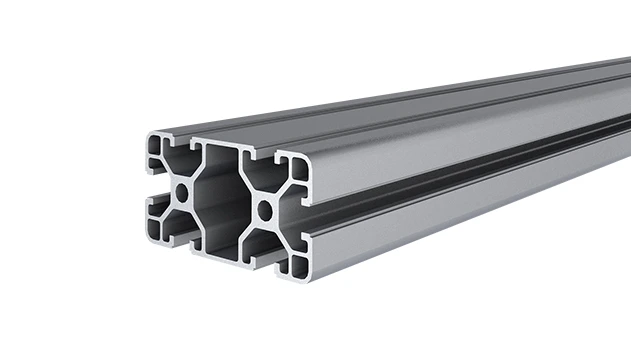
4080A EU Standard Aluminum Profile
4080A is a 4.00x8.00 CM fractional 40 series square extrusion T-slot profile with two side open T-slots, each side with 4.00cm face, two side with 8.00cm face. The profile has align-a-grooves to assist in aligning connecting profiles.
Walk into any educational lab—whether it's a high school chemistry room or a university biology lab—and you'll quickly realize that the setup can make or break the learning experience. Lab stations that are cramped, outdated, or rigidly fixed in place don't just hinder productivity; they limit how students engage with experiments, collaborate with peers, and adapt to new technologies. For educators and lab managers, the challenge has always been finding a balance between durability, functionality, and flexibility. After all, a lab that works perfectly for a 9th-grade physics class might feel completely inadequate three years later when the school introduces a new robotics program.
That's where modular solutions come in. And among the most versatile options out there, aluminum extrusion profiles have emerged as a game-changer. These aren't your average metal bars—they're engineered to be strong, lightweight, and infinitely customizable, thanks to a system of T-slots and compatible accessories that let you build, modify, and expand structures with ease. Today, we're zeroing in on one profile that's become a favorite in educational settings: the 4080A EU Standard Aluminum Profile. Designed with the unique needs of labs in mind, this profile isn't just a building material; it's a foundation for creating lab stations that grow with your students, your curriculum, and your institution's goals.
Why the 4080A EU Standard Aluminum Profile Stands Out
First, let's get to know the star of the show: the 4080A EU Standard Aluminum Profile. At its core, this is a rectangular aluminum extrusion with a cross-section of 40mm (width) by 80mm (height). But those numbers only tell part of the story. What makes it special is its compliance with EU standards—think strict regulations for material safety, structural integrity, and environmental sustainability. For schools and universities, that compliance isn't just a checkbox; it's peace of mind. You're not just buying a metal frame; you're investing in a product that meets rigorous safety benchmarks, ensuring it can withstand the daily wear and tear of busy labs while keeping students and staff protected.
But the 4080A's appeal goes beyond compliance. Let's talk about material: aluminum extrusion profile. Unlike wood, which warps with moisture and harbors bacteria in hard-to-clean crevices, or steel, which is heavy and prone to rust, aluminum brings a winning combo of benefits. It's lightweight enough to be reconfigured by a small team (no need for heavy machinery), yet strong enough to support lab equipment like centrifuges, microscopes, or even small 3D printers. Its natural resistance to corrosion means it can stand up to spills—whether it's a dropped beaker of water or a splatter of diluted acid—without rusting or degrading. And when it's time for a deep clean? A quick wipe with a mild detergent is all it takes to keep surfaces hygienic, a must in environments where sterility matters.
The T-Slot Advantage: Customization Starts Here
If the 4080A profile is the backbone of your lab station, its T-slot design is the secret sauce that makes customization possible. Run your finger along the length of the profile, and you'll notice evenly spaced grooves (the "T-slots") running along its sides. These slots aren't just for show—they're engineered to hold a wide range of aluminum profile accessories, from bolts and brackets to shelves and cable trays. The beauty? You don't need to weld, drill, or hire a professional to make changes. With a basic set of tools, you can loosen a bolt, slide in a new accessory, and tighten it back up—all in minutes. This flexibility is a game-changer for labs that need to evolve.
Let's say your biology class is starting a unit on cell culture, and you need extra storage for petri dishes. Instead of buying a whole new cabinet, you can slide shelf supports into the T-slots of your existing 4080A frame, add a plywood or aluminum shelf, and voilà—extra space. A few months later, when that unit ends and the physics class needs more tabletop space for circuit experiments? Simply remove the shelf and reattach it elsewhere. It's that easy.

Aluminum Profile Accessories: Building Blocks of Customization
Of course, the T-slots are only as useful as the accessories that fit into them. The 4080A ecosystem includes a wide range of aluminum profile accessories, each designed to solve specific lab challenges. Let's break down some of the most popular ones and how they transform a basic frame into a fully functional lab station:
| Accessory Type | Function | Educational Lab Benefit |
|---|---|---|
| T-Slot Nuts & Bolts | Secure accessories to the profile without drilling; slide into T-slots and tighten with a wrench. | Enables tool-free reconfiguration, so stations can adapt from chemistry to physics setups in hours, not days. |
| Corner Brackets | Reinforce joints where two or more profiles meet (e.g., connecting a vertical leg to a horizontal shelf). | Adds stability for heavy equipment like microscopes or spectrometers, reducing the risk of accidents. |
| Adjustable Shelf Supports | Hold shelves at variable heights; lock into T-slots at 10mm increments. | Customize storage for tall items (like graduated cylinders) or short items (like test tube racks) without cutting or modifying profiles. |
| Cable Management Trays | Route power cords, USB cables, and data lines along the back or underside of the station. | Eliminates tangled wires that cause tripping hazards or damage equipment; keeps workspaces clutter-free for focused learning. |
| End Caps | Cover exposed ends of profiles to smooth sharp edges. | Prevents cuts and scrapes during busy lab sessions—critical for younger students or high-traffic environments. |
Designing the Perfect Aluminum Workbench for Your Lab
Now that we've covered the basics, let's zoom in on one of the most common uses for the 4080A profile: building an aluminum workbench. Lab workbenches are the heart of any lab—they're where experiments happen, tools are organized, and students collaborate. But a "one-size-fits-all" workbench rarely works. A chemistry lab needs heat-resistant surfaces and chemical-proof edges; a robotics lab might prioritize extra table space and integrated power strips; a biology lab could benefit from under-shelf lighting to illuminate specimens. With the 4080A profile, you can tailor every aspect of the workbench to your lab's unique needs.
Let's start with height. Standard workbenches are often 36 inches tall, but that's not ideal for everyone. Middle school students, for example, might struggle with a bench that's too high, leading to strained backs or difficulty reaching equipment. With 4080A, you can adjust the height by cutting profiles to custom lengths (or using telescoping accessories) to ensure ergonomic comfort. Imagine a lab where stations for 6th graders are 30 inches tall, while those for 12th graders are 38 inches—no more one-size-fits-all discomfort.
Next, surfaces. The top of your workbench needs to match the work happening on it. For general science classes, a laminate surface (resistant to scratches and easy to clean) might be perfect. For chemistry labs, though, you'll want something more heavy-duty—like stainless steel, which stands up to corrosive chemicals and can even be autoclaved for sterilization. The 4080A frame makes swapping surfaces a breeze: simply remove the bolts securing the old top, lift it off, and place the new one on top. No need to replace the entire bench.
Storage is another area where customization shines. A basic aluminum workbench might start with a single deck (no casters needed if it's meant to stay in one spot), but why stop there? Add a second deck above the main surface to hold reference books or equipment that's used occasionally. Install pegboards on the sides for hanging tools like pipettes, forceps, or goggles. Or attach under-shelf bins for storing smaller items like test tubes or USB drives. The key is that you're not limited by pre-drilled holes or fixed shelves—you can add, remove, or reposition storage as your needs change.
Mobility vs. Stability: Choosing What Works for Your Space
Not all lab stations need to stay in one place. Maybe your school hosts science fairs and needs to rearrange stations into a U-shape for presentations. Or perhaps your lab shares space with other classes, requiring stations to be rolled into storage when not in use. For these scenarios, casters (wheels) are a must—and the 4080A profile can accommodate them with ease.
Casters designed for aluminum profiles typically attach via a mounting plate that slides into the T-slots of the 4080A legs. Opt for locking casters, and you get the best of both worlds: mobility when you need it (simply unlock the wheels and roll), and stability when you don't (lock the wheels to prevent the station from moving during experiments). For stations that need to stay put—like those housing heavy equipment—skip the casters and use adjustable feet instead. These screw into the bottom of the 4080A legs, letting you level the bench on uneven floors and add extra stability.
Future-Proofing Your Lab: Why Modularity Saves Money (and Headaches)
Here's the hard truth about educational budgets: they're rarely unlimited. Schools and universities need to make every dollar count, which is why "future-proofing" is so important. A lab station that can't adapt to new curriculum or technology will quickly become obsolete, forcing you to spend more money replacing it down the line. The 4080A profile, with its modular design, is built to avoid that cycle.
Let's say your school invests in a set of 4080A-based workbenches for its physics lab. A few years later, the district introduces a new engineering program, and suddenly you need stations with built-in power rails for soldering irons and 3D printers. Instead of buying new stations, you can add aluminum profile accessories like power strips (mounted via T-slots) and tool holders. The initial frame remains useful, and you only pay for the upgrades. Over time, this modularity adds up to significant cost savings—money that can be redirected to lab supplies, student scholarships, or other critical needs.
Sustainability is another bonus. Aluminum is 100% recyclable, and because the 4080A profile is built to last decades, it reduces waste from frequent replacements. When a station does reach the end of its life (which, with proper care, could be 20+ years), the aluminum can be melted down and repurposed—aligning with many schools' goals to reduce their environmental footprint.
Real-World Impact: A Lab Manager's Perspective
To put this all in context, let's hear from someone who's been there. Maria, a lab manager at a mid-sized high school in Germany, switched to 4080A-based stations three years ago. "Before, our labs were a hodgepodge of old wooden benches and metal cabinets that couldn't be changed," she recalls. "If a teacher wanted to rearrange the room for group work, we'd have to bring in a hand truck and risk damaging the floors. And when we added a robotics club, we had nowhere to put their equipment—we ended up using folding tables in the hallway."
After researching options, Maria's team chose the 4080A profile for their new stations. "The first thing we noticed was how easy they were to assemble," she says. "We built 12 workbenches in a weekend with just two people. And when the robotics club needed space? We added shelves and tool rails to three of the stations—no extra cost, no downtime. Last month, we even reconfigured two stations into a large collaborative workspace for a project on renewable energy. The students loved it—they could spread out their materials and work together without feeling cramped."
For Maria, the biggest win has been adaptability. "Education isn't static, and neither should our labs," she says. "With the 4080A profiles, we're not just keeping up—we're ahead. When new teachers come in with fresh ideas, we don't have to say 'no' because the space can't handle it. We say 'let's build it.'"
Getting Started: Tips for Designing Your Custom Lab Station
Ready to explore 4080A EU Standard Aluminum Profile for your lab? Here are a few tips to guide you:
Start with a needs assessment. Talk to teachers, students, and staff about what's missing in your current setup. Do you need more storage? Better mobility? Height-adjustable surfaces? Jot down priorities to avoid over-customizing (or under-customizing) your stations.
Test a prototype. Before committing to a full lab upgrade, build one or two sample stations with the 4080A profile. Let teachers and students use them for a month, then gather feedback. Did the height work? Was the storage sufficient? Use that input to refine your design.
Partner with a reputable supplier. Not all aluminum extrusion profiles are created equal. Look for suppliers who specialize in educational or lab equipment and can provide guidance on accessories, load capacities, and compliance. A good supplier will even help you draft designs based on your needs.
Final Thoughts: Building Labs That Inspire
At the end of the day, a lab station isn't just a piece of furniture. It's a space where curiosity is sparked, discoveries are made, and the next generation of scientists, engineers, and innovators learns to explore the world around them. The 4080A EU Standard Aluminum Profile doesn't just provide a sturdy frame for that exploration—it provides a canvas. A canvas that lets you create lab stations as unique as the students using them, as adaptable as the curriculum teaching them, and as resilient as the institutions supporting them.
So whether you're upgrading an outdated lab or building a new one from scratch, consider the power of modular design. With the 4080A profile and its ecosystem of aluminum profile accessories, you're not just building lab stations—you're building environments that grow, adapt, and inspire. And in education, that's the greatest customization of all.