- Company Articles
- Products and Technology
- Product knowledge
- 4080A EU Standard Aluminum Profile for Laboratory Benches: Chemical Resistance

4080A EU Standard Aluminum Profile for Laboratory Benches: Chemical Resistance
Related Product
4080A EU Standard Aluminum Profile
4080A is a 4.00x8.00 CM fractional 40 series square extrusion T-slot profile with two side open T-slots, each side with 4.00cm face, two side with 8.00cm face. The profile has align-a-grooves to assist in aligning connecting profiles.
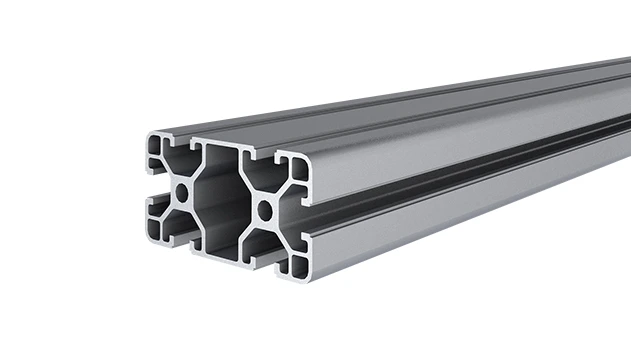
Walk into any busy laboratory—whether it's a pharmaceutical research facility, a university chemistry lab, or a industrial quality control center—and you'll notice one piece of furniture that's the unsung hero of daily operations: the lab bench. It's where experiments are prepped, chemicals are mixed, and sensitive equipment rests for hours on end. But not all lab benches are created equal. When spills happen, when corrosive substances drip, and when heavy instruments are placed, the bench needs to stand firm. That's where the 4080A EU standard aluminum profile comes in. More than just a metal frame, it's a foundation built for resilience, especially when it comes to chemical resistance. Let's dive into why this aluminum extrusion profile has become a game-changer for labs worldwide.
Why Aluminum Extrusion Profiles Are Redefining Lab Furniture
Laboratories have unique demands. Unlike office desks or home worktables, lab benches must withstand a daily onslaught of challenges: exposure to acids, solvents, and bases; repeated cleaning with harsh disinfectants; and the weight of equipment like centrifuges, spectrometers, or even small fume hoods. For decades, labs relied on materials like wood (prone to warping and chemical damage), stainless steel (heavy and expensive), or generic steel (susceptible to rust). Then came aluminum extrusion profile technology, and everything changed.
Aluminum extrusion profiles are created by forcing heated aluminum through a die to form specific cross-sectional shapes—think of it like squeezing toothpaste through a tube, but with industrial precision. The result? Lightweight yet surprisingly strong structures that can be customized to fit almost any need. In labs, this translates to benches that are easy to install (no need for heavy machinery), adaptable (add shelves, hooks, or tool rails in minutes), and, crucially, resistant to the harsh conditions of lab work. But not all aluminum profiles are up to the task. That's where the 4080A EU standard stands out.
Quick Fact:
Aluminum extrusion profiles are 30% lighter than steel but offer comparable strength, making them ideal for lab environments where furniture may need to be reconfigured or moved during renovations.
Meet the 4080A EU Standard: More Than Just a Profile
First, let's decode the name: "4080A" refers to the profile's dimensions—40mm in width and 80mm in height. The "EU standard" tag is non-negotiable for labs in Europe and beyond; it means the profile meets strict quality, safety, and performance criteria set by the European union. This isn't just a marketing label. Compliance with EU standards ensures consistency in material purity, structural integrity, and even environmental sustainability (many EU-standard aluminum profiles use recycled content).
What makes the 4080A particularly suited for lab benches? Let's start with its strength. The 40x80mm cross-section provides a stable base that can support heavy loads—up to 500kg per linear meter in some configurations—without bending or warping. That's enough to hold a row of reagent bottles, a hot plate, and a microscope all at once. Compare that to smaller profiles like the 4040 (40x40mm), which, while versatile, may struggle with the weight of larger lab equipment over time.
But the 4080A's real advantage lies in its adaptability. Thanks to its T-slot design—a series of grooves along its length—lab designers can easily attach aluminum profile accessories like brackets, shelves, or cable management systems without welding or drilling. Need a shelf for extra storage? Slide in a 90° aluminum profile connector and secure it with a bolt. Want to add a rail for hanging tools? Use a 45° aluminum profile connector to angle it perfectly. This modularity means labs can customize their benches on the fly, adapting to new projects or equipment without rebuilding from scratch.

Chemical Resistance: The 4080A's Secret Weapon
Let's get to the heart of the matter: chemical resistance. For a lab bench, this isn't just a nice-to-have—it's a safety requirement. A bench that corrodes or degrades when exposed to chemicals isn't just unsightly; it can contaminate experiments, harbor bacteria in cracks, or even fail structurally. So why does the 4080A aluminum profile excel here?
Aluminum, by nature, is a champion of corrosion resistance. When exposed to air, it forms a thin, invisible layer of aluminum oxide (Al₂O₃) on its surface. This layer acts as a barrier, preventing further oxidation and protecting the metal from many corrosive substances. But the 4080A takes it a step further. Most EU-standard profiles undergo anodization—a process that thickens this oxide layer, making it even more durable. Anodized aluminum isn't just resistant to rust; it can stand up to spills of common lab chemicals like sulfuric acid (in dilute concentrations), ethanol, acetone, and even mild bases like sodium hydroxide.
To put this to the test, imagine a typical scenario: a lab technician accidentally knocks over a beaker of 10% hydrochloric acid, spilling 50ml onto the bench. With a wooden bench, the acid would seep in, causing discoloration and weakening the structure. With untreated steel, it might rust. But with anodized 4080A aluminum? The acid beads up, allowing the technician to wipe it away with a paper towel. After cleaning, there's no pitting, no stain—just a smooth surface ready for the next task. This isn't just about longevity; it's about peace of mind. Lab managers know that with 4080A, they're not replacing benches every few years due to chemical damage.
It's not just strong acids, either. Labs use a lot of organic solvents—methanol, isopropyl alcohol, DMSO—to clean surfaces or prepare samples. These solvents can dissolve paints or coatings on other materials, but the 4080A's anodized layer is impervious. Even daily cleaning with bleach-based disinfectants (common in biotech labs) won't wear it down. Over time, this resistance translates to lower maintenance costs and fewer disruptions to lab work.
Building a Better Bench: Aluminum Profile Accessories That Make a Difference
A profile is only as good as the accessories that bring it to life. The 4080A's T-slot design pairs seamlessly with a range of aluminum profile accessories , turning a simple extrusion into a fully functional lab bench. Let's break down the key players:
- Connectors: 90° aluminum profile connectors, 45° connectors, and 135° connectors let you join profiles at any angle, creating sturdy frames for the bench's legs, shelves, or side panels. These connectors are often made of high-strength aluminum or stainless steel, ensuring they don't loosen under heavy loads.
- End Caps: The 4080 aluminum profile end cap might seem small, but it's essential. It covers the open ends of the profile, preventing dust, liquids, or small tools from getting stuck in the T-slots. It also adds a polished look, eliminating sharp edges that could scratch gloves or lab coats.
- Brackets and Supports: Heavy-duty brackets attach shelves or drawers to the 4080A frame. For example, a gusset alp 4040 bracket (designed for 40mm profiles) can reinforce a shelf holding a 20kg centrifuge, ensuring it stays level even when the lab floor vibrates.
- Panels: While the frame is 4080A, the bench top itself often uses materials like aluminum honeycomb panel —lightweight, rigid, and resistant to heat and chemicals. The honeycomb structure adds strength without adding weight, making the bench easy to move if needed (though most lab benches stay put once installed).
What's impressive is how these accessories simplify assembly. Unlike traditional steel benches that require welding or specialized tools, a 4080A bench can be put together with basic hand tools—hex keys, screwdrivers, maybe a rubber mallet. This modularity is a boon for labs that frequently reconfigure their space. Need to add a shelf halfway through a project? Just slide in a connector and tighten a bolt. No need to call a contractor; the lab team can handle it.
4080A vs. Other Materials: A Lab Bench Showdown
To truly appreciate the 4080A, let's compare it to other common lab bench materials. The table below breaks down how it stacks up against wood, stainless steel, and generic aluminum (non-EU standard):
| Feature | 4080A EU Standard Aluminum Profile | Wood (Plywood/Particleboard) | Stainless Steel | Generic Aluminum (Non-EU Standard) |
|---|---|---|---|---|
| Chemical Resistance | High (anodized oxide layer resists acids, solvents) | Low (prone to staining, warping, and absorption) | High (but prone to fingerprinting and scratching) | Medium (thinner oxide layer; may corrode over time) |
| Weight | Light (easy to assemble/move) | Medium (heavier when wet or with finishes) | Very heavy (requires structural support) | Light (but less sturdy than 4080A) |
| Customization | High (T-slots work with endless accessories) | Low (difficult to modify without damaging) | Medium (welding required for changes) | Low (limited accessory compatibility) |
| Cost (Lifetime Value) | Moderate upfront, low long-term (durable, low maintenance) | Low upfront, high long-term (needs replacement every 2-3 years) | High upfront, moderate long-term (resistant but expensive to repair) | Low upfront, high long-term (may corrode or bend, requiring replacement) |
| EU Compliance | Yes (meets strict quality and safety standards) | Depends on finish (often no specific lab standards) | Yes (but overkill for many labs) | No (may lack quality control) |
As the table shows, the 4080A strikes a balance between durability, cost, and flexibility that other materials can't match. Stainless steel, for example, is indeed chemical-resistant, but its weight makes it hard to install, and its cost can be 2-3 times that of aluminum. Wood is cheap upfront, but labs end up replacing it frequently—costing more in the long run. Generic aluminum might save a few dollars initially, but without EU standards, there's no guarantee it's anodized properly or built to handle heavy loads.
Real Labs, Real Results: How 4080A Is Making a Difference
Talk is cheap—let's look at real-world examples. Take a mid-sized pharmaceutical lab in Germany that specializes in developing new antibiotics. Three years ago, they replaced their old wooden benches with 4080A aluminum profile benches. "We used to have to sand and refinish our wood benches every six months because of chemical stains," says the lab manager, Dr. Anna Müller. "Now, we wipe them down with ethanol at the end of each day, and they still look brand new. The anodized surface even resists the iodine solutions we use for cell culture work. We haven't had to replace a single bench since the upgrade."
Another example: a university chemistry department in France. With over 200 students rotating through lab sessions weekly, their benches take a beating—spills, dropped beakers, and constant movement. After switching to 4080A frames with aluminum honeycomb panel tops, the department head noted a 60% reduction in maintenance requests. "Students are tough on equipment, but these benches just don't break," he says. "Even when a Bunsen burner was left on and scorched the top, the aluminum honeycomb panel didn't warp. We sanded it lightly, and it was good as new."
It's not just about durability, either. The 4080A's clean, modern look has aesthetic benefits. "Labs can feel sterile and cold," Dr. Müller adds. "The aluminum frames, paired with light-colored honeycomb panels, make the space feel brighter and more inviting. It's a small thing, but it boosts morale—especially during long experiments."
Caring for Your 4080A Bench: Simple Maintenance for Longevity
One of the best things about 4080A aluminum profile benches is how little maintenance they need. But a little care goes a long way in ensuring they last for decades. Here are some tips:
- Clean Spills Immediately: While the 4080A resists chemicals, letting a spill sit for hours (especially strong acids) can still cause minor damage. Wipe up spills with a lint-free cloth and mild soap and water. Avoid abrasive cleaners like steel wool—they can scratch the anodized surface.
- Check Accessories Regularly: The aluminum profile accessories (connectors, brackets) can loosen over time, especially if the bench is vibrated by equipment. Every few months, give the bolts a quick tighten with a hex key. It takes 10 minutes and prevents shelves from wobbling.
- Protect the Surface: While the aluminum honeycomb panel top is tough, avoid dragging heavy equipment across it. Use rubber mats or coasters under items like hot plates or stirrers to prevent scratches.
- Inspect for Damage: If a part does get damaged (e.g., a bracket bends), replace it immediately. Thanks to the modular design, replacement parts are easy to find and install. Most suppliers stock 4080A accessories, so downtime is minimal.
By following these steps, a 4080A bench can easily last 15-20 years—far longer than wood or generic aluminum. For labs on a budget, that's a smart investment.
Final Thoughts: Why 4080A Is More Than a Bench—It's a Lab Partner
Labs are places of discovery, but they're also places of discipline. Every tool, every piece of furniture, needs to support the work without adding stress. The 4080A EU standard aluminum profile does exactly that. It's a bench frame that doesn't flinch when chemicals spill, that adapts when experiments change, and that lasts when budgets are tight. It's not just about metal and profiles; it's about trust. Trust that the bench won't fail during a critical experiment. Trust that maintenance costs won't eat into research funding. Trust that, year after year, it will be there—steady, reliable, and ready.
So, if you're designing a new lab, upgrading old furniture, or just curious about what makes a great lab bench, look no further than the 4080A. It's more than a material choice; it's a commitment to quality, safety, and progress. After all, in science, the right foundation can make all the difference.