- Company Articles
- Products and Technology
- Product knowledge
- 4080A EU Standard Aluminum Profile for Material Handling Carts: Load-Bearing Capacity Guide

4080A EU Standard Aluminum Profile for Material Handling Carts: Load-Bearing Capacity Guide
Related Product
4080A EU Standard Aluminum Profile
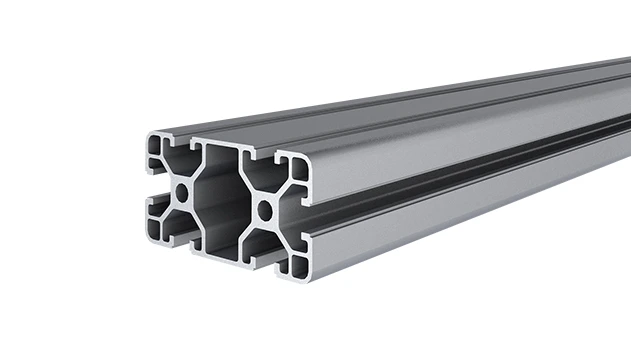
4080A is a 4.00x8.00 CM fractional 40 series square extrusion T-slot profile with two side open T-slots, each side with 4.00cm face, two side with 8.00cm face. The profile has align-a-grooves to assist in aligning connecting profiles.
Walk into any busy warehouse, factory floor, or distribution center, and you'll notice something that rarely gets the spotlight but keeps everything moving: material handling carts. These unsung heroes shuttle parts, tools, and products from point A to B, making sure operations run like clockwork. But what makes a reliable material handling cart? More often than not, it's the frame—specifically, the aluminum profile that forms its backbone. Today, we're diving deep into one of the most trusted names in this space: the 4080A EU Standard Aluminum Profile. If you've ever wondered how much weight this profile can really handle, or how to choose the right setup for your carts, you're in the right place. Let's break it down, step by step, in plain language—no jargon, just practical insights you can use.
What Even Is the 4080A EU Standard Aluminum Profile?
First things first: Let's get familiar with our star player. The 4080A EU Standard Aluminum Profile is a type of aluminum extrusion profile —meaning it's shaped by forcing molten aluminum through a die to create its specific cross-section. The "4080" refers to its dimensions: 40mm wide and 80mm tall. The "A" denotes a specific design variation within the EU standard, typically featuring a T-slot structure (those handy grooves along the profile) that makes it easy to attach accessories like brackets, shelves, or wheels.
Why is this profile so popular for material handling carts? Think of it as the Swiss Army knife of industrial framing: it's lightweight (so carts are easy to push), corrosion-resistant (no rust in damp warehouses), and surprisingly strong for its weight. Plus, the T-slot design means you can customize carts on the fly—add a shelf here, a hook there—without welding or heavy tools. It's no wonder manufacturers and warehouse managers reach for 4080A when they need a balance of strength, flexibility, and cost-effectiveness.
Why Load-Bearing Capacity Matters (Spoiler: It's Not Just About "Strength")
Load-bearing capacity—the maximum weight a structure can safely support—isn't just a number on a spec sheet. It's the difference between a cart that glides smoothly, loaded with boxes, and a cart that wobbles, bends, or even collapses. Imagine pushing a cart stacked with heavy components up a ramp: if the 4080A profile can't handle the load, you're risking damaged goods, injured workers, and costly downtime. That's why getting this right is non-negotiable.
But here's the thing: load-bearing capacity isn't just about the profile itself. It's a team effort involving the profile, its aluminum profile accessories (like joints and brackets), how the cart is assembled, and even how it's used. Let's break down the key factors that determine how much weight your 4080A-based cart can really handle.

Factors That Shape Load-Bearing Capacity: It's More Than Just "How Thick Is the Metal?"
1. Profile Thickness and Alloy
Not all 4080A profiles are created equal. The thickness of the aluminum walls (typically 1.5mm to 3mm for this profile) and the alloy type (most often 6063-T5, a common structural aluminum) play a big role. Thicker walls mean more material to bear weight, and T5 tempering (a heat treatment process) adds strength and hardness. A 4080A profile with 2mm walls will handle more weight than one with 1.5mm walls—simple as that.
2. Span Length: The "Distance Between Supports" Problem
Ever tried to hold a ruler at both ends and bend it? Now try holding it by one end—way easier to bend, right? The same idea applies to 4080A profiles. The "span length" (distance between two supports, like legs or casters) directly affects load capacity. A shorter span (e.g., 500mm between casters) can support more weight than a longer span (e.g., 2000mm), because there's less leverage working against the profile. This is probably the single biggest factor in determining how much your cart can carry.
3. Accessories: Your Profile's "Support Team"
Your 4080A profile might be tough, but it can't do it alone. Aluminum profile accessories like joints, brackets, and even caster wheels act as the "glue" that holds everything together—and they have their own load limits. For example, a cheap plastic joint might snap under heavy weight, even if the profile itself is fine. Similarly, a caster wheel rated for 100kg per wheel won't support a 500kg cart (you need at least 5 wheels, but realistically, 4 wheels with a safety margin). Always check that accessories are rated for at least as much weight as the profile itself.
4. Assembly Quality: Tight Bolts = Happy Carts
Even the best profile and accessories will fail if assembled poorly. Loose bolts, misaligned joints, or uneven weight distribution can turn a strong cart into a wobbly disaster. Think of it like building a bookshelf: if the screws are too loose, the shelves sag. Same with your cart—take the time to torque bolts properly, align profiles straight, and make sure weight is spread evenly across the frame.
Load-Bearing Capacity Table: How Much Can 4080A Really Handle?
Enough theory—let's get to the numbers. Below is a practical guide to 4080A load-bearing capacity based on common span lengths and setups. These numbers assume a standard 4080A EU profile (6063-T5 alloy, 2mm wall thickness) and are meant as general guidelines—always check with your supplier for exact specs for your specific profile.
| Span Length (Between Supports) | Max Uniform Load (kg/m) | Max Point Load (kg at Center) | Common Application Example |
|---|---|---|---|
| 500mm (20 inches) | 350 kg/m | 175 kg | Small workbench (single deck, without caster) |
| 1000mm (39 inches) | 180 kg/m | 90 kg | Medium material cart with caster wheels |
| 1500mm (59 inches) | 95 kg/m | 47 kg | Lower shelf of material rack b (3 row and 3 floor) |
| 2000mm (79 inches) | 55 kg/m | 27 kg | Long, lightweight cart (e.g., for textiles) |
*Note: These values are for a single 4080A profile. For carts with multiple profiles (e.g., a frame with 4 vertical legs and 2 horizontal rails), total load capacity increases—always calculate based on the weakest span in your design.
Real-World Applications: How 4080A Shines in Daily Use
1. Workbenches: Sturdy Surfaces for Getting Things Done
A workbench is where the magic happens—whether you're assembling electronics, packing orders, or repairing tools. A 4080A-based workbench (single deck, without caster) is a popular choice because it balances strength and flexibility. With a span length of 500mm between legs, the tabletop can easily support 175kg of tools, parts, and equipment. Add a shelf below using aluminum profile accessories like angle brackets, and you've got extra storage without sacrificing stability. Pro tip: For heavier tasks (like metalworking), opt for a shorter span (400mm) to bump up load capacity even more.
2. Material Racks: Stacking Smart Without the Stress
Take material rack b (3 row and 3 floor) , a common setup in warehouses for storing boxes, components, or raw materials. Each shelf in this rack is typically supported by 4080A profiles running front to back. With a span of 1500mm between the vertical posts, each shelf can hold around 95kg/m—plenty for stacks of cardboard boxes or plastic bins. The key here is that the weight is spread evenly across the profile (a "uniform load"), which 4080A handles better than concentrated weight. And because aluminum is lightweight, the entire rack is easier to move or reconfigure than a steel alternative—perfect for warehouses that need to adapt to changing inventory.
3. Mobile Carts: Rolling Heavy Loads Safely
Mobile material handling carts rely on caster wheels for mobility, and 4080A profiles for structure. A typical cart might have a frame with 1000mm spans between caster wheels, supporting 180kg/m. That means a 1.2m long cart can carry around 216kg (1.2m x 180kg/m)—enough for 20-30 medium-sized boxes. But remember: the caster wheels themselves need to be up to the task. A cart with four casters should have each wheel rated for at least 1/3 of the total load (to account for uneven floors and dynamic forces like pushing or braking). So for a 200kg cart, look for caster wheels rated for 70kg each or more.
Choosing the Right Accessories: It's All in the Details
Your 4080A profile is only as good as the accessories you pair it with. Here are the key players to consider:
Caster Wheels: Don't Skimp on Quality
As we mentioned earlier, caster wheels are the unsung heroes of cart mobility—and load capacity. Look for heavy-duty casters with ball bearings (for smooth rolling) and steel or polyurethane wheels (better for rough floors). Avoid cheap plastic casters—they crack under pressure. Check the load rating per wheel and multiply by the number of wheels (usually 4) to get the total cart capacity. And don't forget: swivel casters add maneuverability, but fixed casters add stability for straight-line rolling.
Joints and Brackets: The "Connectors" That Keep It All Together
Aluminum profile accessories like corner joints, T-joints, and gusset plates (small triangular brackets) reinforce connections between profiles. For heavy loads, opt for metal joints (aluminum or steel) over plastic—they're stronger and less likely to warp. Gusset plates, in particular, are a game-changer for right-angle connections (like where a vertical leg meets a horizontal rail) by distributing weight more evenly.
Installation Tips: How to Build a Cart That Lasts
Even the best materials need proper installation. Here's how to ensure your 4080A cart lives up to its load-bearing potential:
- Torque bolts properly: Over-tightening strips threads; under-tightening leads to looseness. Use a torque wrench (most aluminum joints recommend 3-5 Nm) to get it just right.
- Align profiles straight: A crooked frame puts extra stress on joints. Use a level to ensure horizontal rails are flat and vertical legs are plumb.
- Spread weight evenly: Avoid piling all the weight in one corner. Distribute heavy items across the cart to prevent sagging.
- Test before full use: Load the cart to 75% of its rated capacity and push it around. If it wobbles or creaks, check for loose bolts or misaligned profiles.
Maintenance: Keeping Your Cart Strong for the Long Haul
Your 4080A cart isn't a "set it and forget it" tool—it needs a little TLC to keep performing. Here's how:
- Inspect regularly: Every month, check for loose bolts, bent profiles, or cracked joints. Tighten bolts as needed—vibration from rolling can loosen them over time.
- Clean profiles: Wipe down T-slots with a dry cloth to remove dust and debris, which can jam accessories. For greasy environments, use a mild degreaser.
- Lubricate casters: Add a drop of oil to caster wheel bearings every 3 months to keep them rolling smoothly. replace worn caster wheels immediately—wobbly wheels stress the frame.
- replace worn accessories: If a joint starts to bend or a bracket cracks, swap it out. Don't wait for a small problem to become a big failure.
Common Misconceptions: What People Get Wrong About Load-Bearing
"All Aluminum Profiles Are the Same—Just Pick the Cheapest"
Nope! A 4080A from a reputable supplier (using 6063-T5 alloy and strict extrusion standards) is very different from a generic "40x80mm aluminum bar" from a discount store. Cheap profiles often have thinner walls, impure alloys, or uneven extrusion, leading to inconsistent load capacity. Save yourself the headache and invest in a quality aluminum extrusion profile from a trusted supplier.
"If It Looks Strong, It Can Handle the Weight"
Aluminum is deceptively strong for its weight, but "looking strong" isn't a substitute for actual load ratings. That 2000mm span might seem sturdy, but as our table shows, it can only handle 55kg/m. Overloading leads to permanent bending or even collapse—don't risk it.
"Accessories Don't Matter—It's All About the Profile"
Wrong again! A profile is only as strong as its weakest link. A plastic joint rated for 50kg will fail long before the 4080A profile does, even if the profile can handle 200kg. Always match accessories to the profile's load capacity—think of it as a team, not a solo sport.
Conclusion: 4080A—Your Partner in Safe, Efficient Material Handling
At the end of the day, the 4080A EU Standard Aluminum Profile is more than just a piece of metal—it's a tool that helps warehouses, factories, and workshops run smoother, safer, and more efficiently. By understanding its load-bearing capacity, choosing the right accessories (like caster wheels and aluminum profile accessories ), and following proper installation and maintenance tips, you can build material handling carts, workbenches , and material rack b (3 row and 3 floor) setups that stand the test of time.
Remember: load-bearing capacity isn't just a number—it's a promise of safety and reliability. Treat it with respect, and your 4080A-based equipment will repay you with years of trouble-free service. Now go out there and build something strong!