- Company Articles
- Products and Technology
- Product knowledge
- 4080A EU Standard Aluminum Profile for Medical Equipment Frames: Precision & Stability

4080A EU Standard Aluminum Profile for Medical Equipment Frames: Precision & Stability
Related Product
4080A EU Standard Aluminum Profile
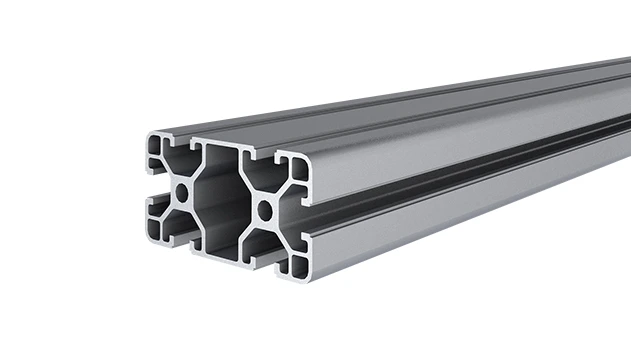
4080A is a 4.00x8.00 CM fractional 40 series square extrusion T-slot profile with two side open T-slots, each side with 4.00cm face, two side with 8.00cm face. The profile has align-a-grooves to assist in aligning connecting profiles.
In the fast-paced world of healthcare, where every second counts and precision can mean the difference between success and setback, the equipment that powers medical facilities is only as reliable as its foundation. From the sleek diagnostic machines in radiology labs to the sturdy workbenches in pharmacy compounding areas, the frames supporting these tools play a silent yet critical role. They must stand firm under pressure, resist corrosion in sterile environments, and adapt to evolving needs—all while meeting the strictest safety standards. Enter the 4080A EU standard aluminum extrusion profile: a material that's redefining what medical equipment frames can achieve, blending precision engineering with unwavering stability to support the heroes on the frontlines of care.
Why Aluminum Extrusion Profiles Are the Backbone of Modern Medical Frames
Before diving into the specifics of the 4080A, let's talk about why aluminum has become the go-to material for medical equipment frames. Unlike steel, which is heavy and prone to rust if not properly coated, aluminum brings a winning combination of strength and practicality. It's lightweight, making equipment easier to maneuver (think mobile surgical carts or adjustable exam tables), yet surprisingly robust—able to support the weight of sensitive imaging equipment or heavy reagent containers without bending. Its natural resistance to corrosion is a game-changer in healthcare settings, where frequent cleaning with harsh disinfectants is non-negotiable. And perhaps most importantly, aluminum extrusion profiles—shaped by forcing molten aluminum through custom dies—offer unparalleled design flexibility. This means manufacturers can create frames with intricate geometries, precise tolerances, and integrated features like T-slots (more on those later) that simplify assembly and customization.
But not all aluminum profiles are created equal. In the medical field, where even a fraction of a millimeter of misalignment can affect device performance, consistency is key. That's where EU standard profiles like the 4080A come in. These profiles are manufactured to strict, standardized specifications, ensuring that no matter which supplier you work with, the dimensions, material quality, and performance will be uniform. For medical equipment manufacturers, this consistency reduces production headaches and ensures compliance with global regulations. For healthcare facilities, it means equipment that fits together seamlessly, lasts longer, and requires less maintenance over time.
Meet the 4080A: A Profile Built for Medical Precision
So, what exactly is the 4080A? Let's break down the name first: "4080" refers to its cross-sectional dimensions—40mm in width and 80mm in height—while the "A" denotes a specific design variant within the EU standard lineup, often characterized by unique slot configurations or wall thicknesses optimized for load-bearing. But numbers only tell part of the story. What truly sets the 4080A apart is how its design addresses the unique challenges of medical environments.
At first glance, you might notice its clean, angular shape, but look closer, and you'll see the engineering details that matter. The profile's walls are thicker in high-stress areas, like the corners, to boost rigidity, while remaining thin enough to keep overall weight in check. Its surface is smooth, with no sharp edges or crevices—critical for preventing bacterial buildup and ensuring easy cleaning. And running along its length are T-slots: narrow, groove-like channels that act as built-in attachment points for aluminum profile accessories, from brackets to guide rails, without the need for welding or drilling. This modularity is a boon for medical settings, where equipment needs often evolve—whether it's adding a new monitor arm to a workstation or reconfiguring a material rack to store larger supplies.

Precision That Leaves No Room for Error
In medical equipment, precision isn't just a buzzword—it's a lifeline. Imagine a surgical robot with a frame that flexes even slightly during operation, or a blood analysis machine where components are misaligned by a hair's breadth. The consequences could be catastrophic. The 4080A addresses this with tight manufacturing tolerances, typically held to within ±0.1mm for key dimensions. This level of accuracy ensures that when components like motors, sensors, or display screens are mounted to the frame, they align perfectly, reducing vibration, minimizing wear, and ensuring consistent performance over time.
Take, for example, a laboratory workbench built with 4080A profiles. The (work surface) needs to sit perfectly level to prevent spills of hazardous materials, and the shelves must align precisely to hold microscopes or centrifuges without wobbling. Thanks to the 4080A's consistent dimensions, manufacturers can pre-drill mounting holes with confidence, knowing the profile will fit together like a puzzle. Even better, the T-slots allow for (fine adjustments) during installation—so if a shelf is slightly off, a quick tweak of the brackets is all it takes to get it right. This precision isn't just about functionality; it's about peace of mind for healthcare professionals, who can focus on their work knowing the equipment won't let them down.
Stability That Stands Up to the Toughest Demands
Stability is the other side of the coin, and here, the 4080A truly shines. Medical equipment frames don't just need to hold static weight—they must withstand dynamic forces, too. Think of an ultrasound machine being wheeled down a hallway, hitting a small bump, or a surgical table adjusting its height mid-procedure. The frame must absorb these shocks without transferring vibrations to sensitive components. The 4080A's design excels here, with a cross-section optimized to resist bending and twisting. Its larger height (80mm) compared to narrower profiles like the 4040A gives it a higher moment of inertia, meaning it's stiffer and less likely to flex under load.
To put this in tangible terms: a properly supported 4080A profile can typically handle static loads of up to 500kg per linear meter—more than enough for most medical applications, from heavy-duty imaging equipment to stacked material racks. Even under dynamic loads, like a mobile cart suddenly stopping, the profile's rigidity minimizes sway, reducing the risk of equipment damage or operator strain. For mobile units, this stability is paired with another key feature: compatibility with high-quality caster wheels. When mounted with lockable casters, 4080A-based frames glide smoothly across hospital floors, yet lock firmly in place during use—ensuring equipment stays exactly where it's needed, no matter the task.
Seamless Integration with Aluminum Profile Accessories: Building Frames That Adapt
One of the 4080A's greatest strengths is its ability to work with a wide range of aluminum profile accessories, turning a simple length of extrusion into a fully functional frame. Let's say you're designing a mobile medication cart for a hospital ward. Start with 4080A rails for the main frame, then add aluminum guide rail A to create smooth-sliding drawers for storing drugs. Attach brackets to hold IV poles or oxygen tanks, and mount lockable caster wheels for mobility. Need to add a laptop shelf for electronic medical records? Just slide a bracket into the T-slot and tighten a screw—no welding, no drilling, no downtime.
This modularity is a game-changer for healthcare facilities, where budgets are tight and equipment needs evolve rapidly. A single 4080A-based frame can be reconfigured multiple times over its lifespan: today's drug cart becomes tomorrow's emergency supply station, or a lab workbench is repurposed as a vaccine storage unit. It also simplifies repairs—if a bracket breaks or a caster wears out, it can be swapped out in minutes, minimizing equipment downtime. For manufacturers, this means faster production times and lower costs, as they can reuse accessory designs across multiple product lines. It's a win-win that keeps healthcare facilities agile and efficient.
Real-World Impact: 4080A in Action
To truly appreciate the 4080A, let's look at how it's being used in real medical settings. Take the aluminum workbench—a staple in labs, pharmacies, and surgical prep areas. A 4080A-based workbench offers a stable, level surface for tasks like compounding medications or assembling surgical kits. Its T-slots allow for adding pegboards to hang tools, adjustable shelves to organize supplies, or even ESD (electrostatic discharge) mats to protect sensitive electronics. The frame's rigidity ensures the workbench doesn't wobble during precise tasks, like measuring doses or handling small components, while its corrosion resistance stands up to daily wipe-downs with alcohol or bleach.
Another example is material rack B, a common storage solution in hospitals and clinics. Built with 4080A profiles, these racks feature multiple shelves (often three rows and three floors, as the name suggests) to hold everything from bandages to surgical instruments. The 4080A's load capacity ensures each shelf can support heavy boxes without sagging, while its lightweight design makes the rack easy to relocate if storage needs change. Add roller tracks to the shelves, and you've got a system where supplies glide forward as they're used—reducing bending and reaching for staff, and ensuring first-expired items are used first (a critical feature for medication storage).
Even specialized equipment benefits. Consider a mobile X-ray machine: its frame, built with 4080A, must support the weight of the X-ray tube, generator, and control panel, while remaining maneuverable enough to navigate tight hospital corridors. The profile's strength ensures stability during imaging, while its lightweight nature makes it easy for radiographers to push. And because it's aluminum, it won't interfere with the X-ray signal—a crucial advantage over steel frames.
EU Standards: More Than a Label, a Promise of Safety
In healthcare, compliance isn't optional—it's the law. The 4080A isn't just a well-designed profile; it's a product of rigorous EU standards that ensure safety, quality, and performance. Manufactured to EN 1090 (the European standard for structural aluminum), it undergoes testing for mechanical strength, corrosion resistance, and dimensional accuracy. It also meets ISO 13485, the international standard for medical device quality management, ensuring every step of production—from raw material sourcing to final inspection—is controlled and documented.
For healthcare facilities, this compliance is more than a checkbox. It means reduced liability, as equipment built with 4080A is less likely to fail or cause harm. It also simplifies cross-border procurement, as EU-standard profiles are recognized globally, making it easier to source replacement parts or expand equipment fleets. And for patients, it's a silent guarantee that the tools used in their care are built to the highest standards—because when it comes to health, there's no room for compromise.
Comparing 4080A to Other Profiles: Why Size and Strength Matter
To understand why the 4080A is ideal for larger medical equipment, let's compare it to two common alternatives: the 4040A and 3030A EU standard profiles. The table below highlights key differences in dimensions, load capacity, and typical medical applications:
| Profile Type | Dimensions (W x H) | Typical Load Capacity (kg/m) | Key Features | Common Medical Applications |
|---|---|---|---|---|
| 4080A EU Standard | 40mm x 80mm | Up to 500kg | Thick walls, high rigidity, large T-slots for heavy accessories | Surgical tables, imaging machines, material racks, heavy-duty workbenches |
| 4040A EU Standard | 40mm x 40mm | Up to 300kg | Balanced strength and weight, versatile for medium loads | Mobile carts, IV stands, small lab equipment frames |
| 3030A EU Standard | 30mm x 30mm | Up to 150kg | Compact, lightweight, ideal for tight spaces | Instrument holders, wall-mounted shelves, small storage units |
As the table shows, the 4080A stands out for heavy-duty applications, where load capacity and rigidity are non-negotiable. While the 4040A and 3030A excel in smaller, lighter equipment, the 4080A is the workhorse for larger, more critical systems. It's the profile you choose when "good enough" isn't enough—when the equipment you're building could mean the difference between life and death.
Maintenance and Longevity: A Profile That Grows with Your Facility
Medical equipment is a significant investment, and healthcare facilities need frames that last. The 4080A delivers here, too, with a design that minimizes maintenance and maximizes lifespan. Its aluminum construction resists rust and corrosion, even with daily exposure to disinfectants, so frames stay looking and performing like new for years. Unlike steel, which may require repainting or coating over time, aluminum develops a natural oxide layer that protects it from the elements—no extra treatments needed.
Cleaning is a breeze, too. The smooth surface and lack of crevices mean there's nowhere for dirt, grime, or bacteria to hide. A quick wipe with a disinfectant cloth is all it takes to keep the frame sterile, reducing the risk of healthcare-associated infections. And when repairs are needed, the modular design makes them simple. Whether it's replacing a worn caster wheel, tightening a loose bracket, or adding a new accessory, the T-slots and standardized aluminum profile accessories ensure parts are easy to find and install. In fact, many facilities report 4080A frames lasting 10+ years with minimal upkeep—far longer than frames made from cheaper materials like plastic or untreated steel.
Looking Ahead: The Future of Medical Framing with 4080A
As healthcare technology advances, so too will the demands on equipment frames. Miniaturization, IoT integration, and sustainability are shaping the next generation of medical devices, and the 4080A is poised to keep up. For example, as devices become smarter, frames will need to accommodate sensors that monitor temperature, vibration, or load—easily mounted via T-slots. Sustainability is another key trend: aluminum is 100% recyclable, and the 4080A's long lifespan reduces the need for frequent replacements, aligning with healthcare's growing focus on eco-friendly practices.
Perhaps most exciting is the potential for customization. As 3D printing and advanced extrusion techniques evolve, we may see 4080A profiles with even more intricate designs—integrated cable management channels, built-in shock absorption, or custom T-slot configurations for specialized accessories. Whatever the future holds, one thing is clear: the 4080A EU standard aluminum extrusion profile has already proven itself as a reliable, versatile, and forward-thinking choice for medical equipment frames. It's not just a material—it's a partner in delivering better care.
Conclusion: Supporting Healthcare, One Profile at a Time
In the end, the 4080A is more than just a length of aluminum. It's a testament to the power of thoughtful engineering—designing for precision, building for stability, and creating for adaptability. For medical equipment manufacturers, it's a tool that simplifies production and ensures compliance. For healthcare facilities, it's a cost-effective, long-lasting solution that grows with their needs. And for patients and providers alike, it's a silent guardian, ensuring the equipment they rely on is safe, reliable, and ready to perform when it matters most.
So the next time you walk into a hospital room, a lab, or a clinic, take a moment to look at the equipment around you. Chances are, somewhere in its frame, there's a 4080A profile hard at work—quietly supporting the care that saves lives. And that, more than any specification or standard, is the true measure of its success.