- Company Articles
- Products and Technology
- Product knowledge
- 4080A EU Standard Aluminum Profile for Packaging Machinery: Durability & Low Maintenance

4080A EU Standard Aluminum Profile for Packaging Machinery: Durability & Low Maintenance
Related Product
4080A EU Standard Aluminum Profile
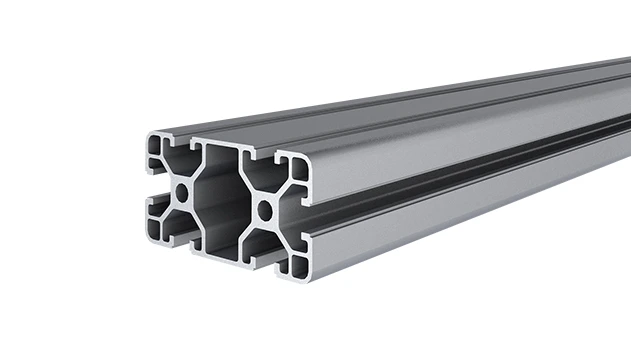
4080A is a 4.00x8.00 CM fractional 40 series square extrusion T-slot profile with two side open T-slots, each side with 4.00cm face, two side with 8.00cm face. The profile has align-a-grooves to assist in aligning connecting profiles.
Walk into any busy packaging facility, and you'll feel the energy: machines humming in sync, products gliding along conveyor belts, workers focused on sealing, labeling, and preparing orders for shipment. But beneath that efficiency lies a hidden stressor for managers: the constant threat of equipment breakdowns. When a critical structure fails – a bent frame, a rusted roller track, a wobbly workbench – production stalls, deadlines slip, and frustration mounts. The root cause? All too often, it's the materials chosen for those essential structures: materials that sacrifice durability for cost, or maintenance ease for quick installation. What if there was a solution that didn't force that trade-off? Enter the 4080A EU Standard Aluminum Extrusion Profile – a workhorse designed to keep packaging lines running smoothly, day in and day out, with minimal fuss and maximum reliability.
Why Aluminum Extrusion Profiles Matter in Packaging Machinery
Packaging machinery operates in some of the toughest environments: high speeds, heavy loads, frequent cleaning, and sometimes even exposure to moisture, chemicals, or extreme temperatures. In these conditions, the materials used to build frames, workbenches, conveyor tracks, and support structures can make or break a facility's productivity. For decades, steel and wood were the go-to choices, but they come with significant drawbacks. Steel is strong but heavy, prone to rust, and requires regular painting or coating to maintain. Wood, while cheap, warps, rots, and harbors bacteria – a nonstarter for food, pharmaceutical, or cosmetic packaging lines.
Aluminum extrusion profiles changed the game. By forcing molten aluminum through a die, manufacturers create profiles with consistent cross-sections, uniform strength, and built-in features like T-slots for easy assembly. This process eliminates weak points, ensuring the material can handle the rigors of constant use. For packaging machinery, this means structures that are lightweight yet strong, resistant to corrosion, and infinitely adaptable. And among the many aluminum profiles available, the 4080A EU Standard stands out as a versatile, durable, and low-maintenance option tailored to the unique needs of packaging operations.
The 4080A EU Standard: What Sets It Apart?
Not all aluminum profiles are created equal. The "4080A" in its name refers to its dimensions – 40mm in width and 80mm in height – a size that strikes a perfect balance between strength and flexibility. But what truly makes it a "EU Standard" profile is its compliance with strict European manufacturing and quality standards. This includes precise tolerances (ensuring profiles fit together seamlessly), material grade (typically 6063-T5 aluminum alloy, known for excellent mechanical properties and weldability), and safety certifications for use in food and pharmaceutical environments.
Why 40x80mm? Think of it as the "Goldilocks" of profiles: not too small to handle heavy loads, not too large to be overkill for most packaging tasks. Its width provides stability for horizontal structures like workbenches and roller tracks, while its height offers vertical strength for frames and support columns. This versatility makes it ideal for everything from lightweight conveyor guides to heavy-duty machine bases. And unlike custom-made profiles, the 4080A is mass-produced, meaning it's readily available and cost-effective – no long lead times or premium pricing for specialized designs.

Durability: Built to Outlast the Toughest Workloads
For packaging machinery, "durability" isn't just a buzzword – it's a requirement. Equipment runs 24/7 in many facilities, handling thousands of products daily. The 4080A profile is engineered to thrive in this environment, thanks to three key features:
- Material Strength: The 6063-T5 aluminum alloy used in 4080A profiles has a tensile strength of 180 MPa and a yield strength of 110 MPa – numbers that translate to the ability to support heavy loads without bending or deforming. Even under the stress of constant vibration (common in high-speed packaging lines), the profile maintains its shape, ensuring conveyor tracks stay aligned and workbenches remain level.
- Uniform Structure: Aluminum extrusion ensures the profile has no weak points. Unlike welded steel, which can crack at joints, or wood, which has knots and grain irregularities, extruded aluminum is consistent from end to end. This uniformity means the 4080A can withstand impacts – like a dropped tool or a misaligned product – without catastrophic failure.
- Corrosion Resistance: Aluminum naturally forms a thin oxide layer when exposed to air, acting as a barrier against rust and corrosion. For facilities that use water-based cleaners or operate in humid environments (like food packaging plants), this is a game-changer. Unlike steel, which rusts and weakens over time, the 4080A profile stays strong even after years of daily cleaning. For extra protection, it can be anodized – a process that thickens the oxide layer, making it even more resistant to scratches and chemicals.
To put this in perspective: A steel frame in a beverage packaging plant might start showing rust spots within 6–12 months, requiring sanding and repainting. A 4080A aluminum frame, on the other hand, will look and perform like new after 5+ years with nothing more than occasional wiping down.
Low Maintenance: More Uptime, Less Headache
Maintenance is the silent killer of productivity in packaging facilities. Every hour spent fixing a rusted joint, replacing a warped board, or lubricating a seized roller is an hour of lost production. The 4080A profile minimizes this downtime through its design and material properties:
- Easy to Clean: The smooth, non-porous surface of aluminum leaves nowhere for dirt, bacteria, or product residue to hide. A quick wipe with a damp cloth or mild detergent is all it takes to keep it clean – critical for industries like food and pharmaceuticals, where hygiene standards are strict. Unlike wood, which can absorb spills and harbor mold, or steel, which traps grime in weld seams, the 4080A profile is a hygienic choice that simplifies compliance with regulatory requirements.
- Modular Assembly with Aluminum Profile Accessories: The 4080A's T-slot design – grooves running along its length – allows for tool-free assembly using aluminum profile accessories like brackets, connectors, and fasteners. Need to replace a worn roller track bracket? Slide the old one out of the T-slot, pop the new one in, and tighten a bolt. No welding, no drilling, no waiting for a specialist. This modularity also makes reconfiguration a breeze: if you need to adjust a workbench height, add a shelf to a material rack, or reroute a conveyor, you can do it in hours, not days.
- Minimal Wear and Tear: Unlike moving parts like gears or motors, the 4080A profile itself has no components that wear out. Its strength and corrosion resistance mean it rarely needs replacement, even in high-traffic areas. This longevity reduces the need for spare parts inventory and cuts down on the costs of frequent repairs or replacements.
Consider this: A packaging facility using steel roller tracks might spend 10–15 hours per month lubricating rollers, tightening rusted bolts, and replacing corroded sections. Switching to 4080A aluminum roller tracks with aluminum profile accessories could cut that time to 1–2 hours – time better spent on actual production.
Applications in Packaging Machinery: From Workbenches to Roller Tracks
The 4080A profile's versatility makes it indispensable across packaging machinery applications. Let's explore a few key uses:
Workbenches: The Heart of Manual Operations
Packaging workbenches are where precision meets productivity. Whether it's inspecting labels, assembling boxes, or preparing kits, these workstations need to be sturdy, level, and adaptable. The 4080A profile excels here. Its 40x80mm cross-section provides a stable base that can support heavy tools, materials, and even workers leaning on it during tasks. Pair it with aluminum profile accessories like adjustable feet, and you can level the workbench on uneven floors – no more wobbly surfaces throwing off measurements. Add a laminate or aluminum honeycomb panel top, and you've got a surface that resists scratches, stains, and chemical spills – perfect for food or cosmetic packaging lines where cleanliness is non-negotiable.
Roller Tracks: Keeping Products Moving
Roller tracks are the arteries of packaging machinery, moving products from filling to sealing to labeling. They need to handle varying weights – from lightweight sachets to heavy boxes – and maintain a consistent flow. 4080A aluminum extrusion profiles form the backbone of these tracks. The T-slots make it easy to mount roller brackets at precise intervals, ensuring smooth product movement. Unlike steel tracks, which can rust and gum up the works, aluminum resists corrosion, so rollers glide freely even in humid environments. And when you need to adjust the track's angle or length? Just loosen the brackets, reposition, and tighten – no cutting or welding required. It's why facilities handling frozen foods (where condensation is a problem) or corrosive cleaning agents swear by aluminum roller tracks.
Machine Frames: Supporting the Heavy Lifting
Packaging machines like fillers, sealers, and palletizers rely on sturdy frames to keep components aligned and stable. The 4080A profile's strength-to-weight ratio makes it ideal for these applications. It can support the weight of motors, pumps, and mechanical parts without adding unnecessary bulk, making machines easier to move (if needed) and reducing strain on floors. Its modular design also simplifies machine assembly: manufacturers can build frames in sections, then bolt them together on-site, cutting down on installation time.
How 4080A Compares to Other Profiles: A Quick Reference
| Profile Type | Dimensions (mm) | Max Load Capacity (kg/m) | Durability Features | Maintenance Needs | Best For |
|---|---|---|---|---|---|
| 4080A EU Standard | 40x80 | 300–400 | 6063-T5 alloy, corrosion-resistant, uniform strength | Occasional cleaning, modular part replacement | Workbenches, heavy roller tracks, machine frames |
| 4040 EU Standard | 40x40 | 200–250 | Similar alloy, lower height limits vertical load | Same as 4080A | Light conveyor tracks, small workbenches |
| 3030 EU Standard | 30x30 | 150–180 | Lightweight, good for small structures | Same as 4080A | Storage racks, light-duty guides |
| Steel (Rectangular Tubing) | 40x80 (comparable) | 400–500 | High strength, prone to rust | Regular painting, rust removal, lubrication | Heavy machinery (where weight is not a concern) |
Real-World Impact: Lean System Integration in Action
Case Study: FreshPack Co. Reduces Downtime with 4080A
FreshPack Co., a mid-sized food packaging company specializing in frozen vegetables, was struggling with frequent production delays. Their steel workbenches were rusting along the edges (thanks to the cold, humid environment), and their steel roller tracks needed monthly lubrication to keep rollers moving – a messy, time-consuming task. Maintenance crews were spending 12+ hours per week just keeping the basics running, and the company was losing an estimated $5,000 per month in downtime.
In 2023, FreshPack switched to 4080A aluminum extrusion profiles for workbenches and roller tracks, paired with aluminum profile accessories like adjustable feet and T-slot brackets. The results were striking:
- Maintenance time dropped to 2 hours per week: No more rusted bolts to replace or lubrication schedules – the aluminum profiles stayed clean and functional with minimal effort.
- Downtime was cut by 80%: The sturdy 4080A frames and roller tracks rarely failed, and when adjustments were needed (like reconfiguring a workbench for a new product line), crews could do it in hours using modular accessories.
- Hygiene scores improved: The smooth aluminum surfaces were easier to sanitize, helping FreshPack pass a strict FDA audit with zero violations.
Today, FreshPack estimates the switch saved them over $60,000 in the first year alone – proof that investing in durable, low-maintenance materials like the 4080A profile pays off.
Why 4080A is a Smart Investment for Packaging Facilities
At first glance, aluminum profiles may seem more expensive than steel or wood. But when you factor in their durability, low maintenance, and longevity, they're often the most cost-effective choice in the long run. Here's why:
- Lower lifetime costs: Steel requires painting, wood needs replacing, but aluminum lasts for decades with minimal upkeep. The savings on maintenance, repairs, and replacements add up quickly.
- Flexibility for growth: As your packaging needs change (new products, higher volumes, different layouts), the 4080A's modular design lets you adapt without rebuilding from scratch. This agility is crucial in today's fast-paced e-commerce and retail landscape.
- Improved safety: Rust-free, stable structures reduce the risk of accidents – from collapsed shelves to wobbly workbenches. This protects workers and lowers liability costs.
For packaging facility managers, the 4080A EU Standard Aluminum Extrusion Profile isn't just a material – it's a strategic asset. It's the difference between constant firefighting and smooth, reliable production. It's the peace of mind that comes from knowing your structures will keep up with your machinery, your deadlines, and your growth.
Conclusion: Durability and Low Maintenance – The Foundation of Packaging Efficiency
In the world of packaging machinery, where every second counts and downtime is costly, the 4080A EU Standard Aluminum Extrusion Profile stands out as a solution that delivers on two critical promises: durability and low maintenance. Its 40x80mm design, compliance with EU standards, and use of high-quality aluminum alloy make it strong enough to handle heavy loads and harsh environments, while its modularity and corrosion resistance ensure it stays functional with minimal effort.
Whether you're building workbenches, roller tracks, machine frames, or material racks, the 4080A profile offers the versatility, reliability, and cost-effectiveness that modern packaging facilities demand. It's not just about building better structures – it's about building a more efficient, more productive, and more resilient operation.
So, the next time you walk through a packaging facility and marvel at its smooth operation, take a closer look at the frames and tracks holding it all together. Chances are, you'll find the 4080A EU Standard Aluminum Extrusion Profile hard at work – quietly, reliably, and without a single complaint.