- Company Articles
- Products and Technology
- Product knowledge
- 4080A EU Standard Aluminum Profile for Retail Display Systems: Customization Tips

4080A EU Standard Aluminum Profile for Retail Display Systems: Customization Tips
Related Product
4080A EU Standard Aluminum Profile
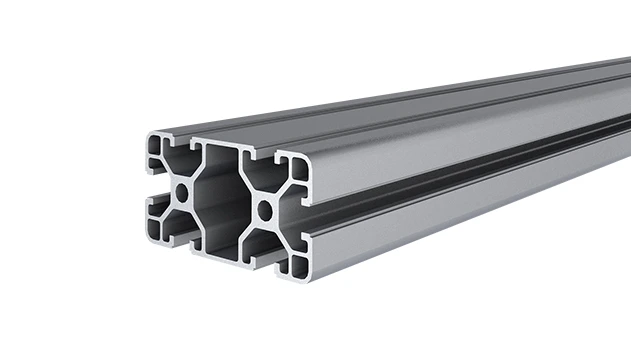
4080A is a 4.00x8.00 CM fractional 40 series square extrusion T-slot profile with two side open T-slots, each side with 4.00cm face, two side with 8.00cm face. The profile has align-a-grooves to assist in aligning connecting profiles.
The Unsung Hero of Modern Retail Displays
Walk into any successful retail store today, and you'll notice something subtle but powerful: the displays. They're not just shelves or racks—they're silent salespeople, guiding customers' eyes, highlighting products, and telling a brand's story. But behind those sleek, functional setups often lies a key component that's easy to overlook: the framework. Traditional display systems, made from wood or generic metal, can feel clunky, rigid, or quick to show wear. That's where the 4080A EU Standard Aluminum Profile comes in. It's not just a piece of metal; it's a canvas for creativity, a tool for adaptability, and a backbone for displays that grow with your business. Let's dive into why this aluminum extrusion profile is revolutionizing retail design—and how you can customize it to make your store stand out.
First Things First: What is the 4080A EU Standard Aluminum Profile?
Before we jump into customization, let's get to know the star of the show. The 4080A is part of the EU standard aluminum extrusion profile family, named for its dimensions: 40mm in width and 80mm in height. Unlike generic metal bars, this profile is crafted through extrusion—a process where aluminum is pushed through a die to create a consistent, precise shape. What makes it special? Its T-slot design. Those long, narrow grooves running along its length aren't just for looks; they're the secret to its versatility. They let you attach accessories, shelves, hooks, and more without drilling, welding, or complicated tools. Think of it as a modular building block: strong enough to hold heavy products, light enough to reconfigure, and durable enough to withstand the chaos of daily retail life.
EU standards matter here, too. This profile meets strict European guidelines for quality, safety, and sustainability—so you can trust it to support your displays for years, even in high-traffic areas. And because it's aluminum, it's naturally resistant to rust and corrosion, making it ideal for stores in humid climates or those selling beauty products, food, or electronics where spills happen.
EU standards matter here, too. This profile meets strict European guidelines for quality, safety, and sustainability—so you can trust it to support your displays for years, even in high-traffic areas. And because it's aluminum, it's naturally resistant to rust and corrosion, making it ideal for stores in humid climates or those selling beauty products, food, or electronics where spills happen.

Customization Tip 1: Design for Your Brand's Personality
Retail displays shouldn't just hold products—they should reflect your brand. Are you a minimalist clothing store? A vibrant toy shop? A tech-savvy electronics retailer? The 4080A profile adapts to all these and more, starting with size and shape. While the standard 40x80mm dimensions work for most setups, you can cut the profile to any length, allowing you to create displays that fit your space perfectly. Need a tall, slim shelf for perfume bottles? Cut it to 1.8m. A low, wide counter for checkout? Trim it to 0.6m. The flexibility here means no more forcing square pegs into round holes with one-size-fits-all displays.
Color is another easy win. The 4080A comes in natural aluminum, but you can anodize or powder-coat it to match your brand's palette. A luxury brand might opt for a matte black finish; a eco-friendly store could go with a brushed silver to highlight the material's sustainability. And don't forget the little details: aluminum profile accessories like end caps (to smooth out sharp edges) or decorative brackets can add subtle branding touches. For example, a bakery might use yellow end caps to echo their logo, while a bookstore could add wooden shelves attached via T-slot brackets for a warm, inviting feel.
Color is another easy win. The 4080A comes in natural aluminum, but you can anodize or powder-coat it to match your brand's palette. A luxury brand might opt for a matte black finish; a eco-friendly store could go with a brushed silver to highlight the material's sustainability. And don't forget the little details: aluminum profile accessories like end caps (to smooth out sharp edges) or decorative brackets can add subtle branding touches. For example, a bakery might use yellow end caps to echo their logo, while a bookstore could add wooden shelves attached via T-slot brackets for a warm, inviting feel.
Pro Tip: Mix and Match Profiles
For layered displays, pair the 4080A with smaller profiles like 2020 or 3030. Use the 4080A as the main support (it can hold up to 150kg per linear meter!) and 2020 for lighter shelves or accent pieces. This creates visual interest without overcomplicating assembly.
Customization Tip 2: Boost Functionality with the Right Accessories
The true magic of the 4080A lies in its compatibility with aluminum profile accessories. These small, often-overlooked parts turn a basic frame into a high-performance display system. Let's break down the essentials:
Roller Tracks: If you sell products that need to "flow" (think cosmetics, small electronics, or packaged snacks), add roller tracks to your 4080A framework. These tracks, which slide into the T-slots, let products glide forward as customers pick items from the front—keeping shelves neat and fully stocked without constant restocking. For example, a convenience store could use roller tracks in their candy aisle, so when a customer grabs a chocolate bar, the next one slides into place automatically.
Caster Wheels: Mobility is key for seasonal displays or pop-up events. Attach caster wheels to the base of your 4080A frame, and suddenly your fixed shelf becomes a movable showcase. Imagine rearranging your holiday display in minutes, or rolling a featured product stand to the front entrance for a weekend promotion. Just make sure to choose locking caster wheels to keep the display stable when in use!
Shelving Brackets and Hooks: T-slot brackets let you add shelves at any height, while hooks can hold bags, scarves, or small tools. The best part? You can reposition them anytime. A clothing store might start with shelves for sweaters in winter, then swap to hooks for summer dresses—no tools required.
To help you pick the right accessories, here's a quick guide to common options and their uses:
Roller Tracks: If you sell products that need to "flow" (think cosmetics, small electronics, or packaged snacks), add roller tracks to your 4080A framework. These tracks, which slide into the T-slots, let products glide forward as customers pick items from the front—keeping shelves neat and fully stocked without constant restocking. For example, a convenience store could use roller tracks in their candy aisle, so when a customer grabs a chocolate bar, the next one slides into place automatically.
Caster Wheels: Mobility is key for seasonal displays or pop-up events. Attach caster wheels to the base of your 4080A frame, and suddenly your fixed shelf becomes a movable showcase. Imagine rearranging your holiday display in minutes, or rolling a featured product stand to the front entrance for a weekend promotion. Just make sure to choose locking caster wheels to keep the display stable when in use!
Shelving Brackets and Hooks: T-slot brackets let you add shelves at any height, while hooks can hold bags, scarves, or small tools. The best part? You can reposition them anytime. A clothing store might start with shelves for sweaters in winter, then swap to hooks for summer dresses—no tools required.
To help you pick the right accessories, here's a quick guide to common options and their uses:
| Accessory | Use Case | Best For |
|---|---|---|
| Roller Track (Yellow/Grey) | Sliding product movement | Snacks, cosmetics, small electronics |
| Caster Wheel (Locking) | Mobility + stability | Seasonal displays, pop-up stands |
| T-Slot Shelf Brackets | Adjustable shelving | Books, clothing, home goods |
| End Caps (Plastic/Aluminum) | Safety + aesthetics | All displays (prevents sharp edges) |
| LED Strip Holders | Lighting accents | Luxury products, jewelry, tech |
Customization Tip 3: Optimize Space with Modular Workbench Elements
Not all retail displays are wall-mounted or standalone—some need to double as workspaces. Think of a cosmetics counter where staff demos products, or a tech store with a "try me" station. Here, the 4080A can pull double duty as a workbench base. By adding a solid top (like plywood or aluminum honeycomb panel) to a 4080A frame, you create a sturdy, height-adjustable surface that's perfect for demonstrations or customer interactions.
What makes this workbench setup better than a traditional desk? Again, modularity. You can add accessories like tool hooks, cable management clips (to keep charging cords tidy), or even small shelves underneath for storage. A phone store might design a workbench with built-in charging ports (installed via T-slots) so customers can test devices while they browse. A craft store could add a pegboard on the back, using T-slot brackets to hold scissors, tape, and markers for DIY workshops.
Space optimization is another perk. Retail spaces are often tight, so being able to collapse or reconfigure the workbench is a game-changer. For example, a small boutique could use a fold-down 4080A workbench that tucks away when not in use, freeing up floor space for customers.
What makes this workbench setup better than a traditional desk? Again, modularity. You can add accessories like tool hooks, cable management clips (to keep charging cords tidy), or even small shelves underneath for storage. A phone store might design a workbench with built-in charging ports (installed via T-slots) so customers can test devices while they browse. A craft store could add a pegboard on the back, using T-slot brackets to hold scissors, tape, and markers for DIY workshops.
Space optimization is another perk. Retail spaces are often tight, so being able to collapse or reconfigure the workbench is a game-changer. For example, a small boutique could use a fold-down 4080A workbench that tucks away when not in use, freeing up floor space for customers.
Customization Tip 4: Prioritize Durability and Safety
Retail displays take a beating. Customers lean on them, products get dropped, and cleaning crews bump into them daily. The 4080A is built to handle this, but a few customization choices can make it even more resilient. Start with load capacity: while the profile itself is strong, the way you assemble it matters. Use heavy-duty brackets for shelves holding large items (like appliances) and reinforce joints with corner braces if needed. For example, a hardware store displaying power tools would want to double up on brackets to ensure shelves don't sag over time.
Safety is non-negotiable, especially in stores with kids or elderly customers. Round off sharp corners with plastic or rubber edge guards (easily attached via T-slots), and ensure all accessories are securely locked into place. Caster wheels should have brakes to prevent displays from rolling unexpectedly, and roller tracks should be installed with stops at the end to keep products from sliding off.
Maintenance is another factor. Aluminum is low-maintenance, but regular care will keep your displays looking new. Wipe down the 4080A with a damp cloth to remove dust, and avoid harsh chemicals that could damage powder-coated finishes. For roller tracks, lubricate the wheels occasionally to keep them sliding smoothly—this small step prevents jams and ensures products flow as they should.
Safety is non-negotiable, especially in stores with kids or elderly customers. Round off sharp corners with plastic or rubber edge guards (easily attached via T-slots), and ensure all accessories are securely locked into place. Caster wheels should have brakes to prevent displays from rolling unexpectedly, and roller tracks should be installed with stops at the end to keep products from sliding off.
Maintenance is another factor. Aluminum is low-maintenance, but regular care will keep your displays looking new. Wipe down the 4080A with a damp cloth to remove dust, and avoid harsh chemicals that could damage powder-coated finishes. For roller tracks, lubricate the wheels occasionally to keep them sliding smoothly—this small step prevents jams and ensures products flow as they should.
Case Study: How a Boutique Used 4080A to Double Sales
Let's put this all into context with a real-world example. A small clothing boutique in Berlin was struggling with static displays that made it hard to refresh their look seasonally. Their wooden shelves were heavy, hard to move, and starting to show scratches. They switched to a 4080A-based system, and here's what happened:
Step 1: They chose a white powder-coated 4080A frame to match their minimalist aesthetic, paired with oak shelves (attached via T-slot brackets) for warmth.
Step 2: Added roller tracks to their accessory display, so scarves and hats automatically slid forward as customers browsed—reducing restocking time by 30%.
Step 3: Installed caster wheels on two mobile racks, allowing them to move displays to the window for new arrivals or sales events.
The result? Customers spent 20% more time in the store (thanks to the inviting, organized displays), and sales of accessories (previously hard to showcase) doubled in three months. Plus, seasonal refreshes went from taking a full day to just two hours—no more closing the store for renovations!
Step 1: They chose a white powder-coated 4080A frame to match their minimalist aesthetic, paired with oak shelves (attached via T-slot brackets) for warmth.
Step 2: Added roller tracks to their accessory display, so scarves and hats automatically slid forward as customers browsed—reducing restocking time by 30%.
Step 3: Installed caster wheels on two mobile racks, allowing them to move displays to the window for new arrivals or sales events.
The result? Customers spent 20% more time in the store (thanks to the inviting, organized displays), and sales of accessories (previously hard to showcase) doubled in three months. Plus, seasonal refreshes went from taking a full day to just two hours—no more closing the store for renovations!
Step-by-Step: Building Your Custom Display
Ready to start customizing? Here's a simple guide to building a basic 4080A display:
1. Plan Your Design: Sketch your display (measure your space first!) and list the parts you'll need: 4080A profiles (cut to length), accessories (brackets, roller tracks, caster wheels), and tools (a T-slot wrench, measuring tape, and hacksaw or miter saw for cutting).
2. Assemble the Frame: Connect the 4080A profiles using corner brackets or T-joints. Slide the brackets into the T-slots, align the profiles, and tighten the screws with a hex key—no welding required!
3. Add Accessories: Attach shelves, roller tracks, or hooks by sliding their mounting brackets into the T-slots. Adjust heights as needed, then lock them in place with set screws.
4. Test and Tweak: Load the display with products to check stability. If it wobbles, add diagonal braces or heavier caster wheels. If shelves sag, reinforce with extra brackets.
Remember, the beauty of the 4080A is that you can always modify it later. Want to add more shelves next season? Just buy extra brackets. Need to move the display? Swap out fixed feet for caster wheels. It's a system that grows with your business.
1. Plan Your Design: Sketch your display (measure your space first!) and list the parts you'll need: 4080A profiles (cut to length), accessories (brackets, roller tracks, caster wheels), and tools (a T-slot wrench, measuring tape, and hacksaw or miter saw for cutting).
2. Assemble the Frame: Connect the 4080A profiles using corner brackets or T-joints. Slide the brackets into the T-slots, align the profiles, and tighten the screws with a hex key—no welding required!
3. Add Accessories: Attach shelves, roller tracks, or hooks by sliding their mounting brackets into the T-slots. Adjust heights as needed, then lock them in place with set screws.
4. Test and Tweak: Load the display with products to check stability. If it wobbles, add diagonal braces or heavier caster wheels. If shelves sag, reinforce with extra brackets.
Remember, the beauty of the 4080A is that you can always modify it later. Want to add more shelves next season? Just buy extra brackets. Need to move the display? Swap out fixed feet for caster wheels. It's a system that grows with your business.
Common Mistakes to Avoid
Even with a flexible system like the 4080A, missteps can happen. Here are three to watch for:
Overloading Shelves: While the 4080A is strong, don't push its limits. Check the load capacity (usually listed by the supplier) and distribute weight evenly. A shelf with 10kg on one end and 1kg on the other will sag over time.
Ignoring T-Slot Compatibility: Not all accessories fit all T-slots. The 4080A uses standard EU T-slot sizes (usually 8mm or 10mm), so buy accessories labeled for EU profiles to avoid frustration.
Skipping the Test Run: Always assemble and test your display before installing it in the store. A wobbly frame or stuck roller track is easy to fix in the workshop but embarrassing (and risky) in front of customers.
Overloading Shelves: While the 4080A is strong, don't push its limits. Check the load capacity (usually listed by the supplier) and distribute weight evenly. A shelf with 10kg on one end and 1kg on the other will sag over time.
Ignoring T-Slot Compatibility: Not all accessories fit all T-slots. The 4080A uses standard EU T-slot sizes (usually 8mm or 10mm), so buy accessories labeled for EU profiles to avoid frustration.
Skipping the Test Run: Always assemble and test your display before installing it in the store. A wobbly frame or stuck roller track is easy to fix in the workshop but embarrassing (and risky) in front of customers.
Final Thoughts: Your Display, Your Way
Retail is all about standing out, and the 4080A EU Standard Aluminum Profile gives you the tools to do just that. It's more than a building material—it's a partner in creating displays that are as unique as your brand, as functional as your team needs, and as durable as your business goals. Whether you're a small boutique or a large chain, customization is the key to turning "meh" displays into memorable experiences. So grab your sketchbook, pick your accessories, and start building—your customers (and your sales numbers) will thank you.