- Company Articles
- Products and Technology
- Product knowledge
- 4080A EU Standard Aluminum Profile for Retail Shelving: Adjustability & Durability

4080A EU Standard Aluminum Profile for Retail Shelving: Adjustability & Durability
Related Product
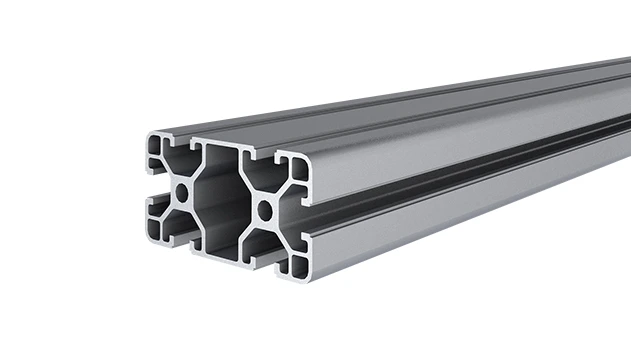
4080A EU Standard Aluminum Profile
4080A is a 4.00x8.00 CM fractional 40 series square extrusion T-slot profile with two side open T-slots, each side with 4.00cm face, two side with 8.00cm face. The profile has align-a-grooves to assist in aligning connecting profiles.
Walk into any successful retail store, and you'll notice something immediately: the shelving doesn't just hold products—it tells a story. It guides customers through aisles, highlights bestsellers, and adapts to seasonal trends. But behind that seamless experience lies a challenge many retailers face daily: finding shelving that's flexible enough to keep up with changing inventory, strong enough to support heavy products, and durable enough to withstand the chaos of busy shopping days. Enter the 4080A EU Standard Aluminum Profile—a quiet workhorse that's redefining what retail shelving can do. In this article, we'll dive into why this aluminum extrusion profile has become a go-to choice for retailers worldwide, focusing on its two standout qualities: adjustability and durability. Whether you're running a boutique clothing store, a bustling electronics shop, or a neighborhood grocery, understanding how 4080A works could be the key to transforming your store's efficiency and appeal.
What Is the 4080A EU Standard Aluminum Profile?
Before we get into its benefits, let's start with the basics. The 4080A is a type of aluminum extrusion profile—meaning it's crafted by pushing molten aluminum through a die to create a specific cross-sectional shape. The "4080" in its name refers to its dimensions: 40mm in width and 80mm in height, making it a medium-to-large profile ideal for applications where both strength and space efficiency matter. The "A" denotes its specific design variant, characterized by a T-slot system (those grooves you see running along the length of the profile) that's standardized across EU manufacturing guidelines. This isn't just a random piece of metal; it's a precision-engineered component built to meet strict European standards for quality, safety, and performance. That means when you choose 4080A, you're getting a product tested for consistency, load-bearing capacity, and compatibility with a wide range of accessories—more on that later.
But why does "EU Standard" matter for retail shelving? For starters, EU standards ensure uniformity. Whether you're sourcing your profiles from a supplier in Germany, Italy, or Poland, the 4080A will have the same slot dimensions, wall thickness, and material composition. This consistency is a game-changer for retailers who might need to expand or modify their shelving over time—no more worrying about mismatched parts or incompatible accessories. It also speaks to safety: EU standards mandate rigorous testing for factors like corrosion resistance and structural integrity, so you can trust that your shelving won't warp, bend, or fail under normal (or even above-normal) use.
The Core Advantage: Adjustability That Keeps Up with Retail Trends
If there's one thing retail doesn't stand still for, it's stagnation. One month, you're stocking summer dresses; the next, bulky winter coats. One quarter, you're promoting small tech gadgets; the next, large home appliances. Rigid shelving—think fixed wooden racks or welded steel units—simply can't keep up. They require you to either stick to a static layout or invest in costly replacements every time your needs change. The 4080A solves this problem with adjustability baked into its design.
The T-Slot System: Your Secret to Modular Flexibility
At the heart of the 4080A's adjustability is its T-slot system. Those parallel grooves running along the profile's length aren't just for show—they're like a series of built-in connection points that let you attach accessories, shelves, hooks, and brackets anywhere along the profile, no drilling or welding required. Need to raise a shelf by 6 inches to make room for taller products? Loosen the bolts, slide the bracket to the new position, and tighten—done. Want to add a row of hooks for hanging merchandise? Snap in a T-slot nut, bolt on the hook, and you're set. This modularity means your shelving isn't a one-and-done investment; it's a blank canvas that evolves with your store.
But the T-slot system is only as good as the accessories that work with it—and here's where aluminum profile accessories shine. From simple shelf brackets and dividers to more specialized components like aluminum guide rail A (a sleek, low-friction rail that makes sliding shelves or product dividers a breeze), the 4080A plays well with a vast ecosystem of add-ons. For example, if you're selling shoes, you could use aluminum guide rail A to create sliding shelves that customers can easily pull out to browse sizes. If you're displaying fragile items, you might add side guards or lip edges to prevent products from slipping off. The best part? These accessories are designed to be swapped out in minutes, so you can rearrange your shelving overnight to prep for a weekend sale or a seasonal launch.
Another aspect of adjustability is scalability. Let's say your store expands, and you need to add a new section of shelving. With 4080A, you don't have to start from scratch. Simply purchase additional profiles and connect them to your existing setup using corner brackets or straight connectors. The profiles are lightweight enough to handle with basic tools (no need for heavy machinery), but strong enough to maintain structural integrity even when extended. This scalability is especially valuable for pop-up shops or temporary displays, where you might need to set up and tear down shelving quickly without sacrificing stability.

Built to Last: Durability That Withstands the Retail Grind
Adjustability is great, but what good is a flexible shelf if it bends under the weight of a few cans of soup or rusts after a year of use? That's where the 4080A's durability comes into play. Aluminum, by nature, is a tough material—but the 4080A takes it a step further thanks to its extrusion process and EU-standard engineering.
First, let's talk about the material itself. The 4080A is made from high-grade aluminum alloy, typically 6063-T5, which is known for its excellent strength-to-weight ratio. This alloy is heat-treated to enhance its hardness, making it resistant to dents and scratches—important in a retail environment where shopping carts, stray elbows, and dropped products are daily occurrences. Unlike steel, aluminum doesn't rust, so even if your store is in a humid climate or near the coast, you won't have to worry about unsightly corrosion eating away at your shelving. A quick wipe with a damp cloth is usually all it takes to keep it looking clean and new.
Then there's the extrusion precision. Because the 4080A is extruded, its walls are uniformly thick, with no weak spots or inconsistencies. This uniformity translates to reliable load-bearing capacity. Depending on the wall thickness (usually around 2-3mm for 4080A), a single vertical profile can support anywhere from 150kg to 300kg of weight when properly installed—more than enough for most retail products, from stacks of jeans to large boxes of electronics. Even better, the T-slot system distributes weight evenly across the profile, so you don't have to worry about stress concentrations causing cracks over time.
Durability also means longevity, and here the 4080A truly shines. Unlike wooden shelving that warps with moisture or steel that needs frequent painting to prevent rust, aluminum profiles have a lifespan of 15-20 years with minimal maintenance. For retailers, this long-term reliability translates to lower replacement costs and less downtime spent repairing or replacing shelving. It's an investment that pays off not just in the first year, but for decades to come.
How Does 4080A Stack Up Against Other Shelving Materials?
To really understand why 4080A is a standout, let's compare it to some common shelving materials retailers often consider: wood, steel, and even other aluminum profiles. The table below breaks down key factors like adjustability, durability, load capacity, and accessory compatibility.
| Material/Profile | Adjustability | Durability | Max Load Capacity (per vertical profile) | Accessory Compatibility | Best For |
|---|---|---|---|---|---|
| 4080A Aluminum Extrusion Profile | High (T-slot system, modular accessories) | High (rust-resistant, scratch-resistant alloy) | 150-300kg | Extensive (aluminum profile accessories, aluminum guide rail A, etc.) | Retail stores needing flexibility and long-term use |
| Wooden Shelving | Low (fixed shelves, requires drilling for modifications) | Medium (prone to warping, scratches, moisture damage) | 50-100kg (depending on wood type) | Limited (basic brackets, no modular accessories) | Boutiques aiming for a rustic aesthetic |
| Steel Angle Shelving | Medium (adjustable at pre-drilled holes, not fully modular) | High (strong, but prone to rust without coating) | 200-400kg | Moderate (standard brackets, limited specialty accessories) | Warehouses or heavy-duty storage |
| 4040A Aluminum Profile (Smaller Variant) | High (same T-slot system) | High (same alloy, thinner walls) | 80-150kg | Extensive (but fewer large accessories) | Lightweight displays, small products |
As the table shows, 4080A strikes a rare balance: it offers the adjustability of smaller aluminum profiles (like the 4040A) with the load capacity of steel, minus the weight and rust issues. Wood, while charming, can't compete in flexibility or longevity. Steel, though strong, lacks the modularity that makes 4080A so versatile. For retailers who need both strength and adaptability, the choice becomes clear.
Real-World Applications: How Retailers Are Using 4080A
Theory is one thing, but seeing how 4080A works in real stores is where its value truly hits home. Let's look at a few examples:
Clothing Retail: Seasonal Shifts Made Simple
A women's clothing store in Paris was struggling with seasonal inventory changes. In summer, they needed short shelves for folded t-shirts and swimwear; in winter, taller shelves for coats and sweaters. With 4080A shelving, they now adjust shelf heights in under an hour. They've also added aluminum guide rail A to create sliding racks for dresses, allowing customers to browse without pulling items off the rack—reducing mess and improving the shopping experience.
Electronics Stores: Heavy-Duty Support with a Sleek Look
An electronics retailer in Berlin sells everything from small phone chargers to large TVs. They switched to 4080A after their old wooden shelves started sagging under the weight of 55-inch TV boxes. Now, their 4080A-based shelving supports 250kg per section, and the clean, metallic finish of the aluminum extrusion profile complements the store's modern aesthetic. They've even added caster wheels to some units, letting staff roll displays to the front of the store for product launches.
Grocery Stores: Freshness and Flexibility
A neighborhood grocery in Madrid needed shelving for produce that could be adjusted daily—higher in the morning to stock crates of apples, lower in the evening to display leftover items at eye level. The 4080A's T-slot system lets them reconfigure shelves quickly, and its corrosion resistance means it holds up well near refrigerated sections. Plus, the lightweight design makes it easy for staff to wipe down shelves during nightly cleaning.
Pop-Up Shops: Fast Setup, Fast Tear-Down
A cosmetics brand that does pop-up shops at music festivals uses 4080A to build temporary displays. They pack flat packs of profiles and aluminum profile accessories into a van, then assemble custom shelving in under 2 hours using basic tools. When the festival ends, everything disassembles just as quickly—no waste, no permanent structures, and the profiles look as good as new for the next event.
Installation & Customization Tips for Retailers
You might be thinking, "This all sounds great, but is it hard to install?" The short answer: no. 4080A is designed to be user-friendly, even for retailers with no prior construction experience. Here are a few tips to get you started:
Start with a plan: Sketch out your shelving layout before you buy. Measure your space, note where walls, doors, and windows are, and list the types of products you'll display. This will help you determine how many profiles, brackets, and accessories you need. Don't forget to account for walkways—you want shelves that are accessible, not cramped.
Invest in basic tools: You won't need a workshop, but a few tools will make installation easier: an Allen wrench set (for T-slot bolts), a tape measure, a level (to keep shelves straight), and a rubber mallet (to gently tap accessories into place). If you're cutting profiles to length, a miter saw with a non-ferrous metal blade works best—just wear safety glasses!
Don't overlook mobility: Adding caster wheels to the bottom of your 4080A units can turn static shelving into mobile displays. This is especially useful for end caps, promotional tables, or stockrooms where you need to move products quickly. Look for locking caster wheels to keep units stable when in use.
Mix and match accessories: Don't be afraid to get creative. Combine aluminum guide rail A with sliding baskets for small items, or use hooks and label holders to make products more visible. Many suppliers offer sample accessory kits—order one to test different configurations before committing to a full setup.
Test load capacity: Even though 4080A is strong, it's always smart to test shelf load before fully stocking. Start with lighter items, then gradually add weight, checking for sagging or instability. Remember: load capacity depends on how the profile is mounted (wall-mounted vs. free-standing) and the number of support brackets used.
Why 4080A Is More Than Just Shelving—It's a Retail Investment
At this point, you might be wondering about cost. It's true: 4080A aluminum extrusion profile can have a higher upfront cost than basic wooden or steel shelving. But here's the thing: retail shelving isn't just an expense—it's an investment in your store's efficiency, customer experience, and long-term profitability. Let's break down the value:
Reduced labor costs: Adjusting 4080A shelving takes minutes, not hours. That means your staff can spend less time rearranging and more time helping customers or restocking. Over a year, those saved hours add up.
Lower replacement costs: With a 15-20 year lifespan, 4080A outlasts wood (which might need replacing every 3-5 years) and even steel (which can rust or require repainting). You'll spend less over time, even with the higher initial price.
Improved customer experience: Flexible shelving means better product visibility, easier browsing, and a store that feels organized and intentional. Happy customers spend more and return more often.
Future-proofing: As your store grows or trends change, 4080A grows with you. No need to buy new shelving for a rebrand or expansion—just reconfigure what you have.
Conclusion: The Future of Retail Shelving Is Modular
Retail is evolving, and so are the tools retailers need to succeed. The 4080A EU Standard Aluminum Profile isn't just a piece of metal—it's a solution that addresses the core challenges of modern retail: flexibility, strength, and durability. Its adjustability, powered by the T-slot system and aluminum profile accessories like aluminum guide rail A, lets you adapt to changing inventory and customer needs on the fly. Its durability, thanks to high-grade aluminum alloy and precision extrusion, ensures it stands up to the demands of busy stores for decades. And when you factor in its compatibility with everything from caster wheels to custom brackets, it's clear why 4080A is becoming the backbone of retail shelving design.
Whether you're a small business owner just starting out or a large chain looking to upgrade your stores, the 4080A offers something rare in retail: a balance of form and function. It's sleek enough to complement your store's aesthetic, strong enough to hold your products, and flexible enough to grow with your business. In a world where customer expectations are higher than ever, and every square foot of store space matters, choosing shelving that works as hard as you do isn't just a smart move—it's essential. The 4080A isn't just keeping up with the future of retail; it's helping build it.