- Company Articles
- Products and Technology
- Product knowledge
- 4080A EU Standard Aluminum Profile for Robotics Workcells: Flexibility & Adaptability

4080A EU Standard Aluminum Profile for Robotics Workcells: Flexibility & Adaptability
Related Product
4080A EU Standard Aluminum Profile
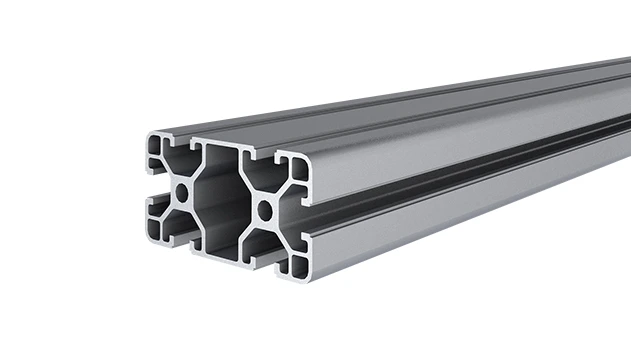
4080A is a 4.00x8.00 CM fractional 40 series square extrusion T-slot profile with two side open T-slots, each side with 4.00cm face, two side with 8.00cm face. The profile has align-a-grooves to assist in aligning connecting profiles.
Walk into any modern manufacturing facility today, and you'll likely spot a hive of activity: robotic arms whirring, parts gliding along conveyor belts, and workers collaborating with machines to assemble everything from smartphones to car components. At the heart of this organized chaos lies a critical element that often goes unnoticed but makes it all possible: the framework that holds these robotics workcells together. More and more, that framework is built from aluminum extrusion profiles—and one type stands out for robotics applications: the 4080A EU Standard Aluminum Profile. In this article, we'll dive into why this unassuming piece of metal has become the backbone of flexible, adaptable robotics workcells, and how it's changing the way manufacturers design, build, and reconfigure their production lines.
What Exactly Is 4080A EU Standard Aluminum Profile?
Let's start with the basics. The 4080A is part of the EU standard series of aluminum extrusion profiles, a family of modular building blocks used to create everything from machine frames to workbenches. The "4080" in its name tells you its dimensions: it's 40mm wide and 80mm tall, forming a rectangular cross-section. The "A" denotes a specific design variant—typically with standardized T-slot positions and wall thickness that balance strength and weight. Think of it as a heavy-duty version of the smaller 4040 or 3030 profiles, built to handle more weight and stress without sacrificing the modularity that makes aluminum extrusion so popular.
But what really sets aluminum extrusion profile apart from a plain metal bar is its structure. The 4080A is made by pushing heated aluminum alloy through a die, a process called extrusion, which shapes it into a long, uniform profile. Along its length, you'll find T-shaped slots (or "T-slots") running parallel to the edges. These slots are like built-in channels that let you attach accessories—brackets, panels, sensors, or even wheels—using simple fasteners like T-slot nuts and bolts. No drilling, no welding, no hassle. It's this combination of strength, precision, and modularity that makes the 4080A a game-changer for robotics workcells.
Key Features of 4080A That Matter for Robotics
Not all aluminum profiles are created equal, and the 4080A has a few standout features that make it ideal for robotics. Let's break them down:
1. Strength Without the Bulk
Robotics workcells often need to support heavy loads: think of a 50kg collaborative robot (cobot) mounted on a frame, or a workbench holding a 100kg assembly fixture. The 4080A is up to the task. Made from 6063-T5 aluminum alloy—known for its excellent strength-to-weight ratio—it can typically handle a vertical load of 500-800kg per meter (depending on the setup). That's more than enough for most robotics applications, but here's the kicker: it's still lightweight. A 1-meter length of 4080A weighs around 2.5-3kg, making it easy for two people to carry and reposition when you need to rearrange your workcell.
2. T-Slots: The Secret to Modularity
The T-slots on the 4080A are its most versatile feature. These slots are precisely sized (usually 8mm or 10mm wide) to accept standard T-slot nuts, which slide into the slot and lock in place when you tighten a bolt. This means you can attach almost any accessory anywhere along the profile—no need to pre-drill holes or stick to fixed mounting points. Need to move a robot arm 10cm to the left? Loosen the bolts, slide the bracket, retighten. Want to add a new sensor above the workbench? Grab a right-angle bracket, drop a T-slot nut into the slot, and bolt it on. It's this flexibility that lets robotics workcells evolve as production needs change.
3. Corrosion Resistance for Factory Environments
Manufacturing floors are tough places for materials. Oils, coolants, and humidity can take a toll on steel, leading to rust and degradation. The 4080A solves this with an anodized finish—a process that coats the aluminum with a thin, hard layer of oxide. This layer acts like a shield, resisting corrosion and wear even in damp or chemical-exposed environments. Unlike steel, you won't need to paint or treat it to keep it looking new, which saves time and maintenance costs over the long run.
4. Precision Engineering for Tight Tolerances
Robotics workcells demand precision. A frame that's slightly warped or misaligned can throw off a robot's accuracy, leading to faulty assemblies or downtime. The 4080A is extruded and cut to tight tolerances (usually ±0.1mm for straightness), ensuring that when you build a frame, the corners are square, and the connections are secure. This precision also means accessories from different manufacturers—like aluminum profile accessories from one brand and brackets from another—will fit together seamlessly, no guesswork required.

Why Robotics Workcells Can't Afford to Ignore 4080A
Robotics workcells are no longer static, one-size-fits-all setups. Today's manufacturers need to pivot quickly: launching new products, customizing orders, or scaling production up (or down) at a moment's notice. Traditional rigid structures—welded steel frames, fixed concrete workbenches—simply can't keep up. Here's why the 4080A has become the go-to solution:
Adaptability for Short Product Lifecycles
Take the electronics industry, where a new smartphone model hits the market every 6-12 months. Each model may require a slightly different assembly process, with robots programmed to handle new parts or tools. With a 4080A frame, you don't need to build a workcell from scratch. Instead, you can reconfigure the existing one: adjust the height of the workbench, add a new roller track to feed different-sized parts, or mount a new gripper bracket on the robot's frame. A recent survey by the Robotics Industry Association found that manufacturers using modular aluminum frames reduced reconfiguration time by 60% compared to steel setups—meaning they can start production on new products weeks earlier.
Collaborative Robotics (Cobots) Need Flexible Frames
Cobots—robots designed to work alongside humans—are everywhere these days, and they thrive in dynamic environments. Unlike industrial robots that are often caged off, cobots need workcells that can adapt to human workflows. For example, a cobot might assist a worker on a morning shift assembling laptops, then be repositioned in the afternoon to pack boxes. The 4080A makes this easy: add caster wheels to the workcell frame, and you can roll the entire setup across the factory floor. Or use quick-release brackets to detach the cobot from its base and mount it on a mobile cart—all without tools. The 4080A's strength ensures the cobot stays stable, even when moving, while its lightweight design means workers can handle the repositioning safely.
Cost Savings: Build Once, Reuse Often
Manufacturing is all about bottom lines, and the 4080A delivers here too. Unlike welded steel frames, which are essentially disposable once you need to change their shape, aluminum extrusion profiles are reusable. When a workcell reaches the end of its lifecycle, you can disassemble the 4080A parts, clean them, and use them to build something new. A study by the Aluminum Extruders Council found that manufacturers save 30-40% on tooling and frame costs over 5 years by reusing aluminum profiles. Plus, since you don't need specialized welders or fabricators to assemble 4080A frames, labor costs drop too—your existing maintenance team can handle most setups with basic hand tools.
Real-World Applications: How 4080A Powers Robotics Workcells
To understand the 4080A's impact, let's look at a few real-world examples of how it's used in robotics workcells today:
Example 1: Automotive Parts Assembly Workcell
A major auto parts supplier needed a workcell to assemble door handles for electric vehicles. The challenge? The handles came in 12 different colors and finishes, each requiring a slightly different assembly sequence. Using 4080A, they built a modular frame with a height-adjustable workbench (using aluminum profile accessories like telescoping brackets) to accommodate workers of different heights. Alongside the workbench, they added a roller track to feed parts from the warehouse—its aluminum guide rails slotted into the 4080A's T-slots, ensuring smooth, quiet movement of components. When a new handle design is introduced, the team simply swaps out the fixtures on the workbench and adjusts the roller track's angle—no need to rebuild the entire cell. "We used to spend 2 weeks reconfiguring for a new part," says the plant manager. "Now it takes 2 days."
Example 2: Electronics Testing Workcell
A consumer electronics company needed a workcell to test smartwatch batteries for durability. The workcell had to hold a testing machine, a robot arm to load/unload watches, and a conveyor to move failed units to a recycling bin. The 4080A frame provided the perfect solution: its T-slots allowed the team to mount the testing machine at a precise angle, attach cameras and sensors to monitor the process, and add a small roller track for the conveyor. When the company launched a larger smartwatch model, they simply extended the frame with additional 4080A sections and adjusted the robot's mounting bracket—no welding, no downtime. "The 4080A's precision meant we didn't have to recalibrate the robot after expanding the frame," notes the lead engineer. "That alone saved us 40 hours of setup time."
Example 3: Mobile Cobot Workstation
A medical device manufacturer wanted to deploy cobots to assist with packaging sterile kits, but their factory floor was tight on space. The solution? A mobile workstation built with 4080A and heavy-duty caster wheels. The frame supports the cobot, a small workbench, and a shelf for supplies. When not in use, the entire workstation rolls into a storage closet; when needed, it's wheeled to the packaging line and locked in place. The 4080A's load capacity ensures the cobot stays stable during operation, while the caster wheels (rated for 200kg each) make moving it a one-person job. "We've doubled our packaging capacity without expanding our floor space," says the operations director. "The 4080A workstation is like a Swiss Army knife—we use it for packaging in the morning and labeling in the afternoon."
4080A vs. Other Profiles: How Does It Stack Up?
You might be wondering: why 4080A instead of smaller profiles like 4040 or 3030, or larger ones like 8080? The answer depends on your needs, but the 4080A hits a sweet spot for many robotics workcells. Let's compare it to a few common alternatives:
| Profile Type | Dimensions (WxH) | Typical Load Capacity (Vertical, per meter) | Best For | Limitations for Robotics |
|---|---|---|---|---|
| 4080A EU Standard | 40mm x 80mm | 500-800kg | Heavy cobots, workbenches with tools, mobile workcells | Bulkier than smaller profiles; overkill for light tasks |
| 4040 EU Standard | 40mm x 40mm | 200-400kg | Light cobots, small machine frames, shelving | Not enough strength for heavy robots or fixtures |
| 3030 EU Standard | 30mm x 30mm | 100-200kg | Prototyping, lightweight carts, small enclosures | Too flimsy for most production robotics applications |
| 8080 EU Standard | 80mm x 80mm | 1000-1500kg | Industrial robots, heavy machinery frames | Heavy (hard to reconfigure), more expensive, overkill for cobots |
As the table shows, the 4080A is the Goldilocks option for many robotics workcells—not too small to handle the load, not too large to be unwieldy. It's the profile of choice for applications where you need a balance of strength, flexibility, and cost.
Choosing the Right Accessories for Your 4080A Workcell
The 4080A is only as good as the accessories you pair with it. Here are some must-have aluminum profile accessories to maximize your workcell's flexibility:
T-Slot Nuts and Bolts
These are the foundation of any 4080A setup. T-slot nuts slide into the T-slots and lock in place when you tighten a bolt, letting you attach accessories anywhere along the profile. Opt for stainless steel versions if your workcell is in a humid or oily environment—they won't rust.
90° and 45° Connectors
These join two 4080A profiles at angles, forming the corners of your frame. Look for "drop-in" connectors that slide into the T-slots—they're faster to install than traditional brackets and leave the profile's surface uncluttered.
End Caps
Simple but essential: these plastic or aluminum caps snap onto the ends of 4080A profiles to cover sharp edges, preventing cuts and keeping dust out of the T-slots. They also give your workcell a clean, professional look.
Caster Wheels
For mobile workcells, heavy-duty caster wheels are a must. Choose swivel casters with brakes for maximum maneuverability—look for models with a load rating of at least 150kg per wheel to match the 4080A's capacity.
Workbench Tops
Plywood or MDF works, but for durability, go with aluminum honeycomb panels or stainless steel. These attach to the 4080A frame using brackets, and some even have built-in T-slots for mounting tools.
Future Trends: What's Next for 4080A and Robotics?
As robotics technology evolves, so too will the role of the 4080A. Here are a few trends to watch:
Integration with IoT and Smart Manufacturing
The Industrial Internet of Things (IIoT) is making factories smarter, and the 4080A is poised to play a role here. Imagine T-slot sensors that monitor the load on your workcell frame, alerting you if it's being overstressed. Or RFID tags embedded in 4080A profiles that track which parts are used in which workcell, making inventory management a breeze. Some manufacturers are already testing 3D-printed T-slot accessories with built-in sensors—custom brackets that measure vibration or temperature and send data to a central dashboard.
Sustainability: Greener Frames for Greener Factories
Aluminum is already one of the most recyclable materials on the planet—nearly 75% of all aluminum ever produced is still in use today. As sustainability becomes a bigger priority, expect to see 4080A profiles made from higher percentages of recycled aluminum (currently around 30-50% in most profiles). Some suppliers are also experimenting with plant-based lubricants in the extrusion process, reducing the environmental footprint even further.
Customization with 3D Printing
While 4080A profiles themselves are mass-produced, 3D printing is opening up new possibilities for custom accessories. Need a bracket with a weird angle to mount a specific sensor? Print it in ABS or nylon, then attach it to the 4080A using T-slot nuts. This "mass customization" means workcells can be tailored to unique robotics applications without the cost of custom tooling.
Conclusion: The 4080A—Your Workcell's Secret Weapon
In the fast-paced world of robotics and manufacturing, flexibility and adaptability aren't just nice-to-haves—they're survival skills. The 4080A EU Standard Aluminum Profile delivers both, acting as a modular, reusable, and cost-effective foundation for robotics workcells that can keep up with changing production needs. Whether you're building a cobot assembly station, a mobile testing workcell, or a material handling system, the 4080A's strength, precision, and modularity make it the smart choice.
So the next time you walk through a factory and see a robotics workcell in action, take a closer look at the frame holding it all together. Chances are, it's made of 4080A—and there's a good reason why: in a world where change is constant, it's the one thing you can count on to stay flexible.