- Company Articles
- Products and Technology
- Application Cases
- 4080A EU Standard Aluminum Profile in 3C Assembly Lines: Applications & Benefits

4080A EU Standard Aluminum Profile in 3C Assembly Lines: Applications & Benefits
Related Product
4080A EU Standard Aluminum Profile
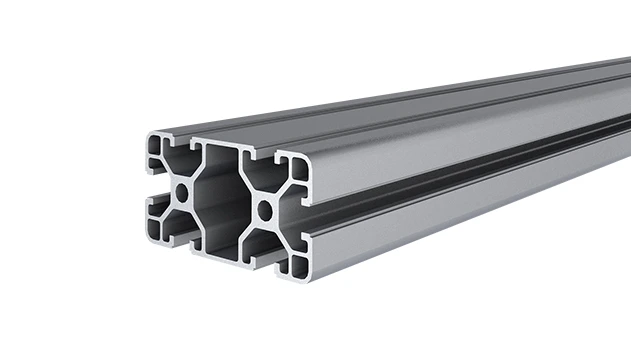
4080A is a 4.00x8.00 CM fractional 40 series square extrusion T-slot profile with two side open T-slots, each side with 4.00cm face, two side with 8.00cm face. The profile has align-a-grooves to assist in aligning connecting profiles.
Walk into any modern 3C (Computer, Communication, Consumer Electronics) manufacturing plant, and you'll likely be struck by the rhythm of precision: robots whirring, components gliding along conveyor belts, and workers assembling smartphones, laptops, or smartwatches with meticulous care. Behind this seamless dance of efficiency lies a silent hero: the equipment that holds it all together. Among these, the 4080A EU Standard Aluminum Profile stands out as a backbone of flexibility, durability, and adaptability—qualities that make it indispensable in the fast-paced world of 3C assembly. Let's dive into why this unassuming piece of material has become a cornerstone for manufacturers aiming to stay ahead in an industry where change is the only constant.
What is 4080A EU Standard Aluminum Profile?
First, let's break down the name. "4080A" refers to the profile's dimensions: 40mm in width and 80mm in height, with "A" denoting a specific groove design and wall thickness optimized for structural stability. "EU Standard" means it adheres to strict European manufacturing norms for quality, precision, and safety—think consistent dimensions, corrosion resistance, and compliance with environmental regulations. Made via aluminum extrusion, this profile is crafted by forcing heated aluminum alloy through a die, resulting in a uniform, high-strength structure with integrated T-slots along its length. These T-slots are the secret sauce: they allow easy attachment of accessories like brackets, connectors, and panels without welding or drilling, turning the profile into a modular building block for almost any structure.
In the 3C industry, where product lifecycles shrink from years to months, manufacturers can't afford to invest in rigid, one-size-fits-all equipment. A smartphone model might be updated twice a year, each requiring tweaks to assembly line layouts, workbench heights, or material flow. This is where the 4080A profile shines: it's not just a piece of metal—it's a system that grows and changes with your needs.
Key Features of 4080A Aluminum Profile
Before we explore its applications, let's highlight the features that make 4080A a standout choice for 3C assembly lines:
- T-Slot Design: The signature T-shaped grooves (typically 8mm or 10mm wide) run the length of the profile, allowing quick attachment of aluminum profile accessories like end caps, hinges, and clamps. No need for specialized tools—just slide in a bolt, tighten a nut, and you're done.
- High Load Capacity: With a wall thickness of around 2.5mm (varies by manufacturer), 4080A can support heavy loads—up to 300kg per linear meter in some configurations. This makes it ideal for workbenches holding tools, or material racks stacked with components.
- Lightweight Yet Strong: Aluminum's natural strength-to-weight ratio means structures built with 4080A are easy to move (when needed) but sturdy enough to withstand daily wear and tear. A typical 4080A profile weighs just 2.5-3kg per meter, compared to 8-10kg for steel of similar dimensions.
- Corrosion Resistance: Aluminum forms a protective oxide layer, so it resists rust even in humid factory environments—critical for 3C plants where moisture control is key to protecting sensitive electronics.
- Precision Engineering: EU standards ensure tight tolerances (often ±0.1mm for dimensions), so profiles and accessories from different suppliers fit together seamlessly. No more frustrating gaps or misaligned holes.

Applications in 3C Assembly Lines: Where 4080A Shines
Now, let's get practical. How exactly does 4080A aluminum profile transform 3C assembly lines? Let's walk through four key applications, each solving a unique challenge in electronics manufacturing.
1. Workbenches: The Heart of Assembly Stations
Every 3C assembly line revolves around workbenches—where workers attach screens to phone bodies, solder circuit boards, or test components. These workbenches need to be stable, customizable, and ergonomic to keep workers productive and reduce fatigue. 4080A profiles excel here.
Imagine a workbench in a laptop assembly line. The base is built with 4080A vertical supports, connected by horizontal crossbars for stability. The top deck, often a plywood or aluminum honeycomb panel, is mounted via T-slot brackets. Along the edges, T-slots hold ESD (Electrostatic Discharge) mats to protect sensitive chips from static damage, tool holders for screwdrivers and tweezers, and LED task lights for better visibility. Need to adjust the height? Swap out the vertical supports for longer ones, or add height-adjustable feet—no need to rebuild the entire bench. This flexibility is a game-changer when workers of different heights use the same station, or when new tools (like heavier testing equipment) require a sturdier setup.
In some cases, manufacturers opt for "workbench e (single deck-without caster)" configurations—fixed workbenches built with 4080A profiles—for tasks that demand absolute stability, like precision soldering. For mobile workstations, casters (another key accessory) can be bolted to the base, turning the bench into a trolley that follows workers across the line. Either way, 4080A ensures the workbench adapts to the task, not the other way around.
2. Material Racks: Organizing Chaos in Lean Systems
3C assembly lines thrive on order. A disorganized station with parts scattered everywhere leads to delays, errors, and wasted time. Enter material racks—structures designed to store components like screws, batteries, or display panels in easy-to-reach, labeled locations. The 4080A profile is perfect for building these racks, and one popular configuration is the "material rack b (3 row and 3 floor)" design: a vertical frame with three horizontal rows, each split into three levels, providing 9 separate compartments for different parts.
Let's take a smartphone battery assembly line. Each "material rack b" might hold battery cells in the top row, adhesive strips in the middle, and protective films in the bottom—all within arm's reach of the assembly worker. Built with 4080A uprights and horizontal beams, the rack is strong enough to hold heavy component boxes but light enough to reposition if the line layout changes. The T-slots allow adding dividers or label holders, ensuring each compartment is clearly marked. This organization isn't just about tidiness; it's a cornerstone of lean system principles—reducing "motion waste" (workers walking to fetch parts) and "inventory waste" (overstocking parts that clutter the line).
What if the next smartphone model uses larger batteries? No problem—simply adjust the shelf heights by moving the brackets along the T-slots. Unlike wooden or welded steel racks, which are fixed, 4080A racks evolve with your inventory needs.
3. Conveyor Systems: Keeping Components Flowing
In a typical 3C line, components don't stay in one place. A circuit board might start at the soldering station, move to quality control, then to the casing assembly, and finally to packaging. Conveyor systems make this flow possible, and 4080A profiles form their backbone. Whether it's a gravity-fed roller track or a motorized belt conveyor, the profile provides the structural support needed to keep components moving smoothly.
Consider a roller track conveyor built with 4080A side rails. The rails are mounted on vertical 4080A supports, with plastic roller track guide rails (yellow or grey, depending on ESD needs) attached via T-slots. The rollers, often made of ESD-safe plastic, glide along these guides, carrying PCBs from one station to the next. If a new component is larger than the current conveyor width, workers can adjust the distance between the 4080A rails by repositioning the brackets—no need to replace the entire system. For heavier loads, like laptop chassis, steel wheel roller tracks can be added, with the 4080A profile ensuring the structure doesn't bend under pressure.
Conveyors built with 4080A also integrate seamlessly with other equipment. For example, a "40 roller track placon mount for aluminum profile flat" bracket can connect the conveyor to a workbench, creating a continuous flow from material storage to assembly. This level of integration is critical in 3C lines, where even a 10-second delay per unit adds up to thousands of lost units per year.
4. Turnover Trolleys: Moving Parts Without the Hassle
Not all component transport happens on fixed conveyors. Sometimes, parts need to be moved from the warehouse to the line, or between distant stations. Turnover trolleys—mobile carts with shelves—fill this gap, and 4080A profiles make them both durable and customizable. A typical trolley might have a 4080A frame, with shelves made of aluminum honeycomb panels, and casters (swivel or fixed) bolted to the base for easy maneuvering.
Take a tablet assembly plant: at the start of each shift, turnover trolleys loaded with LCD screens are wheeled to the assembly line. The trolley's shelves, adjusted via T-slots to fit screen sizes, prevent damage during transport. Casters with brakes ensure the trolley stays put during unloading, while the lightweight aluminum frame means even fully loaded trolleys are easy for workers to push. When the next tablet model arrives with larger screens, the shelves can be raised or widened—no need to buy new trolleys.
Benefits of 4080A Aluminum Profile for 3C Manufacturers
By now, you might be thinking, "This sounds great, but why not use steel or wood instead?" Let's break down the benefits that make 4080A the clear choice for 3C assembly lines:
1. Unmatched Flexibility: Adapt to Change in Hours, Not Weeks
In 3C manufacturing, product designs change overnight. Last month, your line assembled a 6.7-inch smartphone; this month, it's a 7-inch foldable model with a completely different chassis. With traditional steel equipment, reconfiguring the line would mean cutting, welding, and repainting—taking days or weeks. With 4080A profiles, it's a matter of loosening a few bolts, repositioning the brackets, and adding new accessories. A workbench can be extended by adding a 4080A section; a material rack can gain an extra shelf by sliding in new supports. This agility lets manufacturers launch new products faster, reducing time-to-market and staying competitive.
2. Durability That Lowers Long-Term Costs
Aluminum's natural corrosion resistance means 4080A profiles withstand the humid, sometimes chemical-rich environments of 3C plants (think cleaning agents used on workbenches). Unlike wood, they don't warp or rot; unlike uncoated steel, they don't rust. This durability translates to longer equipment lifespans—10+ years in many cases—and lower replacement costs. Even better, when a profile does reach the end of its life, aluminum is 100% recyclable, aligning with sustainability goals (a growing priority for brands and consumers alike).
3. Ergonomics: Prioritizing Worker Wellbeing
Happy, healthy workers are productive workers. 4080A profiles enable ergonomic designs that reduce strain and fatigue. For example, workbenches can be adjusted to heights between 750mm and 900mm (via telescoping 4080A legs) to suit workers of different statures, cutting down on back pain. Material racks can be built at waist height, so workers don't have to bend or stretch to reach parts. Even conveyor heights can be tweaked to align with workbench levels, minimizing the need to lift heavy components. In an industry where repetitive motion injuries are a risk, these small adjustments make a big difference in retention and productivity.
4. Lean System Support: Streamlining Workflow, Cutting Waste
Lean manufacturing—focused on eliminating waste (time, materials, motion)—is the gold standard in 3C production. 4080A profiles are lean by design. Material racks like "material rack b (3 row and 3 floor)" keep parts organized and close to the line, reducing "motion waste." Conveyors built with 4080A ensure a steady flow of components, preventing bottlenecks ("waiting waste"). And since the profiles are modular, there's no overbuilding—you only use what you need, avoiding "inventory waste" from excess equipment. For manufacturers aiming for ISO 9001 or Lean Six Sigma certification, 4080A profiles are a tangible step toward meeting those standards.
How 4080A Compares to Other Profiles: A Quick Guide
Not all aluminum profiles are created equal. Let's compare 4080A with two common alternatives—the 4040 (40x40mm) and 3030 (30x30mm) profiles—to see why it's the go-to for 3C assembly lines:
| Profile Type | Dimensions (WxH) | Load Capacity (kg/m) | Common Applications in 3C Lines | Key Accessories Used |
|---|---|---|---|---|
| 4080A EU Standard | 40mm x 80mm | 250-300 | Heavy-duty workbenches, material racks (3 row/3 floor), conveyor frames | Internal rotary aluminum joints, roller track placon mounts, ESD casters |
| 4040 EU Standard | 40mm x 40mm | 150-200 | Lightweight workbenches, small material bins, tool holders | Straight lean pipe joints, plastic end caps, mini roller tracks |
| 3030 EU Standard | 30mm x 30mm | 80-120 | Shelf dividers, small component holders, cable management | 30° fixed lean pipe joints, plastic pipe sleeves, caster accessories |
As the table shows, 4080A's larger size and higher load capacity make it ideal for the heavy lifting in 3C lines—supporting workbenches with equipment, multi-level material racks, and conveyor systems. While 4040 and 3030 profiles have their place (like lightweight shelving or tool holders), 4080A is the workhorse for structures that need to balance strength and flexibility.
Future Trends: Why 4080A Will Remain a Staple
The 3C industry is evolving faster than ever, with innovations like AI-driven assembly, modular product designs, and sustainable manufacturing leading the way. 4080A profiles are poised to keep up. For example, as more plants adopt "smart factories" with IoT sensors, T-slots can easily accommodate sensor mounts, turning material racks into "smart storage" that tracks inventory levels in real time. As modular products (like phones with swappable batteries) become popular, assembly lines will need even more flexible workstations—something 4080A's modularity supports.
Additionally, the push for sustainability is driving demand for recyclable, energy-efficient equipment. Aluminum extrusion uses 95% less energy than producing aluminum from raw ore, making 4080A profiles an eco-friendly choice. Manufacturers that use EU-standard profiles also benefit from easier access to European markets, where compliance with green regulations is mandatory.
Conclusion: More Than a Profile—A Partner in Progress
In the high-stakes world of 3C manufacturing, success hinges on the ability to adapt, innovate, and deliver quality at speed. The 4080A EU Standard Aluminum Profile isn't just a piece of equipment; it's a strategic asset that empowers manufacturers to do all three. From customizable workbenches to lean-friendly material racks and flexible conveyors, it provides the foundation for efficient, ergonomic, and future-ready assembly lines. As product cycles shorten and competition heats up, the 4080A profile remains a constant—proving that sometimes, the most impactful innovations are the ones that quietly hold everything together.
So the next time you unbox a new smartphone or laptop, take a moment to appreciate the unseen structure that helped build it. Chances are, 4080A aluminum profiles played a role in bringing that device from blueprint to your hands—one T-slot, one bracket, and one perfectly assembled component at a time.