- Company Articles
- Products and Technology
- Application Cases
- 4080A EU Standard Aluminum Profile in Automotive Manufacturing: Chassis & Workbench Applications

4080A EU Standard Aluminum Profile in Automotive Manufacturing: Chassis & Workbench Applications
Related Product
4080A EU Standard Aluminum Profile
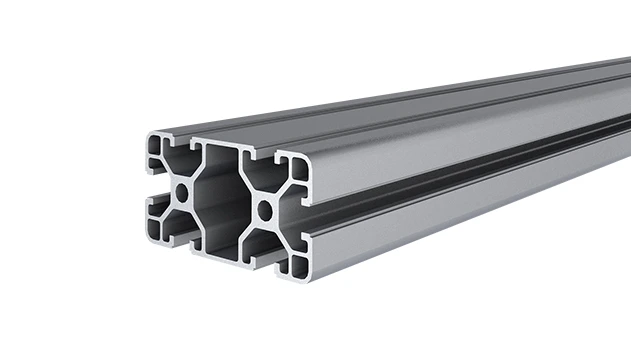
4080A is a 4.00x8.00 CM fractional 40 series square extrusion T-slot profile with two side open T-slots, each side with 4.00cm face, two side with 8.00cm face. The profile has align-a-grooves to assist in aligning connecting profiles.
Introduction: The Unsung Hero of Modern Automotive Production
Step into any cutting-edge automotive factory today, and you'll quickly notice that the most impressive innovations aren't always the flashy robots or high-tech software. Often, they're the quiet, unassuming components that form the backbone of the production line—like the aluminum profiles that hold everything together. In an industry where efficiency, flexibility, and durability are non-negotiable, the 4080A EU Standard Aluminum Profile has emerged as a game-changer. Designed to meet rigorous European standards, this profile isn't just a piece of metal; it's a versatile building block that's transforming how automotive manufacturers approach everything from assembly line chassis to workbench design. Let's take a deep dive into how this remarkable material is reshaping the automotive manufacturing landscape, with a focus on its two most critical applications: chassis systems and workbenches.
What Makes 4080A Aluminum Profile a Standout Choice?
Before we explore its real-world uses, let's unpack what makes the 4080A EU Standard Aluminum Profile so special. First, the basics: "4080A" refers to its dimensions—40mm in width and 80mm in height—while "EU Standard" ensures it adheres to strict quality and safety guidelines set by European regulatory bodies. But its true value lies in its construction. Made through the aluminum extrusion process, this profile features a signature T-slot design that runs the length of the material. These slots are like built-in highways for connectivity, allowing it to pair effortlessly with a wide range of aluminum profile accessories—connectors, brackets, end caps, and more. This isn't just convenience; it's engineering brilliance that turns a simple length of aluminum into a fully customizable system.
The Perfect Blend of Strength and Lightness
Automotive manufacturing demands materials that can handle heavy loads without weighing down the production line. The 4080A delivers on both fronts. Crafted from high-grade aluminum alloys (typically 6063-T5), it offers impressive tensile strength—enough to support hundreds of kilograms when properly configured—while remaining significantly lighter than steel. This lightweight nature reduces strain on equipment, eases installation, and even cuts down on energy costs for moving components. Plus, aluminum's natural resistance to corrosion means it can withstand the harsh conditions of a factory floor, from oil spills to humidity, without rusting or degrading over time.
Accessories: The Key to Unmatched Versatility
A profile is only as useful as the accessories that bring it to life, and the 4080A doesn't disappoint. The market is flooded with aluminum profile accessories designed specifically for EU-standard profiles, turning static structures into dynamic, adaptable systems. Need to connect two profiles at a sharp angle? Use a 90-degree bracket. Want to add wheels for mobility? Attach caster wheels to the base. Even specialized components like roller track connectors (for integrating conveyors) or adjustable feet (for leveling workbenches) slide right into those T-slots with minimal effort. This modularity is a lifesaver in automotive manufacturing, where production lines are constantly evolving to meet new model launches or process improvements.

Chassis Applications: Building the Backbone of Lean Manufacturing
In automotive terms, "chassis" often refers to a car's undercarriage, but on the factory floor, it describes the structural frames that support everything from conveyor systems to mobile workstations. These chassis must be strong enough to handle heavy loads yet flexible enough to adapt to changing production needs. Here, the 4080A truly shines, enabling manufacturers to build lean, efficient systems that align with modern manufacturing principles.
Lean System Integration: Reducing Waste, Boosting Efficiency
Lean manufacturing is all about eliminating waste—whether it's time, materials, or effort. Traditional steel chassis, with their welded joints and fixed designs, are the antithesis of lean; reconfiguring them requires cutting, welding, and days of downtime. The 4080A, however, is inherently lean. Its modular design allows teams to disassemble, reconfigure, or expand chassis in hours, not days. For example, if a plant needs to adjust the height of a conveyor chassis to accommodate a new robot arm, they can simply swap out brackets or add extension profiles—no welding required. This agility reduces "changeover waste" and keeps production lines running smoothly, which is why so many automotive manufacturers are adopting 4080A as a cornerstone of their lean system strategies.
Heavy-Duty Chassis for Assembly Lines
Consider the chassis that supports the main assembly line conveyor belts. These systems carry everything from engine blocks to fully assembled car bodies, enduring constant stress and vibration. The 4080A's robust design, combined with reinforced aluminum profile accessories like cross-braces and heavy-duty connectors, ensures these chassis can handle loads up to 500kg or more (depending on configuration). Yet, because the profile itself is lightweight, the entire structure is easier to install and maintain. A German automotive supplier we spoke with reported that switching to 4080A chassis reduced their installation time by 35% compared to steel, while also cutting the need for specialized lifting equipment.
Custom Chassis for Specialized Tasks
Not all automotive manufacturing happens on the main line. Many tasks—like quality control inspections or component kitting—require specialized setups. The 4080A excels here, too. For instance, a plant might need a mobile chassis to support a portable testing station that moves between work cells. By combining 4080A profiles with lockable caster wheels (a common aluminum profile accessory), they can create a sturdy, maneuverable frame that's easy to position but stable during use. Or, for a fixed storage chassis, adding adjustable feet ensures it stays level, even on uneven factory floors. The flexibility to design custom solutions on the fly is what makes the 4080A indispensable.
Workbench Applications: Where Precision Meets Comfort
Workbenches are the heart of automotive manufacturing, where technicians spend hours assembling components, testing parts, and inspecting finishes. A good workbench needs to be stable, organized, and adaptable to the task at hand. The 4080A EU Standard Aluminum Profile has reimagined the workbench, turning it from a static table into a dynamic tool that enhances productivity and worker comfort.
Modular Workbenches: Built for the Task at Hand
No two automotive tasks are the same. An electrician assembling wiring harnesses needs different tools and storage than a mechanic inspecting brake components. The 4080A's modular design lets manufacturers build workbenches tailored to specific roles. Need extra shelving for parts bins? Add aluminum profile brackets and slide in shelves. Want to integrate a small conveyor for moving components? Attach roller track connectors to the workbench's edge. Even accessories like tool hooks, monitor mounts, or LED lighting can be added via the T-slots, creating a personalized workspace that reduces clutter and streamlines workflows. This level of customization isn't just about convenience—it's about reducing errors and fatigue, which directly impacts product quality.
Ergonomics: Putting Workers First
Automotive manufacturing is physically demanding, and uncomfortable workbenches can lead to chronic injuries and decreased productivity. The 4080A addresses this with adjustable-height designs, made possible by aluminum profile accessories like telescoping legs or electric height adjusters. Workers can raise or lower their workbenches to match their height, reducing strain on shoulders, backs, and wrists. For example, a technician assembling dashboard components might prefer a higher bench to stand while working, while someone sorting small parts could lower it for seated work. This focus on ergonomics has led to measurable improvements in worker satisfaction and retention—a critical factor in today's tight labor market.
Durability That Stands the Test of Time
Workbenches in automotive plants take a beating. Tools are dropped, parts are scraped across surfaces, and spills are inevitable. The 4080A's aluminum construction is up to the challenge. Unlike wooden workbenches, which warp with moisture or chip under heavy use, or steel benches that rust without constant maintenance, the 4080A holds up. Its smooth, anodized surface resists scratches and is easy to clean, while its inherent strength ensures it won't flex or bend under heavy loads. Even better, if a component does wear out—like a bracket or caster—it can be replaced individually, extending the workbench's lifespan and reducing replacement costs.
Comparing 4080A to Traditional Materials: The Numbers Speak for Themselves
To understand why the 4080A is revolutionizing automotive manufacturing, let's compare it to traditional materials like steel and wood. The differences are clear:
| Feature | 4080A Aluminum Profile | Traditional Steel | Wooden Workbenches |
|---|---|---|---|
| Weight | 30% the weight of steel; easy to maneuver | Heavy; requires machinery for installation/reconfiguration | Moderate weight, but prone to warping |
| Customization | Highly modular; aluminum profile accessories enable quick changes | Limited; requires welding/cutting for modifications | Minimal; fixed design with few upgrade options |
| Durability | Corrosion-resistant, scratch-resistant, and long-lasting | Strong but prone to rust without coatings | Prone to water damage, scratches, and wear |
| Lean Manufacturing Alignment | Excellent; supports quick reconfigurations and waste reduction | Poor; rigid design increases downtime during changes | Poor; not adaptable to workflow shifts |
| Total Cost of Ownership | Moderate upfront cost, low long-term costs (repairable, durable) | Low upfront cost, high long-term costs (maintenance, replacement) | Low upfront cost, very high long-term costs (frequent replacement) |
The data speaks for itself: the 4080A offers a superior balance of weight, durability, and customization that traditional materials can't match—especially in fast-paced automotive environments.
Real-World Success: How One Automaker Transformed Production with 4080A
To see the 4080A in action, look no further than a leading European automaker's electric vehicle (EV) battery production line. Faced with tight deadlines and the need to quickly scale production, the automaker was struggling with outdated steel chassis and wooden workbenches that slowed reconfigurations and increased downtime. Their engineering team decided to pilot the 4080A for a section of the line, replacing both the chassis and workbenches.
The results were transformative. First, reconfiguring the line for a new battery design took just 48 hours instead of the usual two weeks, cutting downtime by 90%. Second, workers reported a 30% reduction in fatigue, thanks to adjustable-height workbenches that reduced strain. Third, the corrosion-resistant aluminum eliminated the need for quarterly rust treatments, saving the maintenance team 20+ hours per month. Encouraged by the pilot, the automaker rolled out 4080A across their entire EV production facility, resulting in annual savings of over €200,000 in downtime and maintenance costs alone.
"The 4080A didn't just improve our production line—it changed how we think about manufacturing," said the plant's operations manager. "We can now adapt to new models and processes faster than ever, which is critical in the competitive EV market."
The Future of 4080A in Automotive Manufacturing
As automotive manufacturing continues to evolve—with a focus on EVs, automation, and sustainability—the 4080A's role will only grow. Innovations in aluminum extrusion technology are making profiles stronger and lighter, while new aluminum profile accessories (like IoT-enabled sensors that monitor structural stress) are adding smart capabilities. Imagine a workbench that alerts maintenance when a bracket is loosening, or a chassis that automatically adjusts to balance loads—all made possible by the 4080A's adaptable design.
Sustainability is another key driver. Aluminum is infinitely recyclable, and using recycled aluminum reduces energy consumption by 95% compared to producing new material. For automakers aiming to reduce their carbon footprint, the 4080A is a sustainable choice that aligns with global environmental goals. It's a material that doesn't just build better cars—it builds a better future.
Conclusion: The 4080A—More Than a Profile, a Manufacturing Revolution
The 4080A EU Standard Aluminum Profile may not grab headlines, but its impact on automotive manufacturing is undeniable. By combining strength, flexibility, and modularity, it's enabling manufacturers to build leaner, more efficient production lines that adapt to change with ease. Whether it's supporting heavy chassis systems or creating ergonomic workbenches, this remarkable material is proving that sometimes, the most innovative solutions are the ones that quietly get the job done.
As automotive manufacturing continues to push boundaries, the 4080A will be right there, evolving alongside it. For plant managers, engineers, and workers alike, that's a future worth getting excited about—one where efficiency, adaptability, and sustainability go hand in hand, all thanks to a simple profile with endless possibilities.