- Company Articles
- Products and Technology
- Product knowledge
- 4080A EU Standard Aluminum Profile in Battery Testing Rigs: Stability & Precision

4080A EU Standard Aluminum Profile in Battery Testing Rigs: Stability & Precision
Related Product
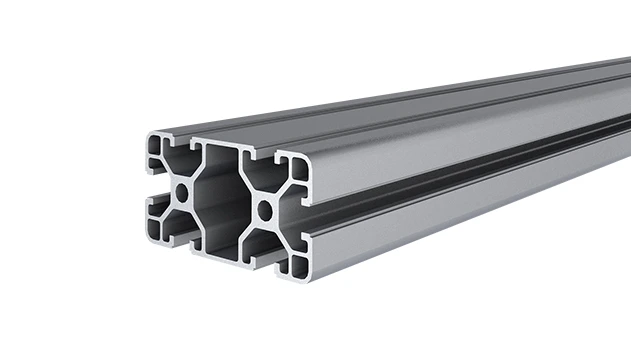
4080A EU Standard Aluminum Profile
4080A is a 4.00x8.00 CM fractional 40 series square extrusion T-slot profile with two side open T-slots, each side with 4.00cm face, two side with 8.00cm face. The profile has align-a-grooves to assist in aligning connecting profiles.
In the fast-paced world of electric vehicles, renewable energy storage, and portable electronics, the battery is the heartbeat of innovation. But before a battery ever powers a car or a solar grid, it undergoes rigorous testing to ensure safety, performance, and longevity. Behind every reliable battery test result is a silent workhorse: the testing rig. And at the core of many of these rigs lies a material that's redefining precision and durability in industrial design—the 4080A EU standard aluminum profile .
Battery testing isn't just about plugging in a charger and watching a meter. It involves subjecting batteries to extreme temperatures, repeated charge-discharge cycles, mechanical stress, and even simulated accidents. For these tests to yield trustworthy data, the rig itself must be unyielding. It needs to hold components steady, maintain alignment under stress, and adapt as testing needs evolve. That's where aluminum extrusion profiles step in—and why the 4080A has become a go-to choice for engineers and manufacturers worldwide.
Why Materials Matter: The Case for Aluminum Extrusion Profiles
When building a battery testing rig, the first question is often: What material should the frame be made of? Steel has long been a staple in industrial settings for its raw strength, but it comes with tradeoffs. It's heavy, prone to corrosion (unless meticulously treated), and rigid—making modifications or repairs a hassle. For testing rigs that need to balance stability with flexibility, steel can feel like overkill.
Enter aluminum extrusion profiles. These aren't your average aluminum tubes; they're precision-engineered products shaped through a process where aluminum alloy is forced through a die, creating consistent cross-sections with built-in features like T-slots. This manufacturing method— aluminum extrusion —results in profiles that are lightweight, incredibly strong for their weight, and inherently resistant to corrosion. But not all aluminum profiles are created equal. The 4080A EU standard, in particular, has emerged as a standout for applications where precision and reliability are non-negotiable.
4080A EU Standard Aluminum Profile: Breaking Down the Specs
Let's start with the basics: What does "4080A" actually mean? The numbers refer to the profile's cross-section: 40mm in width and 80mm in height. The "A" denotes a specific design variant within EU standards—think of it as a guarantee of quality, consistency, and compatibility. EU standards ensure that regardless of the supplier, a 4080A profile will have the same dimensions, slot positions, and load-bearing capabilities, making it easy to source replacement parts or expand a rig later.
But the real magic is in the details. The 4080A profile features T-slots running along its length—those familiar T-shaped grooves that allow accessories to slide in and lock securely. This might sound simple, but it's a game-changer for assembly. Unlike steel frames, which often require welding or drilling, aluminum profiles can be joined with bolts, brackets, and connectors—no special tools needed. This modularity is why labs and manufacturers love them: if a test requires a taller frame or a wider workspace, you can reconfigure the rig in hours, not days.

Stability: The Foundation of Accurate Testing
In battery testing, "close enough" isn't good enough. A rig that wobbles even fractions of an inch during a thermal cycling test can throw off temperature sensor readings. A frame that flexes under the weight of a battery module might misalign mechanical stress testers, leading to inaccurate data on durability. Stability isn't just about safety—it's about the integrity of the test itself.
The 4080A profile excels here thanks to its robust cross-section and material properties. Aluminum alloys used in extrusion (like 6063-T5, common in EU standards) offer an impressive strength-to-weight ratio. While a 4080A profile weighs roughly a third of a steel profile with the same dimensions, it can still support heavy loads—often up to 500kg or more per linear meter, depending on the setup. This strength comes from the extrusion process, which aligns the aluminum's grain structure, enhancing its structural integrity.
| Profile Type | Dimensions (WxH) | Weight (kg/m) | Max Load Capacity (kg/m) | Key Use Case |
|---|---|---|---|---|
| 2020 EU Standard | 20mm x 20mm | 0.7 | 150 | Lightweight shelves, small enclosures |
| 3030 EU Standard | 30mm x 30mm | 1.3 | 300 | Workbenches, small testing fixtures |
| 4080A EU Standard | 40mm x 80mm | 2.2 | 550 | Battery testing rigs, heavy-duty frames |
| 4040 EU Standard | 40mm x 40mm | 1.8 | 400 | Medium-load structures, conveyor frames |
The table above highlights why the 4080A stands out for battery testing rigs. Its 550kg/m load capacity means it can easily support large battery modules, heavy testing equipment, and even environmental chambers without bending or warping. Compare that to a 3030 profile, which maxes out around 300kg/m, and it's clear why engineers opt for the 4080A when stability is critical.
But stability isn't just about raw strength—it's also about how the profile interacts with other components. The T-slots in the 4080A are precision-cut to accept aluminum profile accessories like brackets, end caps, and T-nut fasteners. When you tighten a bolt into a T-slot, it creates a secure, vibration-resistant connection that won't loosen over time—even during the most rigorous testing cycles. This is a far cry from steel frames, where welded joints can weaken with stress or bolted connections may require constant retightening.
Precision Engineering: Why Tolerances Matter in Testing
Battery tests often involve positioning sensors, clamps, and probes with millimeter-level accuracy. A sensor that's off by 2mm might not sound like much, but in a test measuring temperature distribution across a battery cell, that discrepancy could lead to misleading conclusions. This is where the EU standard certification of the 4080A profile becomes invaluable.
EU standards for aluminum extrusion profiles mandate strict tolerances. The width and height of a 4080A profile, for example, typically vary by no more than ±0.3mm. The T-slots, which are critical for alignment, are positioned with similarly tight precision. This consistency means that when you build a rig using 4080A profiles, every component lines up exactly as intended—no guesswork, no shimming, no "making it fit."
Consider a common scenario: mounting a workbench top to the rig frame. With steel, you might drill holes, only to find they're slightly misaligned, forcing you to ream them out or use washers to compensate. With 4080A, the T-slots run the entire length of the profile, so you can slide a bracket to the exact position you need, lock it in place, and trust that it will stay there. This level of precision reduces setup time and minimizes the risk of human error—two factors that directly impact the reliability of test data.
Beyond the Profile: The Ecosystem of Aluminum Profile Accessories
A 4080A profile is only as good as the accessories that bring it to life. The beauty of aluminum extrusion systems lies in their ecosystem of compatible parts—everything from connectors to casters—that turn a simple profile into a fully functional rig. Let's take a closer look at some key accessories that make the 4080A so versatile for battery testing:
Connectors: The Glue That Holds It All Together
90° aluminum profile connectors, for example, allow you to join two 4080A profiles at a perfect right angle without welding. These connectors slide into the T-slots and are secured with bolts, creating a joint that's both strong and. Need a 45° angle instead? There's an accessory for that too. Even complex joints, like three-way or cross connections, are possible with specialized connectors—all designed to work seamlessly with the 4080A's T-slots.
Workbench Tops and Panels
Many battery testing rigs include a workbench area for control electronics, data loggers, or sample preparation. Aluminum honeycomb panels, which are lightweight yet rigid, are a popular choice for these surfaces. They attach directly to 4080A frames using bracket accessories, creating a stable workspace that resists vibration and won't warp under temperature changes.
Roller Tracks: Streamlining Material Handling
Moving heavy battery modules in and out of the testing area can be a hassle—unless you integrate roller tracks into the rig. These tracks, which consist of small rollers mounted in a frame, allow modules to slide smoothly onto the test platform. Roller tracks designed for 4080A profiles bolt directly into the T-slots, aligning perfectly with the rig's frame. They're especially useful for high-throughput testing labs, where minimizing downtime between tests is crucial.
Real-World Impact: A Case Study in Battery Testing
To put this all in perspective, let's walk through a hypothetical (but realistic) example of a battery testing rig built with 4080A profiles. Imagine a lab testing EV battery packs for thermal management. The rig needs to hold a 50kg battery pack, expose it to temperatures from -40°C to 85°C, and measure heat distribution during charge cycles.
The frame is constructed using 4080A profiles, connected with 90° and three-way connectors. The vertical supports are reinforced with gusset plates (another common accessory) to prevent sway during temperature changes. A roller track is mounted along the front of the rig, allowing technicians to slide the battery pack into place without lifting. On top of the frame, a workbench holds a thermal imaging camera and data acquisition system, positioned precisely 1 meter above the battery pack using height-adjustable brackets.
Over months of testing, the rig undergoes hundreds of thermal cycles. Thanks to the 4080A's stability, the camera never shifts, ensuring consistent image alignment. The roller track continues to operate smoothly, even with daily use. When the lab decides to test a larger battery pack, they simply add two more 4080A profiles to the frame and swap out the roller track for a longer model—no welding, no cutting, just a few hours of reconfiguration.
Long-Term Value: Durability and Cost-Efficiency
At this point, you might be thinking: All of this sounds great, but isn't aluminum more expensive than steel? It's true that aluminum profiles have a higher upfront cost, but they more than make up for it over time. Let's break down the long-term benefits:
- Corrosion Resistance: Aluminum forms a natural oxide layer that protects against rust, even in humid or chemically harsh environments. Steel, by contrast, requires regular painting or galvanizing to prevent corrosion—adding maintenance costs.
- Modularity: When testing needs change (and they always do), you can reconfigure the rig instead of building a new one. This saves on material costs and reduces downtime.
- Lightweight: Aluminum is 30% the weight of steel, making the rig easier to move (if needed) and reducing structural stress on the lab floor.
- Low Maintenance: No repainting, no welding repairs, no dealing with seized bolts from rust. Just occasional tightening of fasteners—if that.
For labs and manufacturers focused on long-term efficiency, the 4080A EU standard aluminum profile isn't just a material choice—it's an investment in reliability.
Conclusion: 4080A—More Than a Profile, a Partner in Precision
Battery testing is a high-stakes game. The data collected from these rigs informs product design, safety regulations, and consumer trust. In such a critical field, the equipment itself must be held to the same standards as the batteries being tested. The 4080A EU standard aluminum profile rises to this challenge by offering a rare combination of stability, precision, and flexibility.
From its robust 40x80mm cross-section to its compatibility with a vast ecosystem of aluminum profile accessories, the 4080A isn't just building material—it's a tool that empowers engineers to create better, more reliable testing rigs. Whether you're testing small consumer batteries or large-scale EV packs, this profile ensures that your rig can keep up with the demands of modern battery technology.
In the end, the true measure of a testing rig isn't how strong it is, but how consistently it delivers accurate data. With the 4080A EU standard aluminum profile, you're not just building a frame—you're building confidence in every test result.