- Company Articles
- Products and Technology
- Product knowledge
- 4080A EU Standard Aluminum Profile in Conveyor Systems: Modular Design & Efficiency

4080A EU Standard Aluminum Profile in Conveyor Systems: Modular Design & Efficiency
Related Product
4080A EU Standard Aluminum Profile
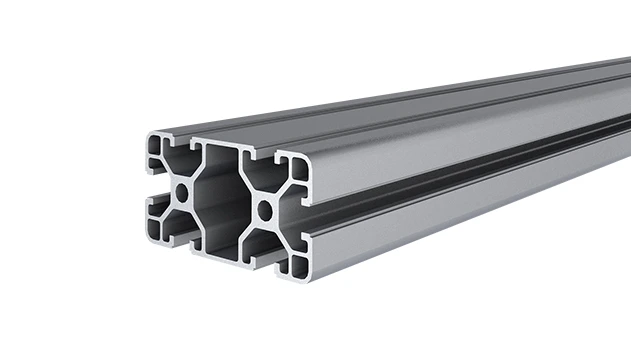
4080A is a 4.00x8.00 CM fractional 40 series square extrusion T-slot profile with two side open T-slots, each side with 4.00cm face, two side with 8.00cm face. The profile has align-a-grooves to assist in aligning connecting profiles.
Walk into any high-performing manufacturing facility today, and you'll notice a silent hero keeping operations moving: the conveyor system. Not just any conveyor—one built with precision, flexibility, and efficiency in mind. That's where the 4080A EU Standard Aluminum Profile comes into play. In an era where production lines need to adapt quickly to changing market demands, this aluminum extrusion profile has emerged as a game-changer, redefining how conveyor systems are designed, built, and optimized for lean manufacturing.
The Backbone of Modern Conveyors: Why Material Matters
Conveyor systems are the circulatory system of manufacturing. They transport raw materials, components, and finished products across the production floor, ensuring that every step—from assembly to packaging—flows seamlessly. But for a conveyor to keep up with the pace of modern production, the materials used in its construction matter just as much as its design. Steel has long been a go-to, but it's heavy, prone to rust, and rigid—traits that clash with today's need for agility.
Enter aluminum extrusion profile. Lightweight yet surprisingly strong, aluminum brings a host of advantages to conveyor systems. And among the various aluminum profiles available, the 4080A EU Standard stands out for its versatility, especially in conveyor applications. Let's break down what makes this profile a standout choice.
What Is 4080A EU Standard Aluminum Profile?
First things first: the "4080A" in its name refers to its dimensions—40 millimeters in width and 80 millimeters in height. This rectangular cross-section is no accident; it's engineered to balance structural stability with flexibility, making it ideal for supporting the weight of conveyor components like roller tracks, while still being easy to maneuver and assemble. As an EU standard profile, it adheres to strict quality and dimensional specifications, ensuring consistency across suppliers and compatibility with a wide range of aluminum profile accessories.
But what truly sets it apart is how it's made. The 4080A is created through an aluminum extrusion process, where heated aluminum billets are pushed through a die to form the desired shape. This process allows for intricate cross-sectional designs—like the T-slots that run along its length. These T-slots are the secret to its modularity: they let you attach accessories, brackets, and components without welding or drilling, using simple fasteners. It's like building with a high-tech Erector Set, but for industrial applications.

Modular Design: Building Conveyors That Adapt
In manufacturing, the only constant is change. A product line might need to scale up next month, reconfigure for a new product next quarter, or downsize during slow periods. Traditional conveyor systems, bolted together with steel and welded joints, struggle with these changes—reconfiguring them often means cutting, welding, and downtime. The 4080A, with its modular design, turns that problem on its head.
Modularity here means two things: easy assembly and effortless reconfiguration. Let's start with assembly. Using aluminum profile accessories like internal rotatary aluminum joints, parallel aluminum joint A, and roller track placon mount for aluminum profile flat, you can build a conveyor frame in hours, not days. No specialized tools, no welding teams—just a few hand tools and a clear plan. For example, attaching a roller track to a 4080A frame is as simple as sliding a placon mount into the T-slot, securing it with a bolt, and snapping the roller track into place. It's intuitive, even for teams without advanced engineering training.
But the real magic is in reconfiguration. Suppose your production line needs to add a 90-degree turn to accommodate a new machine. With 4080A, you don't need to replace the entire conveyor. Just loosen the bolts on the relevant joints, adjust the angle using a 90° aluminum pipe joint inside connection, and secure it again. Done. This flexibility is a game-changer for manufacturers aiming to stay agile in a competitive market.
| Aluminum Profile Accessory | Function in Conveyor Systems | Key Benefit |
|---|---|---|
| Internal Rotary Aluminum Joint | Connects 4080A profiles at adjustable angles (0-180°) | Enables curved or angled conveyor sections without custom fabrication |
| Roller Track Placon Mount for Aluminum Profile Flat | Attaches roller track to the flat surface of 4080A profiles | Secure, vibration-resistant mounting for smooth roller operation |
| Aluminum Guide Rail A | Lines the edges of conveyor tracks to keep items centered | Prevents product jams and ensures consistent movement |
| Caster Wheel with Brake | Mounts to 4080A frames for mobile conveyor sections | Allows temporary or movable conveyor lines for flexible layouts |
Efficiency: More Than Just Speed—Smart Design
Efficiency in manufacturing isn't just about moving products faster; it's about reducing waste, minimizing downtime, and making the most of available space. The 4080A excels here on multiple fronts.
First, installation and setup time. Traditional steel conveyors can take days or even weeks to assemble, requiring heavy lifting equipment and skilled labor. 4080A, being lightweight (about 2.7 kg per meter for a standard 4080A profile), can be handled by two people without specialized tools. This cuts assembly time by up to 60%, getting your conveyor up and running in a fraction of the time. Less downtime means more production—simple as that.
Then there's maintenance. Aluminum is naturally resistant to corrosion, so unlike steel, it won't rust when exposed to moisture or chemicals—common in many manufacturing environments. This reduces the need for regular painting or coating, saving time and money on upkeep. And because components are attached via T-slots and bolts, replacing a worn-out roller track or a damaged joint is quick: just unscrew the old part, pop in the new one, and you're back in business. No grinding, welding, or repainting required.
Space optimization is another win. The 4080A's slim profile (40x80mm) means conveyor systems built with it take up less floor space than bulkier steel alternatives. This is crucial in modern factories where every square meter counts. Plus, its lightweight nature reduces the load on floor structures, opening up possibilities for overhead conveyor systems or multi-level setups that maximize vertical space.
Roller Track Integration: The Heart of the Conveyor
A conveyor system is only as good as its ability to move products smoothly. That's where roller track comes in—and 4080A is the perfect partner for this critical component. Roller track, made up of small wheels mounted on a frame, allows products to glide along the conveyor with minimal friction. When paired with 4080A, it becomes a powerful combination.
The T-slots on 4080A profiles make it easy to mount roller track at various heights and angles. For example, using a roller track placon mount center support bracket, you can secure the roller track to the middle of the 4080A profile, ensuring stability even under heavy loads. Or, for inclined conveyors, adjust the angle using a 45° aluminum pipe joint outside connection to create a gentle slope that moves products upward without slipping.
But it's not just about mounting. The compatibility between 4080A and roller track accessories—like plastic roller track guide rail yellow (for visual cues) or stainless steel swivel roller balls 1 inch (for multidirectional movement)—means you can tailor the conveyor to your specific product needs. Delicate electronics? Use soft plastic rollers. Heavy machinery parts? Opt for steel rollers with reinforced mounts. The 4080A frame provides the strength to support it all, while the accessories handle the details.
Supporting Lean System Principles: Less Waste, More Value
Lean manufacturing is all about eliminating waste—whether it's time, materials, or space—and creating more value for customers. The 4080A EU Standard Aluminum Profile aligns perfectly with these principles, making it a favorite among lean system advocates.
Take waste from overproduction, for example. A rigid conveyor system might force you to produce more than needed to keep the line moving. With 4080A's flexible design, you can scale the conveyor to match demand—adding sections during peak seasons and downsizing during lulls. No more overproducing to fill a conveyor that's too long.
Or consider waste from transportation. A poorly designed conveyor might require products to take unnecessary detours. 4080A's modular joints and lightweight structure let you design a conveyor that follows the shortest path between workstations, reducing travel time and energy use. It's lean thinking in action, built into the very structure of the system.
Beyond Conveyors: 4080A's Versatility in the Factory
While we've focused on conveyor systems, it's worth noting that 4080A's modularity extends far beyond that. Manufacturers often use the same profiles to build workbenches, material racks, turnover trolleys, and even machine guards. This consistency is a hidden efficiency booster: your team only needs to learn one system to build multiple factory components, reducing training time and simplifying maintenance. A workbench built with 4080A can be positioned right next to a 4080A conveyor, creating a seamless workflow where components move from the conveyor directly to the workbench—no gaps, no wasted steps.
Why Choose 4080A Over Other Profiles?
With so many aluminum profiles available—like the 4040A (40x40mm) or 3060 (30x60mm)—why opt for 4080A specifically for conveyors? The answer lies in its balance of size and strength. The 40x80mm cross-section offers more surface area than a 4040A, making it better suited for mounting longer roller tracks or heavier components. At the same time, it's more compact than larger profiles (like 8080A), which is critical for keeping conveyor systems streamlined.
Another factor is load capacity. 4080A can support significantly more weight than smaller profiles, thanks to its wider flange. This makes it ideal for conveyors handling heavy products, like automotive parts or large appliances. And because it's made from high-grade aluminum alloy (typically 6063-T5), it offers excellent strength-to-weight ratio—strong enough to handle the load, light enough to keep installation and reconfiguration easy.
The Future of Conveyors: Built on 4080A
As manufacturing continues to evolve—with trends like small-batch production, customization, and Industry 4.0—conveyor systems will need to keep pace. The 4080A EU Standard Aluminum Profile is well-positioned to lead this evolution. Its modular design aligns with the need for flexibility, its efficiency supports lean principles, and its compatibility with smart manufacturing technologies (like sensors mounted via T-slots) opens the door to connected, data-driven conveyor systems.
A conveyor that can automatically adjust its speed based on sensor data, or reconfigure itself using motorized joints—all built on a foundation of 4080A profiles. It's not science fiction; it's the direction manufacturing is heading, and 4080A is helping to get us there.
Final Thoughts: Investing in Flexibility, Investing in Success
At the end of the day, a conveyor system is more than just a piece of equipment—it's an investment in your manufacturing process. Choosing the right materials and design can mean the difference between a production line that struggles to keep up and one that thrives on change. The 4080A EU Standard Aluminum Profile, with its modular design, efficiency, and compatibility with roller track and aluminum profile accessories, offers that competitive edge.
Whether you're building a new conveyor system from scratch or upgrading an existing one, 4080A brings something invaluable to the table: peace of mind. You'll know your conveyor can adapt to whatever the future holds—new products, changing demand, evolving technology. And in manufacturing, that's not just an advantage; it's essential.
So the next time you walk through a manufacturing facility and marvel at how smoothly the conveyor system runs, take a closer look. Chances are, it's built on the silent strength of 4080A aluminum profiles—proof that sometimes, the most innovative solutions are the ones that quietly get the job done, day in and day out.