- Company Articles
- Products and Technology
- Application Cases
- 4080A EU Standard Aluminum Profile in Educational Institutions: Lab Benches & Project Stations

4080A EU Standard Aluminum Profile in Educational Institutions: Lab Benches & Project Stations
Related Product
4080A EU Standard Aluminum Profile
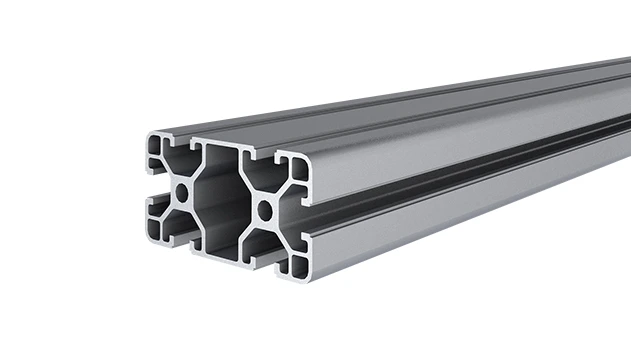
4080A is a 4.00x8.00 CM fractional 40 series square extrusion T-slot profile with two side open T-slots, each side with 4.00cm face, two side with 8.00cm face. The profile has align-a-grooves to assist in aligning connecting profiles.
How modular aluminum systems are transforming hands-on learning spaces for students and educators alike
The Evolution of Learning Spaces: Beyond Rows and Desks
In today's classrooms, education isn't confined to textbooks and whiteboards. From high school science labs to university makerspaces, hands-on learning has become the cornerstone of fostering curiosity, critical thinking, and collaboration. But here's the thing: the furniture and infrastructure that support these activities often lag behind. Traditional lab benches are heavy, fixed, and frustratingly rigid—built for a one-size-fits-all approach that doesn't account for how students actually learn.
Enter the 4080A EU Standard Aluminum Profile —a quiet revolution in educational design. This unassuming yet versatile material is redefining what lab benches and project stations can be, turning static rooms into dynamic, adaptable spaces that grow with students' needs. Whether it's a chemistry lab needing acid-resistant work surfaces, a robotics club building prototypes, or a middle school art class collaborating on a mural, 4080A-based setups are proving that the right tools (and furniture) can make all the difference in how effectively students engage with their work.
But what exactly is 4080A, and why is it becoming a go-to choice for forward-thinking schools? Let's start with the basics.
Meet 4080A: The Workhorse of Modular Design
At its core, the 4080A EU Standard Aluminum Profile is an extruded aluminum beam with a specific cross-section: 40mm wide and 80mm tall. Its "EU Standard" label means it adheres to strict quality and safety guidelines, ensuring it's durable enough for daily classroom chaos while meeting the low-VOC and fire-resistance standards schools require. But numbers and specs only tell part of the story. What makes 4080A special is its T-slot design—longitudinal grooves running along its length that let you attach, adjust, and reconfigure components with ease.
Think of it as the educational equivalent of building with high-quality Legos, but for grown-ups (and kids who act like grown-ups when they're focused on a project). Unlike wood or steel, aluminum is lightweight enough for two teachers to rearrange a lab in an afternoon, yet strong enough to support heavy equipment like microscopes, 3D printers, or even small centrifuges. It's also corrosion-resistant, which is a lifesaver in labs where spills happen (and they will happen), and its smooth, non-porous surface wipes clean with just soap and water—no more scrubbing permanent marker off wooden desks.
Why "4080A" Matters for Schools
The "4080" in its name refers to its dimensions (40mm x 80mm), making it larger and sturdier than smaller profiles like 2020 or 3030—perfect for supporting the weight of lab equipment and student projects. The "A" denotes its specific groove design, which is compatible with a vast ecosystem of aluminum profile accessories —brackets, hinges, end caps, and connectors that turn raw aluminum beams into fully functional workspaces. This compatibility is key: it means schools aren't locked into a single manufacturer's parts, giving them flexibility to source, repair, and upgrade components over time.

Lab Benches Reimagined: Safety, Flexibility, and Student-Centric Design
Science labs are the heart of hands-on STEM education, but traditional lab furniture often feels like an afterthought. Heavy wooden or particleboard benches scratch easily, absorb chemicals, and can't be adjusted for different activities or student heights. A biology class dissecting frogs needs different space than a physics class building catapults, yet schools are stuck with benches that force both groups into the same rigid setup.
4080A-based lab benches solve this by putting adaptability first. Let's break down how:
Height Adjustability: One Bench, Multiple Users
Middle schoolers and high school seniors have very different ergonomic needs. A 12-year-old might need a bench height of 70cm to comfortably use a microscope, while a 17-year-old working on a chemistry experiment might prefer 85cm to avoid hunching over. With 4080A, benches can be fitted with adjustable legs or crank systems that let teachers tweak heights in minutes. Some schools even install electric adjusters for quick transitions between classes—no tools required.
Customizable Work Surfaces: From Heat-Resistant to ESD-Safe
Not all lab work is the same. A chemistry bench needs a heat-resistant, chemical-proof surface (think phenolic resin or stainless steel), while a computer science lab working with sensitive electronics might require an ESD (electrostatic discharge) mat to protect components. 4080A's T-slot system makes swapping surfaces simple: just unbolt the old top, slide in a new one, and reattach. No need to replace the entire bench when curricula change.
Integrated Storage: Clutter-Free, Within Reach
Lab supplies—beakers, test tubes, tools, or project materials—have a way of taking over workspaces. 4080A benches integrate seamlessly with shelving, pegboards, and drawer units using aluminum profile accessories like angle brackets and shelf supports. For example, a biology bench might have upper shelves for glassware and a lower cabinet with lockable drawers for chemicals, while a robotics bench could add a pegboard for tools and a bin rack for spare parts. The best part? If a class needs more storage mid-semester, you can add a shelf or hook without drilling holes or hiring a carpenter.
Safety First: Rounded Edges and Stable Frames
Schools have zero tolerance for safety risks, and 4080A delivers here too. Unlike metal benches with sharp corners, aluminum profiles can be fitted with plastic end caps that soften edges, reducing the risk of bumps and scrapes. The material itself is non-conductive, which is a plus in electrical labs, and its rigidity ensures benches won't wobble—even when students lean on them while debating the results of their latest experiment. Plus, since the frames are modular, damaged sections can be replaced individually instead of replacing the entire bench, keeping repair costs low and downtime minimal.
Project Stations: Where Collaboration Meets Creativity
Beyond labs, schools are increasingly investing in project stations—collaborative spaces where students work in groups on everything from engineering challenges to art installations. These spaces need to be even more flexible than labs, as projects can vary wildly in size, duration, and materials. A week-long math project on geometry might require large whiteboard surfaces, while a month-long engineering project could need space for building prototypes and storing materials. 4080A-based project stations rise to this challenge by being… well, unfinished by design. They're blank canvases that students and teachers can adapt to fit their needs.
Collaborative Layouts: From Rows to Pods
Traditional classrooms arrange desks in rows, but project-based learning thrives on collaboration. 4080A makes it easy to create pod-style stations—hexagonal or rectangular setups where 4-6 students can work together. For example, a middle school might build a cluster of aluminum workbench units, each with a whiteboard top and storage bins, that can be pushed together for group work or pulled apart for individual tasks. High schools and universities often take this further, creating "maker islands" with 4080A frames, casters, and adjustable shelves that can be rolled around the room to reconfigure the space in minutes.
Material Handling with Roller Track : Smooth, Quiet, and Student-Friendly
One of the biggest headaches in project spaces is moving materials—boxes of supplies, tools, or prototypes—between stations. Carrying heavy items across the room wastes time and increases the risk of spills or injuries. That's where roller track systems come in. These simple, low-friction tracks (often made from aluminum or plastic) can be mounted to 4080A frames, creating gravity-fed pathways for bins and trays. Imagine a row of project stations with a roller track running along the back: students can slide a bin of art supplies from station 1 to station 5 without leaving their seats. It's a small addition that saves hours of time over a semester and keeps the space organized.
Roller tracks are also customizable. Schools can choose from different wheel colors (yellow for general use, grey for ESD-sensitive areas) and track lengths, and they're easy to install using—you guessed it—aluminum profile accessories like brackets and connectors. Some schools even add aluminum guide rail A to keep bins from sliding off the track, ensuring everything stays on course even when pushed a little too hard by enthusiastic students.
Case Study: Lincoln High School's Makerspace Makeover
Lincoln High School in Portland, Oregon, used to have a makerspace that was little more than a corner of the library with a few old tables and a 3D printer. Today, thanks to a grant and 4080A aluminum profiles, it's a 500 sq. ft. hub of creativity. The centerpiece? A 12-foot-long collaborative aluminum workbench with a roller track along one side for material transport, adjustable shelves above for storage, and power strips integrated into the frame for laptops and tools. "We used to spend 20 minutes at the start of each class just moving tables and supplies," says tech teacher Mr. Hernandez. "Now students can rearrange the space themselves in 5 minutes, and the roller track means no one's tripping over bins. It's transformed how much we can get done in a period."
Traditional vs. 4080A: A Side-by-Side Comparison
Still on the fence about whether 4080A is worth the investment? Let's compare it to traditional lab and classroom furniture across key factors that matter to schools:
| Feature | Traditional Lab/Classroom Furniture | 4080A Aluminum Profile Setups |
|---|---|---|
| Customization | Fixed design; modifications require carpentry or new furniture | Highly customizable with modular components; reconfigure in minutes |
| Durability | Wood/particleboard scratches, absorbs moisture; lasts 5-7 years | Aluminum resists corrosion, scratches, and dents; lasts 15+ years |
| Cost Over Time | Low upfront cost, but frequent replacements drive long-term expenses | Higher upfront cost, but minimal repairs/upgrades reduce lifetime costs |
| Safety | Sharp edges, heavy weight (risk of injury during moves), porous surfaces | Rounded edges, lightweight frames, non-porous surfaces, ESD options |
| Adaptability to Curricula | Static; can't keep up with new teaching methods or tools | Easily upgraded with new accessories (e.g., adding power, roller track, or shelves) |
| Environmental Impact | Often made with particleboard (formaldehyde emissions); hard to recycle | Aluminum is 100% recyclable; low-VOC finishes; modular design reduces waste |
As the table shows, 4080A isn't just a furniture upgrade—it's a long-term investment in a school's ability to deliver dynamic, student-centered education. While the upfront cost is higher than buying cheap particleboard benches, the savings in replacement, repair, and adaptation costs quickly add up. Plus, aluminum's recyclability aligns with schools' growing focus on sustainability, making it a choice that benefits both students and the planet.
The Future of Educational Spaces: Growing with 4080A
Education is evolving faster than ever. STEM programs are expanding, project-based learning is becoming the norm, and schools are under pressure to prepare students for careers that don't even exist yet. In this context, flexible infrastructure isn't a luxury—it's a necessity. 4080A aluminum profiles give schools the tools to adapt without constantly rebuilding or replacing furniture.
Preparing for Tomorrow's Technology
Today's project stations might need to support 3D printers and laptops, but tomorrow they could host AR/VR equipment, IoT sensors, or laser cutters. 4080A's T-slot design makes it easy to add power rails, cable management systems, or mounting brackets for new tech as it emerges. For example, a school that invests in 4080A benches today can add USB-C charging ports next year or a monitor arm for a classroom display the year after—no need to tear out the entire bench.
Supporting Inclusive Education
Every student learns differently, and inclusive classrooms need furniture that accommodates diverse needs. 4080A's adjustable heights and modular components make it easier to create accessible workspaces for students with mobility challenges, sensory needs, or different learning styles. A student who uses a wheelchair can have a bench height adjusted to 65cm, while a classmate with sensory processing needs might benefit from a quiet corner with a smaller, enclosed workstation built from the same 4080A profiles.
Empowering Student Ownership
When students feel ownership over their learning space, they're more engaged. 4080A's modularity lets students take charge—designing, building, and modifying their own project stations as part of a class project. Imagine a middle school engineering class tasked with redesigning their classroom layout using 4080A profiles and aluminum profile accessories . Not only do they learn about design and teamwork, but they also end up with a space that feels uniquely theirs—a powerful motivator for future learning.
Investing in 4080A: What Schools Need to Know
Ready to explore 4080A for your school? Here are a few tips to get started:
Start Small, Think Big
You don't need to overhaul your entire lab or classroom at once. Many schools start with a single project station or a row of adjustable benches to test the waters. Once teachers and students see the benefits, expansion becomes easier to justify.
Work with a Knowledgeable Supplier
Not all aluminum profile suppliers are created equal. Look for a partner who understands educational needs—someone who can help you design layouts, source compatible aluminum profile accessories , and provide training for your staff on how to assemble and modify the systems. A good supplier will also offer samples, so you can test the materials and accessories before committing.
Plan for the Long Term
When budgeting, remember that 4080A is a multi-decade investment. Factor in not just the initial cost, but also the savings on replacements, repairs, and upgrades. Many schools find that the ROI becomes clear within 3-5 years, as they avoid the cost of replacing traditional furniture.
Conclusion: More Than Furniture—A Foundation for Learning
At the end of the day, 4080A EU Standard Aluminum Profile isn't just about benches and stations. It's about creating learning environments that keep pace with how students learn, teachers teach, and education evolves. It's about turning static rooms into dynamic spaces where curiosity is sparked, collaboration thrives, and students feel empowered to explore, create, and grow.
Traditional furniture was built for a world where education was one-size-fits-all. But today's students deserve better. They deserve spaces that adapt to their needs, support their projects, and inspire them to think beyond the textbook. With 4080A, schools can deliver exactly that—proving that sometimes, the right infrastructure is the best tool we can give our students.
So, whether you're a lab manager, a principal, or a teacher dreaming of a better classroom, consider this: the next great idea in your school might not come from a textbook. It might come from a student working at a 4080A project station, free to experiment, collaborate, and imagine what's possible.