- Company Articles
- Products and Technology
- Product knowledge
- 4080A EU Standard Aluminum Profile in Electronic Enclosures: EMI Shielding Capabilities

4080A EU Standard Aluminum Profile in Electronic Enclosures: EMI Shielding Capabilities
Related Product
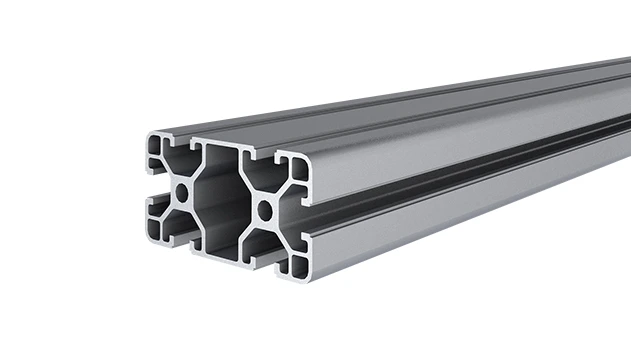
4080A EU Standard Aluminum Profile
4080A is a 4.00x8.00 CM fractional 40 series square extrusion T-slot profile with two side open T-slots, each side with 4.00cm face, two side with 8.00cm face. The profile has align-a-grooves to assist in aligning connecting profiles.
Introduction: The Hidden Battle Against Electronic Noise
Picture this: You're in a busy hospital, where a life-saving MRI machine hums softly in the background., a technician adjusts a heart monitor, and down the hall, a server room powers the hospital's entire network. What if a sudden blip in one device caused the MRI to misread a scan, or the heart monitor to flicker with false data? These scenarios aren't just hypothetical—they're the result of electromagnetic interference (EMI), an invisible "noise" that can disrupt electronic systems. And while we often take the reliability of these devices for granted, much of their stability hinges on a surprisingly simple component: the enclosure that houses them.
Electronic enclosures are more than just metal boxes. They're the first line of defense against EMI, ensuring that sensitive electronics operate as intended. But not all enclosures are created equal. The material they're made from, their design, and even their accessories play a critical role in how well they block interference. In recent years, one material has emerged as a standout choice for this task: the 4080A EU standard aluminum profile.
In this article, we'll dive into why EMI shielding matters, how aluminum profiles like the 4080A excel at this job, and why they've become a go-to solution for engineers and manufacturers worldwide. Whether you're designing medical equipment, industrial control systems, or consumer electronics, understanding the EMI shielding capabilities of the 4080A aluminum extrusion profile could be the key to building more reliable, robust products.
What is EMI, and Why Does Shielding Matter?
Before we explore the 4080A profile itself, let's unpack the problem it solves: electromagnetic interference. EMI is the disruption of an electronic device's performance caused by electromagnetic radiation from other sources. Think of it as static on a radio, but for sensitive electronics—only instead of a fuzzy song, you might get corrupted data, system crashes, or even safety hazards.
EMI comes in two main forms: radiated and conducted. Radiated EMI travels through the air, like the signals from a Wi-Fi router or a cell phone tower. Conducted EMI, on the other hand, spreads through physical connections, such as power cords or data cables. Both can wreak havoc in environments where precision is critical. For example, in aerospace systems, a single EMI-induced error could compromise navigation. In medical devices like pacemakers, interference could be life-threatening. Even in everyday gadgets, EMI can shorten battery life or degrade performance.
That's where shielding comes in. EMI shielding is the practice of enclosing electronic components in a material that absorbs or reflects electromagnetic waves, preventing them from entering or exiting the enclosure. The goal is to create a "Faraday cage"—a barrier that blocks external interference while containing internal emissions (since electronics can also generate their own EMI, which might disrupt nearby devices).
But not all shielding materials are effective. A plastic enclosure, for instance, might be lightweight and cheap, but it offers almost no EMI protection. Steel, while conductive, is heavy and prone to corrosion. This is where aluminum steps in—and specifically, aluminum profiles like the 4080A.

The Role of Aluminum in EMI Shielding: Lightweight, Strong, and Conductive
Aluminum has long been a favorite in engineering for its winning combination of strength, light weight, and conductivity. When it comes to EMI shielding, its conductivity is the star feature. Here's why: electromagnetic waves are essentially moving electric fields. A conductive material like aluminum can reflect these waves, much like a mirror reflects light. Additionally, if the material is thick enough, it can absorb the waves, converting their energy into heat (a process called "eddy current loss").
But aluminum's benefits don't stop there. Unlike steel, it's resistant to corrosion, which is crucial for enclosures used in harsh environments (think factories, outdoor kiosks, or marine settings). It's also highly malleable, allowing manufacturers to shape it into complex profiles—like the 4080A—without sacrificing structural integrity. And because it's lighter than steel, aluminum enclosures are easier to transport, install, and integrate into larger systems (like rack-mounted servers or portable medical devices).
Another advantage? Aluminum is sustainable. It's 100% recyclable, and recycling it uses just 5% of the energy required to produce new aluminum. For companies prioritizing eco-friendly manufacturing, this is a significant plus.
Of course, not all aluminum products are the same. The 4080A EU standard aluminum profile, in particular, is engineered to maximize these benefits—especially when it comes to EMI shielding. Let's take a closer look at what makes this profile unique.
4080A EU Standard Aluminum Profile: An Overview
The 4080A is part of the EU standard series of aluminum extrusion profiles, designed for modular construction. The "4080" refers to its cross-sectional dimensions: 40mm in width and 80mm in height. The "A" denotes a specific groove configuration—typically featuring T-slots along its length, which allow for easy attachment of accessories like brackets, panels, and hinges.
What sets the 4080A apart is its extrusion process. Aluminum extrusion involves heating aluminum billets and forcing them through a die to create a continuous profile with a fixed cross-section. This process allows for precise control over the profile's shape, wall thickness, and surface finish—all critical factors for EMI shielding. The 4080A's design, for example, often includes hollow sections and uniform wall thickness, which enhance both structural rigidity and shielding effectiveness.
EU standards ensure consistency in dimensions, material quality, and performance. For manufacturers, this means they can source 4080A profiles from different suppliers and trust that they'll fit together seamlessly. For engineers, it means predictable performance—whether they're designing a small enclosure for a sensor or a large rack for industrial equipment.
But how does the 4080A's design specifically contribute to EMI shielding? Let's break down the mechanisms at play.
EMI Shielding Mechanisms in 4080A Profiles: Reflection, Absorption, and Grounding
The 4080A's ability to shield against EMI stems from three key mechanisms: reflection, absorption, and grounding. Let's explore each:
1. Reflection: Bouncing Waves Away
As mentioned earlier, aluminum's high conductivity allows it to reflect electromagnetic waves. The 4080A's smooth, continuous surface (a result of the extrusion process) maximizes this effect. When an EMI wave hits the profile, the conductive aluminum electrons move in response to the wave's electric field, generating a secondary wave that cancels out the original. This reflection is most effective for high-frequency waves (like those from Wi-Fi or radar systems).
2. Absorption: Soaking Up the Noise
For lower-frequency waves (such as those from power lines or motors), absorption becomes more important. The 4080A's wall thickness (typically 1.5mm to 3mm, depending on the specific variant) plays a key role here. Thicker walls provide more material to absorb the wave energy, converting it into heat through eddy currents. Engineers can adjust the wall thickness based on the shielding requirements—for example, a medical device might need thicker walls to block low-frequency interference from hospital equipment.
3. Grounding: Channeling Energy Safely
Even the best shielding can fail if there are gaps or poor grounding. The 4080A's T-slots help here by allowing for secure connections to grounding systems. When the enclosure is grounded, any absorbed EMI energy is channeled away from the electronics and into the earth, preventing it from re-radiating inside the enclosure. Additionally, aluminum profile accessories like conductive gaskets can be used to seal gaps between profile sections, ensuring there are no "leaks" in the shielding.
Together, these mechanisms make the 4080A a formidable barrier against EMI. But how does it stack up against other aluminum profiles or materials? Let's compare.
4080A vs. Other Materials: Why It Stands Out
To appreciate the 4080A's advantages, let's compare it to three common alternatives: plastic, steel, and other aluminum profiles (like the smaller 2020 or larger 8080). The table below summarizes key factors:
As the table shows, the 4080A strikes a perfect balance: it offers shielding effectiveness comparable to the larger 8080 profile but at a lower weight, and it's far more modular than steel or plastic. Its T-slots, in particular, make it easy to customize with aluminum profile accessories—like conductive gaskets, grounding straps, or mounting brackets—further enhancing its shielding capabilities.
For example, if an enclosure has a door or removable panel, gaps around the edges can let EMI through. By using aluminum profile accessories like EMI gaskets (made from conductive materials like nickel-coated foam or copper mesh) in the T-slots, engineers can seal these gaps, ensuring the enclosure acts as a continuous shield. This modularity is a huge advantage over fixed materials like steel, which require welding or drilling to modify.
| Material/Profile | EMI Shielding Effectiveness | Weight (kg/m) | Corrosion Resistance | Modularity (with Accessories) |
|---|---|---|---|---|
| Plastic Enclosure | Very Low (no conductivity) | 0.5–1.0 | High | Low (limited accessory options) |
| Steel Sheet | High (but prone to gaps) | 4.0–6.0 | Low (requires coating) | Low (difficult to modify) |
| 2020 Aluminum Profile | Medium (thinner walls) | 0.8–1.2 | High | Medium (smaller T-slots) |
| 8080 Aluminum Profile | High (thick walls) | 2.5–3.5 | High | High |
| 4080A Aluminum Profile | Very High (optimal thickness/conductivity) | 1.8–2.2 | High | Very High (versatile T-slots) |
Practical Applications: Where 4080A Enclosures Shine
The 4080A's EMI shielding capabilities make it ideal for a wide range of electronic enclosures. Let's explore some real-world applications:
1. Industrial Automation
Factories are full of EMI sources: motors, variable frequency drives, and welding equipment, to name a few. Control panels housing PLCs (programmable logic controllers) or HMI (human-machine interface) screens need robust shielding to avoid interference that could shut down production. The 4080A's durability and shielding make it a top choice here—plus, its modular design allows for easy access to components during maintenance.
2. Medical Devices
Medical equipment like MRI machines, ultrasound scanners, and patient monitors are extremely sensitive to EMI. Even a small disruption could lead to misdiagnoses or treatment errors. 4080A enclosures, paired with aluminum profile accessories like conductive gaskets, ensure these devices meet strict EMI standards (such as IEC 60601 for medical electrical equipment).
3. Telecommunications
Cell towers, routers, and server racks handle massive amounts of data, and EMI can corrupt signals or slow down transmission speeds. 4080A enclosures protect these systems from interference from nearby towers or power lines, ensuring reliable communication.
4. Consumer Electronics
While most people don't think about EMI in their smartphones or laptops, the enclosures of larger consumer devices—like smart home hubs, gaming consoles, or home theater systems—still need shielding. The 4080A's lightweight design is perfect for these applications, where portability and aesthetics matter.
5. Automotive Electronics
Modern cars are rolling computers, with sensors, infotainment systems, and autonomous driving features. EMI from the engine, radio, or other vehicles can disrupt these systems. 4080A profiles are used in enclosures for onboard control units, ensuring they operate safely and reliably.
Case Study: How 4080A Solved EMI Issues in a Factory Control System
To put this in perspective, let's look at a hypothetical (but realistic) case study. A manufacturing plant was experiencing frequent shutdowns of its assembly line due to interference with the PLC enclosure. The original enclosure was made of plastic, and engineers suspected EMI from nearby welding machines was causing the PLC to reset.
The solution? The plant replaced the plastic enclosure with one built from 4080A EU standard aluminum profiles. They added aluminum profile accessories like conductive foam gaskets around the door and a grounding strap connecting the enclosure to the factory's earth ground. The results were dramatic: shutdowns decreased by 95%, and production efficiency increased by 15%. The plant also noted that the aluminum enclosure was easier to modify—when they added new sensors later, they simply used the T-slots to mount additional brackets, no drilling required.
This example highlights how the 4080A's combination of shielding performance and modularity can solve real-world problems. It's not just about blocking EMI—it's about creating enclosures that are adaptable, durable, and easy to maintain.
Future Trends: Innovations in Aluminum Profile Shielding
As electronics become smaller, faster, and more interconnected, the demand for effective EMI shielding will only grow. 5G networks, for example, operate at higher frequencies, which can be more difficult to shield against. Similarly, the rise of the Internet of Things (IoT) means more devices are communicating wirelessly, increasing the potential for interference.
So, what's next for the 4080A and aluminum extrusion profiles? Here are a few trends to watch:
1. Composite Materials
Researchers are exploring ways to enhance aluminum's shielding by combining it with other materials, like carbon fiber or conductive polymers. These composites could offer even better absorption of low-frequency waves while keeping weight down.
2. Smart Shielding
Imagine an enclosure that can adjust its shielding properties based on the environment—thickening or thinning a conductive layer in response to EMI levels. While still in the early stages, this "active shielding" could revolutionize how we protect sensitive electronics.
3. Improved Aluminum Profile Accessories
Manufacturers are developing new accessories specifically for EMI shielding, like self-adhesive conductive tapes, magnetic grounding clips, and quick-connect gaskets. These will make it even easier to integrate 4080A profiles into shielding solutions.
4. Sustainability Advances
As companies push for greener manufacturing, we'll see more 4080A profiles made from recycled aluminum, with lower-carbon extrusion processes. Some suppliers are even experimenting with plant-based lubricants for the extrusion process, further reducing environmental impact.
No matter how technology evolves, the 4080A EU standard aluminum profile is poised to remain a cornerstone of EMI shielding. Its versatility, performance, and sustainability make it a future-proof choice for engineers and manufacturers.
Conclusion: More Than a Profile—A Shield for the Digital Age
In a world where electronics power everything from healthcare to manufacturing, the battle against EMI is more critical than ever. The 4080A EU standard aluminum profile isn't just a piece of metal—it's a shield that protects the reliability, safety, and performance of the devices we depend on.
Its success lies in its ability to combine three key strengths: aluminum's natural conductivity for EMI reflection and absorption, a design optimized for structural integrity and modularity, and compatibility with aluminum profile accessories that enhance shielding and adaptability. Whether you're building a medical device that needs to block hospital interference or a factory control panel that must withstand industrial noise, the 4080A delivers.
As we look to the future—with faster networks, smarter devices, and stricter EMI regulations—the 4080A will continue to play a vital role. It's a testament to the power of thoughtful engineering: sometimes, the most innovative solutions are the ones that quietly do their job, ensuring the technology we rely on works seamlessly, every time.
So the next time you use a smartphone, get an MRI scan, or walk through a factory, take a moment to appreciate the unsung hero behind the scenes: the aluminum profile that's keeping the noise out, and the signals strong.