- Company Articles
- Industry articles
- Industry standards
- 4080A EU Standard Aluminum Profile in Food Processing Facilities: Hygiene Compliance

4080A EU Standard Aluminum Profile in Food Processing Facilities: Hygiene Compliance
Related Product
4080A EU Standard Aluminum Profile
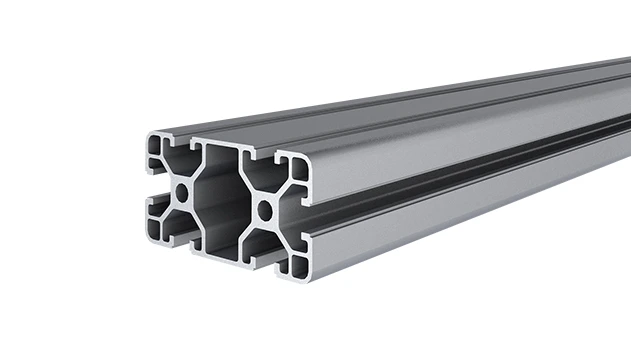
4080A is a 4.00x8.00 CM fractional 40 series square extrusion T-slot profile with two side open T-slots, each side with 4.00cm face, two side with 8.00cm face. The profile has align-a-grooves to assist in aligning connecting profiles.
Walk into any food processing facility, and you'll quickly realize that hygiene isn't just a buzzword—it's the backbone of safe, compliant operations. From the moment raw ingredients arrive to the second packaged products leave the line, every surface, tool, and piece of equipment plays a role in preventing contamination. But here's the thing: not all materials are created equal when it comes to meeting the strict standards of the food industry. This is where the 4080A EU Standard Aluminum Profile steps in—a material that's quietly revolutionizing how food plants balance efficiency, durability, and, most importantly, hygiene.
The Hidden Challenge: Why Material Choice Matters in Food Processing
Food processing environments are tough. They're exposed to frequent washdowns with harsh sanitizers, temperature fluctuations, and constant contact with moisture, oils, and acidic or alkaline substances. Traditional materials like wood or untreated steel might seem cost-effective upfront, but they quickly become breeding grounds for bacteria. Wood, for example, is porous—tiny cracks and crevices trap food particles and moisture, making it nearly impossible to fully sanitize. Untreated steel rusts, creating rough surfaces that harbor pathogens. Even some plastics, while smooth, can degrade over time when exposed to high temperatures or strong chemicals, leading to microplastics in food products.
Regulators like the EU's Food Safety Authority (EFSA) and the U.S. FDA don't take these risks lightly. EU Regulation (EC) No. 1935/2004, for instance, sets strict rules for materials that come into contact with food, requiring they don't transfer harmful substances, are resistant to corrosion, and can be thoroughly cleaned and disinfected. For facility managers, this means choosing materials that don't just "work" but actively support compliance with standards like HACCP (Hazard Analysis and Critical Control Points) and EU 10/2011 on plastic materials. It's a tall order—and one that the 4080A aluminum extrusion profile is uniquely equipped to fill.
Aluminum Extrusion Profiles: A Hygienic Foundation
Aluminum has long been valued in industries where cleanliness is critical, and for good reason. Unlike wood or porous plastics, aluminum is non-porous—its surface is dense and uniform, leaving nowhere for bacteria like Listeria or E. coli to hide. But what makes aluminum extrusion profiles, specifically the 4080A EU standard, stand out? Extrusion is a manufacturing process where aluminum is forced through a die to create custom cross-sectional shapes. This means the 4080A profile isn't just a generic tube; it's engineered with precision, featuring smooth, seamless surfaces that eliminate crevices. No welds, no joints that trap gunk—just a clean, continuous structure that's a dream to sanitize.
But it's not just about smoothness. Aluminum naturally forms a thin, protective oxide layer when exposed to air, which resists corrosion and prevents the metal from reacting with food acids or sanitizers. This layer is self-healing, too—if scratched, it quickly reforms, ensuring long-term durability even in wet environments. For food processors, this translates to less downtime for maintenance, fewer replacements, and a lower risk of contamination from degraded materials. When you pair this with the 4080A's compliance with EU standards, it's easy to see why more facilities are making the switch.

What "EU Standard" Really Means for 4080A Profiles
When we talk about the 4080A being "EU Standard," we're referring to a set of strict specifications that govern everything from material composition to dimensional accuracy. The "4080" in the name denotes the profile's cross-section: 40mm in width and 80mm in height, a versatile size that balances strength with flexibility. The "A" indicates it meets specific tolerances for straightness, wall thickness, and surface finish set by European standards organizations like DIN (Deutsches Institut für Normung).
But compliance goes deeper than dimensions. The 4080A is made from food-grade aluminum alloys, typically 6063-T5, which are approved for use in food contact applications under EU 1935/2004. This alloy is not only strong and lightweight but also free from heavy metals or additives that could leach into food. Its surface treatment is equally important: most 4080A profiles undergo anodization, an electrochemical process that thickens the natural oxide layer. Anodized aluminum has a matte, non-reflective finish that's resistant to scratches, fingerprints, and staining—perfect for high-traffic areas like production lines or packaging stations.
Perhaps most importantly, the 4080A's EU certification means it's been tested to withstand the rigorous conditions of food processing. Whether it's daily pressure washing with hot water and caustic cleaners or exposure to cold storage temperatures, this profile doesn't just meet the minimum requirements—it exceeds them. For facility managers, that's peace of mind knowing their infrastructure is built on a material that regulators won't question.
Beyond the Profile: Aluminum Profile Accessories for Seamless Hygiene
A profile is only as good as the system it builds. That's where aluminum profile accessories come into play. The 4080A's T-slot design—a series of grooves running along its length—allows for easy attachment of accessories without the need for welding or drilling. This modularity is a game-changer for food plants, where layouts often need to adapt to new products or production demands.
Take aluminum guide rail A, for example. These rails are designed to fit into the T-slots of 4080A profiles, creating smooth, low-friction surfaces for conveyor belts or material slides. Unlike traditional steel rails, which can rust or accumulate debris, aluminum guide rail A is anodized and seamless, ensuring materials glide without catching—and without harboring bacteria. They're also lightweight, making reconfiguration a breeze; a single worker can adjust a rail in minutes, minimizing downtime.
Other accessories, like corner brackets, end caps, and adjustable feet, are equally hygienic. Made from the same food-grade aluminum or FDA-approved plastics, they feature rounded edges to prevent food buildup and snap into place without screws or adhesives that could loosen over time. Even the connectors are designed with hygiene in mind: many use quick-release mechanisms that can be disassembled for deep cleaning, ensuring no hidden areas are missed during sanitization cycles.
Workbenches Reimagined: 4080A in Daily Operations
Walk through a food processing facility, and workbenches are everywhere—used for everything from cutting meat to assembling snack packages. But traditional workbenches often fall short: wooden tops stain, steel tops rust, and plastic tops warp under heat. Enter workbenches built with 4080A aluminum profiles. These aren't your average tables; they're custom-engineered for the unique demands of food processing.
A typical 4080A workbench features a frame made from the profile, with a top surface of anodized aluminum or food-grade stainless steel. The frame's T-slots allow for easy attachment of accessories like tool holders, utensil hooks, or even overhead lighting—all without drilling holes that could trap dirt. The height is adjustable, too, thanks to telescoping legs with locking pins, ensuring workers can maintain ergonomic postures and reducing the risk of injury.
But the real star is the cleanliness factor. Wiping down a 4080A workbench takes seconds: the smooth, non-porous surface repels liquids, so sanitizers can be sprayed on and wiped off without leaving residue. There are no cracks between the top and frame, no crevices where crumbs or spills can hide. Even the corners are rounded to prevent buildup. For a facility that cleans multiple times a day, this translates to hours saved each week—time that can be redirected to production or quality control.
Consider a small bakery in Germany that recently switched to 4080A workbenches. Previously, their wooden worktables required daily sanding to remove stains and bacteria buildup, a tedious process that took two workers an hour each morning. With the new aluminum workbenches, cleaning takes 15 minutes total, and microbiology tests show a 90% reduction in surface bacteria. "We used to worry about passing audits," says the bakery manager. "Now, we know our workbenches are part of the solution, not the problem."
4080A vs. Stainless Steel Pipe Series: Which Is Right for Your Facility?
Stainless steel has long been the gold standard in food processing, and for good reason—it's incredibly durable and resistant to corrosion. But when compared to the 4080A aluminum extrusion profile, there are clear trade-offs. Let's break them down.
| Feature | 4080A Aluminum Extrusion Profile | Stainless Steel Pipe Series |
|---|---|---|
| Hygiene | Smooth, non-porous surface; anodized finish resists bacteria; no welds or crevices. | Non-porous but may have welds or joints that trap debris; heavier, harder to maneuver for deep cleaning. |
| Weight | 30-50% lighter than stainless steel, making installation and reconfiguration easier. | Heavy; requires more labor and equipment to install or adjust. |
| Cost | Lower upfront cost; modular design reduces long-term reconfiguration expenses. | Higher upfront cost; welding and customization add to long-term expenses. |
| EU Compliance | Meets EU 1935/2004 and DIN standards for food contact and dimensional accuracy. | Compliant but may require additional certifications for welds or finishes. |
| Modularity | T-slot design allows tool-free attachment of accessories; easy to reconfigure. | Often requires welding or drilling for modifications; less flexible. |
For many facilities, the choice comes down to priorities. If you need extreme heat resistance (e.g., near ovens or fryers), stainless steel might be better. But for most general food processing—think dairy, snacks, or fresh produce—the 4080A's combination of hygiene, cost-effectiveness, and modularity makes it a smarter long-term investment. It's no wonder that a 2023 survey of European food plant managers found that 62% of new facilities now use aluminum extrusion profiles for workbenches and conveyor frames, up from 38% just five years ago.
Maintaining Hygiene: Keeping 4080A Profiles in Top Shape
Even the most hygienic materials need proper care, and 4080A profiles are no exception. The good news? Maintaining them is straightforward, requiring minimal time and effort. Here's what facility managers need to know:
Daily Cleaning: Wipe down profiles and accessories with a mild detergent or FDA-approved sanitizer (avoid abrasive cleaners, which can scratch the anodized finish). For tough stains, use a soft-bristled brush—never steel wool. Rinse with warm water and dry thoroughly to prevent water spots.
Weekly Inspections: Check T-slots for debris and vacuum or brush them out. Inspect accessories like aluminum guide rail A for signs of wear, such as cracks or bent edges. replace any damaged parts immediately to prevent jams or contamination.
Quarterly Deep Cleaning: Disassemble modular components (like guide rails or brackets) and soak them in a sanitizing solution. Use a pipe cleaner to clean T-slots, ensuring no hidden residue remains. Reassemble tightly to prevent gaps where bacteria could grow.
By following these steps, 4080A profiles can last 10+ years in even the busiest food plants—far longer than many traditional materials. And because they're modular, replacing a single damaged section is easy and affordable, avoiding the need for full replacements.
Future-Proofing Your Facility with 4080A
The food industry is constantly evolving. New regulations, changing consumer demands, and advances in technology mean facilities must be agile to stay competitive. The 4080A EU Standard Aluminum Profile isn't just a material for today—it's an investment in tomorrow.
Its modular design allows for quick reconfigurations, whether you're adding a new production line or adapting to a smaller batch size. Its compliance with EU standards ensures you'll meet future regulatory changes without costly overhauls. And its durability means it can grow with your business, supporting heavier loads or new accessories as needed.
Perhaps most importantly, the 4080A helps build a culture of hygiene. When workers see clean, well-maintained equipment, they're more likely to follow best practices themselves. It sends a message that safety isn't an afterthought—it's built into the very structure of the facility.
Conclusion: More Than a Profile—A Commitment to Safety
In food processing, every detail matters. From the ingredients you source to the equipment you use, each choice impacts the safety and quality of the products that reach consumers. The 4080A EU Standard Aluminum Profile isn't just another piece of equipment—it's a tool that makes compliance easier, operations more efficient, and facilities safer. Its smooth, non-porous surface, modular design, and EU certification address the unique challenges of food hygiene, while its durability and cost-effectiveness make it a smart investment for the long term.
So, the next time you walk through a food processing facility, take a closer look at the workbenches, conveyor frames, and guide rails. Chances are, if they're shiny, seamless, and built to last, they're made with 4080A aluminum extrusion profiles. And for good reason: in an industry where hygiene can't be compromised, this profile isn't just meeting standards—it's setting them.