- Company Articles
- Products and Technology
- Application Cases
- 4080A EU Standard Aluminum Profile in Marine Applications: Saltwater Resistance

4080A EU Standard Aluminum Profile in Marine Applications: Saltwater Resistance
Related Product
4080A EU Standard Aluminum Profile
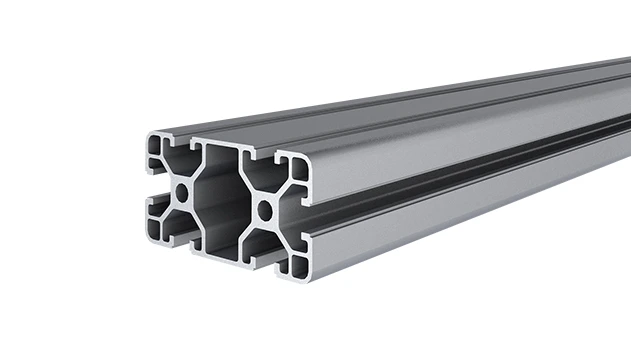
4080A is a 4.00x8.00 CM fractional 40 series square extrusion T-slot profile with two side open T-slots, each side with 4.00cm face, two side with 8.00cm face. The profile has align-a-grooves to assist in aligning connecting profiles.
Introduction: The Unforgiving Marine Environment
Imagine stepping onto a ship's deck on a blustery day, the salty wind stinging your cheeks as waves crash against the hull. What you might not see at first glance is the silent battle happening all around you—between the ocean's corrosive forces and the materials that keep the vessel seaworthy. Saltwater, with its high chloride content, humidity, and constant exposure to UV rays, is one of the most aggressive environments on Earth for any material. From ship hulls to offshore platforms, and even the smallest workbench in a ship's workshop, every component must stand up to this relentless assault.
For decades, shipbuilders and marine engineers have relied on heavy materials like carbon steel (often coated in expensive anti-corrosion paints) or stainless steel to combat this challenge. But in recent years, a new player has emerged as a game-changer: aluminum extrusion profiles. Specifically, the 4080A EU Standard Aluminum Profile has become a go-to choice for marine applications, thanks to its unique blend of strength, lightweight design, and—most importantly—exceptional saltwater resistance. In this article, we'll dive deep into why this profile is revolutionizing marine construction, how it holds up against saltwater's wrath, and the real-world applications where it's making waves (pun intended).
What is the 4080A EU Standard Aluminum Profile?
Before we explore its marine superpowers, let's get to know the 4080A EU Standard Aluminum Profile. At its core, this is an aluminum extrusion profile—a product of forcing heated aluminum alloy through a die to create a specific cross-sectional shape. The "4080A" refers to its dimensions: 40mm in width and 80mm in height, with "A" denoting a specific flange design that meets EU manufacturing standards. These standards ensure consistency in quality, tolerances, and material composition, making the 4080A a reliable choice for critical applications where precision matters.
But what sets this profile apart from other aluminum extrusions? For starters, it's typically made from 6063-T5 aluminum alloy, a popular choice in extrusion due to its excellent formability and corrosion resistance. This alloy contains magnesium and silicon, which not only strengthen the material but also enhance its ability to resist rust and degradation. Unlike carbon steel, which relies on external coatings to stay protected, aluminum has a built-in defense mechanism: when exposed to oxygen, it forms a thin, invisible layer of aluminum oxide (Al₂O₃) on its surface. This layer acts as a barrier, preventing further oxidation and corrosion—even in saltwater.
Another key feature of the 4080A profile is its versatility. Thanks to its T-slot design (a series of grooves along its length), it can be easily assembled with aluminum profile accessories like connectors, brackets, and end caps without welding. This modularity makes it ideal for marine settings, where on-site modifications or quick repairs are often necessary. Whether you're building a workbench, a material rack, or a safety railing, the 4080A can be customized to fit almost any need—all while maintaining its structural integrity.

Saltwater Resistance: How Aluminum Fights Back
The Science of Passivation
Saltwater is a nightmare for most metals because of its high chloride concentration. Chloride ions penetrate protective coatings, react with metal surfaces, and cause pitting corrosion—a localized form of degradation that can weaken structures from the inside out. So how does the 4080A profile stand up to this? The answer lies in aluminum's natural passivation process.
When aluminum is exposed to air or water, it immediately forms a 2-3 nanometer thick layer of aluminum oxide. This layer is not just a surface coating; it's chemically bonded to the metal, making it incredibly durable and self-healing. If the layer is scratched or damaged (say, by a dropped tool on a ship's workbench), it quickly reforms when exposed to oxygen, sealing the wound and preventing further corrosion. In saltwater, this process is slightly slower, but the 6063-T5 alloy's composition—rich in magnesium—boosts the oxide layer's stability, even in chloride-rich environments.
To put this to the test, consider ASTM B117, the standard salt spray test used to evaluate corrosion resistance. A 4080A profile subjected to 1,000 hours of continuous salt spray (simulating years of marine exposure) typically shows minimal signs of corrosion—just a slight dulling of the surface, with no pitting or structural damage. Compare that to carbon steel, which would rust completely within days, or even some grades of stainless steel (like 304), which can develop pitting in high-salinity conditions. The 4080A's performance here is nothing short of impressive.
Alloy Composition: Magnesium's Role
The 6063-T5 alloy isn't just a random mix of metals. Magnesium, in particular, plays a starring role in enhancing saltwater resistance. When added to aluminum, magnesium forms intermetallic compounds that strengthen the oxide layer, making it more resistant to chloride penetration. It also improves the alloy's ductility, allowing the profile to bend slightly under stress (like the sway of a ship) without cracking—an essential property for marine applications where flexibility is as important as strength.
Silicon, another key alloying element, works with magnesium to form Mg₂Si precipitates, which increase the profile's hardness and tensile strength. This means the 4080A can support heavy loads (like a fully stocked material rack) without warping, even in the humid, temperature-fluctuating conditions of a ship's hold.
Marine Applications: Where the 4080A Shines
Now that we understand why the 4080A is resistant to saltwater, let's explore how it's being used in marine settings. From small workbenches to large storage systems, this profile is proving its worth in countless ways.
Workbenches: The Heart of Shipboard Workshops
Every ship has a workshop where repairs are made, tools are stored, and equipment is maintained. The workbench in these spaces takes a beating—exposed to salt spray, oil, grease, and constant use. Traditional steel workbenches are heavy, prone to rust, and require frequent repainting. Enter the 4080A-based aluminum workbench.
By using 4080A profiles as the frame, paired with a corrosion-resistant top (like a marine-grade plywood or aluminum honeycomb panel), shipbuilders create workbenches that are lightweight (easy to move if needed), rust-proof, and built to last. The T-slot design allows for easy attachment of accessories: tool hooks, shelves, or even vice mounts, all using aluminum profile accessories like brackets and connectors. And because aluminum doesn't conduct heat as well as steel, the workbench stays cooler to the touch on hot days— a small but appreciated comfort for crew members.
Material Racks: Organizing Supplies in Tight Spaces
Ships and offshore platforms have limited storage space, so material racks need to be both compact and durable. The 4080A profile excels here, too. Take, for example, a material rack B (3 row and 3 floor) design—common in marine storage. Built with 4080A uprights and crossbars, this rack can hold heavy parts, tools, and spare equipment without bending. The lightweight nature of aluminum also means the rack is easier to install (no need for heavy lifting equipment in cramped ship holds) and reduces the overall weight of the vessel—critical for fuel efficiency.
To further protect stored items from saltwater, many marine racks use aluminum profile rubber strip to seal gaps between the profile and shelves, preventing water from seeping in and damaging contents. This small accessory makes a big difference in keeping tools and parts dry and rust-free.
Railings and Safety Barriers: Balancing Strength and Weight
Safety is paramount on any marine vessel, and railings are a critical part of that. Traditional steel railings are strong but heavy, adding unnecessary weight to the ship. The 4080A profile offers a lightweight alternative without compromising safety. When assembled with 90° aluminum profile connectors and reinforced with diagonal bracing (also made from aluminum extrusions), these railings meet strict EU safety standards for load-bearing capacity. They're also easy to customize—cut to length on-site, powder-coated in high-visibility colors, or fitted with non-slip handrails for wet conditions.
Offshore oil rigs, in particular, have embraced 4080A railings. The profile's resistance to saltwater and UV rays means less maintenance (no repainting every few months) and longer lifespans, reducing downtime and costs for rig operators.
Comparing Materials: 4080A Aluminum vs. Stainless Steel vs. Carbon Steel
To truly appreciate the 4080A's value, let's compare it to two common marine materials: stainless steel (a popular choice for corrosion resistance) and carbon steel (the traditional workhorse). The table below breaks down key factors like corrosion resistance, weight, cost, and maintenance.
| Factor | 4080A EU Standard Aluminum Profile | Stainless Steel (316 Grade) | Carbon Steel (with Anti-Corrosion Paint) |
|---|---|---|---|
| Corrosion Resistance | Excellent (passive oxide layer; resists pitting in saltwater) | Very Good (resists corrosion but can pit in high chloride environments) | Poor (requires regular repainting; rusts quickly if coating is damaged) |
| Weight (kg/m) | ~2.5 kg/m (lightweight, ideal for fuel efficiency) | ~7.8 kg/m (heavy; increases vessel weight) | ~7.8 kg/m (same as stainless steel, but added paint weight) |
| Cost (Initial) | Moderate (higher than carbon steel, lower than stainless steel) | High (3-4x the cost of aluminum) | Low (cheapest upfront, but hidden costs in maintenance) |
| Maintenance | Low (occasional cleaning with fresh water; no repainting) | Moderate (requires periodic polishing to maintain finish) | High (repaint every 1-2 years; rust removal) |
| Marine Suitability | Excellent (ideal for workbenches, racks, railings, and lightweight structures) | Good (best for high-stress parts like propellers, but overkill for non-critical components) | Fair (only suitable for temporary or low-exposure applications) |
As the table shows, the 4080A aluminum profile strikes a perfect balance between performance and practicality. It's not as expensive as stainless steel, yet offers better corrosion resistance than carbon steel. Its lightweight design is a huge plus for marine applications, where every kilogram saved translates to lower fuel costs and improved maneuverability.
That said, stainless steel pipe series still have their place in marine engineering—for example, in high-pressure systems or components submerged for extended periods. But for most structural, storage, and workspace applications, the 4080A profile is the smarter choice.
Aluminum Profile Accessories: Enhancing Performance in Marine Settings
A profile is only as good as the accessories that accompany it, and the 4080A's T-slot design opens up a world of possibilities for marine-specific enhancements. Let's take a look at some key aluminum profile accessories that make this profile even more marine-ready.
Aluminum Profile Rubber Strip: Sealing Out the Elements
One of the simplest but most effective accessories is the aluminum profile rubber strip. These flexible strips fit snugly into the T-slots of the 4080A profile, creating a watertight seal. On a workbench, this prevents saltwater from pooling in the slots and causing hidden corrosion. On a material rack, it cushions stored items and reduces noise (important in a busy ship environment). Rubber strips also come in UV-resistant variants, ensuring they don't degrade under the harsh sun—perfect for deck-mounted structures.
End Caps and Connectors: Finishing Touches That Matter
4080 aluminum profile end caps are small plastic or aluminum covers that fit over the ends of the profile, blocking water, dust, and debris from entering the hollow interior. In marine settings, this is crucial—moisture trapped inside the profile could lead to internal corrosion, even if the exterior is protected. End caps are easy to install (often just snapped into place) and come in colors that match the profile's powder coating, keeping the design sleek and professional.
Connectors, like the 90° aluminum profile connector or 45° aluminum profile connector, are equally important. Made from corrosion-resistant aluminum or stainless steel, these components join profiles at precise angles without welding. For marine applications, many connectors feature rubber gaskets to further seal the joint, preventing saltwater from seeping in and weakening the connection over time.
Casters and Leveling Feet: Mobility and Stability
For mobile equipment like tool carts or temporary workbenches, casters and accessories are a must. Aluminum casters with stainless steel bearings and non-marking rubber wheels are ideal for marine use—they resist saltwater corrosion and won't scratch deck surfaces. Leveling feet, which screw into the base of 4080A profiles, help stabilize racks and workbenches on uneven ship decks, ensuring they don't wobble even in rough seas.
Real-World Case Study: A Fishing Vessel's Workshop Upgrade
To see the 4080A in action, let's look at a real case study: a small fishing vessel based in the North Sea that upgraded its on-board workshop from carbon steel to aluminum extrusion profiles. The vessel, which operates in some of the saltiest waters in Europe, was struggling with constant rust on its steel workbench and material rack. The crew spent hours each month sanding and repainting, and tools stored in the rack often developed rust spots, leading to costly replacements.
In 2023, the shipyard recommended replacing the steel components with a 4080A-based system. The new setup included an aluminum workbench (single deck, without casters) and a material rack B (3 row and 3 floor), both assembled with aluminum profile accessories like end caps, rubber strips, and stainless steel connectors. The entire system was powder-coated in a durable gray finish to match the ship's interior.
A year later, the results were striking: the workbench showed no signs of corrosion, even with daily exposure to salt spray and fish scales. The material rack, which once required monthly maintenance, now only needed a quick rinse with fresh water every few weeks. The crew reported spending 90% less time on upkeep, and tool rust had decreased by nearly 100%. Best of all, the lighter aluminum setup reduced the vessel's overall weight by 150 kg, improving fuel efficiency by an estimated 3%—a significant saving for a fishing boat operating on tight margins.
Maintenance Tips: Keeping Your 4080A Profile in Top Shape
While the 4080A is low-maintenance, a little care goes a long way in maximizing its lifespan in marine environments. Here are some practical tips:
- Rinse with fresh water regularly: After a day at sea, hose down aluminum components with fresh water to remove salt residue. Pay extra attention to T-slots and joints, where salt can accumulate.
- Inspect rubber strips and end caps: Check rubber strips for cracks or wear, and replace them if they're no longer sealing properly. Tighten loose end caps to prevent water intrusion.
- Avoid abrasive cleaners: Use a mild detergent and a soft cloth to clean the profile—abrasive sponges or harsh chemicals can scratch the oxide layer, making it more vulnerable to corrosion.
- Lubricate moving parts: If your setup includes casters or hinges, lubricate them with a marine-grade grease to prevent saltwater from causing seized components.
- Touch up powder coating if needed: While the powder coating is durable, scratches can happen. Use a touch-up pen matching the profile's color to seal the scratch and protect the aluminum underneath.
Future Trends: What's Next for Aluminum in Marine Applications?
The 4080A EU Standard Aluminum Profile is already making waves in marine construction, but the future looks even brighter. Here are a few trends to watch:
Recycled Aluminum Content: With sustainability becoming a priority in shipping (the International Maritime Organization has strict emissions targets), manufacturers are developing 4080A profiles with higher recycled aluminum content. These "green" profiles maintain the same strength and corrosion resistance but have a lower carbon footprint—appealing to eco-conscious shipowners.
Smart Coatings: Researchers are testing self-healing coatings for aluminum profiles that can repair minor scratches automatically, further enhancing saltwater resistance. These coatings could extend the profile's lifespan by years, reducing replacement costs.
Integration with IoT: Imagine a 4080A railing fitted with sensors that monitor corrosion levels in real-time, sending alerts to the ship's crew before issues arise. This "smart" aluminum could revolutionize predictive maintenance in marine settings.
Conclusion: A Profile Built for the Sea
The 4080A EU Standard Aluminum Profile is more than just a piece of metal—it's a testament to how innovation in materials science is solving age-old challenges in marine engineering. Its ability to resist saltwater corrosion, combined with its lightweight design, modularity, and low maintenance, makes it an indispensable tool for shipbuilders, offshore operators, and anyone working in the harsh marine environment.
From the smallest workbench in a fishing boat's workshop to the railings of a massive offshore platform, the 4080A profile is proving that aluminum isn't just for soda cans and window frames—it's a marine-grade material that can stand up to the ocean's worst. And with ongoing advancements in alloys, accessories, and sustainability, its role in marine applications is only set to grow.
So the next time you're on a ship or offshore structure, take a closer look at the railings, racks, or workbenches around you. Chances are, you'll spot the 4080A's familiar T-slots and sleek design—quietly holding its own against the saltwater, wind, and waves, and proving that sometimes, the best solutions are the ones that work smarter, not harder.