- Company Articles
- Products and Technology
- Product knowledge
- 4080A EU Standard Aluminum Profile in Marine Equipment: Saltwater Corrosion Resistance

4080A EU Standard Aluminum Profile in Marine Equipment: Saltwater Corrosion Resistance
Related Product
4080A EU Standard Aluminum Profile
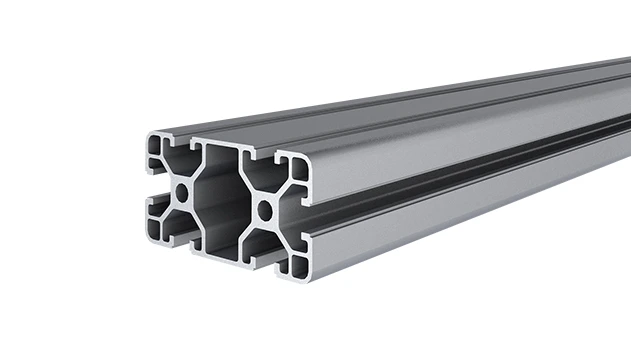
4080A is a 4.00x8.00 CM fractional 40 series square extrusion T-slot profile with two side open T-slots, each side with 4.00cm face, two side with 8.00cm face. The profile has align-a-grooves to assist in aligning connecting profiles.
The Hidden Enemy: Why Saltwater Corrosion Haunts Marine Equipment
Let's face it: life at sea is tough—for humans and for the equipment that keeps ships, offshore platforms, and marine facilities running. Among the many challenges, one enemy stands out as particularly relentless: saltwater corrosion. It's not just a cosmetic issue; it's a silent destroyer that eats away at metal, weakens structures, and turns reliable machinery into ticking time bombs.
Saltwater is a harsh cocktail of sodium chloride, minerals, and electrolytes that accelerates the electrochemical reactions responsible for corrosion. When metal components are exposed to this environment—whether through constant immersion, salt spray, or high humidity—they begin to degrade. For marine operators, this translates to frequent repairs, unexpected downtime, skyrocketing maintenance costs, and even safety risks. A corroded workbench might collapse under the weight of tools; a rusted material rack could spill cargo; a failing conveyor system could bring loading operations to a grinding halt.
For decades, the go-to solutions have been materials like stainless steel or heavy-duty carbon steel with protective coatings. But stainless steel is expensive and heavy, adding unnecessary weight to vessels where every pound counts. Carbon steel, even with coatings, still succumbs to rust over time, requiring frequent touch-ups. Regular aluminum, while lightweight, often lacks the corrosion resistance needed to stand up to years of saltwater exposure. So, what if there was a material that balanced strength, durability, corrosion resistance, and cost-effectiveness—all while being lightweight enough for marine applications?
Enter the 4080A EU Standard Aluminum Profile. This unassuming extrusion has been quietly revolutionizing marine equipment design, offering a level of saltwater corrosion resistance that's changing the game for shipyards, offshore facilities, and marine operators worldwide. In this article, we'll dive deep into what makes this aluminum extrusion profile so special, how it holds up against the harshest marine environments, and why it's quickly becoming the material of choice for everything from workbenches to material racks on the high seas.
What Is 4080A EU Standard Aluminum Profile, Anyway?
First things first: let's get to know the star of the show. The 4080A EU Standard Aluminum Profile is a specific type of aluminum extrusion profile designed and manufactured to meet strict European union standards for quality, performance, and safety. The "4080" refers to its cross-sectional dimensions—40mm in width and 80mm in height—while the "A" denotes its specific alloy and extrusion specifications. But numbers and letters only tell part of the story; it's the profile's composition, manufacturing process, and design that make it a standout.
At its core, the 4080A is made from an aluminum alloy rich in magnesium and silicon (typically 6063 or similar), elements that work together to enhance both strength and corrosion resistance. Unlike cast aluminum, which can have inconsistencies in structure, this profile is created through an extrusion process. Extrusion involves heating aluminum billets to a malleable state and forcing them through a die to create a uniform, continuous shape. This process not only ensures precise dimensions but also aligns the metal's grain structure, resulting in improved mechanical properties and a smooth, consistent surface.
What sets the EU standard apart? European standards for aluminum profiles (like those set by EN 755) are known for their rigorous testing and quality control. For marine applications, this matters—a lot. When you're relying on a material to withstand the corrosive power of saltwater, you can't afford shortcuts. The 4080A profile undergoes strict checks for alloy composition, dimensional accuracy, surface finish, and mechanical strength, ensuring that every piece performs as expected, no matter how harsh the environment.
But the 4080A isn't just a standalone product. It's part of a larger ecosystem of aluminum profile accessories—connectors, joints, end caps, and brackets—that are designed to work seamlessly with the profile. These accessories, often made from the same corrosion-resistant alloys and treated with matching surface finishes, ensure that the entire system (whether it's a workbench, a material rack, or a conveyor) holds up as a unified, durable unit. This compatibility is key in marine settings, where even a single corroded joint can compromise an entire structure.

The Science Behind the Resistance: How 4080A Fights Saltwater Corrosion
So, what makes the 4080A EU Standard Aluminum Profile so tough on saltwater corrosion? It's a combination of smart alloy design, advanced surface treatments, and the inherent properties of aluminum—all working together to create a material that doesn't just resist corrosion but actively fights it.
Let's start with the basics: aluminum is naturally corrosion-resistant. When exposed to oxygen, it forms a thin, invisible layer of aluminum oxide on its surface. This layer is self-healing—if scratched or damaged, it quickly reforms, preventing further oxidation. But in saltwater, this natural oxide layer can break down. Chloride ions in saltwater penetrate the layer, causing pitting corrosion, where small holes form and expand over time. That's where the 4080A's alloy composition steps in.
The 4080A's alloy (often 6063 or 6082) includes carefully balanced amounts of magnesium and silicon. Magnesium enhances the alloy's strength and ductility, while silicon improves its extrusion properties. Together, these elements also boost the stability of the oxide layer, making it more resistant to chloride attack. Additionally, some variants include trace amounts of copper or zinc, further enhancing corrosion resistance in marine environments.
But the real secret weapon is often the surface treatment. Most 4080A profiles undergo anodizing—a process that thickens and hardens the natural oxide layer. Anodizing involves submerging the aluminum in an electrolytic solution and passing an electric current through it, which causes the oxide layer to grow. The result is a surface that's not only thicker (up to 100 microns, compared to the natural 0.1 microns) but also porous, allowing it to absorb dyes or sealants. For marine use, anodized 4080A profiles are often sealed with a clear, corrosion-resistant coating, creating a barrier that chloride ions struggle to penetrate.
Another common treatment is powder coating. In this process, a dry powder (typically polyester or epoxy) is electrostatically applied to the profile and cured in an oven, forming a hard, durable finish. Powder coatings add an extra layer of protection against saltwater, UV rays, and physical damage. They also come in a range of colors, which can be useful for color-coding equipment or improving visibility in low-light marine environments.
What about those aluminum profile accessories we mentioned earlier? They're not left out of the corrosion-fighting equation. Connectors and joints are often made from the same 6063 alloy as the 4080A profile, ensuring they have matching corrosion resistance. End caps, which seal the ends of the profile to prevent water and debris from entering, are typically made from plastic or rubber that's resistant to saltwater degradation. Even the fasteners used to assemble the system—screws, bolts, nuts—are often made from stainless steel or coated with anti-corrosion treatments, ensuring that every component works together to keep corrosion at bay.
To put it simply: the 4080A doesn't just tolerate saltwater; it's engineered to thrive in it. Its alloy composition strengthens the natural oxide layer, surface treatments add extra barriers, and compatible accessories ensure no weak links in the chain. This combination makes it far more resistant to pitting, crevice corrosion, and general degradation than regular aluminum or even some grades of stainless steel.
From Workbenches to Material Racks: 4080A in Action
Now that we understand the "why" behind the 4080A's corrosion resistance, let's explore the "how"—how this aluminum extrusion profile is being used in real-world marine applications to solve problems and improve operations. From the deck of a cargo ship to the workshop of an offshore oil rig, the 4080A is proving its worth in a variety of roles.
Take workbenches, for example. On a ship or offshore platform, workbenches are where repairs happen, tools are stored, and precision tasks are carried out. They need to be sturdy, stable, and resistant to the constant exposure to salt spray and humidity. A traditional steel workbench might rust within months, its surface becoming pitted and unsafe. A 4080A aluminum workbench, on the other hand, stands strong. Its smooth, anodized surface is easy to clean (no rust to trap dirt), and its lightweight design makes it easy to reposition if needed. Add aluminum profile accessories like adjustable shelves, tool hooks, and cable management systems—all corrosion-resistant—and you've got a workbench that not only lasts but adapts to changing needs.
Then there are material racks. Marine facilities often need to store everything from spare parts to safety equipment, and these racks must withstand the weight of heavy items while fending off corrosion. The 4080A's strength-to-weight ratio makes it ideal here. A material rack built with 4080A profiles can support hundreds of pounds without adding unnecessary bulk to the vessel. Unlike steel racks, which can become top-heavy and prone to rust-related weakening, aluminum racks are lightweight and maintain their structural integrity over time. And with accessories like adjustable shelving brackets and corrosion-resistant end caps, these racks can be customized to fit everything from small tools to large machinery parts.
Conveyor systems are another area where 4080A shines. Loading and unloading cargo, moving supplies, or transporting equipment around a ship's deck—these tasks require conveyors that are reliable and low-maintenance. Saltwater corrosion can jam rollers, rust hinges, and seize motors, but a conveyor built with 4080A profiles and aluminum accessories (like roller track guides and corrosion-resistant casters) avoids these issues. The smooth, anodized surface of the profiles reduces friction, keeping the conveyor moving efficiently, while the lightweight design minimizes strain on motors and supports. Even in wet, salty conditions, the system stays operational, reducing downtime and keeping operations on schedule.
Turnover trolleys are yet another application. These wheeled carts are essential for moving materials around tight spaces on ships or offshore platforms. A trolley with a corroded frame or seized wheels is more of a liability than a tool. 4080A aluminum trolleys, however, are built to last. The profiles form a lightweight yet strong frame, while corrosion-resistant casters (often made with stainless steel bearings and rubber wheels resistant to saltwater) ensure smooth movement. Even after years of exposure to salt spray and rain, these trolleys remain easy to push, load, and store—no rusted wheels, no bent frames, no unexpected breakdowns.
What ties all these applications together? The 4080A's versatility. Because it's an extrusion profile, it can be cut to custom lengths, drilled, and assembled with a variety of accessories to fit almost any marine need. Whether you're building a small workbench for a fishing boat or a large material rack for an offshore wind farm, the 4080A provides a flexible, durable foundation that stands up to saltwater's worst.
Comparing the Contenders: How 4080A Stacks Up Against Other Materials
To truly appreciate the value of the 4080A EU Standard Aluminum Profile, it helps to see how it compares to other common materials used in marine equipment. Let's break down the key factors: corrosion resistance, weight, cost, and practicality. The table below pits 4080A against three popular alternatives: stainless steel 304, regular aluminum 6061, and carbon steel with a protective coating.
| Material | Corrosion Resistance in Saltwater | Weight (kg/m for 40x80mm profile) | Cost (Relative to 4080A) | Installation & Flexibility | Expected Lifespan in Marine Environments |
|---|---|---|---|---|---|
| 4080A EU Standard Aluminum Profile | Excellent (anodized/powder coated: resists pitting, chloride attack) | 2.5–3.0 | 1.0x (Baseline) | High: Lightweight, easy to cut/drill; compatible with aluminum profile accessories | 15–20 years (with minimal maintenance) |
| Stainless Steel 304 | Very Good (resists corrosion but prone to pitting in high chloride levels) | 8.0–9.0 | 2.5–3.0x | Low: Heavy, requires specialized tools; limited accessory compatibility | 20–25 years (higher maintenance cost for polishing/cleaning) |
| Regular Aluminum 6061 (Uncoated) | Poor to Fair (natural oxide layer breaks down in saltwater; pitting occurs within 2–3 years) | 2.3–2.8 | 0.8–0.9x | High: Lightweight, easy to work with | 3–5 years (requires frequent coating touch-ups) |
| Carbon Steel (with Epoxy Coating) | Poor (coating chips; rust forms quickly in saltwater) | 7.5–8.5 | 0.5–0.7x | Medium: Heavy but widely available; limited flexibility | 2–4 years (constant coating repairs needed) |
As the table shows, 4080A strikes a rare balance that's hard to beat. Stainless steel 304 offers excellent corrosion resistance but at a steep cost—both in terms of upfront price and weight. For marine vessels, where weight directly impacts fuel efficiency, the extra 5–6 kg per meter of stainless steel adds up quickly. Regular aluminum 6061 is cheaper and lightweight but fails to stand up to saltwater over time, leading to frequent replacements. Carbon steel is the cheapest upfront but becomes a money pit in marine environments, requiring constant coating repairs and replacements.
The 4080A, on the other hand, offers excellent corrosion resistance (nearly on par with stainless steel) at a fraction of the weight and cost. Its compatibility with aluminum profile accessories means it's easy to install, customize, and maintain—no specialized tools or expensive contractors needed. And with a lifespan of 15–20 years (compared to just 3–5 for regular aluminum or carbon steel), it delivers long-term value that's hard to match.
Here's the bottom line: marine equipment needs to be reliable, durable, and cost-effective. The 4080A EU Standard Aluminum Profile checks all three boxes, making it the smart choice for anyone looking to build equipment that stands the test of time—even in the harshest saltwater environments.
Real-World Results: A Shipyard's Journey with 4080A Profiles
Let's step into the shoes of a mid-sized shipyard in Northern Europe. For years, they'd relied on carbon steel workbenches, stainless steel material racks, and regular aluminum trolleys to keep their operations running. But saltwater corrosion was a constant headache. The carbon steel workbenches rusted within a year, requiring sandblasting and repainting every six months. The stainless steel racks were durable but so heavy that moving them around the yard required forklifts, wasting time and fuel. The regular aluminum trolleys? Their wheels seized up after a few months, and their frames developed unsightly pits, making them unsafe to use with heavy tools.
By 2020, the shipyard's maintenance costs were spiraling. They were spending over €50,000 annually on replacing corroded equipment, and downtime due to broken workbenches or seized conveyors was costing them even more in lost productivity. The yard manager, desperate for a solution, began researching alternatives. That's when they stumbled on the 4080A EU Standard Aluminum Profile.
Skeptical at first—after all, they'd tried "corrosion-resistant" materials before—the manager ordered a small batch of 4080A profiles and aluminum profile accessories to build a test workbench and a material rack. The results were immediate. The workbench, assembled with anodized 4080A profiles and corrosion-resistant joints, was lightweight enough for two workers to move but sturdy enough to support heavy welding equipment. The material rack, with adjustable shelves and powder-coated finish, held up to salt spray during outdoor storage with no signs of pitting or discoloration.
Encouraged, the shipyard expanded their use of 4080A. Over the next year, they replaced all their carbon steel workbenches with 4080A models, swapped out stainless steel racks for lighter aluminum versions, and upgraded their trolley fleet to 4080A frames with corrosion-resistant casters. The impact was dramatic:
- Maintenance costs dropped by 70%: No more sandblasting, repainting, or replacing rusted parts. The 4080A profiles required only occasional cleaning with fresh water to remove salt buildup.
- Downtime decreased by 85%: Workbenches, racks, and trolleys no longer broke down unexpectedly. The shipyard's operations ran smoother, with fewer delays.
- Worker satisfaction improved: The lightweight aluminum equipment was easier to move, reducing strain and fatigue. The clean, rust-free workbenches made tasks like welding and assembly more efficient.
- Fuel costs fell: Lighter material racks meant fewer forklift trips, cutting fuel consumption by 15% in the yard.
Three years later, the shipyard's 4080A equipment still looks and performs like new. The anodized surfaces have maintained their luster, the joints are still tight, and the trolleys roll as smoothly as the day they were assembled. The yard manager estimates that the initial investment in 4080A profiles paid for itself within 18 months—and they're now standardizing on the material for all new equipment.
This isn't an isolated case. From small fishing boats to large offshore platforms, marine operators worldwide are discovering that the 4080A EU Standard Aluminum Profile isn't just a material—it's a long-term investment in reliability, efficiency, and peace of mind.
The Future of Marine Equipment: Why 4080A Is Here to Stay
As marine industries face increasing pressure to reduce costs, improve safety, and minimize environmental impact, the demand for durable, sustainable materials is higher than ever. The 4080A EU Standard Aluminum Profile checks all these boxes—and then some. Its corrosion resistance reduces the need for frequent replacements, cutting down on waste and resource consumption. Its lightweight design lowers fuel usage for vessels carrying equipment made with the profile. And its recyclability (aluminum can be recycled infinitely without losing quality) aligns with the growing focus on circular economies in marine operations.
Looking ahead, we can expect to see even more innovation around 4080A and aluminum extrusion profiles. Manufacturers are developing new surface treatments that enhance corrosion resistance further, such as ceramic coatings or nanotechnology-based sealants. New aluminum profile accessories, like self-locking joints or modular connectors, are making installation even easier, allowing marine operators to build custom equipment on-site with minimal tools. And as EU standards continue to evolve, the 4080A will only become more refined, ensuring it stays at the forefront of marine material technology.
For marine operators still on the fence, consider this: saltwater corrosion isn't going away. The question is, will you keep fighting it with band-aids (repairs, coatings, replacements), or will you invest in a solution that stops it in its tracks? The 4080A EU Standard Aluminum Profile isn't just a material—it's a way to take control of your equipment's lifespan, reduce costs, and focus on what really matters: keeping your operations running safely and efficiently, no matter how rough the seas get.
In the end, the choice is clear. When it comes to saltwater corrosion resistance, versatility, and value, the 4080A EU Standard Aluminum Profile isn't just a contender—it's the champion.