- Company Articles
- Products and Technology
- Product knowledge
- 4080A EU Standard Aluminum Profile in Medical Device Workstations: Design & Applications

4080A EU Standard Aluminum Profile in Medical Device Workstations: Design & Applications
Related Product
4080A EU Standard Aluminum Profile
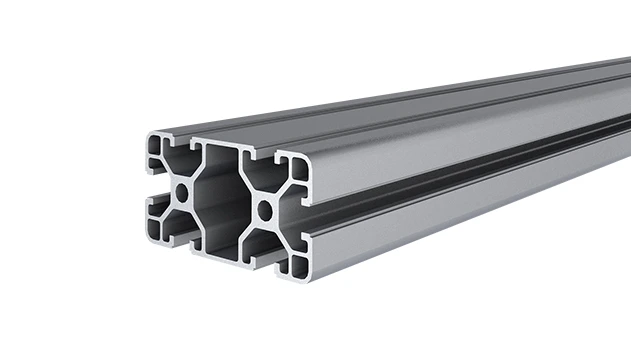
4080A is a 4.00x8.00 CM fractional 40 series square extrusion T-slot profile with two side open T-slots, each side with 4.00cm face, two side with 8.00cm face. The profile has align-a-grooves to assist in aligning connecting profiles.
Walk into any medical device manufacturing facility, and you'll quickly notice the unsung heroes of the operation: the workstations. These aren't just tables or benches—they're the command centers where precision meets purpose, where tiny sensors, life-saving implants, and intricate diagnostic tools take shape. In an industry where a fraction of a millimeter can mean the difference between success and failure, the materials that build these workstations matter just as much as the devices themselves. Today, we're diving into one material that's quietly revolutionizing how medical workstations are designed and built: the 4080A EU Standard Aluminum Profile. Let's explore why this unassuming piece of metal has become a cornerstone of modern medical manufacturing, and how it's shaping the future of device production.
The Backbone of Medical Workstations: Why Material Choice Matters
Medical device manufacturing is a world of extremes. On one hand, it demands uncompromising precision —components like pacemaker leads or surgical robot arms must meet tolerances measured in micrometers. On the other hand, it requires relentless adaptability : as technology evolves, workstations need to shift from assembling wearables one month to diagnostic chips the next. And above all, there's hygiene —surfaces must withstand daily disinfection with harsh chemicals without corroding, chipping, or harboring bacteria.
For decades, manufacturers leaned on materials like steel (strong but heavy, prone to rust) or wood (cheap but porous, impossible to sanitize properly). Plastic? Too flimsy for heavy equipment. Then came aluminum extrusion profiles—lightweight, strong, and infinitely customizable. But not all aluminum profiles are created equal. Enter the 4080A EU Standard Aluminum Profile: a specific type of aluminum extrusion profile engineered to meet the strictest European standards, making it a game-changer for medical device workstations.
What Exactly Is 4080A EU Standard Aluminum Profile?
Let's break it down. The "4080A" refers to the profile's dimensions: 40mm in width and 80mm in height, with "A" indicating a specific groove design and wall thickness optimized for structural stability. The "EU Standard" part is crucial—it means this profile meets EN (European Norm) specifications for material purity, mechanical strength, and surface finish. For medical applications, that's non-negotiable. EN standards ensure the aluminum is free of harmful impurities, resists corrosion, and can withstand the rigors of daily use in regulated environments.
But what makes it an "extrusion profile"? Aluminum extrusion is a manufacturing process where heated aluminum billets are pushed through a die, shaping them into long, uniform profiles with complex cross-sections. Think of it like squeezing toothpaste through a tube—only with molten metal and industrial-grade precision. This process lets engineers design profiles with built-in features: T-slots for attaching accessories, rounded edges for safety, and hollow cores to reduce weight without sacrificing strength. For 4080A, those T-slots are the secret sauce—they turn a simple metal bar into a modular building block.
Key Properties That Make 4080A Ideal for Medical Settings
- Lightweight yet strong: Aluminum has a strength-to-weight ratio that outperforms steel. A 4080A frame can support heavy equipment (like microscopes or testing machinery) without requiring reinforced floors or bulky supports. This makes workstations easier to move and reconfigure—critical in facilities where production lines shift constantly.
- Corrosion-resistant: Aluminum naturally forms a thin oxide layer that protects it from rust and degradation. In medical settings, where workstations are wiped down with disinfectants (think bleach, alcohol, or hydrogen peroxide) multiple times a day, this resistance is a lifesaver. No more flaking paint or pitted surfaces harboring bacteria.
- Non-porous and easy to sanitize: Unlike wood or even some plastics, aluminum extrusion profiles have smooth, non-porous surfaces. There are no cracks or crevices for germs to hide in, making them compliant with strict hygiene standards like ISO 14644 (cleanroom classification) and FDA guidelines for medical device manufacturing.
- Customizable with aluminum profile accessories: The T-slots running along the profile's length are designed to accept a wide range of aluminum profile accessories—brackets, connectors, end caps, shelves, and even casters. This modularity means a single 4080A frame can be transformed into an assembly station, a testing bench, or a packaging unit with just a few tools and the right accessories.

Designing Medical Workstations: How 4080A Profile Delivers on Key Needs
Medical device workstations aren't one-size-fits-all. An assembly line for insulin pumps needs different features than a testing station for MRI coils. 4080A's flexibility lets designers tailor workstations to specific tasks, all while adhering to lean system principles—minimizing waste, maximizing efficiency, and adapting to change.
1. Ergonomics: Putting Workers First
Medical device assembly is meticulous work, often requiring workers to stand or sit for hours, manipulating tiny parts. Poor ergonomics leads to fatigue, errors, and even repetitive strain injuries. 4080A profiles solve this with adjustability. Using aluminum profile accessories like height-adjustable legs (fitted with anti-slip leveling feet) and tiltable work surfaces, designers can create workstations that adapt to each operator's height and posture. T-slots make it easy to add monitor arms, tool holders, or footrests—all positioned exactly where the worker needs them.
Take, for example, a workbench used to assemble surgical stents. The operator needs to lean in close, use precision tools, and access components from multiple angles. A 4080A frame can support a height-adjustable tabletop (raised or lowered via a hand crank or electric motor), a overhead light bar (attached via T-slot brackets), and a side shelf for tools—all without welding or drilling. If a new operator with a different height takes over, the workstation can be reconfigured in minutes.
2. Modularity: Adapting to Changing Needs
In medical manufacturing, product lines change. A facility might produce 10,000 glucose monitors one quarter, then switch to ventilator components the next. Traditional workstations—welded steel frames or fixed wooden benches—can't keep up. They're permanent, expensive to replace, and generate waste when production shifts. 4080A profiles, paired with aluminum profile accessories, are modular by design. Need to add a shelf? Slide a bracket into the T-slot and tighten a bolt. Want to extend the workstation length? Connect two profiles with a corner joint. No welding, no cutting, no downtime.
This modularity aligns perfectly with lean system principles, which focus on eliminating waste (like unused space or inflexible equipment) and optimizing workflow. For instance, a manufacturer might start with a basic 4080A workbench, then add a flow rack (using roller track accessories) to feed components to the operator, reducing the time spent reaching for parts. Later, if they need to integrate a conveyor for finished products, they can attach it directly to the workstation frame using T-slot connectors. It's manufacturing on demand, without the waste.
3. Compliance: Meeting the Strictest Standards
Medical device manufacturers don't just answer to their customers—they answer to regulatory bodies like the FDA (U.S.) and EMA (EU). ISO 13485, the international standard for medical device quality management, mandates that all production equipment (including workstations) meets safety, hygiene, and performance criteria. 4080A profiles check every box.
- Material safety: EU-standard aluminum is biocompatible, meaning it won't leach harmful substances into the environment or contaminate products. This is critical when working with devices that will come into contact with patients.
- Cleanability: The smooth, non-porous surface of 4080A profiles can be disinfected with hospital-grade cleaners, including alcohol, bleach, and hydrogen peroxide. No cracks, no seams, no place for bacteria to hide—essential for maintaining ISO 14644 cleanroom classifications.
- Durability: EN standards ensure the profile can withstand years of heavy use, chemical exposure, and temperature fluctuations—reducing the need for frequent replacements and ensuring consistent performance during audits.
Comparing 4080A Aluminum Profile to Traditional Workstation Materials
To truly appreciate 4080A's value, let's see how it stacks up against common alternatives. The table below compares key factors for medical device workstations:
| Factor | 4080A Aluminum Profile | Steel | Wood | Plastic |
|---|---|---|---|---|
| Weight | Lightweight (easy to move/reconfigure) | Heavy (requires structural support) | Moderate (varies by type) | Light (but low load capacity) |
| Corrosion Resistance | Excellent (natural oxide layer) | Poor (prone to rust without coating) | Very poor (absorbs moisture, warps) | Good (but can degrade with chemicals) |
| Sanitization | Easy (smooth, non-porous surface) | Difficult (coating can chip, harboring bacteria) | Impossible (porous, absorbs liquids) | Moderate (scratches create hiding spots) |
| Customization | High (T-slots + aluminum profile accessories) | Low (requires welding/drilling) | Low (permanent, hard to modify) | Limited (molded shapes, no T-slots) |
| Long-Term Cost | Cost-effective (reusable, low maintenance) | High (coating replacement, heavy shipping) | High (frequent replacement due to wear) | High (low durability, frequent replacement) |
Real-World Applications: 4080A Workstations in Action
Enough theory—let's look at how 4080A profiles are transforming medical device production floors. Here are three common applications where this material shines:
1. Assembly Workstations: Building the Future of Healthcare
Imagine a workstation where technicians assemble diagnostic test kits—tiny vials, labels, and sensors that need to be placed with pinpoint accuracy. The 4080A frame supports a large, flat workbench top (often made of stainless steel or antimicrobial laminate), with T-slots along the edges for attaching tool holders, magnifying lamps, and small parts bins. Aluminum profile accessories like adjustable shelves hold bulk components, while a overhead rail system (suspended from the workstation frame) keeps frequently used tools within arm's reach.
One medical device manufacturer in Germany recently switched all their assembly workstations to 4080A profiles. They reported a 20% reduction in setup time for new product lines, as workers could reconfigure the stations themselves using basic tools. The smooth surfaces also cut down on cleaning time—what used to take 30 minutes per station now takes 10, freeing up staff for more critical tasks.
2. Testing Stations: Precision Meets Stability
Testing medical devices requires stability—even the smallest vibration can throw off readings. 4080A profiles, with their rigid yet lightweight frames, provide the perfect foundation. For example, a workstation used to test pacemaker batteries might feature a 4080A base with vibration-dampening feet (aluminum profile accessories), a reinforced shelf for sensitive testing equipment, and cable management channels (built into the profile's T-slots) to keep wires organized and out of the way.
A Swiss medical tech firm specializing in MRI components uses 4080A workstations for their testing labs. The profiles' non-magnetic properties are a bonus—aluminum doesn't interfere with the magnetic fields used in MRI testing, ensuring accurate results. Plus, the modular design lets them add shielding panels or specialized clamps as needed, without rebuilding the entire station.
3. Packaging Workstations: Streamlining the Final Step
Once a device is assembled and tested, it needs to be packaged safely for shipping. Packaging workstations often integrate conveyors or roller tracks to move products along the line. 4080A profiles excel here, too—their T-slots make it easy to mount roller track systems (using specialized aluminum profile accessories like placon mounts), creating a smooth flow from workstation to packaging machine.
A U.K.-based manufacturer of surgical instruments uses 4080A workstations with integrated roller tracks for their packaging line. The ability to adjust the height of the roller track (by moving brackets in the T-slots) means they can align it perfectly with different packaging machines, reducing jams and improving throughput. And when they introduced a new, larger instrument case, they simply extended the workstation with additional 4080A profiles—no need to buy a whole new system.
The Future of Medical Workstations: Where 4080A Profile Is Headed
As medical device technology advances, so too will the demand for smarter, more adaptable workstations. 4080A EU Standard Aluminum Profile is poised to lead this evolution. Here's what we can expect:
- Smarter accessories: Manufacturers are developing aluminum profile accessories with built-in technology—sensors that monitor workstation usage, RFID tags for inventory tracking, and even wireless charging pads integrated into T-slots. Imagine a workbench that alerts managers when tools are missing or tracks how often a station is reconfigured—all powered by the 4080A frame.
- Sustainability: Aluminum is 100% recyclable, and extrusion requires less energy than steel production. As healthcare companies push for greener operations, 4080A profiles will become even more attractive—workstations can be disassembled, recycled, or repurposed at the end of their life, reducing waste.
- Custom extrusion designs: As 3D modeling and die manufacturing become more affordable, we'll see 4080A-like profiles tailored to specific medical applications—think profiles with built-in ESD (electrostatic discharge) protection for electronics assembly or antimicrobial coatings for implantable device workstations.
Final Thoughts: Why 4080A Profile Is More Than Just Metal
At the end of the day, 4080A EU Standard Aluminum Profile isn't just a material—it's a tool for innovation. It lets medical device manufacturers build workstations that are safe, efficient, and adaptable, all while meeting the strictest regulatory standards. It's the quiet partner in the production of life-saving devices, enabling precision where it matters most.
Whether you're assembling a pacemaker, testing a diagnostic tool, or packaging surgical instruments, the right workstation can make all the difference. And with 4080A aluminum extrusion profiles and aluminum profile accessories, that workstation isn't just a piece of equipment—it's a promise of quality, reliability, and progress. In the world of medical manufacturing, that's invaluable.