- Company Articles
- Products and Technology
- Product knowledge
- 4080A EU Standard Aluminum Profile in Packaging Machinery: Low Maintenance Design

4080A EU Standard Aluminum Profile in Packaging Machinery: Low Maintenance Design
Related Product
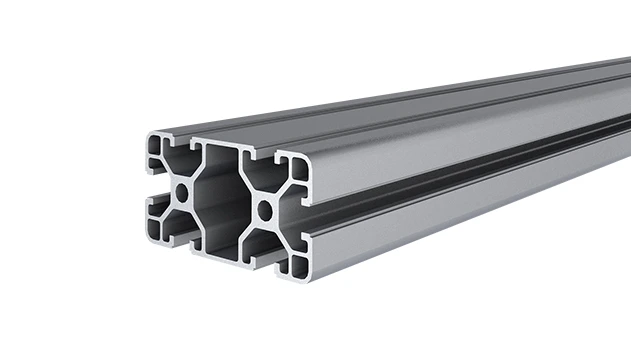
4080A EU Standard Aluminum Profile
4080A is a 4.00x8.00 CM fractional 40 series square extrusion T-slot profile with two side open T-slots, each side with 4.00cm face, two side with 8.00cm face. The profile has align-a-grooves to assist in aligning connecting profiles.
In the fast-paced world of packaging machinery, every second counts. Production lines hum with the rhythm of conveyor belts, robotic arms lift and sort packages, and workers rush to keep up with tight deadlines. But what happens when a vital component breaks down? A seized roller track, a rusted joint, or a warped frame can bring the entire operation to a grinding halt—costing manufacturers thousands in lost productivity and repair fees. For plant managers and maintenance teams, the quest for reliable, low-maintenance equipment isn't just a preference; it's a necessity. That's where the 4080A EU standard aluminum profile comes into play. This unassuming yet robust material has quietly revolutionized packaging machinery design, offering a blend of durability, flexibility, and ease of upkeep that traditional materials like steel or plastic simply can't match. Let's dive into why this aluminum extrusion profile has become a cornerstone of modern packaging systems, and how its low-maintenance design is changing the game for factories worldwide.
What is 4080A EU Standard Aluminum Profile?
Before we explore its role in packaging machinery, let's get to know the star of the show: the 4080A EU standard aluminum profile. At its core, this is a type of aluminum extrusion profile—a product of the extrusion process, where heated aluminum alloy is forced through a die to create a specific cross-sectional shape. The "4080A" designation refers to its dimensions: 40mm in width and 80mm in height, with "A" indicating a specific groove configuration (a detail that matters more to engineers than end-users, but trust us—it's critical for compatibility with accessories). The "EU standard" tag ensures it meets strict European quality benchmarks for material purity, structural integrity, and dimensional consistency—no surprise, given Europe's reputation for precision manufacturing.
What sets this profile apart from generic aluminum extrusions? For starters, its T-slot design. Running along its length are longitudinal slots (the "T-slots") that act as built-in connection points. These slots allow for quick, tool-free attachment of aluminum profile accessories like brackets, connectors, and panels—no welding, drilling, or heavy machining required. Imagine building with a set of high-tech Legos: you can assemble, disassemble, and reconfigure components in minutes, not hours. This modularity isn't just convenient for initial setup; it's a lifesaver when maintenance or upgrades are needed.
But the 4080A isn't just about convenience. Its aluminum alloy composition—typically 6063-T5, a common grade for structural applications—strikes a perfect balance between strength and lightweight. It's strong enough to support heavy loads (think pallet-sized packages weighing 50kg or more) but light enough that even a single worker can maneuver sections during installation or repairs. And unlike steel, aluminum naturally resists corrosion, thanks to a thin oxide layer that forms on its surface. This layer acts as a protective shield against moisture, chemicals, and dust—common foes in packaging environments where spills, humidity, and airborne particles are part of daily life.
Why Packaging Machinery Needs Low-Maintenance Materials
To understand the value of the 4080A's low-maintenance design, let's step into the shoes of Maria, a maintenance supervisor at a mid-sized packaging plant in Germany. Her team is responsible for keeping 12 production lines running 16 hours a day, five days a week. "Our biggest headache? Steel conveyor frames," she says, shaking her head. "They rust within months, even with regular painting. The bolts seize up, and when we need to replace a roller track, we have to grind off the old welds and re-weld the new part. That takes hours—hours where the line is down, and orders pile up."
Maria's frustration is universal. Packaging facilities are harsh environments for machinery. Think about it: Cardboard dust clogs moving parts. Spilled liquids (from cleaning solutions to product residues) corrode metal. Constant vibration from conveyor belts loosens fasteners. And with production targets tightening, downtime isn't just inconvenient—it's costly. A 2023 study by the Packaging Machinery Manufacturers Institute (PMMI) found that unplanned downtime costs the average packaging plant $22,000 per hour. For plants running multiple shifts, that number can balloon into the millions annually.
Traditional materials exacerbate these issues. Steel, while strong, is prone to rust and requires frequent painting or coating to stay protected. Plastic profiles, though lightweight, warp under heat and can't handle heavy loads. Even lower-grade aluminum extrusions often lack the precision T-slot design, forcing teams to drill holes or use adhesives—both of which weaken the material over time and make repairs a nightmare. What packaging machinery needs is a material that can withstand the environment, support heavy use, and minimize the need for constant tinkering. Enter the 4080A EU standard aluminum profile.

Low Maintenance Design Features of 4080A: A Closer Look
The 4080A's low-maintenance reputation isn't just marketing hype—it's built into its DNA. Let's break down the key features that make it a maintenance manager's dream:
1. Corrosion Resistance: No More Rust, No More Paint
Aluminum's natural oxide layer is a game-changer. Unlike steel, which requires regular painting, galvanizing, or powder-coating to fight rust, the 4080A needs no such treatments. Even in humid environments or areas with occasional liquid exposure (like near cleaning stations), the oxide layer self-repairs if scratched. "We installed 4080A frames on our beverage packaging line three years ago," says Thomas, a plant engineer in the Netherlands. "That line gets hosed down daily to clean up spilled soda. The steel frames we had before would start rusting within six months. These aluminum profiles? They still look brand new. No peeling paint, no flaking rust—just wipe them down with a cloth, and they're good to go."
2. Smooth Surfaces: Dust and Debris Don't Stand a Chance
Packaging plants are dusty places. Cardboard fibers, plastic particles, and product dust float through the air, settling on every surface. On traditional steel frames with rough welds or bolt heads, this dust accumulates in crevices, attracting moisture and creating a breeding ground for corrosion. The 4080A, however, has a smooth, extrusion-molded surface with no sharp edges or weld seams. Dust slides off easily, and a quick wipe with a damp cloth is enough to keep it clean. "We used to spend two hours every week vacuuming and brushing dust off our steel frames," Maria recalls. "With the 4080A profiles, it takes 20 minutes. The team can focus on more important tasks, like checking bearings or calibrating sensors."
3. Tool-Free Repairs with Aluminum Profile Accessories
Here's where the T-slot design truly shines: when a component fails, you don't need a welder or a drill to fix it. Aluminum profile accessories—like 90° aluminum profile connectors, end caps, or roller track placon mounts—snap into the T-slots using simple fasteners (think hex keys or hand knobs). Let's say a roller track on a conveyor line wears out. With a steel frame, you'd need to unbolt the entire section, cut the old track free, and weld a new one in place. With 4080A, you loosen the T-slot fasteners holding the roller track, slide out the old track, slide in the new one, and retighten the fasteners. Total time? Under 30 minutes, compared to 2-3 hours for steel. "Last month, a roller seized on Line 5," Maria says. "Two years ago, that would've meant a 4-hour shutdown. With the aluminum profiles? We had it fixed during the lunch break. The line was back up before the second shift started."
4. Durability That Stands Up to Vibration and Wear
Packaging machinery vibrates—constantly. Over time, this vibration can loosen bolts, crack welds, and fatigue materials. The 4080A's aluminum alloy is inherently fatigue-resistant, meaning it can withstand repeated stress without weakening. Its T-slot connections also act as shock absorbers: the fasteners flex slightly under vibration, reducing the risk of bolts coming loose. "We used to do daily bolt checks on our steel frames—tightening dozens of loose bolts every shift," Thomas says. "With the 4080A, we check them once a week, and maybe tighten one or two. It's a huge time-saver."
Real-World Applications: 4080A in Action
Enough theory—let's look at how the 4080A is transforming actual packaging operations. Take the example of a cosmetics packaging plant in France that switched to 4080A profiles for its bottle-filling line in 2022. The line handles over 50,000 bottles daily, moving them along a roller track system from filling to capping to labeling. Previously, the line used steel frames and plastic roller tracks, which required monthly replacements due to wear and corrosion.
After installing 4080A frames and aluminum roller tracks, the plant saw immediate results. "The first thing we noticed was the noise reduction," says Pierre, the plant manager. "Steel on steel is loud, but aluminum and plastic rollers are much quieter. Our workers no longer need ear protection near that line." More importantly, maintenance costs plummeted. The roller tracks, which once needed monthly replacement, now last 18-24 months. And when a track does need replacing? "A technician can swap it out in 20 minutes," Pierre adds. "We haven't had an unplanned shutdown on that line in over a year."
Another example: a food packaging facility in Italy that uses 4080A profiles to build custom workbenches for its quality control stations. These workbenches need to be sturdy enough to hold heavy inspection equipment, easy to clean (to meet food safety standards), and flexible enough to reconfigure as product lines change. "With steel workbenches, cleaning was a nightmare—food particles got stuck in the welds, and we had to use harsh chemicals to sanitize," says Lucia, the QA supervisor. "The 4080A workbenches have smooth surfaces and T-slot accessories, so we can attach tool holders, bins, and even small conveyor sections right where we need them. And since aluminum is non-porous, a quick wipe with a sanitizing cloth is all it takes. We've passed every health inspection with flying colors since switching."
Comparing Maintenance Requirements: 4080A vs. Traditional Steel
Still not convinced? Let's put the 4080A head-to-head with traditional steel profiles in a maintenance showdown. The table below compares key maintenance metrics for a typical 10-meter conveyor frame over a 5-year lifespan:
| Maintenance Task | 4080A Aluminum Profile | Traditional Steel Profile |
|---|---|---|
| Corrosion Protection | No treatment needed (oxide layer self-repairs) | Annual painting/powder coating ($500-$800 per frame) |
| Roller Track Replacement | 30 minutes per replacement; 2 replacements in 5 years | 3 hours per replacement; 8 replacements in 5 years |
| Bolt Tightening | Weekly checks; ~5 hours/year | Daily checks; ~50 hours/year |
| Cleaning | Monthly wipe-down; ~2 hours/year | Weekly deep cleaning (scrubbing rust, debris); ~24 hours/year |
| Total 5-Year Maintenance Cost* | ~€1,200 (labor + parts) | ~€8,500 (labor + parts + corrosion treatments) |
*Estimates based on EU labor costs (~€45/hour) and average part prices.
The numbers speak for themselves: the 4080A reduces maintenance costs by over 85% compared to steel. For a plant with 20 conveyor frames, that's a savings of over €146,000 over five years—enough to fund new equipment, training programs, or employee bonuses. And that doesn't even account for the value of reduced downtime, which, as we saw earlier, can cost tens of thousands per hour.
Beyond Maintenance: Sustainability and Scalability
The 4080A's benefits extend beyond low maintenance. In an era where sustainability is a top priority for manufacturers, aluminum's recyclability is a major plus. Unlike steel, which loses quality when recycled, aluminum can be melted down and reused indefinitely without degradation. "We're aiming for carbon neutrality by 2030," says Pierre, the French cosmetics plant manager. "Using recycled aluminum profiles helps us reduce our footprint. And when we reconfigure a production line, we can disassemble the old 4080A frames and reuse the profiles elsewhere—no waste, no new materials needed."
Scalability is another advantage. Packaging needs change: new products require new conveyor layouts, seasonal demand spikes call for expanded lines, and automation upgrades demand flexible workspaces. The 4080A's modular design makes scaling a breeze. Need to add a new workbench? Just connect new profiles to the existing T-slots. Want to extend a roller track? Slide in additional sections and secure with aluminum profile accessories. "Last Christmas, we needed to double our gift box packaging capacity," Maria says. "With steel, that would've meant building a whole new line from scratch. With 4080A, we reconfigured three existing lines in a weekend. The profiles and accessories just click together—it's like building with a giant Erector set."
Choosing the Right 4080A Accessories for Maximum Efficiency
To get the most out of your 4080A investment, pairing it with the right aluminum profile accessories is key. Here are a few must-haves for packaging applications:
Roller Tracks: Essential for moving packages along production lines. Look for aluminum roller tracks with plastic or steel wheels—plastic wheels are quieter and gentler on delicate products, while steel wheels handle heavier loads. The 40 steel roller track (a close cousin of the 4080A system) is a popular choice, with options for ESD (electrostatic discharge) wheels to protect sensitive electronics packaging.
Connectors: 90° aluminum profile connectors, 45° connectors, and three-way connectors let you build frames, workbenches, and racks in any configuration. Internal rotary aluminum joints are ideal for sections that need to pivot (like adjustable workbench heights).
Workbench Tops: Aluminum honeycomb panels or wooden tops with aluminum edges attach easily to 4080A frames, creating sturdy work surfaces. For food packaging, opt for stainless steel tops for extra durability and hygiene.
Casters: Adding casters to 4080A frames turns fixed workbenches into mobile carts—perfect for moving tools or materials between stations. Look for swivel casters with brakes for stability when in use.
"We work with a local 4080A supplier who helps us choose the right accessories," Thomas says. "They even sent a technician to our plant to design a custom roller track system that fits our unique bottle sizes. It's not just about selling parts—it's about solving problems."
Conclusion: The 4080A—More Than a Profile, a Productivity Partner
In the high-stakes world of packaging machinery, the 4080A EU standard aluminum profile isn't just a material—it's a productivity partner. Its low-maintenance design slashes downtime, reduces labor costs, and frees up maintenance teams to focus on proactive upgrades instead of constant repairs. Its modularity lets plants adapt to changing needs quickly, while its durability ensures it stands the test of time in harsh environments. And with sustainability and scalability built in, it's an investment that pays dividends for years to come.
For Maria, Thomas, Pierre, and maintenance teams worldwide, the message is clear: when it comes to packaging machinery, the 4080A isn't just a choice—it's the smart choice. "I used to dread Monday mornings, wondering what would break next," Maria says with a smile. "Now? I look forward to it. The 4080A profiles just work. They let us focus on making products, not fixing machines. And in this industry, that's the difference between falling behind and leading the pack."
So, if you're tired of fighting rust, downtime, and endless maintenance, maybe it's time to give the 4080A a closer look. Your production line (and your bottom line) will thank you.