- Company Articles
- Products and Technology
- Application Cases
- 4080A EU Standard Aluminum Profile in Renewable Energy Systems: Solar Panel Frames

4080A EU Standard Aluminum Profile in Renewable Energy Systems: Solar Panel Frames
Related Product
4080A EU Standard Aluminum Profile
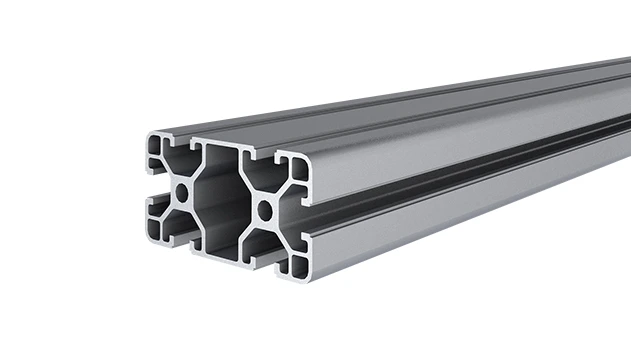
4080A is a 4.00x8.00 CM fractional 40 series square extrusion T-slot profile with two side open T-slots, each side with 4.00cm face, two side with 8.00cm face. The profile has align-a-grooves to assist in aligning connecting profiles.
When we talk about renewable energy, the conversation often centers on sleek solar panels, wind turbines spinning gracefully, or cutting-edge battery storage. But behind every sun-soaked solar array, there's an unsung hero working tirelessly to keep those panels secure, aligned, and efficient: the frame. And in the world of solar frame design, one material has risen to become indispensable: aluminum. Specifically, the 4080A EU Standard Aluminum Profile has emerged as a game-changer, blending strength, versatility, and sustainability to meet the demands of modern renewable energy systems. Let's dive into why this unassuming piece of metal is quietly powering the future of solar energy.
1. The Rise of Renewable Energy and Solar Power's Critical Role
Over the past decade, renewable energy has shifted from a "nice-to-have" to a global imperative. With climate change accelerating and fossil fuel dependencies proving increasingly unsustainable, countries worldwide are racing to transition to cleaner energy sources. Solar power, in particular, has taken center stage. According to the International Energy Agency (IEA), solar photovoltaic (PV) capacity is set to triple by 2030, becoming the largest source of electricity in many regions. This growth isn't just about the panels themselves, though—every component of a solar system, from wiring to mounting structures, plays a role in its success. And at the heart of that system lies the frame, a component so essential that even the most advanced solar cells would fail without it.
Solar panels are designed to withstand harsh weather: blistering heat, freezing cold, heavy rain, and even hail. They need to stay aligned to capture maximum sunlight, and they must support their own weight (and sometimes additional loads like snow) for decades. Imagine installing a solar array on a rooftop in the Swiss Alps, where winter snowfall can pile up to meters deep, or in the Australian Outback, where temperatures regularly soar above 40°C. In both cases, the frame is the first line of defense. A weak or poorly designed frame can lead to panel misalignment, reduced energy output, or even catastrophic failure—costing installers, homeowners, and businesses dearly. That's where the right materials come in, and why aluminum has become the go-to choice for solar frame manufacturers.
2. Why Aluminum? The Material of Choice for Solar Frames
When it comes to building solar panel frames, manufacturers have options: steel, wood, even composite materials. But aluminum stands out for a handful of unbeatable reasons. First, it's lightweight. A typical solar panel weighs around 15–20 kg, and a residential system might have 20–30 panels—adding up to 300–600 kg. A heavy frame would increase installation difficulty, require stronger roof supports, and drive up shipping costs. Aluminum, by contrast, has a density of just 2.7 g/cm³ (compared to steel's 7.87 g/cm³), making it easy to transport and install without compromising strength.
Second, aluminum is naturally corrosion-resistant. Unlike steel, which rusts when exposed to moisture, aluminum forms a thin oxide layer on its surface when it reacts with oxygen. This layer acts as a protective barrier, preventing further corrosion. For solar panels, which spend their lives outdoors, this resistance is non-negotiable. A frame that rusts or degrades would weaken over time, putting the entire system at risk. Aluminum's durability means solar frames can last 25–30 years—matching the lifespan of most solar panels.
Third, aluminum is infinitely recyclable. In an industry built on sustainability, the ability to reuse materials is a huge plus. When a solar system reaches the end of its life, the aluminum frame can be melted down and reshaped into new products with minimal energy loss. In fact, recycling aluminum uses just 5% of the energy required to produce new aluminum from raw bauxite ore. This circularity aligns perfectly with the renewable energy mission: reducing carbon footprints at every stage, from production to disposal.
But not all aluminum is created equal. To meet the rigorous demands of solar applications, manufacturers rely on aluminum extrusion profiles—precision-engineered shapes produced by forcing heated aluminum through a die. These profiles are strong, customizable, and designed to fit specific needs. And among the many extrusion profiles available, one stands out for solar frame design: the 4080A EU Standard Aluminum Profile.

3. Meet 4080A EU Standard Aluminum Profile: A Solar Frame Game-Changer
The 4080A isn't just another aluminum profile—it's a product of careful engineering and compliance with strict European standards. Let's break down what makes it unique. First, the name itself gives clues: "4080" refers to its dimensions (40mm width x 80mm height), and "A" denotes a specific design variant within the EU standard series. This profile is part of a broader family of aluminum extrusion profiles, but its size and structural properties make it ideal for solar frames.
Dimensions and Structural Design
At 40mm wide and 80mm tall, the 4080A strikes a balance between compactness and load-bearing capacity. Its cross-section is typically a "T-slot" design, meaning it has grooves (or slots) along its length that allow for easy attachment of accessories like brackets, panels, and connectors. This T-slot system is a hallmark of modern aluminum extrusion profiles, enabling quick assembly and disassembly without welding. For solar installers, this translates to faster installation times and greater flexibility—whether they're mounting panels on a roof, ground, or even a floating solar farm.
The profile's wall thickness is another critical factor. Most 4080A profiles have a wall thickness of 2–3mm, which might sound thin, but aluminum's strength-to-weight ratio means this is more than enough to support heavy solar panels. Think of it like an airplane wing: thin but engineered to withstand immense forces. In testing, a 4080A profile with a 2.5mm wall can typically support up to 200 kg per linear meter when properly mounted—more than enough for even large commercial solar panels.
Mechanical Properties That Matter
Beyond dimensions, the 4080A's mechanical properties set it apart. Made from aluminum alloy 6063-T5 (a common grade for extrusions), it offers excellent tensile strength (around 180 MPa), yield strength (110 MPa), and elongation (8–10%). In plain terms, this means it can bend without breaking under stress, making it resilient to wind gusts, thermal expansion, and physical impacts. For example, in coastal areas where saltwater spray is common, the 6063-T5 alloy's corrosion resistance is enhanced by optional surface treatments like anodizing or powder coating—adding an extra layer of protection.
Compliance with EU Standards
The "EU Standard" label isn't just marketing—it's a guarantee of quality. The 4080A adheres to EN 755, the European standard for aluminum and aluminum alloys extruded profiles. This standard specifies requirements for dimensions, mechanical properties, surface quality, and tolerances. For solar installers and manufacturers operating in the EU (or exporting to EU markets), compliance with EN 755 is non-negotiable. It ensures that every 4080A profile performs consistently, regardless of where it's produced. This uniformity is crucial for large-scale solar projects, where thousands of profiles might be sourced from different batches or suppliers.
4. Designing Solar Panel Frames with 4080A: Balancing Strength and Efficiency
Designing a solar frame with 4080A isn't just about slapping panels onto a metal structure—it's a careful process of balancing strength, weight, and energy output. Let's walk through how engineers and installers leverage the 4080A's unique properties to create optimal solar systems.
Load Distribution: Supporting Panels (and More)
Solar panels aren't just heavy—their weight isn't evenly distributed. The frame must support the panels themselves, plus any additional loads like snow, wind, or even maintenance workers standing on them. The 4080A's T-slot design allows engineers to attach cross-braces and support brackets at precise intervals, distributing weight evenly across the frame. For example, in a ground-mounted solar farm, the 4080A might be used as the main rail, with smaller aluminum profiles (like 4040A) as cross-members. This combination creates a grid-like structure that can handle heavy snow loads without sagging.
Wind is another major consideration. High winds can create uplift forces, trying to pull the panels off the roof or ground. The 4080A's rigidity, combined with strong mounting brackets (often made from the same aluminum alloy), resists these forces. Engineers use software to simulate wind tunnel conditions, ensuring the frame can withstand gusts of up to 150 km/h (common in hurricane-prone regions) without failing.
Thermal Expansion: Adapting to Temperature Swings
Solar panels absorb sunlight, which means they heat up—and when they heat up, they expand. When the sun sets, they cool down and contract. Over time, this thermal cycling can stress the frame, leading to cracks or loosened connections. Aluminum has a coefficient of thermal expansion of 23.1 x 10⁻⁶/°C, which is higher than steel but manageable with proper design. The 4080A's T-slot system allows for slight movement, as brackets and connectors can slide within the slots to accommodate expansion and contraction. This flexibility prevents the frame from warping or damaging the panels over time.
Alignment for Maximum Sunlight
Solar panels work best when they're tilted at an angle that faces the sun directly. Even a small misalignment can reduce energy output by 5–10%. The 4080A's precision dimensions make it easy to adjust tilt angles during installation. Installers can use angle brackets (another type of aluminum profile accessory) to set the frame at the optimal angle for the local latitude, ensuring panels capture as much sunlight as possible. In tracking systems (which follow the sun's path), the 4080A's lightweight design reduces the energy needed to move the panels, improving overall system efficiency.
5. Aluminum Profile Accessories: Enhancing 4080A's Versatility
A 4080A profile is only as good as the accessories that accompany it. Solar frame assembly relies on a range of aluminum profile accessories—small but critical components that turn a simple extrusion into a fully functional system. Let's explore some of the most common ones and how they work with the 4080A.
Connectors and Brackets: Holding It All Together
Connectors are the glue of aluminum extrusion systems. For 4080A frames, corner brackets, T-connectors, and L-connectors are essential. These accessories slide into the T-slots and are secured with bolts or screws, creating strong, rigid joints without welding. For example, a 90° corner bracket might connect two 4080A profiles at a right angle, forming the corner of a frame. Many connectors are made from the same aluminum alloy as the profile, ensuring compatibility and uniform corrosion resistance.
Aluminum Guide Rail A: Streamlining Panel Mounting
Aluminum guide rail A is a specialized accessory designed to simplify panel mounting. These rails attach to the 4080A frame and feature pre-drilled holes or slots that align with the mounting holes on solar panels. Installers can slide the panels into place along the guide rail, reducing the time spent measuring and drilling. This not only speeds up installation but also ensures panels are perfectly aligned, maximizing energy output. In large solar farms, where hundreds of panels are installed, this efficiency translates to significant cost savings.
End Caps and Covers: Protecting Against the Elements
Even the smallest details matter. End caps are placed on the ends of 4080A profiles to prevent water, dirt, and insects from entering the T-slots. Over time, debris in the slots can make it difficult to attach accessories or adjust the frame. End caps, often made from plastic or rubber, create a tight seal, extending the frame's lifespan. Similarly, T-slot covers (made from rubber or PVC) fill in unused slots, preventing corrosion and improving the frame's aesthetic appeal.
Fasteners: The Unsung Heroes of Assembly
Fasteners like T-slot nuts, bolts, and screws might seem trivial, but they're critical for a secure frame. T-slot nuts slide into the 4080A's grooves and lock in place when tightened, creating a strong connection. Stainless steel fasteners are preferred for outdoor use, as they resist corrosion better than standard steel. Some fasteners even feature nylon washers to prevent scratching the aluminum surface during installation—a small touch that preserves the frame's appearance and protective oxide layer.
6. Comparing 4080A to Other Aluminum Profiles: When to Choose 4080A
The 4080A isn't the only aluminum profile used in solar frames. So when should installers or manufacturers opt for it over smaller profiles like the 4040A (40x40mm) or larger ones like the 50100A (50x100mm)? The answer depends on the project's specific needs: panel size, load requirements, and installation environment. To illustrate, let's compare 4080A with two common alternatives in a practical table:
| Profile Type | Dimensions (WxH) | Wall Thickness (mm) | Typical Load Capacity (kg/m) | Best For | Limitations |
|---|---|---|---|---|---|
| 4080A EU Standard | 40mm x 80mm | 2.0–3.0 | 150–200 | Large commercial panels, ground-mounted systems, high-wind/snow areas | Heavier than smaller profiles; overkill for small residential systems |
| 4040A EU Standard | 40mm x 40mm | 1.5–2.0 | 80–120 | Residential rooftop systems, small-scale arrays | Lower load capacity; not ideal for large panels or heavy snow |
| 50100A EU Standard | 50mm x 100mm | 2.5–3.5 | 250–300 | Utility-scale solar farms, extreme weather conditions | Bulky; higher shipping/installation costs; excess strength for most projects |
As the table shows, the 4080A hits the sweet spot for many mid-to-large-scale projects. For example, a commercial rooftop with 300W solar panels (weighing ~18 kg each) would benefit from the 4080A's 150–200 kg/m load capacity, ensuring the frame can handle the panels plus snow loads. A small residential system with 10–15 panels might use 4040A to save on cost and weight, while a utility-scale farm in the Arctic (with heavy snow) might opt for 50100A. The 4080A's versatility is its greatest strength—it adapts to most scenarios without overcomplicating the design or budget.
7. Real-World Applications: 4080A in Action
To understand the 4080A's impact, let's look at real-world examples of solar projects that rely on this profile. These case studies highlight how it solves practical challenges and delivers tangible benefits.
Case Study 1: Residential Rooftop in Germany
In Bavaria, Germany, a homeowner wanted to install a 5 kW solar system on their roof. The region experiences cold winters with heavy snowfall (up to 50 cm) and occasional strong winds. The installer chose 4080A profiles for the frame, paired with aluminum guide rail A for panel alignment. The 4080A's load capacity ensured the roof could support the panels plus snow, while its corrosion resistance protected against the damp, snowy climate. The T-slot design made installation quick—two installers completed the job in just two days, and the system has operated flawlessly for five years, with no signs of frame degradation.
Case Study 2: Commercial Solar Farm in Spain
A solar developer in Andalusia, Spain, built a 10 MW solar farm using over 30,000 panels. To keep installation costs low, they needed a lightweight but durable frame. The 4080A was chosen for its balance of strength and weight—each frame section weighed 15% less than a comparable steel frame, reducing shipping and labor costs. The T-slot system also allowed for quick assembly, with crews installing 500+ panels per day. In the hot Andalusian sun, the 4080A's thermal expansion properties prevented warping, and the anodized surface resisted fading. After three years, the farm's energy output remains 98% of its initial capacity—a testament to the frame's reliability.
Case Study 3: Floating Solar Array in the Netherlands
Floating solar arrays (installed on reservoirs or lakes) are gaining popularity in land-scarce countries like the Netherlands. These systems face unique challenges: corrosion from water, wave action, and limited access for maintenance. A Dutch installer used 4080A profiles with stainless steel fasteners and powder-coated surfaces for a floating array near Amsterdam. The 4080A's lightweight design kept the floating platform stable, while its corrosion resistance protected against freshwater exposure. The T-slot system made it easy to attach buoys and anchor points, and the frame's rigidity ensured panels stayed aligned despite gentle wave movement. After two years, the array has required minimal maintenance, proving the 4080A's suitability for unconventional solar applications.
8. Sustainability: 4080A and the Circular Economy
Sustainability isn't just a buzzword in renewable energy—it's the core mission. Solar power reduces reliance on fossil fuels, but the materials used to build solar systems must also align with this goal. The 4080A excels here, thanks to aluminum's recyclability and the EU's strict environmental standards for extrusion manufacturing.
Aluminum is 100% recyclable, and recycled aluminum (often called "secondary aluminum") has the same properties as primary aluminum. When a solar frame reaches the end of its life (after 25–30 years), it can be collected, melted down, and reshaped into new 4080A profiles with minimal energy input. In fact, recycling one ton of aluminum saves 9 tons of CO₂ emissions compared to producing new aluminum. For solar manufacturers, this means they can source recycled aluminum for 4080A production, reducing their carbon footprint and supporting a circular economy.
EU standards also play a role. EN 755 doesn't just cover mechanical properties—it includes guidelines for energy efficiency in extrusion plants. Many 4080A manufacturers use renewable energy (like solar or wind) to power their extrusion presses, further reducing the profile's lifecycle emissions. Some even offer "green aluminum" options, where the entire production process (from bauxite mining to extrusion) is certified carbon-neutral. For solar developers aiming for LEED or BREEAM certifications, using 4080A from these suppliers can help meet sustainability criteria.
9. Future Trends: Innovations in 4080A and Solar Frame Design
The solar industry is evolving fast, and 4080A profiles are evolving with it. Manufacturers are exploring new ways to enhance the profile's performance, reduce costs, and integrate smart technology. Here are a few trends to watch:
Lightweighting Through Advanced Alloys
Engineers are developing new aluminum alloys that maintain the 4080A's strength while reducing weight. By adding trace elements like scandium or zirconium, they're creating alloys with higher tensile strength, allowing for thinner walls without sacrificing load capacity. A 4080A profile made with these advanced alloys could weigh 10–15% less, further lowering shipping and installation costs.
Integrated Smart Sensors
Imagine a solar frame that can "talk" to you. Some manufacturers are experimenting with embedding sensors directly into 4080A profiles. These sensors monitor temperature, strain, and vibration, sending real-time data to a central system. If a frame starts to weaken or a panel becomes misaligned, the system alerts installers, allowing for proactive maintenance. This could extend the lifespan of solar systems and reduce downtime.
Modular Design for Easy Upgrades
As solar panel technology improves (e.g., larger, more efficient panels), frames need to adapt. The 4080A's T-slot system already allows for easy modifications, but future designs may take this further. Modular 4080A components could snap together like building blocks, making it simple to replace or upgrade panels without replacing the entire frame. This would extend the system's useful life and reduce waste.
10. Conclusion: 4080A—Powering Solar's Future, One Frame at a Time
Solar power is more than just a clean energy source—it's a global movement, and every component of a solar system plays a part in its success. The 4080A EU Standard Aluminum Profile may not be the most glamorous part of that system, but it's undeniably critical. Its strength, versatility, and sustainability make it the backbone of modern solar frames, supporting panels in everything from residential rooftops to utility-scale farms.
As renewable energy continues to grow, the demand for reliable, efficient solar components will only increase. The 4080A, with its EU-standard compliance, T-slot design, and compatibility with aluminum profile accessories like guide rail A, is poised to meet that demand. It's a testament to the power of thoughtful engineering—taking a simple material like aluminum and shaping it into a solution that helps power a greener future.
So the next time you see a solar array glinting in the sun, take a moment to appreciate the frame holding it all together. Chances are, it's a 4080A profile, quietly doing its job—strong, steady, and ready to support solar power for decades to come.