- Company Articles
- Products and Technology
- Product knowledge
- 4080A EU Standard Aluminum Profile in Warehousing Racks: Load Capacity & Stability

4080A EU Standard Aluminum Profile in Warehousing Racks: Load Capacity & Stability
Related Product
4080A EU Standard Aluminum Profile
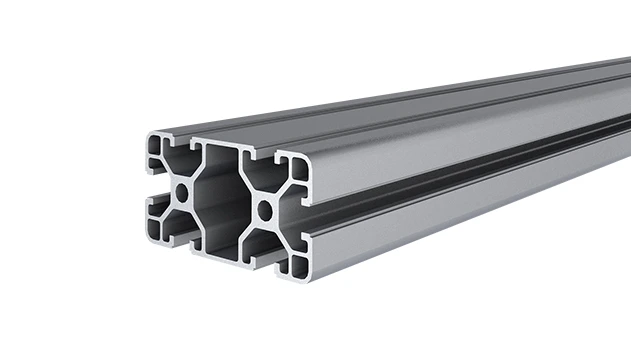
4080A is a 4.00x8.00 CM fractional 40 series square extrusion T-slot profile with two side open T-slots, each side with 4.00cm face, two side with 8.00cm face. The profile has align-a-grooves to assist in aligning connecting profiles.
The Backbone of Modern Warehousing: Why 4080A Aluminum Profile Matters
Walk into any efficient warehouse today, and you'll notice a quiet hero holding everything together: the structural framework that supports racks, workbenches, and material handling systems. For years, warehouses relied on bulky steel or flimsy plastic, but those days are fading. Enter the 4080A EU standard aluminum profile —a game-changer that balances strength, flexibility, and durability in a way few materials can. But what makes it stand out, especially when it comes to the critical factors of load capacity and stability? Let's break it down.
Warehouse managers know the stakes: a single unstable rack can disrupt workflows, damage inventory, or worse, compromise safety. Load capacity isn't just about numbers on a spec sheet; it's about trust—trust that the structure will hold up when stacked with heavy boxes, tools, or raw materials shift during loading, or when daily operations put constant stress on the framework. Stability, meanwhile, is the unsung guardian against wobbles, sagging, or collapse, even in high-traffic areas where forklifts and pallet jacks buzz by. That's where 4080A aluminum profile shines, and it starts with understanding what makes this profile unique.
What Is 4080A EU Standard Aluminum Profile, Anyway?
First things first: let's decode the name. "4080A" refers to its dimensions—40mm in width and 80mm in height—making it a medium-to-large profile ideal for supporting significant weight. The "EU standard" tag isn't just a label; it means the profile meets strict European union regulations for material quality, dimensional accuracy, and safety, ensuring consistency whether you're in Berlin, Barcelona, or beyond. Unlike generic aluminum extrusions, this isn't a one-size-fits-all product—it's engineered for industrial use, with precision at its core.
But what really sets it apart is its design. 4080A profiles are created through aluminum extrusion, a process where heated aluminum alloy (typically 6063-T5, known for its excellent strength-to-weight ratio) is pushed through a die to form its signature shape. The result? A lightweight yet robust structure with T-slots running along its length—those are the grooves you'll see on the sides. These T-slots aren't just for show; they're the secret to its flexibility, allowing easy attachment of aluminum profile accessories like connectors, brackets, and shelves without welding or drilling. Imagine building with Lego blocks, but for industrial warehouses—that's the T-slot advantage.
Let's talk materials. Aluminum alloy 6063-T5 is a workhorse here. It's heat-treated to enhance strength, corrosion-resistant (say goodbye to rust in humid warehouses), and surprisingly lightweight compared to steel. A 4080A profile weighs roughly 2.5kg per meter, less than half the weight of a comparable steel beam. That might not sound like much, but when you're assembling a multi-level rack or moving a workbench, every kilogram saved translates to easier installation, lower shipping costs, and less strain on your facility's floor load limits.

Load Capacity: How Much Can It Really Hold?
Load capacity is the first question any warehouse manager asks, and for good reason. Let's cut to the chase: under optimal conditions, a single 4080A EU standard aluminum profile can support up to 500kg per linear meter when properly installed with adequate support. But "optimal conditions" is key—several factors influence this number, and understanding them will help you avoid overloading and ensure safety.
Key Factors Affecting Load Capacity
1. Span Distance : The distance between supports (e.g., how far apart the vertical posts are) has a huge impact. A 4080A profile spanning 1 meter might handle 500kg, but stretch that span to 2 meters, and the maximum load drops to around 200kg. Why? Because longer spans create more bending stress, and even strong materials have limits. Think of it like a diving board—the farther you stand from the support, the more it flexes.
2. Material Thickness : 4080A profiles typically have wall thicknesses ranging from 1.5mm to 3mm. Thicker walls mean higher load capacity. For example, a 3mm wall profile can support 30% more weight than a 1.5mm version under the same span conditions. Always check the spec sheet for your specific profile's thickness—don't assume all 4080A profiles are identical.
3. Installation Quality : Even the strongest profile fails if installed poorly. Loose connectors, misaligned T-slots, or missing brackets can drastically reduce load capacity. This is where aluminum profile accessories like 90° aluminum profile connectors or gusset plates (gusset alp 4040, for example) come into play—they reinforce joints and distribute weight evenly.
4. Load Distribution : A evenly distributed load (e.g., boxes spread across a shelf) is easier on the profile than a concentrated load (one heavy item in the middle). A 4080A profile might handle 500kg evenly spread over 1 meter, but a 500kg weight hanging in the center could cause bending or failure. Always distribute weight as evenly as possible.
Real-World Load Capacity: A Practical Table
To make this tangible, let's look at a typical 4080A EU standard aluminum profile (alloy 6063-T5, 2mm wall thickness) under different span conditions. This is data you might see from a reputable aluminum profile supplier :
| Span Distance (Between Supports) | Maximum Evenly Distributed Load | Maximum Concentrated Load (At Center) |
|---|---|---|
| 0.5 meters | 800 kg | 400 kg |
| 1.0 meter | 500 kg | 250 kg |
| 1.5 meters | 300 kg | 150 kg |
| 2.0 meters | 200 kg | 100 kg |
These numbers are based on static loads (no movement) and ideal conditions. If your warehouse deals with dynamic loads—like items being dropped onto shelves or constant vibration from nearby machinery—you'll want to reduce these values by 20-30% to be safe. It's better to be cautious than to push the limits.
Stability: The Hidden Force Keeping Racks Upright
Load capacity gets the spotlight, but stability is the quiet partner that ensures the structure doesn't just hold weight—it holds steady . A rack might support 500kg on paper, but if it wobbles when a forklift passes by, it's useless. So how does 4080A aluminum profile stay stable?
The Role of Design: T-Slots and Rigidity
The 4080A's shape isn't accidental. Its rectangular cross-section (40x80mm) provides inherent rigidity, resisting twisting or bending in multiple directions. Unlike round pipes, which can rotate under stress, the flat sides of the profile lock into place when paired with the right accessories. The T-slots, too, play a role—when you insert a connector into a T-slot and tighten it, it creates a mechanical bond that's far stronger than glue or tape. This connection resists lateral forces (sideways pushes) that might otherwise topple a rack.
Aluminum Profile Accessories: The Stability Team
Stability isn't just about the profile itself—it's about the aluminum profile accessories that tie everything together. Let's meet the key players:
- 90° Aluminum Profile Connectors : These L-shaped brackets lock two profiles at a right angle, distributing stress evenly at corners. Look for heavy-duty versions with reinforced edges for high-stress areas.
- Gusset Plates (Gusset Alp 4040) : These triangular plates attach to the inside or outside of joints, adding rigidity. Think of them as the "backbone" of a corner, preventing it from flexing under load.
- End Caps : Simple but effective, end caps fit over the ends of profiles, preventing moisture or debris from entering (which can weaken the structure over time) and adding a finished look. Some even have rubber gaskets for extra grip on floors.
- Heavy-Duty Split Foot Seats : These attach to the bottom of vertical profiles, spreading the weight over a larger area of the floor and reducing the risk of sinking into concrete or tilting on uneven surfaces.
- Suction Cup Anti-Slip Adjusters : For warehouses with smooth floors, these accessories stick to the ground, adding friction and preventing the rack from sliding during heavy use.
Real-World Example: Material Rack B (3 Row and 3 Floor)
Let's take a concrete example: Material Rack B (3 row and 3 floor) , a common warehouse setup for storing tools, parts, or finished goods. Built with 4080A profiles, this rack uses vertical posts every 1.2 meters, horizontal beams (4080A) between them, and diagonal bracing (using smaller 2040 profiles) for lateral stability. The 90° connectors and gusset plates at each joint ensure no movement, even when the top shelf is loaded with 300kg of boxes. The split foot seats keep the base steady, and the T-slots allow adding dividers or bins without weakening the structure. It's a system where every component—profile, connector, accessory—works together to stay stable.
Another test: push against the side of this rack with moderate force (like a person leaning on it). A poorly built rack would sway; a 4080A-based rack? It might creak slightly, but it won't move. That's the stability we're talking about.
Why 4080A Beats Steel, Plastic, and Other Profiles
You might be thinking: "Why not just use steel? It's stronger, right?" Steel is strong, but it's also heavy, prone to rust, and hard to modify. Plastic is lightweight but can't handle heavy loads. Let's stack 4080A against the competition:
4080A vs. Steel: Strength Without the Weight
Steel beams might support more weight per meter, but they're twice as heavy, making installation a two-person job (or requiring a forklift). 4080A's aluminum alloy offers 60% of steel's strength at 40% of the weight. Plus, steel rusts—bad news in humid warehouses or food storage facilities. Aluminum? It forms a natural oxide layer that resists corrosion, even in damp environments. And when you need to reconfigure a rack (because warehouse needs change!), steel requires cutting and welding; 4080A? Just loosen the T-slot connectors and rearrange. No sparks, no special tools, no downtime.
4080A vs. Smaller Aluminum Profiles (e.g., 2020, 3030)
Smaller profiles like 2020 (20x20mm) or 3030 (30x30mm) are great for light-duty tasks, but they lack the rigidity for heavy warehousing. A 3030 profile can support only ~150kg per meter at a 1m span—less than a third of 4080A's capacity. If you're storing pallets, machinery parts, or bulk materials, 4080A is the minimum you'll want to consider.
4080A vs. Non-Standard Aluminum Profiles
There are plenty of cheap, non-standard aluminum profiles on the market, but they skip the EU standard's quality checks. They might have inconsistent wall thickness, rough T-slots that don't fit accessories, or use lower-grade aluminum that fatigues quickly. The 4080A EU standard ensures you're getting a profile that's tested, consistent, and reliable—no surprises down the line.
Maintenance: Keeping 4080A Profiles Strong for Years
Even the best materials need a little care. Luckily, 4080A aluminum profiles are low-maintenance, but a few simple steps will keep them performing at their best:
- Check Connections Quarterly : Tighten any loose T-slot bolts or connectors. Vibration from daily use can loosen them over time, weakening stability.
- Clean T-Slots Regularly : Dust, dirt, or debris in T-slots can prevent accessories from seating properly. A quick wipe with a dry cloth or compressed air does the trick.
- Inspect for Dents or Bends : If a profile gets hit by a forklift, check for deformation. A small dent might not seem bad, but it can create stress points that reduce load capacity.
- Lubricate Moving Parts : If your setup includes roller tracks or casters (common in turnover trolleys), lubricate the wheels or bearings annually to reduce friction and vibration.
Compared to steel, which needs painting to prevent rust, or wood, which rots, 4080A is a breeze. Most warehouses find that a quick monthly inspection is enough to keep their profiles in top shape for 10+ years.
Final Thoughts: 4080A EU Standard Aluminum Profile—A Smart Investment
At the end of the day, warehousing is about efficiency, safety, and reliability. The 4080A EU standard aluminum profile delivers on all three. Its load capacity (up to 500kg/m under ideal conditions) handles heavy loads, while its inherent rigidity and high-quality accessories ensure stability. It's lightweight enough for easy installation, corrosion-resistant for long life, and flexible enough to grow with your warehouse's needs.
Whether you're building a new material rack B , upgrading workbenches, or designing a custom storage system, don't overlook the foundation. 4080A aluminum profile isn't just a material—it's a partner in keeping your warehouse running smoothly, safely, and efficiently. And when paired with the right aluminum profile accessories , it becomes a solution that's hard to beat.
So next time you walk through your warehouse, take a closer look at the racks. If they're made with 4080A EU standard aluminum profile, you can rest easy knowing you've invested in a structure that's built to hold up—literally and figuratively—for years to come.