- Company Articles
- Products and Technology
- Product knowledge
- 4080A EU Standard Aluminum Profile: Weight-to-Strength Ratio for Mobile Systems

4080A EU Standard Aluminum Profile: Weight-to-Strength Ratio for Mobile Systems
Related Product
4080A EU Standard Aluminum Profile
4080A is a 4.00x8.00 CM fractional 40 series square extrusion T-slot profile with two side open T-slots, each side with 4.00cm face, two side with 8.00cm face. The profile has align-a-grooves to assist in aligning connecting profiles.
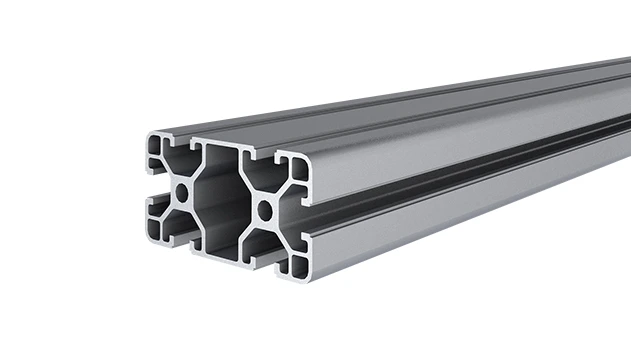
In the fast-paced world of manufacturing and lean operations, the ability to balance strength, flexibility, and mobility can make or break a production line. Enter the 4080A EU Standard Aluminum Profile—a game-changer for businesses that refuse to compromise on either durability or adaptability. Let's dive into how this aluminum extrusion profile is redefining what's possible for mobile workbenches, material racks, and lean system setups.
The Hidden Cost of "Heavy Duty": Why Mobility Matters in Modern Factories
Walk into any manufacturing facility, and you'll likely see a common challenge: equipment that's built to last but impossible to move. Steel frames, bulky workbenches, and rigid assembly lines—these were once the gold standard for "strength." But in an era where production lines need to pivot overnight (think shifting from smartphone parts to medical device components), that rigidity becomes a liability.
Take a mid-sized automotive parts plant in Hungary, for example. They relied on steel workbenches for their assembly stations. When a sudden order surge required reconfiguring three lines, their team spent two full days disassembling and relocating the steel frames—losing valuable production time and straining their workforce. The problem? Steel offers unmatched strength, but its weight makes mobility a nightmare. What if there was a material that could deliver 80% of that strength at half the weight? That's where the 4080A aluminum extrusion profile steps in.
Meet the 4080A: More Than Just a "Profile"—A Lean System Workhorse
The 4080A EU Standard Aluminum Profile isn't just another piece of metal. It's a precision-engineered solution born from decades of refining aluminum extrusion technology. Let's break down what makes it unique:
First, the basics: "4080A" refers to its dimensions—40mm in width and 80mm in height. The "A" denotes its specific groove design, optimized for EU-standard aluminum profile accessories like brackets, connectors, and end caps. But numbers alone don't tell the story. What truly sets this profile apart is its weight-to-strength ratio —a metric that matters more than raw strength when mobility is key.
Manufactured from 6063-T5 aluminum alloy (a heat-treated grade known for its excellent mechanical properties), the 4080A can support up to 200kg per linear meter when properly installed—enough to hold heavy tools, bins of components, or even small machinery. Yet, at just 2.3kg per meter, it's light enough for two workers to carry and reposition without specialized equipment. Compare that to a similar steel profile, which might weigh 7-8kg per meter for the same strength. The difference is transformative.

The Science of Lightweight Strength: How Aluminum Extrusion Gets It Right
Aluminum's reputation as a "lightweight" material often leads people to underestimate its strength. But the 4080A isn't just any aluminum—it's a product of the extrusion process, which aligns the metal's grain structure for maximum durability. Here's why that matters:
During extrusion, heated aluminum billets are forced through a die, shaping them into the 4080A's signature T-slot design. This process compresses the metal's molecules, creating a uniform structure that resists bending and torsional stress. The result? A profile that can take repeated impacts (like tools being set down or parts sliding into place) without warping. Add in the T-slot grooves, which distribute weight evenly across the profile, and you've got a system that's both strong and efficient.
But strength without versatility is useless. That's where aluminum profile accessories come into play. The 4080A's T-slots are compatible with hundreds of EU-standard components: 90° connectors for right-angle joints, end caps to smooth edges (and prevent snags on gloves), and even adjustable feet to level workbenches on uneven factory floors. This modularity means a single 4080A profile can be a workbench today, a material rack tomorrow, and a conveyor side rail next week—no welding or drilling required.
From Workbench to Warehouse: Real-World Applications of the 4080A
Let's get practical. How does the 4080A actually perform in day-to-day operations? Let's look at three common use cases where its weight-to-strength ratio shines:
1. Mobile Workbenches for Assembly Lines
A leading electronics manufacturer in Poland swapped their steel workbenches for 4080A-based setups last year. Their new workbench E (a single-deck design without casters, but easily retrofitted with caster wheels) cut setup time by 60%. When a design change required shifting 12 workstations, their team reconfigured the entire line in under four hours—using just basic hand tools. The secret? The 4080A's light weight meant two workers could lift and move each bench, while its strength ensured it still supported heavy soldering equipment and component bins.
2. Material Racks That Keep Up with Demand
Material Rack B (a 3-row, 3-floor design) is a staple in warehouses, but traditional steel versions are notoriously hard to relocate. A logistics firm in Spain replaced their steel racks with 4080A-based racks and saw immediate benefits. During peak seasons, they now reposition racks to shorten pick paths—reducing worker travel time by 15%. And because the 4080A is corrosion-resistant (unlike steel, which rusts in humid environments), their racks look and perform like new after two years of use.
3. Lean System Flexibility for Small-Batch Production
Lean manufacturing thrives on eliminating waste—including wasted space and time. A medical device startup in Sweden uses 4080A profiles to build temporary assembly cells for small-batch orders. When a client needs 500 custom syringes, they assemble a mini-line using 4080A rails, roller tracks, and workbenches in a day. Once the order is done, they disassemble the cell and reuse the profiles elsewhere. No more permanent "dead space" for rarely used lines—just adaptability.
How Does It Stack Up? Comparing 4080A to Other Profiles
Not all aluminum profiles are created equal. Let's see how the 4080A compares to two common alternatives: the 4040A (a smaller 40x40mm profile) and the 3030 (a lightweight 30x30mm option). The table below breaks down weight, strength, and ideal applications:
| Profile Type | Weight (kg/m) | Max Load Capacity (kg/m) | Best For | Mobility Rating (1-5) |
|---|---|---|---|---|
| 4080A EU Standard | 2.3 | 200 | Workbenches, material racks, heavy-duty mobile systems | 4.5/5 |
| 4040A EU Standard | 1.5 | 120 | Shelving, light tools, small conveyors | 5/5 (lighter, but less strength) |
| 3030 EU Standard | 0.9 | 80 | Prototyping, display racks, non-load-bearing structures | 5/5 (lightest, but limited use) |
The 4080A strikes the sweet spot: it's not the lightest (that's the 3030), but it's the only one that can handle heavy loads while remaining movable. For most lean system setups, that balance is non-negotiable.
Aluminum Profile Accessories: The "Secret Sauce" for Customization
A profile is only as good as the accessories that bring it to life. The 4080A's compatibility with EU-standard aluminum profile accessories turns it from a static piece of metal into a modular building block. Here are three accessories that elevate its functionality:
Internal Rotary Aluminum Joints
These joints allow 4080A profiles to pivot 180°, making them perfect for foldable workbenches or adjustable material racks. A furniture manufacturer in Italy uses these joints to create workbenches that can tilt from horizontal to 45°—ideal for assembling large cabinet doors without straining workers' backs.
Plastic Roller Track Guide Rails
When paired with roller tracks (like the plastic yellow or grey guide rails), 4080A profiles become conveyor systems for parts. A toy factory in Denmark installed these on their 4080A workbenches, letting components slide smoothly from one station to the next—reducing manual handling and cutting down on errors.
Heavy-Duty Casters with Brake Locks
Add these to a 4080A-based workbench, and you've got a mobile workstation that stays put when needed. A food packaging plant in France uses these casters to move their 4080A workbenches between cleanrooms—locking them in place during production and unlocking for deep cleaning at shift end.
Beyond the Factory: 4080A in Non-Manufacturing Spaces
You don't have to run a factory to appreciate the 4080A's versatility. Its lightweight strength makes it a hit in other industries too:
Retail and Warehousing
Pop-up shops and seasonal displays need to be built and broken down quickly. A clothing brand in the UK uses 4080A profiles to build custom shelving that can be assembled in hours and moved by two people. No more expensive, permanent fixtures that gather dust during off-seasons.
Event Production
Trade shows and conferences demand booths that stand out but are easy to transport. An exhibition design firm in Germany uses 4080A frames for their clients' booths—strong enough to support LED screens and signage, light enough to ship via standard courier (saving on freight costs).
Education and Labs
Science labs often need adjustable workstations for experiments. A university in the Netherlands outfitted their chemistry labs with 4080A workbenches, using aluminum profile accessories to add reagent racks, tool hooks, and even overhead lighting—all reconfigurable as courses change.
The Cost of Going Lightweight: Is 4080A Worth the Investment?
Let's address the elephant in the room: aluminum profiles cost more upfront than steel or plastic. A 4080A profile might run €15-20 per meter, compared to €8-10 for a similar steel profile. But that's only part of the story. The true ROI comes from long-term savings:
Reduced Labor Costs
Moving a steel workbench requires 4 workers and a pallet jack. Moving a 4080A workbench? Two workers and a hand truck. Over a year, that adds up to fewer man-hours spent on reconfigurations and more time spent on production.
Lower Maintenance
Steel rusts, wood warps, and plastic cracks. Aluminum is corrosion-resistant and requires zero painting or treatment. A brewery in Belgium calculated that their steel material racks needed repainting every 2 years (costing €2,000/year). Their 4080A racks? Zero maintenance beyond occasional cleaning.
Future-Proofing
When your production needs change, you won't need to buy new equipment—just reconfigure what you have. A electronics manufacturer in Portugal estimates they've saved €45,000 in new workbench costs over three years by reusing their 4080A profiles.
Choosing the Right Supplier: What to Look For
Not all 4080A profiles are created equal. To get the best weight-to-strength ratio, you need a supplier that prioritizes quality. Here's what to ask:
Alloy Grade : Insist on 6063-T5 aluminum—cheaper alloys (like 6005) may cut costs but compromise strength.
Extrusion Precision : The T-slots should have consistent dimensions (within ±0.1mm) to ensure compatibility with EU-standard accessories.
Testing Certifications : Look for suppliers who provide load-test reports—proof that their 4080A can actually handle the 200kg/m claim.
Reputable suppliers will also offer samples, so you can test the profile's weight and strength firsthand before placing a bulk order.
Final Thoughts: Lean System Success Starts with the Right Foundation
In a world where "adapt or die" isn't just a catchphrase, the 4080A EU Standard Aluminum Profile is more than a tool—it's a strategic advantage. It lets you build systems that are strong enough to last, light enough to move, and flexible enough to grow with your business. Whether you're assembling workbenches, material racks, or entire lean production lines, this aluminum extrusion profile proves that you don't have to choose between strength and mobility.
So, the next time you look at your factory floor, ask: Are my current systems holding me back? If the answer is yes, it might be time to go with the 4080A. After all, in lean manufacturing, the best systems aren't just built to work—they're built to evolve.