- Company Articles
- Products and Technology
- Product knowledge
- 4080B EU Standard Aluminum Profile Compatibility with Industrial Casters: Mobility Solutions

4080B EU Standard Aluminum Profile Compatibility with Industrial Casters: Mobility Solutions
Related Product
4080B EU Standard Aluminum Profile
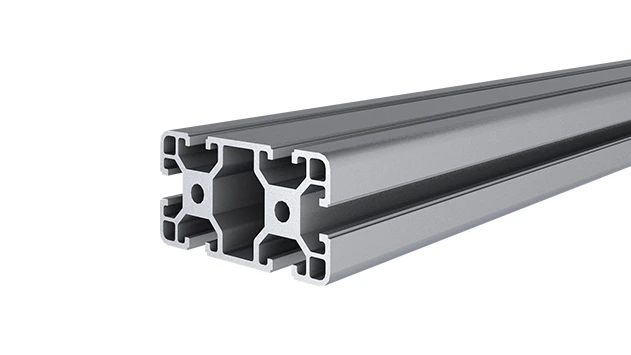
4080B is a 4.00x8.00 CM fractional 40 series square extrusion T-slot profile with two side open T-slots, each side with 4.00cm face, two side with 8.00cm face. The profile has align-a-grooves to assist in aligning connecting profiles.
In the bustle of a modern factory or warehouse, the difference between a smooth, efficient workflow and a frustrating bottleneck often comes down to one thing: mobility . Imagine a production line where workbenches are bolted to the floor, material racks stay fixed in place, and reconfiguring for a new product run takes days of heavy lifting and tools. Sound familiar? For many industrial managers, this rigidity isn't just inconvenient—it's a barrier to meeting tight deadlines and adapting to changing demands. But what if there was a way to transform those static setups into flexible, movable systems that adapt as quickly as your business does? Enter the 4080B EU standard aluminum profile and its perfect (partner): industrial casters. Together, they're redefining how factories approach mobility, one workbench and trolley at a time.
1. What Makes the 4080B EU Standard Aluminum Profile a Game-Changer?
Before diving into mobility, let's get to know the star of the show: the 4080B EU standard aluminum profile. If you've spent time in industrial settings, you've likely seen aluminum profiles—those modular, T-slot extrusion beams used to build everything from workbenches to machine guards. But the 4080B stands out for a reason. Let's break down its specs:
- Dimensions: 40mm wide, 80mm tall (hence "4080"), with a sturdy wall thickness that balances lightweight design and strength.
- EU Standard Compliance: Built to strict European union standards for quality, precision, and safety—meaning it plays well with other EU-standard components, including aluminum profile accessories .
- T-Slot Design: The real magic lies in its T-shaped slots (running along all four sides). These slots let you attach accessories—like brackets, panels, and yes, casters—without drilling or welding. Just slide in a T-nut, bolt on your component, and you're done.
- Material: Made from high-grade aluminum alloy, it's lightweight (easy to handle during assembly) yet surprisingly tough, resisting corrosion and wear even in busy factories.
Why does this matter? Unlike traditional steel frames or fixed wooden workbenches, the 4080B is modular. Need to add a shelf? Slide in a bracket. Want to adjust the height? Swap out a section. And when it comes to mobility? Those T-slots become the key to attaching casters quickly and securely—no permanent modifications required. It's like building with industrial-grade Legos, but for grown-ups.
2. The Case for Mobility: Why Factories Can't Afford to Stay Static
Let's talk about the elephant in the factory: rigidity. Fixed setups might seem stable, but they come with hidden costs. For example, when a new product line requires a longer assembly area, moving a fixed workbench could mean hiring a crew, renting a forklift, or even dismantling and rebuilding. That's downtime—time when your team isn't producing, and deadlines creep closer. Then there's cleaning: hard-to-reach corners under fixed racks become magnets for dust and debris, violating hygiene standards in industries like food processing or pharmaceuticals.
Mobility solves these problems. A movable workbench can be wheeled aside for deep cleaning. A material rack on casters can follow the production line, reducing the distance workers walk to fetch parts. And when a sudden rush order comes in? Reconfigure your setup in hours, not days. Studies even show that mobile workstations boost employee morale—no one likes wrestling with heavy equipment when a simple wheel could do the job.

3. Industrial Casters 101: More Than Just "Wheels on a Stick"
Casters get a bad rap as simple components, but there's more to them than meets the eye. At their core, industrial casters are designed to carry heavy loads (think hundreds or even thousands of pounds) while rolling smoothly and safely. Let's break down the basics, including castor and accessories that make them work with profiles like the 4080B:
Types of Casters
Swivel Casters: These have a rotating top plate that lets the wheel turn 360°, making tight corners and precise positioning a breeze. Many come with brakes to lock the wheel in place when you need stability.
Rigid Casters: Fixed in direction, these roll straight—great for setups that move back and forth along a predictable path (like a trolley that shuttles between two stations).
Heavy-Duty Casters: Built with thicker frames and larger wheels (often steel or polyurethane), these handle extreme loads, like full material racks or heavy machinery bases.
Caster Accessories: The Unsung Heroes of Compatibility
To attach a caster to a 4080B profile, you need more than just a wheel and a stem. That's where aluminum profile accessories like the castor install base come in. A castor install base is a flat or angled plate designed to fit into the 4080B's T-slots. It acts as a bridge between the caster and the profile, ensuring a secure connection that won't slip, even under heavy loads. Other accessories might include lock washers (to prevent bolts from loosening) or height-adjustable plates (to level uneven workbenches).
4. Compatibility 101: How 4080B Profiles and Casters Work Together
So, can any caster work with a 4080B profile? Not quite. Compatibility depends on three key factors: mounting options , load capacity , and stability . Let's break them down.
Mounting: It All Starts with the T-Slot
The 4080B's T-slots are the gateway to attaching casters. Most industrial casters come with a top plate (a flat metal plate with pre-drilled holes) that bolts onto a surface. To connect this to the 4080B, you'll use a castor install base —an aluminum profile accessory designed to fit snugly into the T-slot. Here's how it works: slide T-nuts into the 4080B's slots, align the castor install base over the nuts, bolt the base to the profile, then bolt the caster's top plate to the base. It's a three-step process that takes minutes, not hours, and can be disassembled just as easily if you need to reconfigure later.
Load Capacity: Matching Casters to the Job
The 4080B can handle impressive weight—often 500kg or more per meter, depending on the setup. But your casters need to keep up. A good rule of thumb: calculate the total weight of your setup (workbench + tools + materials), then divide by the number of casters (usually 4 for stability). For example, a 1000kg workbench with 4 casters needs each caster to support at least 250kg (plus a 20% safety margin, so 300kg per caster). The 4080B's strength ensures the profile itself won't bend, but skimping on casters can lead to wobbly setups or even wheel failure.
Stability: Why 4 Casters Are Better Than 3
Ever tried to balance a three-legged stool? It wobbles. The same goes for workbenches. For maximum stability, always use 4 casters (one at each corner of your 4080B frame). This distributes weight evenly and prevents tipping, even when the setup is loaded unevenly (like a workbench with tools piled on one side). Some setups use 6 casters for extra-large frames, but 4 is standard for most workbenches and trolleys.
5. Step-by-Step: Attaching Casters to Your 4080B Setup
Ready to turn that static workbench into a mobile powerhouse? Let's walk through the process. You'll need: a 4080B frame (already assembled or in pieces), 4 casters (with top plates), 4 castor install bases , T-nuts and bolts (aluminum profile accessories), a hex key, and a level.
- Plan Your Layout: Decide where to place the casters. For a workbench, they'll go at the bottom corners of the frame. Mark the T-slots where the castor install bases will sit.
- Install T-Nuts: Slide T-nuts into the marked T-slots. These will grip the inside of the slot when you tighten the bolts, so make sure they're aligned with the holes in the castor install base.
- Attach the Castor Install Base: Place the castor install base over the T-nuts, insert bolts through the base's holes and into the T-nuts, then tighten with a hex key. Don't overtighten—you want a snug fit, not a stripped bolt.
- Bolt On the Casters: Align the caster's top plate with the holes in the castor install base. insert bolts, washers, and lock nuts, then tighten until the caster is secure (but still able to swivel freely if it's a swivel caster).
- Level and Test: Stand the setup upright. Use a level to check if it wobbles—if so, adjust the bolts on the castor install bases to raise or lower corners. Test the brakes (if your casters have them) to ensure they lock the wheels firmly.
Pro tip: If you're building a workbench from scratch, assemble the frame first, then add the casters. This makes it easier to flip the frame upside down during installation—no straining to reach the bottom of a standing frame!
6. Real-World Applications: From Workbenches to Turnover Trolleys
The 4080B and caster combo isn't just for workbenches—its versatility shines in countless industrial setups. Let's explore a few real-world examples:
Mobile Workbenches: The Backbone of Flexible Production
A standard workbench built with 4080B profiles and casters becomes a mobile command center. Imagine an electronics assembly line where each worker's bench can be wheeled to a testing station, then back to the line—no more carrying delicate circuit boards across the factory. Add a tool panel (attached via T-slots) and a storage shelf, and you've got a self-contained workstation that adapts to each task.
Turnover Trolleys: Moving Materials with Ease
Ever tried pushing a heavy cart loaded with parts across a factory floor? If it's on cheap casters, it's a struggle. But a turnover trolley and rack built with 4080B profiles and heavy-duty swivel casters? It glides. These trolleys are perfect for moving raw materials from storage to the production line, or finished products to shipping. The 4080B's strength ensures the trolley doesn't flex under load, while the casters' brakes keep it steady during loading and unloading.
Material Racks: Adapting to Inventory Shifts
Material racks built with 4080B and casters solve a common warehouse headache: seasonal inventory swings. Need to expand your racking for the holiday rush? Wheel extra racks into place. Slow season? Tuck them away in storage. And since the 4080B is modular, you can add or remove shelves (using aluminum profile accessories) as your inventory changes.
7. The Benefits: Why 4080B + Casters = Industrial Mobility Done Right
By now, you're probably seeing the appeal—but let's spell out the benefits clearly:
- Flexibility: Reconfigure your factory layout in hours, not days. No more waiting for contractors or heavy machinery.
- Cost-Effective: The 4080B is reusable—disassemble and rebuild instead of buying new equipment. Casters are replaceable individually, so you won't need to replace the whole trolley if one wheel wears out.
- Safety: Sturdy aluminum frames and lockable casters reduce the risk of accidents from tipping or slipping. Plus, mobile setups make it easier to maintain safe walkways and emergency exits.
- Durability: Aluminum resists rust, and high-quality casters (like polyurethane or steel) stand up to oil, grease, and rough factory floors.
- Cleanliness: Wheel setups aside for deep cleaning—no more dust bunnies under fixed racks. Critical for industries with strict hygiene rules.
8. Choosing the Right Casters for Your 4080B Setup
Not all casters are created equal—and choosing the wrong ones can turn your mobile setup into a frustrating, unsafe mess. Here's what to consider:
Load Capacity: Don't Cut Corners
As we mentioned earlier, calculate the total weight of your setup, then choose casters with a per-wheel capacity that exceeds that (plus a 20% safety buffer). A 500kg workbench with 4 casters needs casters rated for at least 150kg each (500kg / 4 = 125kg + 20% = 150kg).
Floor Type Matters
Smooth concrete? Rubber or polyurethane wheels work best (they're quiet and won't scratch floors). Rough or uneven surfaces? Steel wheels are more durable but louder. Sensitive floors (like epoxy or hardwood in labs)? Soft rubber wheels prevent marks.
Environment: Think About Conditions
Wet or corrosive environments (like food processing or chemical plants)? Look for stainless steel casters to resist rust. High temperatures? Avoid plastic wheels—they can melt. Cold storage? Rubber wheels might harden; opt for polyurethane instead.
Mobility Needs: Swivel vs. Rigid
Tight spaces (like between machines)? Swivel casters with brakes let you maneuver and lock in place. Long, straight paths (like warehouse aisles)? Rigid casters are more stable and require less effort to push.
| Castor Type | Compatible Aluminum Profile Accessory | Load Capacity (Per Castor) | Best For | Key Feature |
|---|---|---|---|---|
| Swivel Castor with Brake | Castor Install Base | 150-300kg | Mobile workbenches, tight spaces | 360° rotation + brake for stability |
| Rigid Castor | Castor Install Base | 200-500kg | Straight-path trolleys, heavy loads | Fixed direction, minimal rolling resistance |
| Heavy-Duty Swivel Castor | Reinforced Castor Install Base | 500-1000kg | Material racks, machinery bases | Thick steel frame, shock-absorbing wheels |
9. Maintenance: Keeping Your Mobile Setup Rolling Smoothly
Even the best 4080B and caster setups need a little TLC to stay in top shape. Here's how to keep them rolling for years:
- Clean the T-Slots: Dust, grease, and debris can build up in the T-slots of your 4080B profiles, making it hard to adjust accessories later. Wipe them out monthly with a dry cloth or brush.
- Lubricate Caster Wheels: Swivel joints and wheel bearings need lubrication to stay smooth. Use a silicone-based lubricant (avoid oil, which attracts dust) every 3 months, or more often if you use the setup daily.
- Check Bolts Regularly: Vibration from rolling can loosen bolts on the castor install base or caster top plates. Tighten them with a hex key every few weeks to prevent wobbling.
- replace Worn Wheels: If a wheel starts to drag or makes strange noises, replace it immediately. A stuck wheel can strain the 4080B frame or cause the setup to tip.
10. The Future of Industrial Mobility: Where 4080B and Casters Lead
As factories move toward "smart manufacturing" and agile production, mobility will only grow more critical. The 4080B EU standard aluminum profile, with its modular design and compatibility with castor and accessories , is perfectly positioned to lead this shift. It's not just about moving workbenches—it's about building factories that can adapt, grow, and thrive in a world where change is the only constant.
So, whether you're upgrading a single workbench or reimagining your entire production line, remember this: the right tools make all the difference. With the 4080B aluminum profile and a set of quality casters, you're not just building furniture—you're building a factory that moves at the speed of your business.