- Company Articles
- Products and Technology
- Product knowledge
- 4080B EU Standard Aluminum Profile Fastening Methods: Bolts, Nuts & T-Slot Connectors

4080B EU Standard Aluminum Profile Fastening Methods: Bolts, Nuts & T-Slot Connectors
Related Product
4080B EU Standard Aluminum Profile
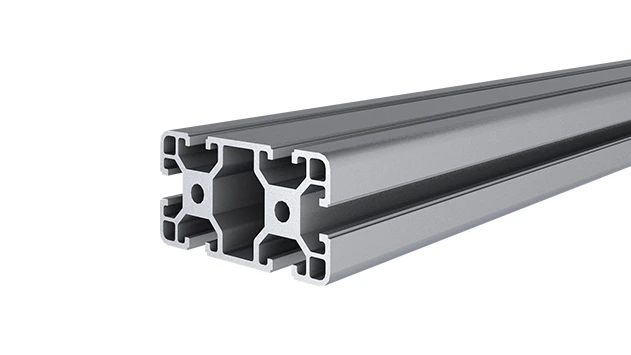
4080B is a 4.00x8.00 CM fractional 40 series square extrusion T-slot profile with two side open T-slots, each side with 4.00cm face, two side with 8.00cm face. The profile has align-a-grooves to assist in aligning connecting profiles.
Introduction: The Backbone of Modern Industrial Structures
Walk into any manufacturing plant, warehouse, or workshop today, and you'll likely spot a familiar sight: sturdy, silver-gray frames holding up workbenches, material racks, conveyor systems, and even automated machinery. Chances are, those frames are made from aluminum profiles—and among the most widely used is the 4080B EU standard aluminum profile. With its 40mm x 80mm cross-section, precision-engineered T-slots, and lightweight yet durable aluminum extrusion, this profile has become a go-to for engineers and facility managers alike. But what makes it truly indispensable isn't just the profile itself—it's how easily it can be assembled into custom structures using the right fastening methods. Today, we're diving deep into the three workhorses of 4080B assembly: bolts, nuts, and T-slot connectors. Whether you're building a simple workbench or a complex material handling system, understanding these methods will help you create structures that are secure, reliable, and built to last.
Understanding the 4080B EU Standard Aluminum Profile
Before we jump into fastening, let's get to know the star of the show: the 4080B EU standard aluminum profile. First, the "4080" refers to its dimensions—40mm in width and 80mm in height (or vice versa, depending on orientation). The "B" denotes a specific groove design within the EU standard, meaning its T-slots (the long, narrow channels running along its length) are uniform in size and spacing, ensuring compatibility with a wide range of aluminum profile accessories. This standardization is key: it means you can mix and match parts from different suppliers without worrying about fit issues.
Made from aluminum extrusion—where molten aluminum is pushed through a die to form its shape—the 4080B profile balances strength and weight beautifully. Aluminum's natural corrosion resistance is another plus, making it suitable for both indoor and (with proper care) outdoor use. But what really sets it apart is its modularity. Those T-slots aren't just for show; they're the secret to its versatility. They allow you to attach brackets, panels, shelves, and other components anywhere along the profile, without drilling holes or welding. And to make the most of those T-slots, you need the right fastening tools: bolts, nuts, and T-slot connectors.

Fastening 101: Why It Matters More Than You Think
You might think fastening is just about "tightening things down," but it's so much more. A poorly fastened joint can turn a sturdy workbench into a wobbly hazard, or a material rack into a collapse risk. On the flip side, a well-executed fastening job ensures your structure can handle daily wear and tear—vibrations from nearby machinery, the weight of heavy tools, or the constant movement of parts on a conveyor. It also impacts efficiency: loose connections mean frequent repairs, downtime, and even safety risks for workers. In short, fastening isn't an afterthought—it's the foundation of any reliable aluminum profile structure.
Pro Tip: Always check the load capacity of your chosen fasteners. The 4080B profile itself can handle significant weight, but the bolts, nuts, or connectors you use might be the weak link if undersized. Most suppliers provide load charts for their aluminum profile accessories, so keep those handy!
Bolts and Nuts: The Traditional Workhorses
Let's start with the classics: bolts and nuts. These tried-and-true fasteners have been holding things together for centuries, and they're just as relevant in aluminum profile assembly today. When used with 4080B profiles, bolts and nuts create strong, permanent joints—ideal for structures that won't need frequent reconfiguration, like heavy-duty workbenches or fixed material racks.
Types of Bolts for 4080B Profiles
Not all bolts are created equal, and choosing the right one depends on your project. Here are the most common types used with 4080B:
- Socket Head Cap Screws: These are the workhorses of T-slot fastening. With a cylindrical head and a hexagonal socket (for Allen wrenches), they sit flush or slightly recessed in the T-slot, avoiding protrusions that could catch on tools or materials. They're available in lengths from 10mm to 100mm, so you can find the perfect fit for connecting profiles at different angles.
- Hex Bolts: These have a hexagonal head and are often used when you need to fasten profiles together at 90° angles using external brackets. Unlike socket head screws, they require a wrench to tighten, which can be bulkier but offers more torque for extra-sturdy joints.
- Flange Bolts: These bolts have a built-in washer-like flange under the head, eliminating the need for a separate washer. The flange distributes pressure evenly across the profile, reducing the risk of damaging the aluminum surface—great for lightweight to medium-duty applications.
Nuts, Washers, and Locking Mechanisms
Bolts need nuts to complete the joint, and here are the top choices for 4080B profiles:
- Hex Nuts: The standard choice, paired with hex bolts for external joints. They're simple, affordable, and easy to find.
- Flange Nuts: Like flange bolts, these have a built-in flange to distribute pressure. They're ideal for use with socket head cap screws in T-slots, as they grip the inside of the slot tightly.
- Nylon insert Lock Nuts: For joints that might vibrate (like those near conveyor systems), these nuts have a nylon ring inside that creates friction, preventing loosening over time. They're a must for safety-critical structures.
Don't forget washers! Plain washers protect the aluminum surface from scratches, while lock washers (like split washers) add extra friction to keep nuts from loosening. Even small details like these can extend the life of your structure.
Installing Bolts and Nuts: A Step-by-Step Guide
Ready to put those bolts and nuts to work? Here's how to create a secure joint between two 4080B profiles:
- Align the Profiles: Place the two profiles in your desired configuration (e.g., 90° angle for a workbench corner). Make sure their T-slots are aligned if you're using internal fasteners, or their edges are flush for external brackets.
- insert the Bolt: For T-slot mounting, slide the bolt into the slot and position it where the joint will be. If using an external bracket (like a 90° aluminum profile connector), pass the bolt through the bracket's hole and into the T-slot.
- Add the Nut: Reach into the T-slot (or use a nut driver if the slot is narrow) and thread the nut onto the bolt. Hand-tighten until the joint is snug.
- Tighten with Tools: Use an Allen wrench (for socket head screws) or wrench (for hex bolts) to tighten the nut. Stop when you feel resistance—over-tightening can strip the threads or warp the profile!
- Check for Stability: Give the joint a gentle shake to ensure it's secure. If it wobbles, double-check the alignment and tighten further (but don't overdo it).
T-Slot Connectors: The Modular Alternative
If bolts and nuts are the "permanent" solution, T-slot connectors are the "modular" MVPs. These specialized aluminum profile accessories slide into the T-slots of 4080B profiles, allowing you to connect profiles quickly and adjust them later—no drilling or welding required. They're perfect for structures that might need reconfiguration, like assembly lines that change with production needs or temporary workstations.
Common T-Slot Connectors for 4080B Profiles
T-slot connectors come in dozens of shapes and sizes, each designed for specific joints. Here are the ones you'll use most often:
90° Aluminum Profile Connector: The Right-Angle Expert
As the name suggests, the 90° aluminum profile connector is built for joining two profiles at a right angle—think the corners of a workbench or the legs of a material rack. Most models have two parts: one that slides into the T-slot of one profile, and another that connects to the second profile. Some are fixed (permanent once tightened), while others are swivel-style, letting you adjust the angle slightly before locking it down. They're a favorite among manufacturers because they eliminate the need for external brackets, keeping the structure sleek and uncluttered.
Straight Connectors: Extending Profiles
Need to join two 4080B profiles end-to-end to make a longer beam? Straight connectors are your friend. These slide into the T-slots of both profiles and lock in place, creating a seamless joint that's almost as strong as a single piece of aluminum. They're ideal for building long conveyor rails or extra-wide workbench tops.
Gusset Plates: Adding Reinforcement
For joints that need extra strength—like the corners of a heavy material rack—gusset plates (such as the gusset alp 4040, sized for smaller profiles but adaptable to 4080B with longer bolts) are a game-changer. These flat, triangular plates attach to both profiles at a 90° joint, distributing weight and reducing stress on the connection. They're especially useful for structures that hold heavy loads, like 3-row, 3-floor material racks (yes, the kind that might store hundreds of pounds of parts!).
Installing T-Slot Connectors: Quick and Easy
T-slot connectors are designed for speed, so installation is a breeze compared to bolts and nuts. Here's how to use a 90° aluminum profile connector to join two 4080B profiles:
- Slide the Connector Into the T-Slot: insert the connector's base into the T-slot of the first profile. Position it where you want the joint—most connectors have markings to help align them perfectly.
- Align the Second Profile: Hold the second profile at a 90° angle to the first, making sure its T-slot lines up with the connector's top plate.
- Secure the Connector: Use a small Allen wrench to tighten the connector's locking screws. As you turn, the connector will grip the T-slots of both profiles, pulling them together tightly.
- Test the Joint: Push or pull gently on the profiles to check for movement. If it shifts, loosen the screws, realign, and tighten again. Most connectors allow for minor adjustments even after initial tightening—another perk of modular design!
Complementary Accessories: Finishing the Job Right
Bolts, nuts, and connectors are the stars, but no aluminum profile structure is complete without a few key accessories. These small parts might seem minor, but they functionality, safety, and even aesthetics.
Aluminum Profile End Caps: Protection and Polish
Ever run your hand along the end of an aluminum profile and gotten a sharp edge? Aluminum profile end caps solve that problem. These plastic or rubber caps snap onto the ends of 4080B profiles, covering rough edges and preventing cuts. They also keep dust, debris, and moisture out of the T-slots, which can corrode fasteners over time. Available in colors like black, gray, or white, they add a clean, professional look to any structure—no more "unfinished" edges.
T-Slot Rubber Seal Cover: Keeping Slots Clean
Speaking of T-slots, if you're not using every slot in your 4080B profile, T-slot rubber seal cover is a must. This flexible rubber strip presses into unused T-slots, blocking dust, dirt, and small tools from falling in. It also reduces noise—no more rattling debris inside the profile! Plus, it gives the structure a neater appearance, making your workbench or rack look intentional, not thrown together.
Comparing Fastening Methods: Which One Should You Choose?
Now that we've covered bolts, nuts, and T-slot connectors, how do you decide which to use? It depends on your project's needs. To help, here's a side-by-side comparison:
| Factor | Bolts & Nuts | T-Slot Connectors |
|---|---|---|
| Strength | Excellent—creates rigid, permanent joints ideal for heavy loads. | Very good—strong enough for most applications, but may loosen slightly under extreme vibration. |
| Adjustability | Low—requires loosening/tightening to reposition; not ideal for frequent changes. | High—easily slid or repositioned with minimal tools; perfect for modular setups. |
| Installation Time | Longer—requires aligning holes, threading nuts, and careful tightening. | Shorter—slides into place and tightens with a few turns of an Allen wrench. |
| Cost | Lower—bolts and nuts are inexpensive and widely available. | Higher—specialized connectors cost more than basic fasteners. |
| Best For | Permanent structures (fixed workbenches, heavy material racks). | Modular structures (assembly lines, temporary workstations, adjustable racks). |
In many cases, the best approach is to mix and match. For example, use bolts and nuts for the main frame of a workbench (permanent, heavy-duty) and T-slot connectors for the adjustable shelf brackets (so you can raise or lower shelves as needed). This hybrid approach gives you the best of both worlds: strength where you need it, flexibility where you want it.
Real-World Example: Building a 4080B Workbench
Let's put this all into practice with a common project: building a basic workbench using 4080B profiles. Here's how you'd combine bolts, nuts, and T-slot connectors to create a sturdy, functional workspace:
Materials You'll Need:
- 4x 4080B profiles (1200mm long) for the frame
- 4x 4080B profiles (800mm long) for the legs
- 4x 90° aluminum profile connectors (for leg-to-frame joints)
- 8x socket head cap screws (M8x20mm) and flange nuts
- 1x plywood or aluminum top (1200mm x 800mm)
- Aluminum profile end caps (8x, for the leg ends)
- T-slot rubber seal cover (for unused T-slots)
- Allen wrenches, tape measure, level
Step-by-Step Assembly:
- Build the Frame: Connect the four 1200mm profiles into a rectangle using 90° aluminum profile connectors. Tighten the connectors until the frame is square (use a level to check!).
- Attach the Legs: Flip the frame upside down. At each corner, use socket head cap screws and flange nuts to bolt the 800mm legs to the frame (the bolts will go through the frame's T-slots and into the legs' T-slots). Tighten until the legs are secure and perpendicular to the frame.
- Add End Caps: Press end caps onto the bottom of each leg to cover sharp edges.
- Install the Top: Place the plywood or aluminum top on the frame. Use additional socket head screws (from underneath the frame) to secure the top to the profiles.
- Seal Unused Slots: Press T-slot rubber seal cover into any T-slots not used for fasteners or connectors.
- Level and Test: Stand the workbench upright. Use a level to ensure it's even—adjust leg height if needed (some legs use adjustable feet, another handy aluminum profile accessory!). Give the top a firm push to test stability—if it wobbles, check the leg bolts and tighten further.
And just like that, you've built a workbench that's strong enough for tool storage, assembly work, or even light machinery. The best part? If you need to add a shelf later, you can use T-slot connectors to attach it without drilling new holes—modularity in action!
Maintenance Tips: Keeping Your Structure Strong
Your 4080B structure is built—now how do you keep it in top shape? With a little regular maintenance, it will last for years:
- Check Fasteners Quarterly: Tighten any loose bolts, nuts, or connectors. Vibration from daily use can loosen them over time, so a quick once-over with an Allen wrench goes a long way.
- Clean T-Slots: Use a small brush or compressed air to remove dust from T-slots. If you're using T-slot rubber seal cover, remove it, clean the slot, and reinsert it.
- replace Worn Parts: If a T-slot connector starts to slip, or a bolt strips, replace it immediately. Damaged fasteners compromise the entire structure's integrity.
- Protect Against Corrosion: If your structure is in a humid or wet environment, use stainless steel bolts and nuts (instead of standard steel) to prevent rust. Aluminum profiles themselves resist corrosion, but fasteners can still suffer.
Final Thoughts: The Power of the Right Fastening
At the end of the day, the 4080B EU standard aluminum profile is only as good as the fasteners holding it together. Bolts and nuts offer unbeatable strength for permanent structures, while T-slot connectors bring flexibility and speed to modular builds. By combining these methods with aluminum profile accessories like end caps and T-slot rubber seal cover, you can create structures that are safe, efficient, and tailored to your needs. Whether you're a seasoned engineer or a DIY enthusiast, taking the time to choose the right fastening method will ensure your project stands the test of time. So grab your Allen wrench, stock up on connectors, and start building—your perfect 4080B structure is waiting!