- Company Articles
- Products and Technology
- Product knowledge
- 4080B EU Standard Aluminum Profile for Automated Storage & Retrieval Systems (AS/RS)

4080B EU Standard Aluminum Profile for Automated Storage & Retrieval Systems (AS/RS)
Related Product
4080B EU Standard Aluminum Profile
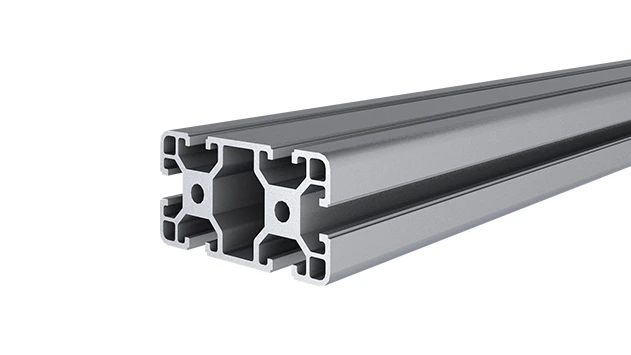
4080B is a 4.00x8.00 CM fractional 40 series square extrusion T-slot profile with two side open T-slots, each side with 4.00cm face, two side with 8.00cm face. The profile has align-a-grooves to assist in aligning connecting profiles.
In the fast-paced world of modern logistics and manufacturing, efficiency isn't just a buzzword—it's the backbone of staying competitive. As warehouses and production facilities grapple with rising demand, labor shortages, and the need for faster order fulfillment, Automated Storage & Retrieval Systems (AS/RS) have emerged as game-changers. These systems, which use robotics and software to automate the storage and retrieval of goods, promise to boost accuracy, speed, and space utilization. But behind every high-performing AS/RS lies a critical, often overlooked component: the materials that bring these systems to life. Enter the aluminum extrusion profile —a versatile, durable, and cost-effective solution that forms the structural foundation of many AS/RS setups. Among the various profiles available, the 4080B EU Standard Aluminum Profile stands out as a workhorse, designed to meet the rigorous demands of automated environments while aligning with lean principles. Let's dive into why this profile has become a staple for engineers, facility managers, and system integrators alike.
The Backbone of AS/RS: Why Material Matters
AS/RS systems are engineering marvels, but their reliability hinges on the materials used to construct their frames, racks, and conveyance paths. Traditional materials like steel, while strong, often come with drawbacks: they're heavy, prone to corrosion (without proper treatment), and difficult to modify. In contrast, aluminum extrusion profiles offer a compelling alternative. Made by forcing heated aluminum through a die to create custom cross-sections, these profiles are lightweight, corrosion-resistant, and infinitely adaptable—qualities that make them ideal for dynamic environments where flexibility and durability are non-negotiable.
Aluminum's natural properties—high strength-to-weight ratio, excellent thermal conductivity, and recyclability—make it a sustainable choice, too. For AS/RS systems, which require precise alignment, minimal maintenance, and the ability to support heavy loads without bending or warping, aluminum extrusion profiles check all the boxes. And within the vast family of aluminum profiles, the 4080B EU Standard Aluminum Profile has earned a reputation as a go-to option for medium to heavy-duty applications. Let's break down what makes it unique.
Meet the 4080B EU Standard Aluminum Profile: Specs and Design
The 4080B isn't just another piece of metal—it's a meticulously engineered component designed to balance strength, versatility, and ease of use. Let's start with the basics: its dimensions. As the name suggests, the 4080B has a cross-section of 40mm by 80mm, with a rectangular shape that provides a stable base for mounting accessories, shelves, and conveyor components. The "EU Standard" designation ensures compatibility with a wide range of aluminum profile accessories —think brackets, T-slot nuts, end caps, and hinges—manufactured to uniform specifications across Europe and beyond. This standardization is a boon for system integrators, who can mix and match components from different suppliers without worrying about fit issues.
But the 4080B's design goes beyond just size. Its T-slot structure—longitudinal grooves running along its length—is where the magic happens. These slots allow for quick, tool-free installation of accessories, making it easy to customize the profile for specific needs. Need to add a sensor mount? Slide a T-slot nut into the groove and secure it with a bolt. Want to attach a conveyor track? Use a bracket designed to fit the slot. This modularity means that AS/RS systems built with 4080B profiles can be reconfigured as operational needs change—no welding or major overhauls required. For facilities embracing lean system principles, this adaptability is key to reducing waste (in this case, waste from rigid, unchangeable infrastructure) and promoting continuous improvement.
Material quality is another standout feature. The 4080B is typically made from 6063-T5 aluminum alloy, a heat-treated grade known for its excellent mechanical properties. With a tensile strength of around 180 MPa and a yield strength of 145 MPa, it can support significant loads—up to 500 kg per linear meter in some configurations—without compromising structural integrity. Its surface is often anodized, creating a hard, corrosion-resistant layer that protects against moisture, chemicals, and wear. This makes the 4080B suitable for both indoor and controlled outdoor environments, a versatility that extends its application range.
Table 1: Key Specifications of 4080B EU Standard Aluminum Profile vs. Common Alternatives
| Feature | 4080B EU Standard Aluminum Profile | 4040A EU Standard Aluminum Profile | 3030 EU Standard Aluminum Profile | Carbon Steel Profile (40x80mm) |
|---|---|---|---|---|
| Cross-Section Dimensions | 40mm x 80mm | 40mm x 40mm | 30mm x 30mm | 40mm x 80mm |
| Material | 6063-T5 Aluminum Alloy | 6063-T5 Aluminum Alloy | 6063-T5 Aluminum Alloy | Mild Steel |
| Weight (per meter) | 2.5 kg | 1.8 kg | 1.2 kg | 8.5 kg |
| Max Load Capacity (Uniformly Distributed) | 500 kg/m | 300 kg/m | 150 kg/m | 800 kg/m |
| Surface Treatment | Anodized (Natural/Black) | Anodized (Natural/Black) | Anodized (Natural/Black) | Powder-Coated/Galvanized |
| Key Applications | AS/RS Frames, Flow Racks, Heavy-Duty Conveyors | Workstations, Light Conveyors, Shelving | Small Racks, Machine Guards, Partitioning | Industrial Shelving, Fixed Racks (Low Corrosion Risk) |

Aligning with Lean System Principles: 4080B's Role in Waste Reduction
Lean manufacturing and logistics are all about eliminating waste—whether it's time, space, materials, or labor. The 4080B profile aligns seamlessly with these principles, making it a favorite among organizations striving for operational excellence. Here's how:
Flexibility = Less Waste: In traditional setups, modifying a steel rack or conveyor system often means cutting, welding, or replacing entire sections—a time-consuming and costly process. With the 4080B's T-slot design and compatible aluminum profile accessories , changes can be made in hours, not days. Need to adjust the height of a shelf to accommodate taller bins? Swap out a bracket. Want to add a new conveyor lane to handle increased throughput? Connect additional profiles using corner brackets. This flexibility reduces downtime and ensures that the AS/RS system can evolve with changing product sizes, order volumes, or business needs—eliminating the waste of investing in new infrastructure.
Lightweight Design = Energy Savings: AS/RS systems rely on robotic shuttles, cranes, and lifts to move goods. The lighter the structural components, the less energy these machines consume. At 2.5 kg per meter, the 4080B is significantly lighter than steel (8.5 kg/m for a comparable 40x80mm steel profile). This reduced weight translates to lower power usage, longer equipment lifespan (less strain on motors and gears), and lower carbon footprints—all hallmarks of lean, sustainable operations.
Modularity = Space Optimization: Lean systems prioritize maximizing space utilization, and the 4080B excels here. Its slim profile and customizable design allow for tighter rack spacing, higher vertical storage, and more efficient use of floor area. For example, in a flow rack system—where goods are stored on inclined tracks and move forward as items are picked—the 4080B provides a sturdy, lightweight frame that can be configured to fit even irregularly shaped spaces. This modularity ensures that every square meter of the warehouse is put to good use, reducing the need for costly expansions.
Flow Racks and Beyond: 4080B in Action
While the 4080B is a versatile profile, it truly shines in applications like flow rack systems—an integral part of many AS/RS and lean warehousing setups. Flow racks use gravity to move products from the loading end to the picking end, ensuring first-in, first-out (FIFO) inventory rotation and reducing the need for manual handling. The 4080B's strength and precision make it the ideal frame for these racks, supporting the weight of heavy bins, cartons, or pallets while maintaining the incline needed for smooth product flow.
Consider a typical e-commerce fulfillment center using a flow rack system built with 4080B profiles. The racks are configured with multiple levels, each fitted with roller tracks (another accessory that easily mounts to the T-slots). As workers unload incoming stock onto the higher end of the rack, gravity pulls the items down to the picking stations below. The 4080B's rigidity ensures that the rack doesn't sag under the weight of dozens of boxes, while its corrosion-resistant surface stands up to the constant movement of goods and occasional spills. If the center decides to switch from handling small boxes to larger, heavier items, the system can be upgraded by adding reinforced brackets or thicker roller tracks—all without replacing the 4080B frames themselves.
But flow racks are just the beginning. The 4080B is also used in:
- Automated Conveyor Frames: Supporting belt, roller, and chain conveyors that transport goods between AS/RS modules, sorting stations, and shipping docks.
- Robotic Workstations: Providing stable platforms for robotic arms, sensors, and vision systems that handle picking, packing, and quality control.
- Mezzanine Floors: Creating elevated storage or workspace areas within the warehouse, doubling usable space without expanding the building footprint.
- Machine Guards: Enclosing AS/RS machinery to protect workers while allowing visibility and easy access for maintenance (thanks to quick-release hinges and T-slot fasteners).
The Power of Accessories: Enhancing 4080B's Capabilities
A profile is only as good as the accessories that complement it, and the 4080B benefits from a vast ecosystem of aluminum profile accessories designed to extend its functionality. These accessories turn a simple length of aluminum into a fully integrated system component. Let's explore some of the most popular ones:
T-Slot Nuts and Bolts: These are the workhorses of profile assembly. T-slot nuts slide into the grooves of the 4080B, allowing bolts to secure accessories like brackets, shelves, or sensors at any position along the profile. They come in various sizes and materials (nylon, steel) to suit different load requirements.
Corner Brackets and Connectors: These accessories join 4080B profiles at angles (90°, 45°, 135°), creating rigid frames for racks, workstations, or conveyor supports. Many are designed for tool-free assembly, speeding up installation and reconfiguration.
End Caps and Covers: These simple but essential accessories snap onto the ends of the 4080B, protecting workers from sharp edges and preventing dust, debris, or moisture from entering the T-slots. They also give the profile a clean, finished look.
Roller Track Placon Mounts: Specifically designed for flow rack systems, these mounts attach roller tracks to the 4080B profile, ensuring precise alignment and smooth product movement. They come in various heights and configurations to accommodate different track types and load capacities.
Wheels and Casters: For mobile applications—like portable workstations or temporary storage racks—casters can be mounted to the 4080B using plate mounts, turning static structures into flexible, movable assets.
The beauty of these accessories is their compatibility. Since the 4080B adheres to EU standards, accessories from different manufacturers (e.g., brackets from one supplier, T-slot nuts from another) will work together seamlessly. This interoperability gives system integrators the freedom to choose the best components for the job, rather than being locked into a single brand.
Real-World Impact: Case Studies in Efficiency
To understand the real-world value of the 4080B, let's look at two hypothetical but representative case studies:
Case Study 1: Automotive Parts Manufacturer Adopts Lean Flow Racks
A mid-sized automotive parts manufacturer was struggling with inefficient inventory management. Their manual storage system required workers to walk long distances to retrieve parts, leading to delays and errors. The company decided to implement a lean flow rack system using 4080B profiles. The new racks, configured with roller tracks and adjustable shelves, reduced picking time by 40% and cut down on walking distances by 60%. The 4080B's modular design allowed the company to add new lanes as product lines expanded, and its lightweight nature meant the racks could be installed without reinforcing the warehouse floor. Within six months, the manufacturer saw a 25% increase in daily production output.
Case Study 2: E-Commerce Fulfillment Center Upgrades AS/RS Frames
An e-commerce giant needed to upgrade its AS/RS system to handle a 50% increase in order volume during peak seasons. The existing steel frames were heavy, making it difficult to add new storage levels or reconfigure lanes. The company switched to 4080B aluminum profiles for the new rack structures. The lighter weight allowed for taller storage (adding 30% more vertical space) and reduced the load on the warehouse floor, eliminating the need for costly structural reinforcements. The T-slot design also made it easy to integrate new sensors and robotic shuttle guides, improving picking accuracy to 99.9%. During the next peak season, the center processed 45% more orders with no increase in labor hours.
Challenges and Solutions: Making the Most of 4080B
While the 4080B offers numerous benefits, it's not without challenges. Here are some common hurdles and how to overcome them:
Initial Cost vs. Long-Term Savings: Aluminum profiles can have a higher upfront cost than steel. However, the savings in installation time, maintenance, energy, and reconfiguration costs often offset this within 1–2 years. To mitigate upfront expenses, consider phasing the transition—start with high-impact areas like flow racks or conveyor frames, then expand to other systems.
Load Capacity Concerns: While the 4080B is strong, it may not match the load capacity of steel for extremely heavy applications (e.g., storing full pallets weighing over 1 ton). In these cases, engineers can reinforce the profile with internal braces or use thicker-walled 4080B variants (available from some suppliers) to boost load ratings.
Thermal Expansion: Aluminum expands and contracts more than steel with temperature changes. In AS/RS systems with tight tolerances (e.g., robotic shuttle tracks), this can cause misalignment. Solution: Use expansion joints and flexible connectors in long runs, and design systems with clearances to accommodate thermal movement.
Future Trends: 4080B and the Next Generation of AS/RS
As AS/RS systems become more advanced—with AI-driven software, autonomous mobile robots (AMRs), and IoT connectivity—the role of the 4080B is evolving, too. Here are some trends to watch:
Smart Profiles: Manufacturers are exploring ways to integrate sensors directly into 4080B profiles, allowing real-time monitoring of load stress, temperature, and vibration. This data can predict maintenance needs, prevent failures, and optimize system performance.
Sustainability: With a growing focus on eco-friendly manufacturing, the 4080B's recyclability (aluminum can be recycled indefinitely without losing quality) makes it a preferred choice for companies aiming to reduce their carbon footprint. Some suppliers are even offering profiles made from 100% recycled aluminum, further lowering environmental impact.
Custom Extrusions: While the 4080B is a standard profile, advances in extrusion technology are making custom cross-sections more affordable. This means future profiles could be tailored to specific AS/RS needs—e.g., integrated cable management channels or specialized T-slot configurations—while still maintaining compatibility with existing accessories.
Conclusion: Why 4080B is More Than Just a Profile
The 4080B EU Standard Aluminum Profile may seem like a simple component, but it's a testament to how thoughtful engineering can transform the efficiency of entire systems. By combining strength, flexibility, and lean compatibility, it has become an indispensable tool for building the next generation of AS/RS and flow rack systems. Whether you're a warehouse manager looking to optimize space, a system integrator designing a custom solution, or a manufacturer striving for leaner operations, the 4080B offers a foundation that grows with your needs.
In a world where adaptability and sustainability are no longer optional, the 4080B stands as a reminder that the best innovations often lie in the details—the materials that quietly support the technologies we rely on. As AS/RS systems continue to evolve, one thing is clear: the 4080B EU Standard Aluminum Profile will remain at the forefront, helping businesses around the world build smarter, more efficient, and more resilient operations.