- Company Articles
- Products and Technology
- Product knowledge
- 4080B EU Standard Aluminum Profile for Custom Workstations: Tailoring to Industry Needs

4080B EU Standard Aluminum Profile for Custom Workstations: Tailoring to Industry Needs
Related Product
4080B EU Standard Aluminum Profile
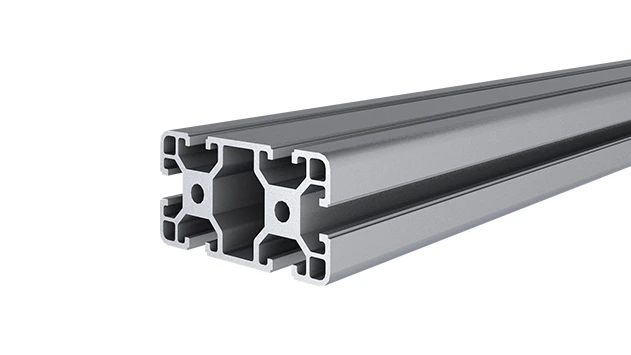
4080B is a 4.00x8.00 CM fractional 40 series square extrusion T-slot profile with two side open T-slots, each side with 4.00cm face, two side with 8.00cm face. The profile has align-a-grooves to assist in aligning connecting profiles.
Walk into any modern factory, warehouse, or workshop, and you'll quickly notice that the backbone of efficient operations often comes down to one thing: the workstations. These aren't just tables or benches—they're carefully designed hubs where employees assemble products, sort materials, or manage inventory. But here's the problem: no two industries, or even two teams within the same company, work exactly alike. A workstation that works for a pharmaceutical lab might be useless in an automotive plant, and what a small electronics manufacturer needs could differ drastically from a large-scale logistics hub. That's where customization becomes critical. And when it comes to building workstations that adapt to unique needs, few materials stand out like the 4080B EU Standard Aluminum Profile.
In this article, we'll dive deep into what makes the 4080B profile a game-changer for custom workstations. We'll explore its features, how it integrates with aluminum profile accessories, and why it's become a go-to choice for industries ranging from electronics to automotive. Whether you're looking to build a simple workbench or a complex lean system, understanding the 4080B's capabilities could be the first step toward transforming your workflow.
What Exactly Is the 4080B EU Standard Aluminum Profile?
Let's start with the basics. The 4080B is part of a family of aluminum extrusion profiles—long, straight pieces of aluminum shaped through a process called extrusion, where molten aluminum is pushed through a die to create a specific cross-sectional shape. The "4080" in its name refers to its dimensions: 40mm in width and 80mm in height. The "B" denotes a specific design variant within the EU standard, which means it adheres to strict European manufacturing and quality guidelines for strength, precision, and safety.
To put that in perspective, think of other common profiles you might encounter: the 2020 (20x20mm) is tiny, great for small DIY projects; the 4040 (40x40mm) is a workhorse for mid-sized structures; but the 4080B steps up with a larger, more robust profile. This extra size gives it a unique balance of strength and versatility—strong enough to support heavy equipment, yet lightweight enough to be easily reconfigured when needs change.
Unlike generic aluminum pipes, extrusion profiles like the 4080B have a key feature that sets them apart: T-slots. These are long, narrow grooves running along the length of the profile, designed to accept nuts, bolts, and other accessories without the need for drilling or welding. Imagine building with a set of giant, industrial-grade Lego blocks—each T-slot acts like a connector point, letting you attach shelves, brackets, wheels, or tools wherever you need them. That's the modular magic of the 4080B.
Key Features of the 4080B: Why It Stands Out
So, what makes the 4080B more than just a big piece of aluminum? Let's break down its most important features:
1. Lightweight but Incredibly Strong
Aluminum is naturally lighter than steel, which makes the 4080B easy to handle during assembly—no need for heavy machinery to move sections around. But don't let its weight fool you: thanks to the extrusion process, the profile's internal structure is dense and uniform, giving it impressive load-bearing capacity. Depending on the wall thickness (typically 1.5mm to 3mm for industrial grades), a single 4080B profile can support hundreds of kilograms when properly mounted. This makes it ideal for workstations that need to hold heavy tools, equipment, or batches of materials.
2. Modular Design for Endless Customization
The T-slot system is where the 4080B truly shines. Those grooves aren't just for show—they're designed to work with a wide range of aluminum profile accessories. Need to add a shelf? Slide a T-slot nut into the groove, bolt on a bracket, and you're done. Want to attach a lamp or a power strip? Use a clamp-on accessory that fits right into the slot. Even better, if you need to rearrange your workstation later, you can loosen the bolts, move the accessories, and tighten them back up—no drilling, no glue, no permanent changes. This modularity is a huge win for businesses that evolve quickly.
3. Corrosion Resistance for Longevity
Aluminum naturally forms a thin oxide layer when exposed to air, which protects it from rust and corrosion. For industries like food processing, pharmaceuticals, or even outdoor logistics, this is a must—no one wants a workstation that starts to degrade after a few months of use. Many 4080B profiles also come with anodized finishes, which thicken that oxide layer, making them even more resistant to scratches, chemicals, and moisture. This means your workstation will look and perform like new for years, even in harsh environments.
4. Precision Engineering for Consistent Performance
As an EU standard profile, the 4080B is manufactured to tight tolerances. That means every piece you order will have the exact same dimensions, and T-slots will align perfectly with accessories from different suppliers. This consistency is crucial when building complex structures—imagine trying to assemble a workstation where one profile is slightly warped or a T-slot is misaligned. With the 4080B, you can trust that parts will fit together seamlessly, saving time and frustration during setup.

Building Custom Workstations with the 4080B: From Simple to Complex
Now, let's get practical: how do you actually use the 4080B to build a workstation? Let's start with the most common application: the humble workbench. A basic workbench might consist of four 4080B legs, a tabletop (often made of plywood, MDF, or aluminum honeycomb panel), and maybe a shelf or two. But with the right accessories, that simple bench can transform into something tailored to your team's exact needs.
The Basics: Building a Custom Workbench
Let's say you're in an electronics workshop, and your team needs a workbench where they can assemble circuit boards. They need space for tools, a flat surface to lay out components, and maybe a shelf underneath for storage. Here's how the 4080B comes into play:
- Legs and Frame: Four vertical 4080B profiles serve as legs. You'll connect them at the top and bottom with horizontal 4080B profiles using 90° aluminum profile connectors—these are small, L-shaped brackets that fit into the T-slots and secure the profiles together with bolts.
- Tabletop Support: Across the top frame, you'll add cross-braces (more 4080B profiles) to support the tabletop. Using T-slot nuts, you can attach angle brackets that hold the tabletop in place. If you need the table height to be adjustable (say, for ergonomic reasons), you can use leveling feet with threaded rods that screw into the bottom of the legs—twist them up or down to raise or lower the bench.
- Accessories: Under the table, add a shelf using shorter 4080B profiles and brackets. On the side, attach a tool holder using a slotted aluminum rail—perfect for hanging screwdrivers, pliers, or wire cutters. If static electricity is a concern (common in electronics), you can even add an ESD (electrostatic discharge) mat on the tabletop and ground it through the frame.
The result? A workbench that's sturdy, adjustable, and organized—exactly what your team needs. And if next month you need to add a light bar or a monitor arm? Just slide a T-slot nut into the frame, bolt on the accessory, and you're good to go.
Going Further: Integrating Conveyors and Lean Systems
But the 4080B isn't limited to standalone workbenches. It's also a key component in larger systems, like conveyors and lean manufacturing setups. Let's say your warehouse needs a way to move boxes from one workstation to another. Instead of buying a pre-made conveyor (which might not fit your space), you can build a custom roller track using 4080B profiles as the frame. Attach roller track placon mounts to the T-slots, add plastic or steel rollers, and suddenly you have a conveyor that fits your exact layout—narrower here, longer there, with a curve if needed.
This flexibility is why the 4080B is a favorite in lean system design. Lean manufacturing focuses on reducing waste and improving efficiency, and that often means adapting your workspace as processes change. With 4080B, you can quickly reconfigure workstations, add or remove conveyors, or repurpose a section of your setup for a new project—all without tearing down walls or buying entirely new equipment. It's modularity at its finest, and it aligns perfectly with the "continuous improvement" mindset of lean systems.
Tailoring to Industry Needs: How 4080B Solves Unique Challenges
Every industry has its own set of challenges, and the 4080B's versatility makes it adaptable to almost all of them. Let's take a look at a few examples:
Electronics Manufacturing: ESD Workstations and Precision
In electronics, even a small static discharge can damage sensitive components like microchips. That's why ESD workstations are non-negotiable. The 4080B is ideal here because aluminum is conductive, so the entire frame can be grounded to dissipate static. Add an ESD tabletop and ESD-safe accessories (like anti-slip mats or grounding wrist straps), and you've got a workstation that protects your products. Plus, the T-slot system lets you mount ESD-compliant tool holders, bins, and even static-dissipative conveyor tracks—all in one integrated setup.
Automotive: Heavy-Duty Workstations for Big Parts
Automotive workshops deal with heavy parts—think engine components, door panels, or axles. A flimsy workstation just won't cut it. The 4080B's load capacity (often up to 500kg per linear meter, depending on support) makes it perfect for holding these heavy items. You can build workstations with reinforced shelves, adjustable height settings (to reduce worker strain), and even add casters (via caster installation bases) to make the bench mobile. Need to move a workstation from one assembly line to another? Just unlock the casters and roll it—no need for a forklift.
Pharmaceuticals: Cleanliness and Compliance
Pharmaceutical labs have strict hygiene standards—surfaces must be easy to clean, and there's no room for rust or contamination. The 4080B's anodized finish resists bacteria growth and can be wiped down with disinfectants, making it compliant with regulations like ISO 13485. You can build workstations with smooth, seamless surfaces (using aluminum honeycomb panels) and add accessories like adjustable dividers to separate different batches of materials. Even better, since the 4080B is modular, you can disassemble and sanitize individual components if needed—something you can't do with welded steel workstations.
Logistics: Conveyors and Material Racks for Efficient Flow
In logistics, moving materials quickly and safely is key. The 4080B is often used to build custom material racks (like the "material rack B (3 row and 3 floor)" mentioned in the keywords) and conveyors. For example, a 3-row, 3-floor rack built with 4080B profiles can hold hundreds of boxes, with each shelf adjustable to fit different box sizes. Add a roller track conveyor on the top level, and you've got a system where boxes slide down to the packing station—reducing the need for manual lifting and speeding up order fulfillment.
Aluminum Profile Accessories: The Building Blocks of Customization
You can't talk about the 4080B without mentioning the aluminum profile accessories that make it so versatile. These small but mighty components turn a pile of aluminum profiles into a functional workstation. Let's take a closer look at some of the most essential ones:
| Accessory Type | Function | Material | Why It Matters for 4080B Workstations |
|---|---|---|---|
| 90° Aluminum Profile Connector | Joins two profiles at a right angle (e.g., legs to horizontal frame). | Aluminum or Steel | Creates sturdy corners without welding; essential for frame stability. |
| T-Slot Nut | Slides into T-slots to secure bolts, brackets, or other accessories. | Nylon or Steel | Enables tool-free adjustments—loosen the bolt, move the nut, retighten. |
| Aluminum End Cap | Covers the ends of profiles to prevent sharp edges and debris buildup. | Aluminum or Plastic | Improves safety (no sharp corners) and keeps T-slots clean. |
| Adjustable Leveling Feet | Screws into the bottom of legs to level workstations on uneven floors. | Aluminum with Rubber Base | Prevents wobbling, protects floors, and ensures a stable work surface. |
| Caster Wheels with Brakes | Attaches to legs via caster installation bases for mobility. | Steel or Nylon Wheels | Makes workstations portable; brakes lock wheels in place during use. |
| Roller Track Placon Mount | Mounts roller tracks to 4080B profiles for conveyor systems. | Aluminum | Integrates conveyors into workstations for material flow. |
These are just a few examples—there are also hinges for foldable shelves, brackets for mounting monitors, cable management clips, and even LED light strips that fit into T-slots. The beauty of it all is that these accessories are standardized, so you can mix and match from different suppliers and still expect them to work with your 4080B profiles.
Why Choose 4080B Over Other Materials?
You might be wondering: why not just use wood, steel, or another aluminum profile? Let's compare:
Wood: Cheap but Limited
Wood is affordable and easy to cut, but it's heavy, prone to warping, and can't support heavy loads without sagging. It also doesn't handle moisture well—spills or humidity can lead to rot or mold. And forget about customization: once you drill a hole in wood, it's there forever. No T-slots, no easy adjustments.
Steel: Strong but Rigid
Steel is strong, but it's heavy—assembling a steel workstation often requires multiple people or a forklift. It's also prone to rust unless painted or coated, and welding is usually needed to join pieces, making reconfiguration nearly impossible. For businesses that need flexibility, steel is more of a long-term commitment than a solution.
Smaller Aluminum Profiles (e.g., 4040 or 2020)
Smaller profiles like the 4040 are great for lightweight projects, but they lack the 4080B's load capacity. If you need to support heavy tools or materials, the 4080B's larger size and thicker walls make it more reliable. The 4080B also has more T-slots (typically four: two on each wide side), giving you more attachment points for accessories—something that matters when building complex workstations.
In short, the 4080B strikes a balance that's hard to beat: it's lighter than steel, stronger than wood, and more versatile than smaller aluminum profiles. For businesses that value customization, durability, and adaptability, it's an investment that pays off in efficiency and longevity.
The Future of Workstations: Where 4080B Fits In
As industries continue to evolve—with trends like automation, smart manufacturing, and ergonomic design taking center stage—the 4080B is poised to play an even bigger role. Here's why:
Smart Manufacturing Integration
Smart factories use sensors, IoT devices, and data analytics to optimize workflows. The 4080B's T-slot system makes it easy to mount these devices: attach a sensor to monitor workstation usage, a camera for quality control, or a barcode scanner for inventory tracking. Since the profiles are conductive, you can even run wiring through the T-slots, keeping cables organized and out of the way.
Ergonomics First
More and more companies are prioritizing worker health, and ergonomic workstations are a big part of that. The 4080B's adjustability lets you build workstations that fit employees of all heights—raise the tabletop for a tall worker, lower it for someone shorter, or add a footrest using aluminum profile brackets. This reduces strain, lowers injury rates, and boosts productivity.
Sustainability
Aluminum is 100% recyclable, and the 4080B's modular design means you can reuse profiles and accessories when you reconfigure your workspace. Instead of throwing away an old workstation, you can take it apart and build something new—reducing waste and lowering your carbon footprint. For companies aiming to meet sustainability goals, this is a significant advantage.
Final Thoughts: Is the 4080B Right for Your Workstation?
At the end of the day, the 4080B EU Standard Aluminum Profile isn't just a piece of metal—it's a tool for solving problems. Whether you're in electronics, automotive, or logistics, its modularity, strength, and versatility make it a foundation for workstations that adapt to your needs, not the other way around. When paired with the right aluminum profile accessories, it can transform a generic workspace into one that's efficient, ergonomic, and ready for whatever your industry throws at it.
So, if you're tired of workstations that limit your team's potential, or if you're building a new facility and want to future-proof your setup, consider the 4080B. It might just be the key to unlocking a more productive, flexible, and sustainable workflow.